



Alright – so today we’ve got the honor of introducing you to Sarah Dillingham. We think you’ll enjoy our conversation, we’ve shared it below.
Sarah, looking forward to hearing all of your stories today. Let’s kick things off with talking about how you serve the underserved, because in our view this is one of the most important things the small business community does for society – by serving those who the giant corporations ignore, small business helps create a more inclusive and just world for all of us.
Arthritis is the leading cause of disability in the US, affecting 1 in 3 women, mostly in their mid-life to senior years.
However, brands ignore this demographic when designing joint support products, like orthopedic bracing and compression wear.
That’s a shame because orthopedic bracing effectively treats chronic joint pain conditions like rheumatoid arthritis, osteoarthritis, and carpal tunnel syndrome.
The American College of Rheumatology recommends braces to relieve pain and swelling and delay the need for invasive procedures like injections and surgeries.
But many braces are designed for sports or short-term injury use, with a male sizing and aesthetic – think neon logos and chunky straps.
Braces are rarely designed ‘female first’ or to meet the needs of people with chronic joint pain, who wear joint support daily for several hours at a time.
Women tell us that they don’t like wearing ugly, poorly fitting braces. They report feeling embarrassed or uncomfortable – so they take them off, and get zero medical benefit.
This is borne out by studies which show that the medical compliance rates of these products can be as low as 20%.
Grace & Able is run by hand therapist Trevor and an arthritis patient Sarah. We have a mission to empower women living with arthritis.
Sarah started Grace & Able because she couldn’t find an attractive wrist brace to wear at her own wedding. She designed her own and discovered many other women seeking better options.
Sarah also runs a free online patient community for over 30,000 women living with rheumatoid arthritis.
This means that Grace & Able has a deep connection with the community we serve.
Grace &Able products are designed in a universal approach. This means listening to the people who will be using the products, and incorporating their feedback into the product design, so that it meets their needs.
It sounds like an obvious thing to do, but in practice it is a time-consuming and costly process so some brands skip this step.

As always, we appreciate you sharing your insights and we’ve got a few more questions for you, but before we get to all of that can you take a minute to introduce yourself and give our readers some of your back background and context?
I’m Sarah, originally from London, UK, now living in Snohomish WA USA. I run Grace & Able, serving the 1 in 3 US women who live with chronic joint pain.
I am one of those women, I have rheumatoid arthritis, a condition where my immune system attacks the joints and soft tissues in my body. It’s very painful and I’m always looking for non-invasive ways to manage it, including wearing orthopedic braces, a treatment recommended by The American College of Rheumatology.
I even needed to wear a wrist brace to do my first dance at my wedding. It’s not the kind of accessory that I wanted to wear on my big day.
So I customized it with fabric and beads to match my dress.
Result: one wedding-worthy wrist brace and a very twirly first dance.
When I shared the photo online I was bombarded with requests from other women asking if I could make something better for them. They told us that they were fed up with ugly, uncomfortable braces that draw the wrong kind of attention.
So I teamed up with hand therapist Trevor Petrie, and we started designing and making our own joint support products.
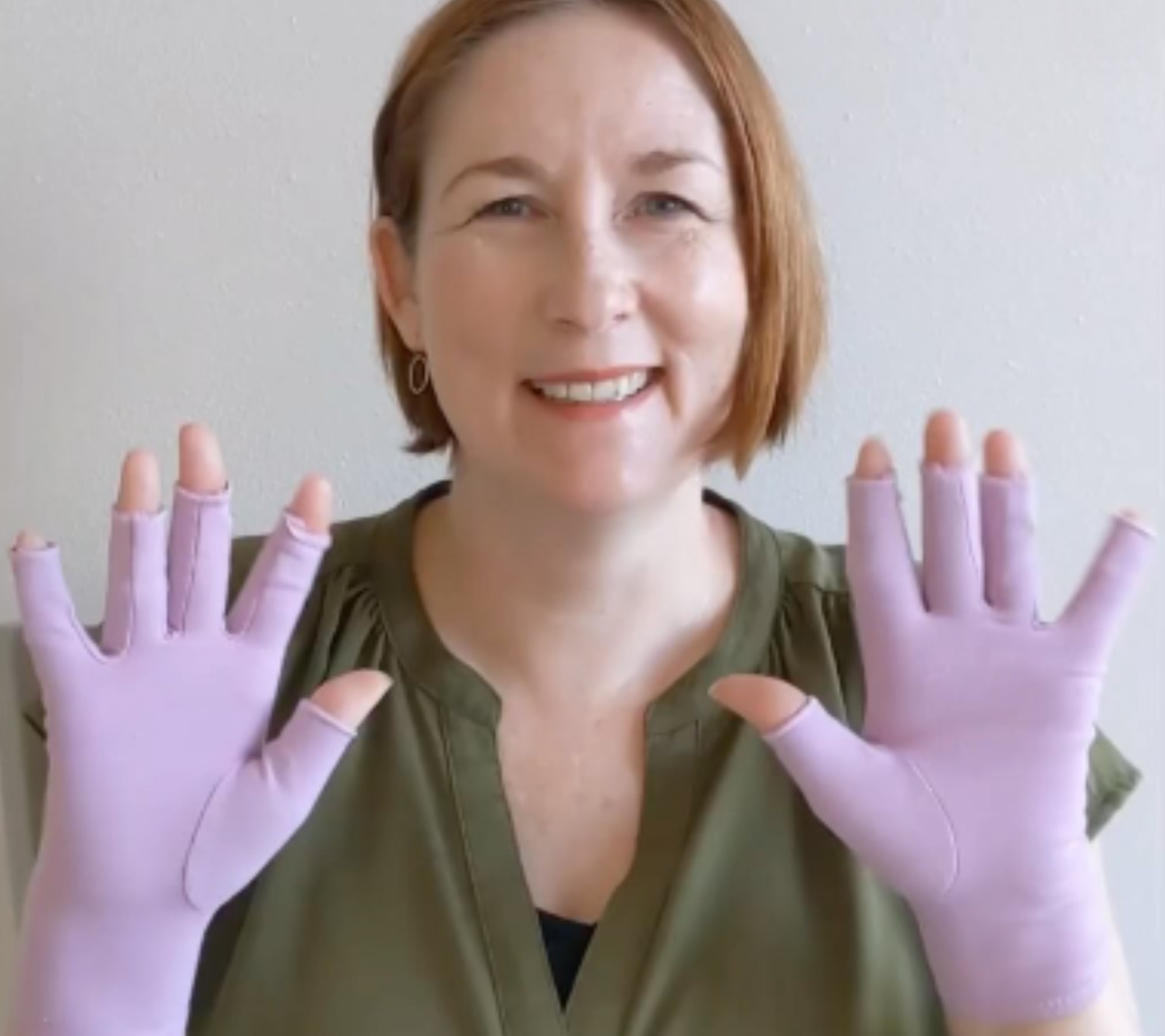
We design compression products and braces that look and feel more like apparel than a traditional medical device – so that you’ll enjoy wearing them.
We want you to attract compliments, not stares!
Two years on, and we have 3 patents, 2 therapeutic products in the market, thousands of customers and an average 4.9 star review rating, plus partnerships with 2 arthritis charities, one in the USA (AiArthritis) and one in the UK (Versus Arthritis).
We ask everyone who leaves a review: ‘does this product relieve your joint pain and swelling?” We are product to share that 96% of customers say yes!
our customers are our whole mission, and we are committed to working closely with customers to bring you more great products.

Can you share a story from your journey that illustrates your resilience?
I started working on Grace & Able back in 2019. We submitted a patent application for our wrist splint, and I got into a local mentoring program for health start ups. I was super excited to bring my product ideas to market.
However, during 2019, I was in a serious accident. I sustained a head injury and concussion and broke my ribs and foot. The nurse at the hospital told me that I had been lucky to survive.
As a result, I spent 3 months in bed, unable to look at screens or read. I had to put Grace & Able on hold. It was very frustrating as it took over a year to fully recover from my injuries.
It would have been very easy to give up on Grace & Able, especially as my recovery coincided with the pandemic, and everything seemed to be in a strange limbo.
But my head injury only made me more determined to bring our products to market. Having that close call made me realize how essential it is to focus on the things that you care about and make them happen.
We’d really appreciate if you could talk to us about how you figured out the manufacturing process.
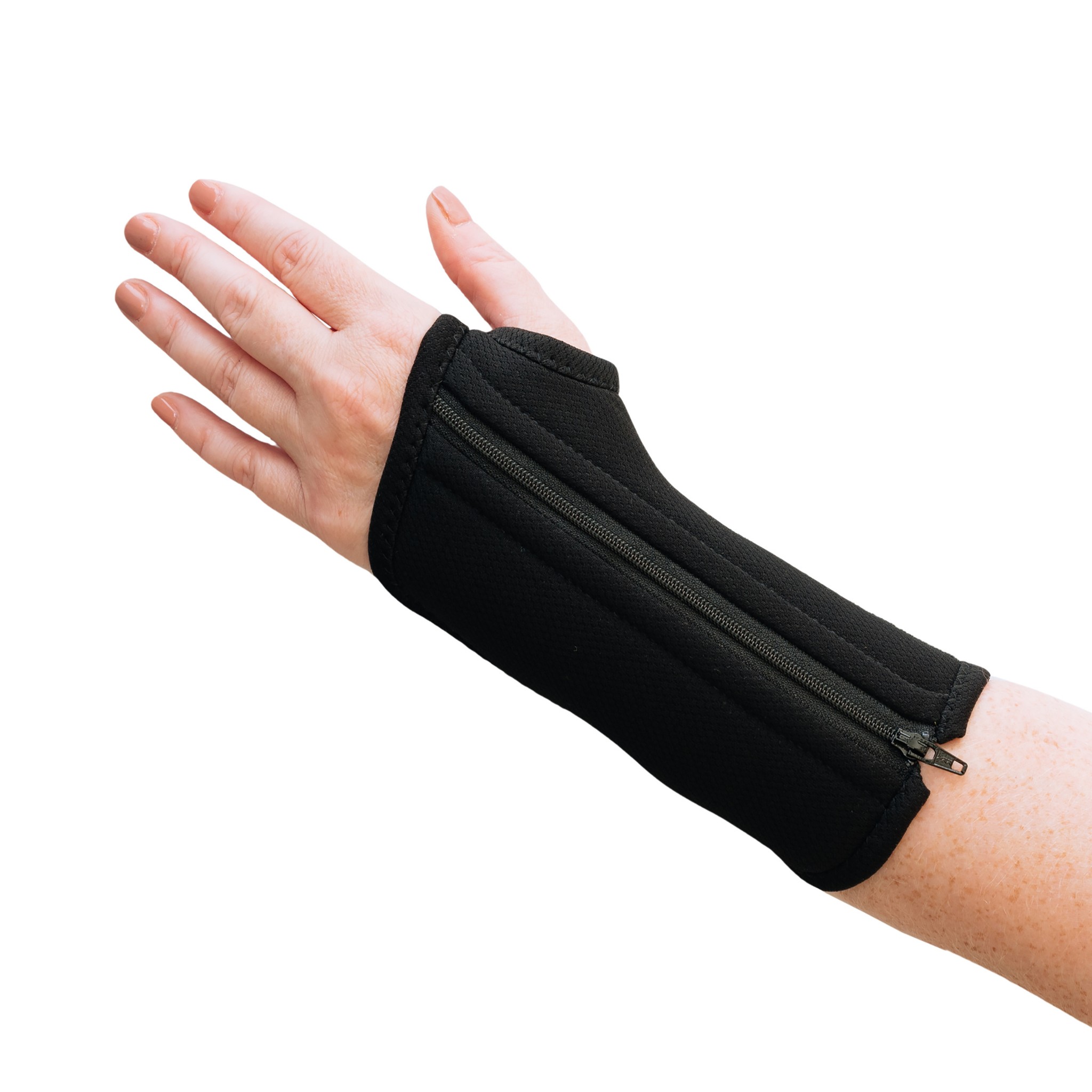
At Grace & Able, we design our own products in-house, and work with manufacturing partners for production.
When we first started, we were making products ourselves. For our wrist braces, we made our splints using 3D printing, and we bought, cut and sewed the fabric in-house.
That was great because it meant we could test ideas and iterate on customer feedback quickly. It worked well for small runs – but as we grew we needed to start producing larger quantities so we started looking into factories.
The biggest unexpected challenge was translating our in-house production methods into factory production.
A model that works for 3D printing doesn’t always work for injection molding, so we needed to get it amended. A fabric pattern made on a domestic sewing machine needs significant adjustments for factory sewing. The steps and processes used in a small studio may not be as effective in a large factory.
It was a big learning curve – and it all took time. Here are my lessons:
1. Validate with customers every stepof the way – there’s no point pouring time and money into something if people aren’t going to buy it.
2. when working with a factory, make sure you go through a thorough and detailed sampling process. Keep notes / specs and and keep making samples until they are exactly right. It’s time-consuming and it can be stressful – but it’s better to hash out production issues at the sampling stage than to end up with hundreds or even thousands of products that aren’t quite right – and will get returned to you by unhappy customers.
3. Don’t get sucked into adding all the features – you need to ensure that the cost of goods : retail price is 1 : 5, so avoid adding extra bits and pieces for the sake of it – every process or embellishment adds cost, so back to lesson 1 – check that it will meet you customers need before you add it.
Contact Info:
- Website: https://www.graceandable.com
- Instagram: instagram.com/graceandable_official
- Facebook: https://www.facebook.com/GraceandAble/
- Linkedin: https://www.linkedin.com/in/sarahdillingham/