



We were lucky to catch up with Sara Christensen Blair recently and have shared our conversation below.
Sara, appreciate you joining us today. We’d love to hear about when you first realized that you wanted to pursue a creative path professionally.
Art was never something that was an option for me to study in high school or college; until it was. I was on the pre-med track and also taking business classes, you know, so I could get a normal job and be successful under the constraints of society. Then, I took a drawing class, then a painting class, then I received a scholarship from the Art Department for the following year because they thought I was an art major. That was all I needed, someone to recognize that I was doing well. In order for me to receive the funds, I had to declare my major as art. This was only difficult because I knew my parents would not like this change. Being the conflict avoider I am, I emailed them a 4 page word document explaining how I was switching to art, I wanted to paint, and someday, I would be an art professor. My parents were not thrilled with the change but I got a part time job at an art store, became an RA (resident assistant) to pay for room and board, and they did continue to help with tuition. This was the late 1990’s and today I am in my 20th year as a professor of art and design and chair of the department. Now a parent myself, I understand the conflict of wanting your child to do something they love but also, wanting them to be a successful, fully-employed adult.
My only regret is that I didn’t discover my love and talent for art making until my third year of college. That said, I am proud of the work it took to get to where I am in my career. I never wanted to be a full-time artist as I didn’t want to make commercial work, which is why I knew I wanted to teach. While I love being alone while making art, teaching others how to appreciate and make art as a new language and problem solving tool feeds my soul.


Great, appreciate you sharing that with us. Before we ask you to share more of your insights, can you take a moment to introduce yourself and how you got to where you are today to our readers.
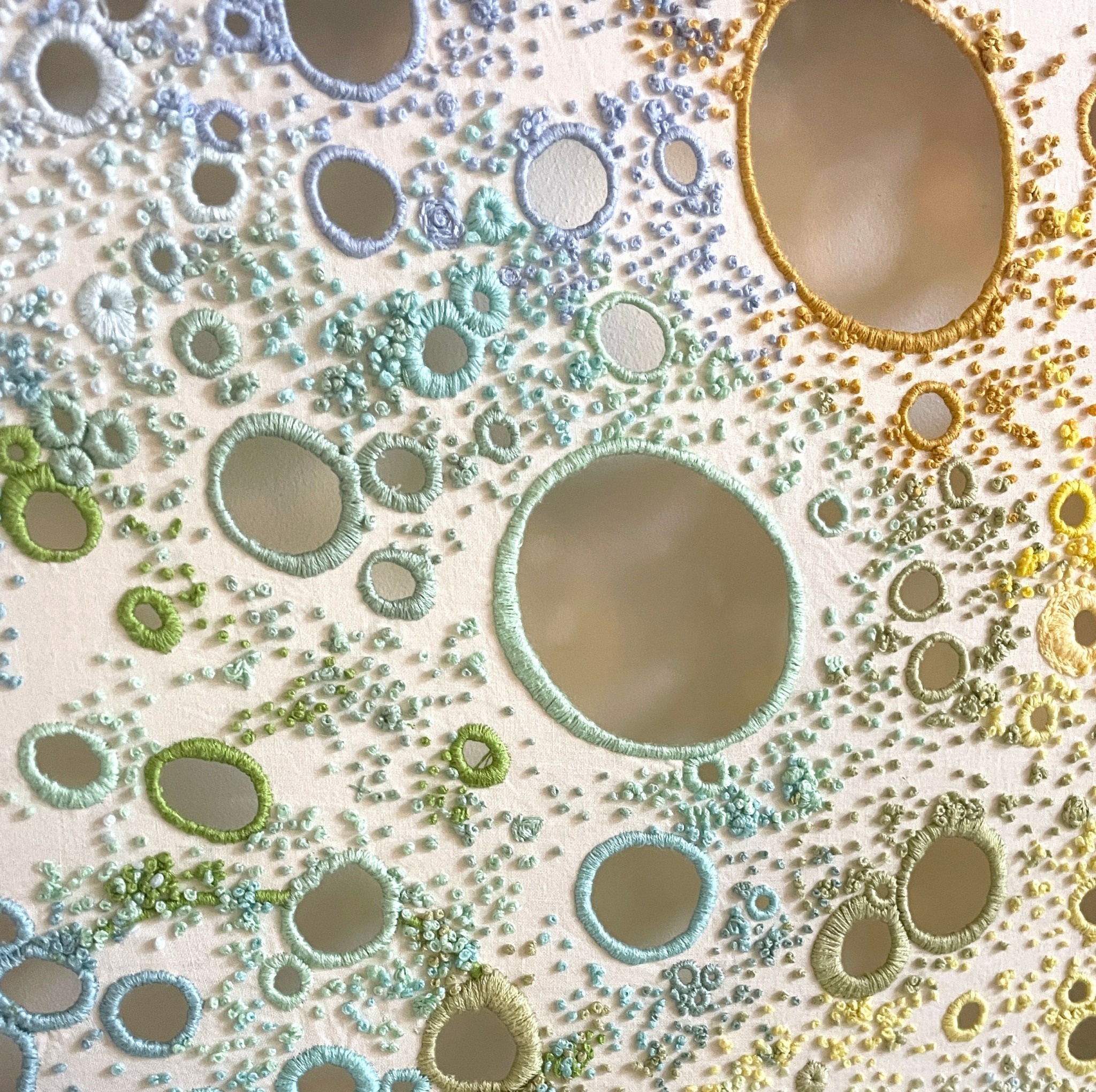
I’m a mixed media artist that uses found objects, fibers, metal, and paint. After graduate school I worked as a graphic design for a year before obtaining my first tenure-track teaching job. I went to graduate school in North Dakota after graduating from the School of the Art Institute of Chicago with a BFA. While teaching full-time, I pursued a Ph.D in Visual Arts: Philosophy, Aesthetics, and Art Theory. I felt a doctoral-level degree would be helpful if I ever wanted to explore the idea of becoming an administrator at a university. The PhD was for me, the most difficult endeavor of my creative life as it was all based in theory and not in the studio. I learned how to write, read more closely, and understand that the more I know, the less I know. I love academia because it provides an opportunity to work with others, has a structure that helps me thrive, and supports creative research as an aspect of my job. After 15 years teaching graphic design and other courses, I am finally doing what I set out to do in 1998, I’m the tenured, full-professor of painting. Because I am an organized artist (I know, oxymoron), I also enjoy most aspects of being the chair of the department as it feeds the logistical side of my brain.
Identifying as an artist is a privilege unlike any other. Teaching others that play is part of the creative process essential to all areas of life, including solutions to major issues both locally and internationally, is the highlight of my career. Most of my time is not filled with making art however, being surrounded by artistic energy motivates me to create and learn from my colleagues and students.


How can we best help foster a strong, supportive environment for artists and creatives?
The most helpful thing society can do for artists and creatives is to value what they do. Yes, of course, value in terms of money but also in terms of dedication and time spent on creative projects. As a freelance designer (side-gig since I worked as a design), I’m still shocked at how little people know about the process and the time that goes into any creative work. Society is quick to reward time spent in professions such as being a lawyer or a medical doctor, but seem to think what we do is easy. I believe we make it look easy because good design/art can be quickly consumed and forgotten. It is important that artists and designers articulate the time and effort that goes into their craft and give just enough “behind the scenes” information for others to understand what we do.

We’d love to hear a story of resilience from your journey.
When I was trying to get a job in academia, I was in my mid-20s. I would get far in the process but would come up short as the committees would say that I “lacked experience.” I believe this was code for you are too young to possibly be in academia. It was heart wrenching to go to a campus, meet potential colleagues and students, then be told you needed more experience. I continued to apply to jobs anyway and was lucky to get a position at a small regional public university that was willing to take on someone with less experience but enthusiasm and passion to make up for the time. Now almost 50, people still ask if I’m new to academia, the blatant ageism and sexism in their comments always shocks me but with that, I often take the time to explain that I’ve been around a bit and not all of us are white men with elbow patches on our blazers.
Contact Info:
- Website: https://saracblair-art.com
- Instagram: @sarachristensenblair
- Linkedin: Sara Christensen Blair

Image Credits
Just me, their all my images, no credit needed.