


Alright – so today we’ve got the honor of introducing you to Saint Trey Wooden. We think you’ll enjoy our conversation, we’ve shared it below.
Saint Trey, thanks for taking the time to share your stories with us today Do you wish you had started sooner?
I don’t think I was late to myself. I think I arrived right on time.
There’s a version of this story where I start earlier, where I claim the title of writer before the world has had its way with me. But I don’t know that I would have understood what I was holding. Writing, for me, is not just language or form; it is a way of surviving what tries to unmake you. I needed to live enough life to recognize that.
The first real stirring came through grief. In 2017, my father, Ray, died suddenly in a car accident. Two years later, in 2019, my partner, Nahiir, died of cancer. Three years after that, my mother, Jamila passed, also from cancer. Each loss carved something open in me. There was a moment, more than one if I’m honest, where I didn’t want to be here anymore. The world felt too heavy to carry.
But I made a quiet decision. I would not let myself die.
So I turned to the page. I started writing, journaling, and reading with a different kind of hunger. I leaned on writers and poets, some I knew, many I didn’t, who still found a way to speak to me across time. Their words met me where I was and reminded me that language could hold what felt unbearable.
Before this, I had spent over 13 years in politics, advocacy, and lobbying, much of it across the South, working as a Political Director in the fight to protect voting rights. It was meaningful work, urgent work. Later, I led efforts to end child marriage, helping to pass legislation in three states and stop its reintroduction in another, all within a year. And, even in those victories, something in me felt misaligned. The pace, the constant urgency, the feeling that I was often advancing someone else’s vision at the expense of my own. And in spaces where whiteness remained centered, it became increasingly difficult to stay rooted in my own politic and moral commitments.
At some point, I had to tell myself the truth. That work was important, but it was no longer mine.
Writing and art called me back. Not with guarantees or clarity but with a kind of knowing I could not ignore. And I answered, even when I didn’t have it mapped out.
If I had started earlier, I don’t know that I would have had the spiritual fortitude to stay. I hadn’t yet gathered the kind of knowing that only comes from living, from loss, from being undone and choosing, somehow, to remain. I hadn’t yet learned how to sit with discomfort long enough to transform it into something honest.
I’m still learning and still growing into the work. And, I trust the timing of it now. I didn’t start late; I truly believe that I started when I was finally ready to listen.
As always, we appreciate you sharing your insights and we’ve got a few more questions for you, but before we get to all of that can you take a minute to introduce yourself and give our readers some of your background and context?
I am a writer, first and last. Everything else I’ve been, everything I’ve done, has led back to that truth.
I came to this work after more than a decade in politics, advocacy, and policy. I spent years organizing across the South, fighting to protect voting rights, building campaigns, fighting for and against legislation, shaping strategy, and trying to move systems that were never built with us in mind. I later led work to end child marriage, helping to pass legislation in three states and stop its return in another. That chapter of my life taught me how power moves, how language gets weaponized, how people survive inside systems that were never meant to hold them. And, over time, I began to feel a quiet fracture within myself. I was helping to build a world I believed in, but I was not living inside my own calling.
Writing was always there, waiting. It was the thing I returned to when everything else felt too loud, too fast, too removed from the truth of being alive. After a series of personal losses that reshaped my life, I began to take that return seriously. I stopped treating writing as something I visited and started building a life around it.
Now, my work lives at the intersection of art, memory, and political imagination. I write poetry, essays, and longform pieces that center the lives and interior worlds of those who are too often pushed to the margins. My work is concerned with grief, love, survival, Blackness, queerness, and the quiet ways we remake ourselves after being broken open. I am also interested in what it means to imagine beyond the world as it is, to write toward futures that feel both honest and possible.
In terms of what I offer, I create across multiple forms. I write and publish essays and report pieces for magazines. I am working on a debut poetry collection that maps survival and self-reclamation. I develop long-form editorial work that blends personal narrative with cultural and political analysis. I also collaborate on creative and strategic projects, helping shape language, narrative, and vision for organizations, campaigns, and cultural initiatives that want to speak with clarity and integrity.
What I solve, if I can call it that, is a problem of language and truth. Many people and organizations know what they feel, know what they believe, but struggle to say it in a way that feels precise, human, and alive. I help bring that into language. I help make meaning legible. I help people and projects speak in a voice that is not just polished, but rooted.
What sets me apart is that I do not approach writing as content. I approach it as a practice of attention and responsibility. I am not interested in flattening stories for consumption. I am interested in honoring their complexity. My background in organizing means I understand the stakes of narrative. My life has taught me that language is not abstract. It is how we survive, how we remember, how we build what comes next.
What I am most proud of is not a single publication or milestone, though those matter. I am proud that I chose to stay. That I chose to build a life in alignment with what I know to be true, even when it was uncertain, even when it required letting go of stability and recognition in another field. I am proud that my work makes people feel seen, that it gives language to things they have carried quietly.
For those encountering my work for the first time, I want them to know this; I write from a place of care, but also from a place of rigor. I believe in beauty, but not at the expense of truth. I believe in imagination, but not as escape, rather as a tool for transformation.
My work is not just meant to be read. It is meant to be felt, to be wrestled with, to be returned to. It is an invitation to consider what it means to live fully, to grieve honestly, and to imagine beyond what we’ve been told is possible.
In your view, what can society to do to best support artists, creatives and a thriving creative ecosystem?
To support artists, we have to begin by telling the truth about what art is.
Art is not decoration. It is not an afterthought once the “real work” is done. It is the way we make sense of being alive, the way we document who we have been and imagine who we might become. A society that does not take care of its artists is a society that has decided it does not need to understand itself.
So the first shift has to be cultural. We have to stop treating creative work as indulgent or secondary and recognize it as essential labor. That means honoring artists not only with applause, but with material support. Sustainable funding for the arts; living wages; grants and fellowships that are accessible, not gatekept; residencies that do not require people to already be resourced in order to participate. We cannot keep asking artists to produce beauty out of burnout.
We also have to make space for artists to live. Affordable housing, healthcare, and basic economic stability are not separate from a thriving creative ecosystem; they are the foundation of it. When artists are forced into constant survival mode, the work narrows and not because the vision isn’t there, but because there is no room to breathe.
Education matters deeply as well. We need to invest in arts education early and often, especially in communities that have been historically underfunded and overlooked. And I dont mean that as some sort of luxury program, but as a core part of how we teach young people to think, to feel, to question. I deeply believe that exposure creates possibility and it tells a young person that their voice has somewhere to go.
And, beyond institutions and policy, there is a more intimate responsibility. We have to practice showing up for artists while they are still becoming. That means buying the book before it wins an award; attending the reading when the room is half full; sharing the work, citing it, teaching it, taking it seriously. Too often, recognition comes after exhaustion, after years of invisibility.
And we have to expand what we consider worthy of support. A thriving creative ecosystem cannot be built on a narrow definition of whose stories matter. We have to center and invest in artists who have been pushed to the margins, not as a gesture, but as a correction. Because some of the most urgent, world-making work is happening there.
I think, at its core, supporting artists is about alignment. It is about building a world where the people who help us feel, remember, and imagine are not asked to do so at the cost of their own well-being.
If we want art that is alive, that is honest, that pushes us forward, then we have to create the conditions where artists can live full lives. And, not just survive, but live.
What do you find most rewarding about being a creative?
The most rewarding part is that moment when something unnamed finds its way into language.
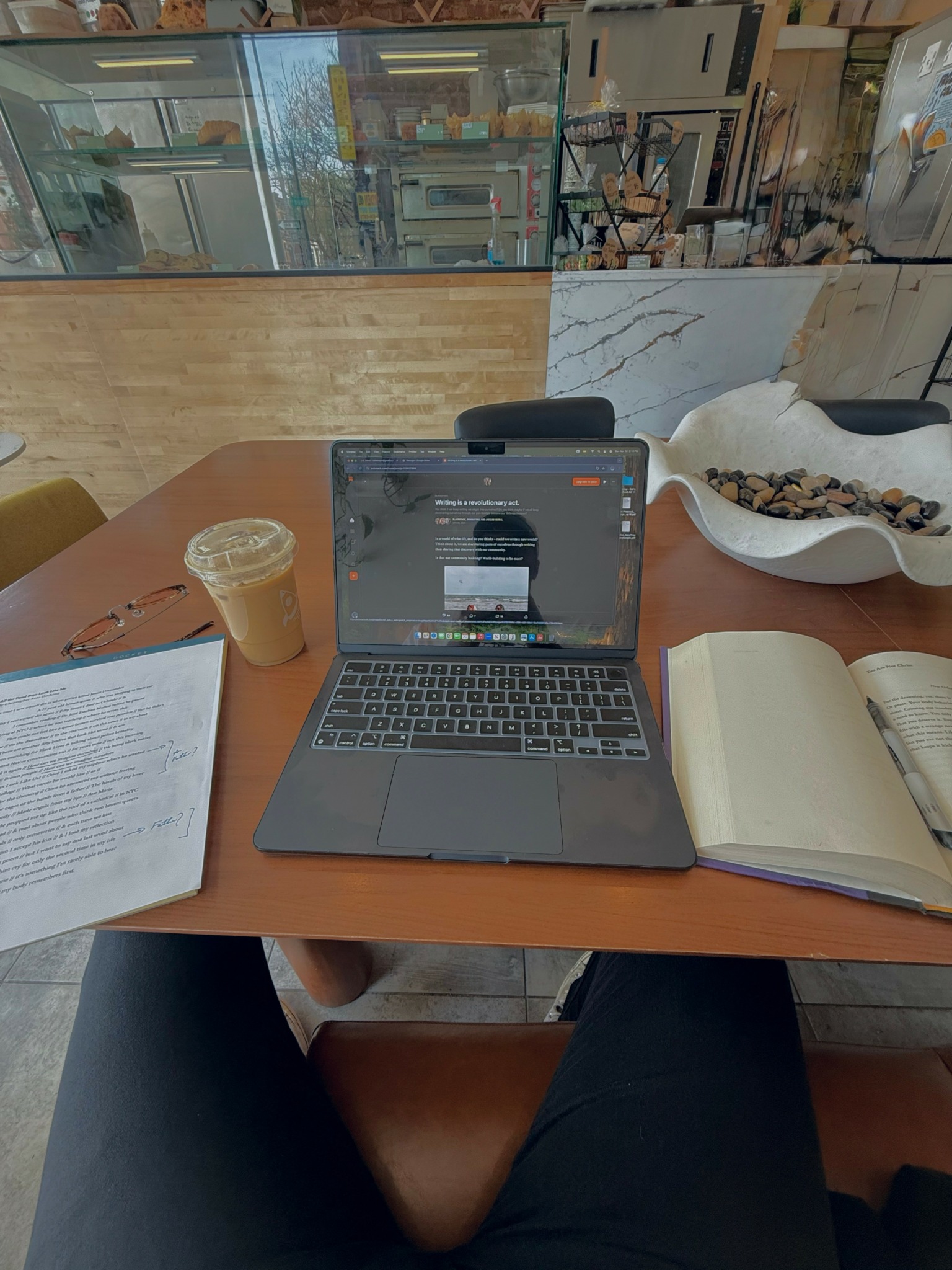
There are things we carry that don’t arrive as sentences. They live in the body first, in memory, in feeling, in the quiet spaces we don’t always know how to speak about. Writing gives me a way to sit with those things long enough for them to reveal themselves. And when they do, when a line finally lands in a way that feels true, it feels like I’ve made a small clearing in the world. Like something that was once heavy and formless now has shape, and because it has shape, it can be held.
And what makes it even more meaningful is when that language leaves me and finds someone else.
When someone reads my work and says, in their own way, that it gave them language for something they thought they had to carry alone, that’s the reward. Not in a grand or performative sense, but in a quiet recognition. A reminder that none of us is as isolated as we sometimes feel. That our stories, even the most personal ones, are part of something shared.
There’s also a kind of honesty this work demands of me that I’ve come to value deeply. Writing doesn’t let me hide for long. It asks me to confront myself, to sit with contradictions, to be accountable to what I know and what I’m still learning. That process can be difficult, but it is also clarifying. It keeps me in relationship with my own becoming.
And then there is the simple, almost sacred fact of choosing to stay.
To make art, especially after loss, especially in a world that can feel relentless, is a way of insisting on life. It’s a way of saying that even here, even now, there is something worth noticing, worth shaping, worth offering.
That, to me, is the reward. Not just that I get to make something, but that in making it, I get to remain present to my life and, in some small way, connected to others who are trying to do the same.
Contact Info:
- Website: https://substack.com/@sainttreyw
- Instagram: @sainttreyw
- Other: Threads: @sainttreyw
TikTok: @sainttreyw
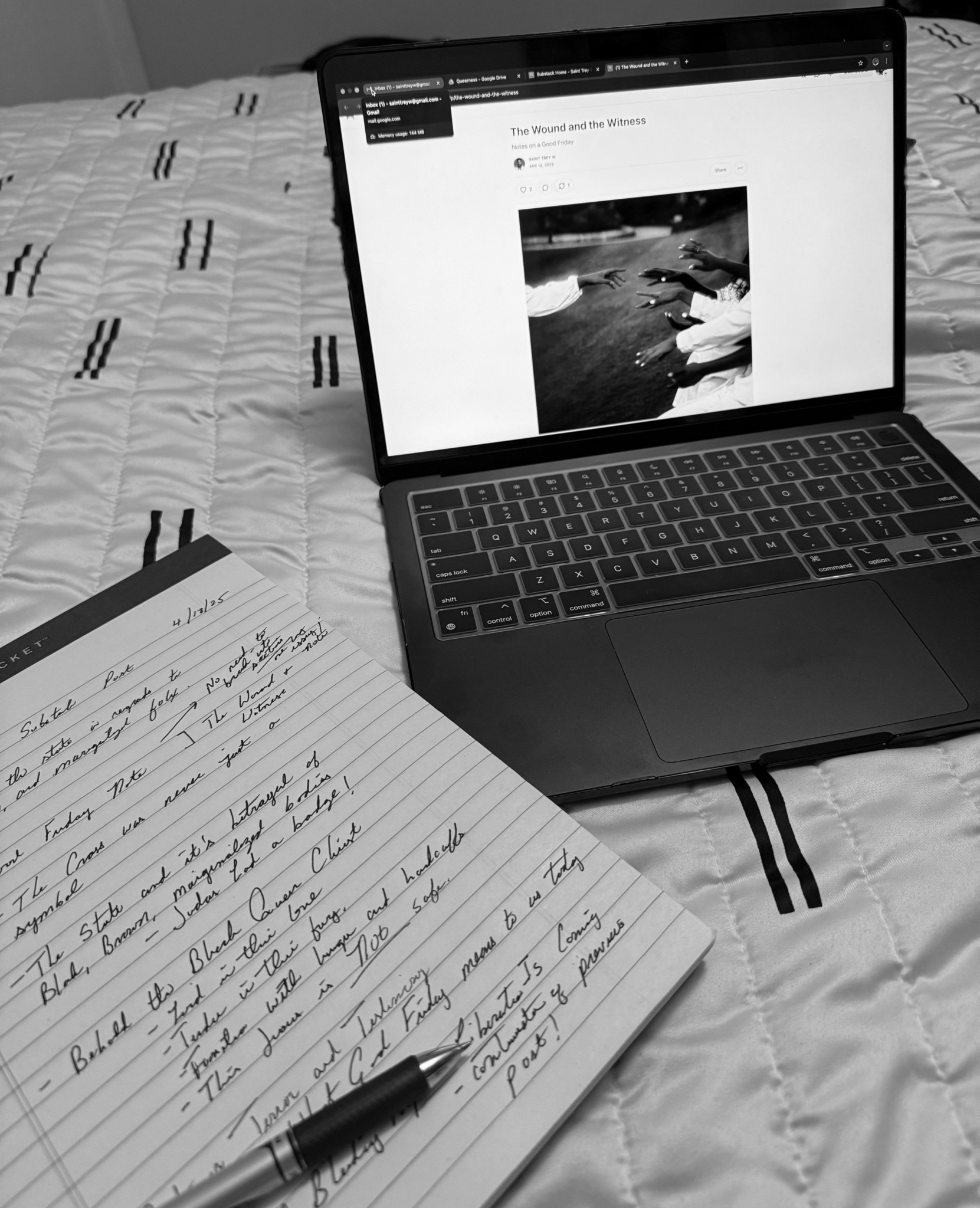
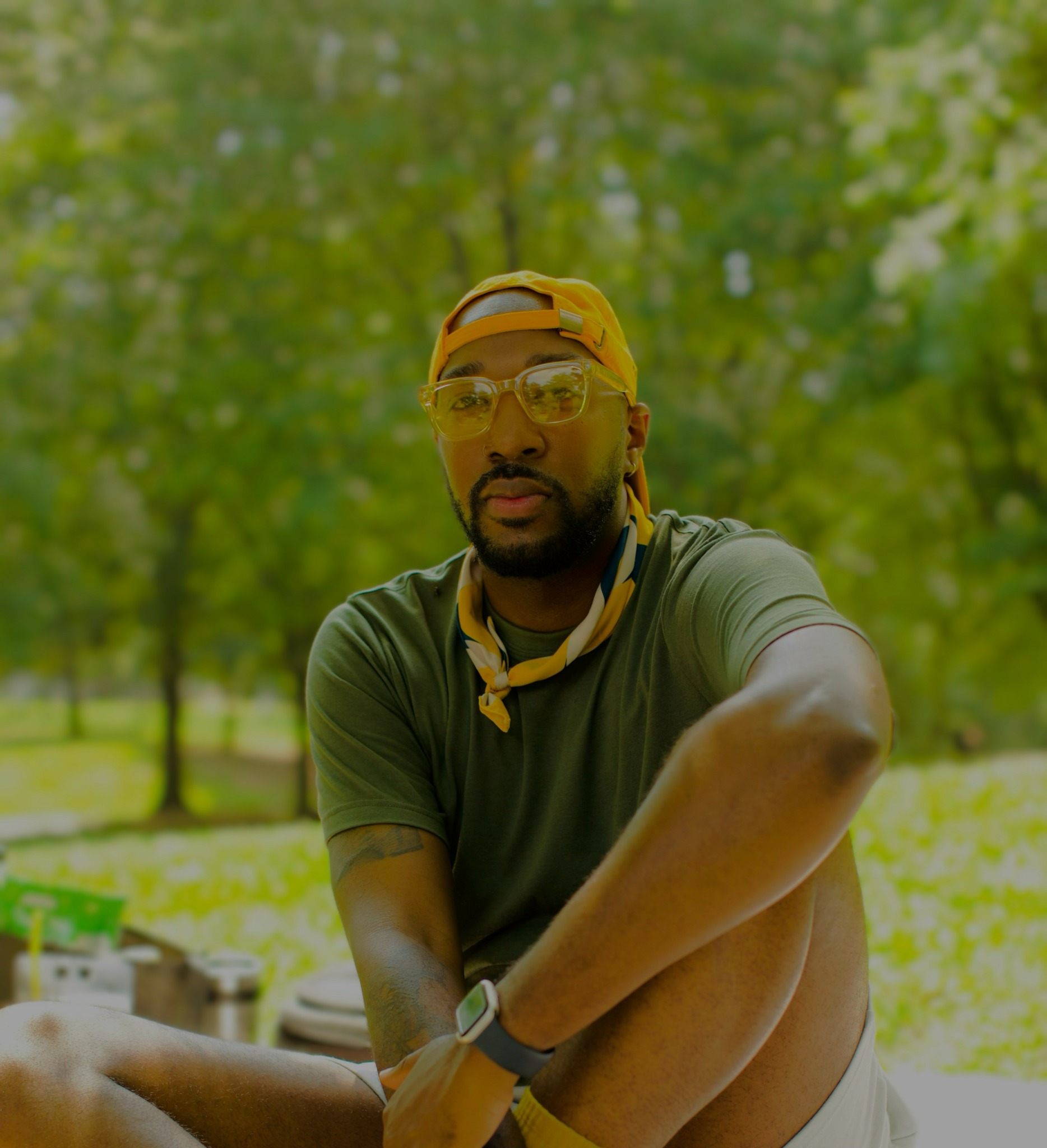
Image Credits
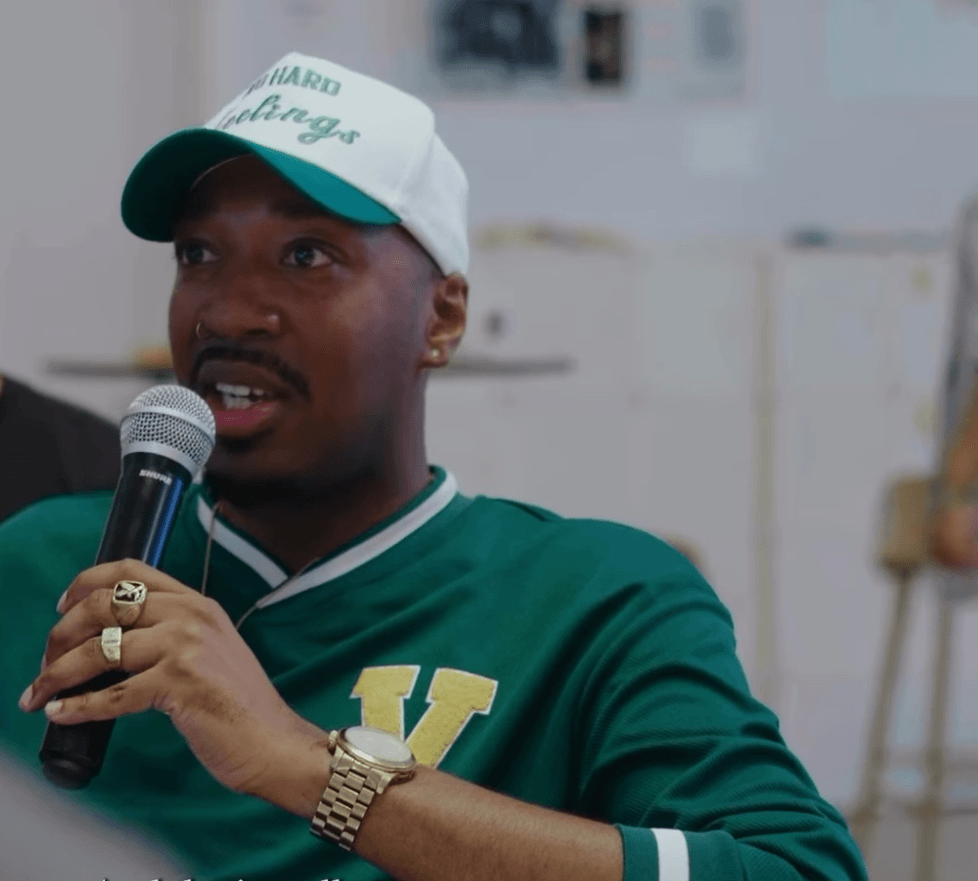
For Image Credits (Sperenza Foundation for the group photo)