

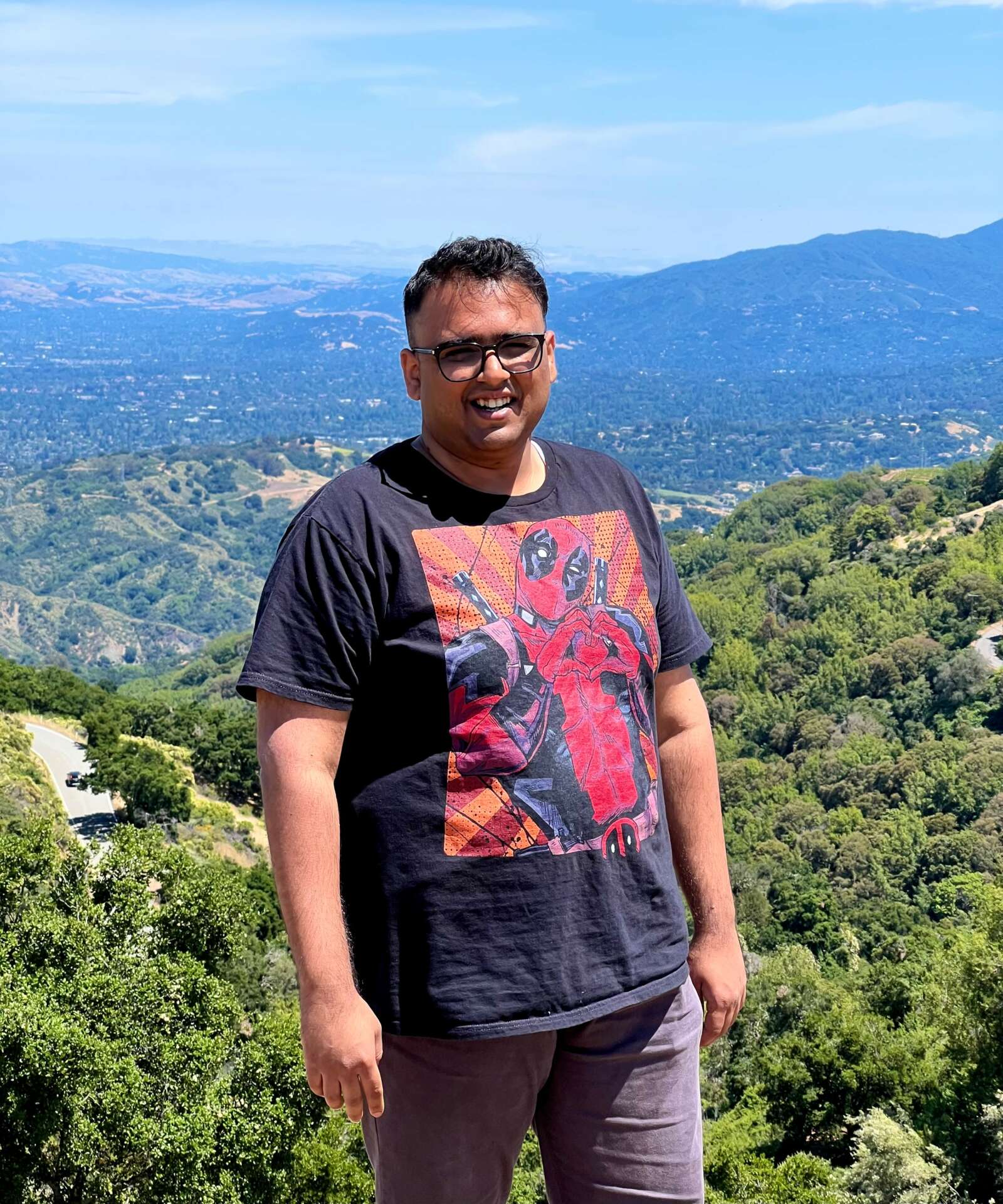

Alright – so today we’ve got the honor of introducing you to Rutuj Acharya. We think you’ll enjoy our conversation, we’ve shared it below.
Hi Rutuj, thanks for joining us today. To kick things off, we’d love to hear about things you or your brand do that diverge from the industry standard.
I come from a video advertising background. I was lucky enough to start my journey with an advertising company in India that did everything from pre-production – where the theme of a video commercial is decided before it goes to scriptwriting, followed by production – which involves shot design, shot breakdown, budgeting, and scheduling to film the commercial, and, Post-production- which includes editing, sound design, VFX, and color-grading. Since we were starting, we wanted to get the market’s attention more than a corporate/established advertising company. And it was not easy. What we did differently back then was that we did not follow the industry standard order of pre-production to production and then post-production. Most of the big shows would wait until a script was confirmed by the client, which would take approximately three weeks to 3 months; we started ideating on the best way strategically and visually to execute those script ideas as if they were approved! The ideations would then take the form of storyboarding, photography, and sometimes enacting the scene in the office. While this approach did not work for every client, it helped us develop our vision. It taught us what would work and what would not work. And then, when the market finally noticed and approached us, we were prepared.
Now, I work as a video editor for branded content and color grade independently. Since I am not familiar with the process of post-production houses that do color grading, I am not sure what I am doing differently than others. But to speak for me, One of the things I do differently is when I start working on a project, even before I explore what that image could be, I ask my director what they want it to be! On the surface level, anyone with a basic understanding of the software can make a shot look pleasing. Still, the art of color grading is making that image SPEAK the emotion the filmmakers intend to communicate with the audience. And I think that can happen by not doing the obvious, immediately.


Awesome – so before we get into the rest of our questions, can you briefly introduce yourself to our readers.
As a kid, my mom always took me to children’s plays. And I used to love watching them, so my parents enrolled me in a Summer acting workshop. The result of each workshop was three short plays in theatre in front of an audience of 100 + people. I kept doing that for each summer. I used to like similar things, like watching movies and then doodling movie scenes with crayons, which, I was later told, is an entire team in the industry called Storyboarding and story development! But all these were hobbies until I heard Andrew Stanton, the director of Wall. E, in his behind-the-scenes/director’s commentary for Wall. E, about no-dialogue storytelling. As I remember now, he said, “When you decide to take dialogue out of the equation, all the other elements (such as animation, texture, light, camera) have to do much better to tell the story.” And something about how he said it convinced me that I can enjoy doing this as a career! Not because of the money there is, but by just imagining how many possibilities there are to tell stories! In the entertainment culture I grew up in, there was no room for something experimental, such as a film without dialogues, and the storyteller inside me was deeply attracted to experiment with moving images, so I enrolled in 4 years of an Animation Film design program in India. I made two 2D animated films as my undergrad thesis. Later, my work transitioned me into advertising, and then I returned to film by applying for my master’s at SCAD- The Savannah College of Art and Design. My thesis was a no-dialogue experimental film – The Waiting Room- which explored a dead man’s journey between his after-death and before his next life. This film was made with 80% of Stock footage and 20% of footage shot on purpose. Also, I color-graded several short films while at SCAD and still color-grade independently. Some short films have been officially selected and screened at various film festivals, including Hollyshots Spring 2023, which won the LA Best Student Doc, and many more.


We’d love to hear your thoughts on NFTs. (Note: this is for education/entertainment purposes only, readers should not construe this as advice
While I really like the idea of NFTs, and I have tried to read about it, I think there is still a lot of room to develop in terms of achieving stability and long-term trustability.


What’s a lesson you had to unlearn and what’s the backstory?
They say you must lie to survive in advertising, fake a smile, be overly friendly, and never disagree with your client’s opinions. At least, that’s what most people in the industry told me in India when I started. However, what I experienced was different. No matter how rich your client is or how far you are from the perspective and vision they have, if you honestly think their business needs a solution for a problem they cannot see, they will listen to your suggestion. Most of the time, we are afraid of speaking because we think if we can think about this, they must have thought about it already, and there is a reason they chose not to go ahead with what we are thinking; in reality, that is not always true. We had a local client who was running a small car-pooling business. His business was good, and he wanted to expand, so he came to us with the proposal of two 30-second spots. He mentioned that he had already produced video commercials twice from two different agencies, but it did not help his business to the extent of his expectations. The commercial had fewer views on YouTube despite some digital marketing (done by other companies previously). His suggestion for us was to figure out what the problem was before we started producing. After a few weeks of internal discussions and viewings of both of his commercials, we found the problem. The location where the previous agencies had shot the commercials had hardly any residents who were using cars to commute. (Due to the huge amount of traffic, it is common in India to use public transport to commute to work.) We changed the location and shot the commercial, which was a success. So that’s what I learned from this experience: sometimes, there are small things that other people can’t see just because they are focused on many other things at the same time. So, never assume that just because someone has spent more time in the industry, they can’t make any mistakes.

Contact Info:
- Website: https://www.rutujacharya.com/
- Instagram: https://www.instagram.com/espresso_parade/
- Facebook: https://www.facebook.com/rutuj.acharya/
- Linkedin: linkedin.com/in/rutujacharya
- Youtube: https://www.youtube.com/channel/UCHFPjQdyY00FSyKG55yNFGA
- Other: https://vimeo.com/rutujacharya https://medium.com/@rutujacharya94
Image Credits
Portrait of Meme Locked In (Post-production) Missing in the Midwest Last Date Rake Daisies In Five Blackbird Daydream Closed Casket