

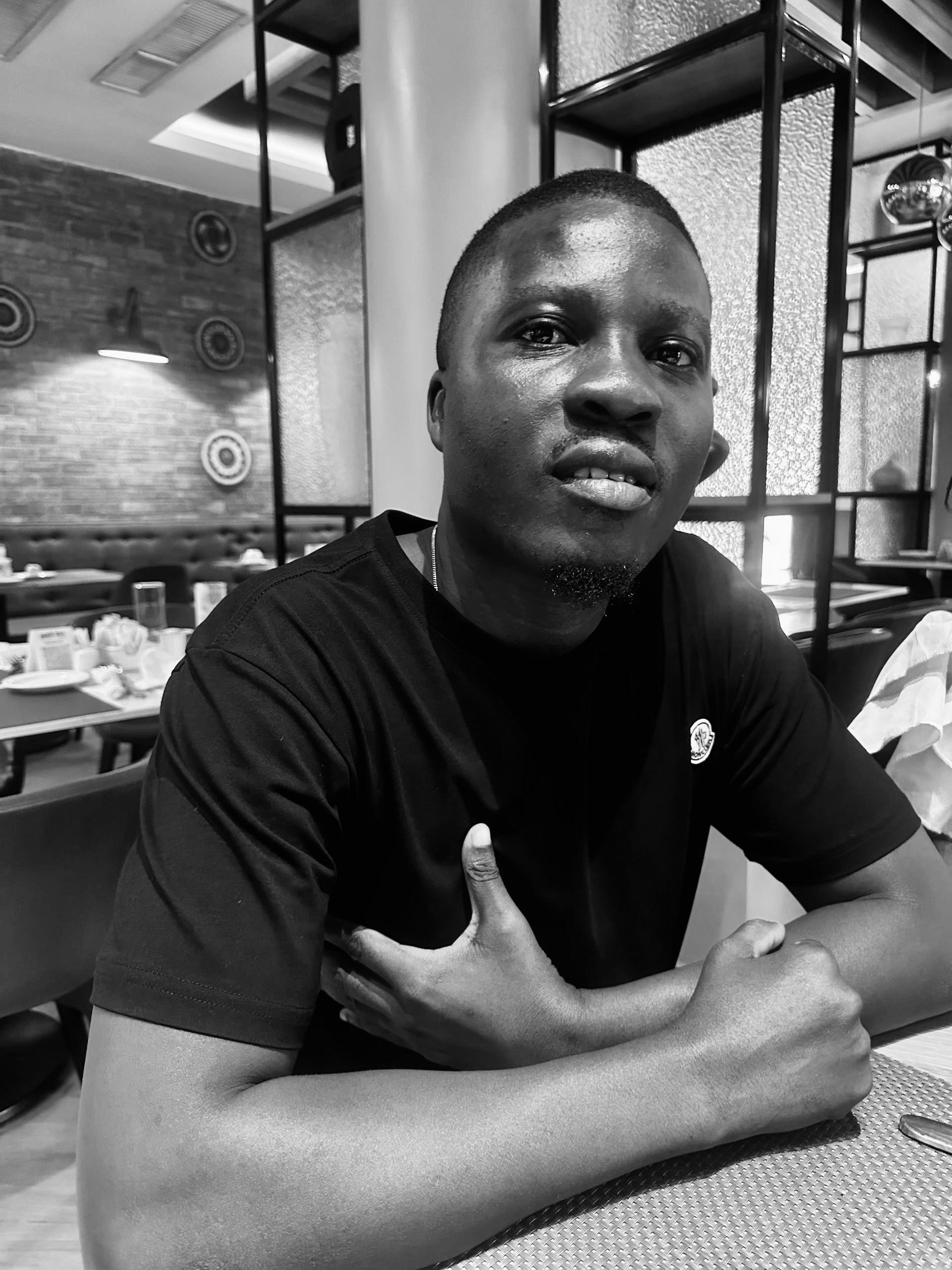

We recently connected with Russell Oru and have shared our conversation below.
Russell, thanks for joining us, excited to have you contributing your stories and insights. Do you wish you had waited to pursue your creative career or do you wish you had started sooner?
If I could go back, I think I would have started filmmaking earlier, long before university. I didn’t come into film as someone who had always known this was the path. In my younger years, I didn’t even consider fine art, visual art, or literature as serious or interesting enough ventures.
I had the curiosity, I had the instinct, but I didn’t yet have the language. I was learning how to see, how to frame, how to interpret emotion visually, all at the same time I was trying to create. But more than just technical skill, I think about exposure. Literature, painting, photography, those things I once overlooked are now some of the most important references I have. They shape how I think about composition, rhythm, character, silence. Sometimes I wonder what my visual language would look like today if I had engaged with those forms earlier. What I would have noticed sooner. What I would have understood differently.
That said, starting later also gave me a certain awareness. I didn’t take it for granted when I finally stepped into it. There was intention in the way I approached the work, because I knew I had found something I had once ignored.
Great, appreciate you sharing that with us. Before we ask you to share more of your insights, can you take a moment to introduce yourself and how you got to where you are today to our readers.
Russell Oru is an independent Nigerian filmmaker whose work powerfully
explores social issues through a bold cinematic lens. His films delve into
themes of systemic corruption, environmental degradation, and human
rights, often centering the voices of marginalized communities. With a deep
belief in the transformative power of storytelling, Russell crafts narratives
that merge personal experience with broader societal critique.
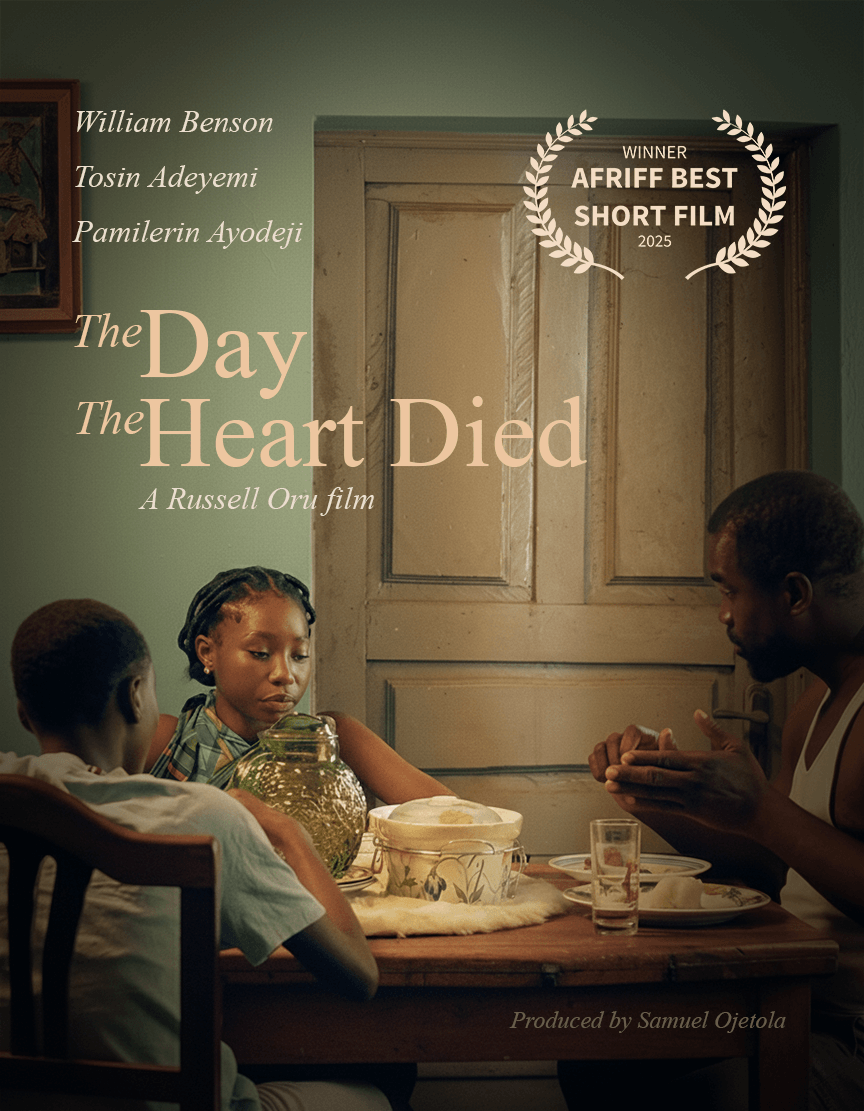
Notable among his works are Growing Pains, The Waiting Song, and The Day
the Heart Died — the latter winning Best Short Film at the recently concluded
Afriff Globe Awards, 2025. His writing credits include cinema projects such
as Ewo and Love Is Yellow, as well as The Yard for African Magic and
Showmax. His TV directing credits span both Showmax and African Magic,
and he has a big-screen project currently in post-production.
Russell’s films have screened at local and international festivals, including
Lagos, Los Angeles, London, Norwich, and Kigali. He continues to cultivate a
practice at the intersection of art and social justice, committed to using
cinema as a tool for awareness, resistance, and change.
What’s the most rewarding aspect of being a creative in your experience?
For me, the most rewarding part of being creative is the process of birthing an idea, from script to screen and watching characters that once only existed on paper take on a life of their own.
There’s something almost surreal about it. You start with fragments, thoughts, emotions, questions you can’t quite explain. Then slowly, they become words. The words become scenes. And before you know it, those same characters are breathing, moving, speaking… existing in a way that feels completely real, even beyond you.
At some point, they stop feeling like something you created and start feeling like something you’ve met.
And then comes the most unexpected part, watching other people connect with them. Seeing an audience respond to a character you once struggled to define, or a moment that once only lived in your head. It’s like something deeply personal becomes shared, and that connection makes the entire process worth it.
What do you think is the goal or mission that drives your creative journey?
At the core of my work is a need to tell stories of those often unheard or more accurately, unheard in their full complexity.
I’m drawn to experiences that are usually simplified or overlooked, and I try to explore them with depth, nuance, and emotional honesty. For me, it’s less about giving people a voice, and more about creating space for them to be truly seen and understood.
Contact Info:
- Instagram: russelloru
- Twitter: @Russellming_
Image Credits
The images are copyrighted with Russell Oru