

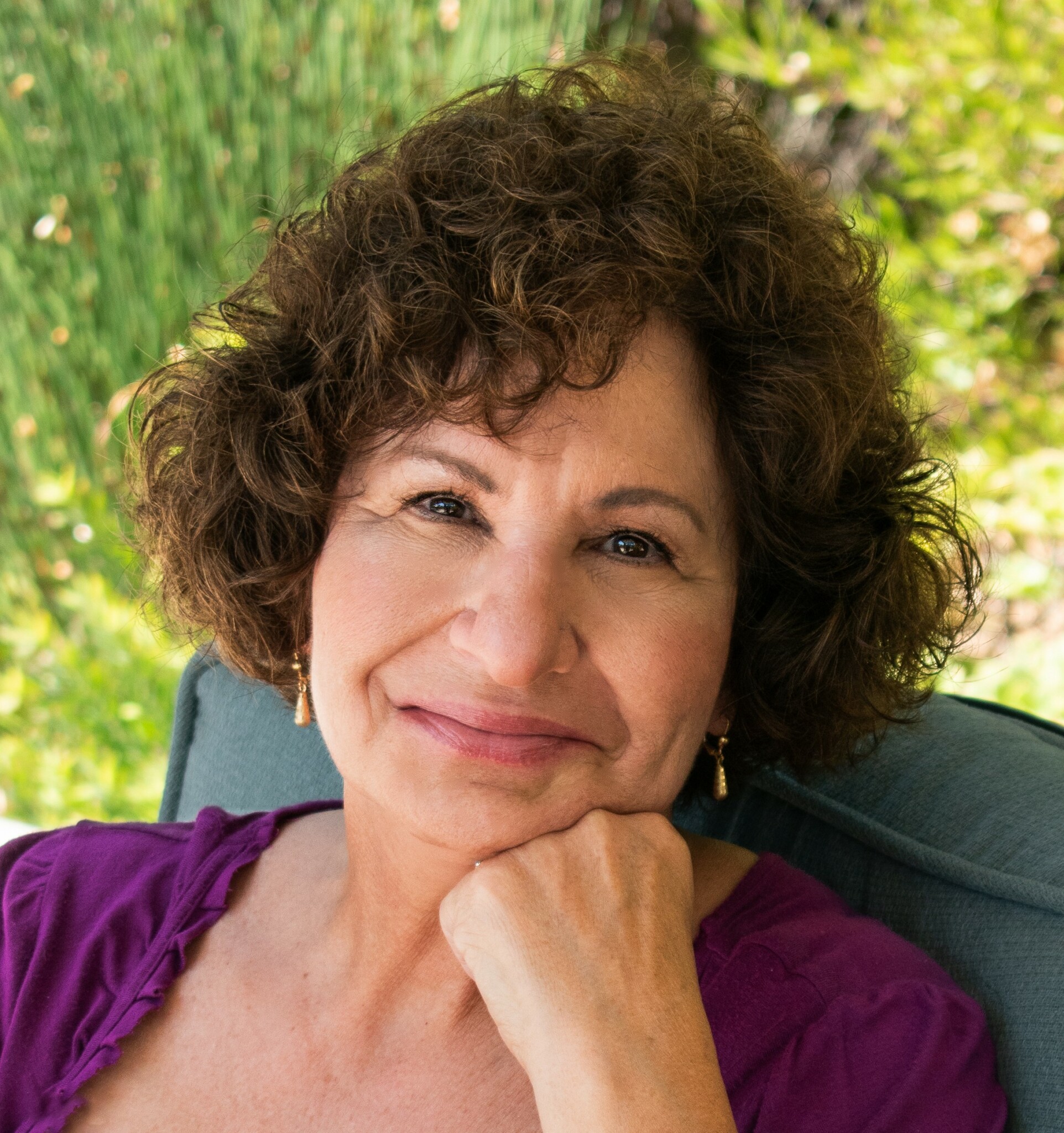

We caught up with the brilliant and insightful Ronna Mandel a few weeks ago and have shared our conversation below.
Ronna, thanks for joining us, excited to have you contributing your stories and insights. How did you learn to do what you do? Knowing what you know now, what could you have done to speed up your learning process? What skills do you think were most essential? What obstacles stood in the way of learning more?
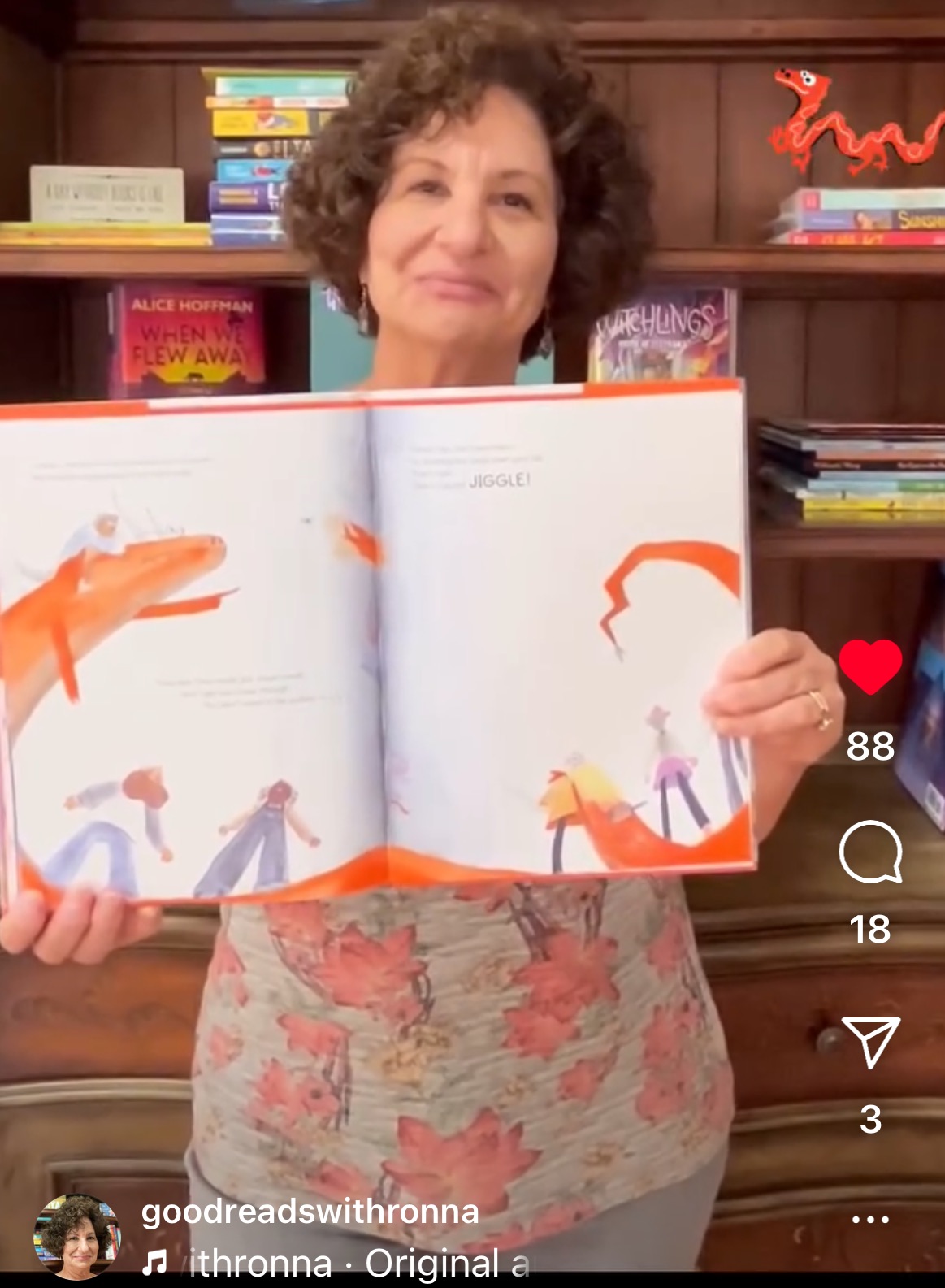
I began learning about children’s book writing when I was Associate Editor at L.A. Parent magazine. My editor asked me to start a children’s book review blog and called it GoodReadsWithRonna.com. Even though I’m no longer working there, I’ve continued reviewing children’s books on the site, which has been ideal. Anyone aspiring to write is told to READ! READ! READ! Read hundreds and hundreds of picture books if you want to write and/or illustrate them. Read hundreds of middle-grade and graphic novels if writing and/or illustrating those is your goal. The same applies to young adult novels. Immerse yourself in your desired kidlit (short for kids’ literature) category and genre. At the same time, attend classes and conferences, devour books on writing for children, and watch webinars as you hone your craft.
Another great way to grow as a children’s book author is to join SCBWI (Society of Children’s Book Writers and Illustrators), which was founded here in L.A. back in 1971 and has chapters across America and abroad. I joined over 13 years ago, and it’s been invaluable for making industry connections and friends, finding critique group partners, and learning the ins and outs of the publishing business. It is the preeminent organization for all things children’s books. I run a monthly networking and workshopping group in Pasadena called a Mingle as part of SCBWI’s Los Angeles chapter, and it has been beyond rewarding. I recommend surrounding yourself with like-minded creators as I have in order to grow as a kidlit professional.
Looking back on my learning process, I could have used my free time better by taking classes sooner, writing more often, and maybe not listening to that sabotaging self-critic. However, one important thing that occupied my time was raising my children, one who is neurodivergent. Therefore, I have no regrets about my slower-than-usual path to publication. My career sped up during the pandemic when I found my agent. While having representation is not mandatory, it facilitated getting my manuscripts in front of editors who do not accept unsolicited work.
One crucial element or state of mind needed to become a children’s book author is to have a thick skin to handle the hundreds of rejections from agents and editors. Another is to be able to think like a child and bring that quality to your writing. Learning how to use language effectively to engage younger readers and give a picture book the re-readability factor is highly desirable. Creating characters that children care about and a plot that keeps them turning the page is a skill that some authors do effortlessly while others struggle to master. It’s helpful to stay up-to-date on the kidlit market by frequenting bookstores and libraries. Did you know, for example, that a 1000-word picture book, unless it’s nonfiction, will likely not sell? The current word count many editors and agents seek is approximately 500 words, and managing that is not as easy as you’d think.
Ronna, love having you share your insights with us. Before we ask you more questions, maybe you can take a moment to introduce yourself to our readers who might have missed our earlier conversations?
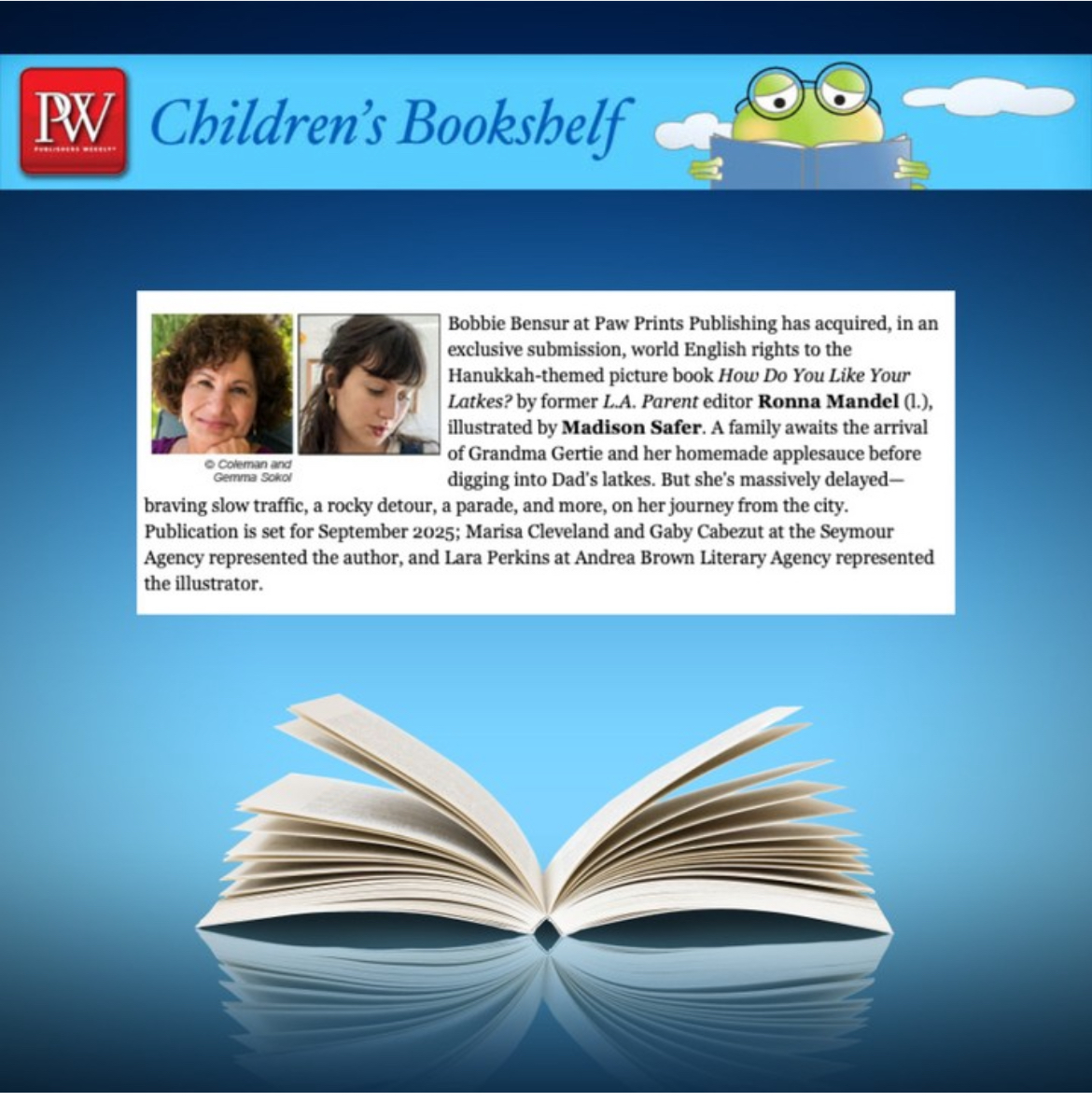
I am a children’s book author in my sixties. My debut picture book, How Do You Like Your Latkes? illustrated by Madison Safer, will be published by Paw Prints Publishing in time for Hanukkah when it’s released on September 18, 2025. Coming to this career later in life has been a gift because, while I’ve been fortunate enough to have experienced all kinds of jobs these past forty-plus years, I cannot think of anything more rewarding right now than bringing joy to children and fostering a love of reading.
I’ve known since high school that I wanted to be a writer and began focusing on that career all the back at the State University of NY at Albany. I graduated with an interdisciplinary major I created called Media Production and Writing with the goal of working in television. The stars aligned differently, and my first job ended up being in publicity at Crown Publishing long before it became part of Penguin Random House. I took a year off and moved to London, spending a good part of that time traveling. Back in the U.S., I moved on to the advertising industry but became disillusioned, so I temporarily put writing aside.
I have always been passionate about travel since first having an English pen pal, then falling in love with Italy watching “Gidget Goes to Rome,” and ultimately.
studying abroad in Paris and London during my junior year at university. Little did I know where that strong pull would lead. My career disillusionment was short-lived when I found an entry-level position in the wholesale travel industry, (aka tour operators), where I wrote brochure copy and sold European ski trips as well as Portugal and Spain packages. Back then, our clients were travel agents, because tour companies rarely sold directly to the public. A friend I met at a conference suggested I interview with her company, and I was offered a sales job with a travel innovator called General Tours. After several years of sales calls to travel agents, I eventually began giving them educational seminars at the behest of my company’s founder. These presentations covered the ins and outs of travel to Eastern Europe, the former Soviet Union, and India. I traveled the country giving slide shows accompanied by speeches and was in my element. I was once interviewed by the late Arthur Frommer at an industry-wide conference in Hamburg, Germany, where I was a featured speaker! I even considered becoming a travel writer, but two years after having my first child, I moved abroad with my husband and daughter to Frankfurt, Germany. When our daughter was five, we moved again. This time to London, where our son was born. While living overseas, I took creative writing classes with the intention of writing short stories and perhaps a murder mystery novel.
Once back in America, I worked for a year at the local high school as an aide for a teen on the autism spectrum. During this time, a friend who knew I adored writing mentioned an opening at L.A. Parent magazine. That job proved to be transformative. I was inspired daily surrounded by creative and supportive women who taught me the magazine business. In a way, my career had come full circle. Instead of writing press releases as I did at Crown Publishing all those years ago, this time, I wrote articles, interviewed people, and began looking at picture books in a whole new way when asked to begin a children’s book review blog.
I no longer only looked at books from a parent’s perspective: Would this book help my child fall asleep, entertain them, or teach them? I wanted to know how the author accomplished these things. And could I learn to write a book that a child would ask for again and again? Most importantly, could the books I write provide mirrors and windows for youngsters to see themselves reflected on the page or introduce them to the diverse and fascinating world they may not yet have seen for themselves? As someone who’s had the privilege to travel, I wanted to create stories to make the world a smaller, and more welcoming place.
Learning and unlearning are both critical parts of growth – can you share a story of a time when you had to unlearn a lesson?
I love this question because, after university, my father drilled it into me that I had to pursue a career in what my major was. In his eyes, nothing else made sense. However, that could not be farther from the truth. He felt that the natural next step involved working at a publishing house, even if I felt drawn to something else. The entry-level position I was offered in a publisher’s publicity department meant promoting other people’s books when I wanted to be the author. With one year under my belt, I hightailed it to London and used my savings to experience life in my boyfriend’s country.
After returning from that year abroad, I tried advertising. I took copywriting classes at NYU and assembled a portfolio. I soon learned that my portfolio was not as refined as my competition’s, so I spent a year on an account management team instead. I was miserable not being on the creative side of the business. Still, I kept hearing a voice in my head say that I had to pursue my major, Media Production and Writing, despite being unable to break in. One day, while discussing my unhappiness with a temp, she uttered six profound words: “It’s okay to change your mind.” Her words freed me so much that 40 years on, I still share this lesson with young people who ask me for career advice. Somehow, this young woman’s insight and her acknowledgment motivated me to change the course of my creative journey. At the time, my passion for travel drew me to begin a fulfilling career in the wholesale travel industry for nine years, and that international experience has helped inspire many of my picture books today.
Do you think there is something that non-creatives might struggle to understand about your journey as a creative? Maybe you can shed some light?
Non-creatives may not realize that as a children’s book author, even when I’m not busy typing away on my laptop, ideas may be germinating. If I visit a museum or a garden, stroll along a bustling street, or go to the library, I never know when a story’s seed may plant itself in my brain. It can happen while chatting with a friend, staring out a window, sweeping in my backyard, and while driving, too. My debut picture book, How Do You Like Your Latkes?, first sprouted as a poem while I was listening to an NPR report on my way to Pasadena. I can even recall that I was on an exit ramp when it happened. I dictated the first stanza to myself in a text message so I wouldn’t forget it. I now keep a notebook handy in my car’s glove compartment for when creativity strikes. My husband is used to me interrupting him to write a quick note on my phone when a new book idea hits. It can be a title, an opening sentence, or even something vague like “fuschia flowers at The Huntington Library and Gardens.” Sadly, those vague ideas that I may have considered gems at the time often are fleeting if I don’t add some context. And, like some seeds never see the light of day, writing the story does not guarantee it will ever get published.
In this journey, it’s rather rare for a story to be complete in one fell swoop. Writing books isn’t the black-and-white that non-creatives believe it to be. I cannot force a story to emerge. One time though, I wrote an entire picture book manuscript in an afternoon, but despite revisions, it still hasn’t sold. Mostly, it takes weeks, months, and, in the case of one particular rhyming story I refuse to give up on, 10 years to be completed! The gardening metaphor is perfect because a story, like a plant, needs time, the right conditions, and care to grow. It also helps to have an understanding spouse who likes to garden.
Contact Info:
- Website: https://www.goodreadswithronna.com https://www.RonnaMandel.com
- Instagram: https://www.instagram.com/goodreadswithronna
- Facebook: https://www.facebook.com/goodreadswithronna
- Linkedin: https://www.linkedin.com/RonnaMandel
- Twitter: https://www.twitter.com/ronnawriter https://www.twitter.com/goodreadsronna
- Other: Bluesky: @ronnawriter.bsky.social
Image Credits
Ronna Mandel Headshot Photo Credit: Coleman Sokol and Gemma Sokol