

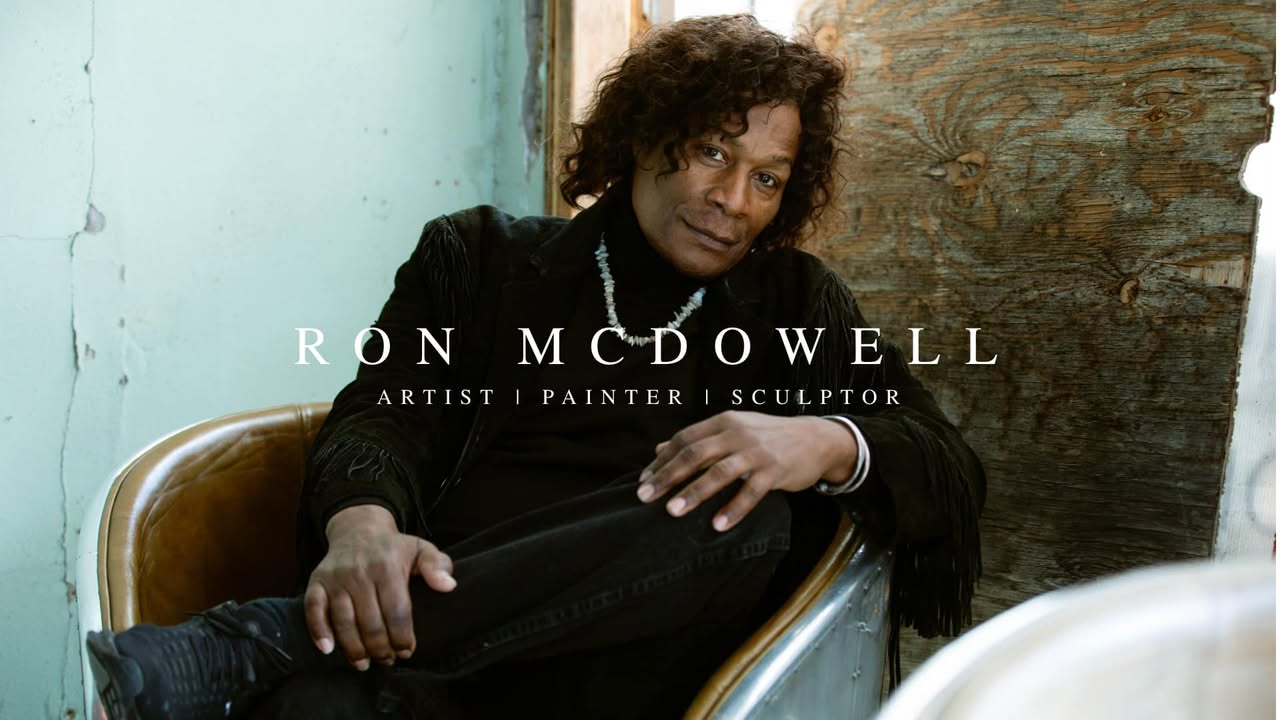

We caught up with the brilliant and insightful Ronald Scott McDowell a few weeks ago and have shared our conversation below.
Ronald Scott , appreciate you joining us today. Can you talk to us about how you learned to do what you do?
My earliest artistic influences began at home, where creativity was part of everyday life. My father and brothers each played a role in shaping my appreciation for art, encouraging me to observe, create, and trust my instincts from a young age. That early environment gave me both inspiration and confidence, laying the foundation for a lifelong commitment to his craft.
My further learning didn’t come from a single classroom or one defining moment, but more from observation, discipline, and a deep desire to understand people. I studied faces, expressions, posture, and emotion. I spent countless hours sketching, refining, and pushing myself to see beyond what was in front of me and into what was felt.
Growing up, I didn’t always have access to formal training or resources, so I relied on instinct, practice, and faith in my gift. Over time, that foundation was strengthened through real-world experiences, commissions, and the responsibility of telling important stories through my work. Each piece became part of my education.
If I’m being honest, I don’t know that I would rush the process. Every challenge, every mistake, every late night spent trying to get something just right helped shape the artist I became.
That said, access to mentorship earlier on would have made a difference. Being able to learn from established artists, to understand the business side of art, and to navigate opportunities more strategically could have accelerated certain aspects of my journey. But at the same time, learning the hard way gave me a deeper appreciation for the craft and a stronger sense of purpose.
Observation is everything. The ability to truly see people, not just their features, but their spirit, their story, their presence, is what separates a good artist from a meaningful one.
Discipline is equally important. Talent will only take you so far. You have to be willing to put in the time, to practice when no one is watching, and to hold yourself to a higher standard with every piece.
And then there’s patience. Art, especially sculpture and portrait work, cannot be rushed. You have to allow the work to reveal itself. That takes trust in the process.
Great, appreciate you sharing that with us. Before we ask you to share more of your insights, can you take a moment to introduce yourself and how you got to where you are today to our readers.
For those who may not know your work, can you tell us about yourself and your journey?
I am a visual artist, sculptor, and painter whose life’s work has been dedicated to capturing history, culture, and the human spirit through art. My journey did not begin in a traditional way. I am largely self-taught, shaped by observation, discipline, and a deep calling to create. From an early age, I found myself drawn to people, to their expressions, their stories, and the emotional weight they carried. That curiosity became the foundation of everything I do.
Growing up, I did not always have access to formal training or resources, but I had something just as important, which was the desire to learn and the willingness to put in the work. I spent years studying form, practicing constantly, and refining my ability to see beyond the surface. Over time, that commitment opened doors for me, from working within the Motown circle during its golden era, to becoming known for my Civil Rights sculptures and portrait work that now live in public spaces and institutions.
My path has allowed me to stand at the intersection of art and history, and I have always taken that responsibility seriously.
What type of work do you provide, and what problems do you solve for your clients?
At its core, my work is about preservation and legacy.
I create monumental sculptures, portrait busts, full-figure statues, and museum-quality paintings that honor individuals, movements, and moments that deserve to be remembered. Many of my clients come to me because they are looking to create something that will outlive them, something that speaks not only to the present, but to future generations.
Whether it is a Civil Rights monument in a public park, a commemorative sculpture for a university, or a portrait that captures the legacy of a leader, I help bring those visions into form. I take stories that might otherwise fade with time and give them a physical presence that people can stand in front of, reflect on, and learn from.
In many ways, I solve the problem of how to make history visible, tangible, and lasting.
What sets you apart from others in your field?
What sets me apart is not just my technique, but my connection to the work.
I have had the rare opportunity to not only study history, but to live alongside individuals who have shaped it. My relationship with Michael Jackson, as his first art instructor and a longtime friend, gave me a unique understanding of creative genius at its highest level. My time around Motown allowed me to witness and document a cultural movement from the inside.
At the same time, my work in Civil Rights art comes from a place of deep respect and lived awareness. I do not approach these subjects as distant history. I approach them as stories that are still alive and still relevant.
That combination of personal experience, historical sensitivity, and artistic discipline allows me to create work that resonates on a deeper level. It is not just about creating something that looks accurate. It is about creating something that feels true.
What are you most proud of?
I am most proud of the impact my work has had on people.
When I see someone stand in front of a sculpture like The Foot Soldier and feel something, whether it is reflection, emotion, or inspiration, that means more to me than anything else. It tells me that the work is doing what it was meant to do.
I am also proud of the role I have played, even in a small way, in shaping cultural history. From mentoring a young Michael Jackson to creating works that honor Civil Rights leaders, I have been blessed to contribute to moments that matter.
But above all, I am proud that I stayed true to my calling. That I continued to create, even when the path was not easy.
What do you want people to know about you and your work?
I want people to understand that my work is about more than art. It is about purpose.
Every piece I create carries a responsibility. It is meant to honor, to educate, and to preserve. I do not take that lightly.
For those considering working with me, I want them to know that I approach each project with care, respect, and a commitment to excellence. I am not just creating a sculpture or a portrait. I am helping to tell a story that will stand for generations.
And for those who simply experience my work, I hope it leaves them with a deeper appreciation for the people and histories that have shaped our world.
Because at the end of the day, art should not only be seen.
It should be felt.
What do you think is the goal or mission that drives your creative journey?
Yes, there is.
My mission has always been to preserve history and give it a presence people can see and feel. I believe art has the power to carry stories forward in a way that words alone sometimes cannot. Through sculpture and portraiture, I try to honor the lives, struggles, and triumphs of those who helped shape our culture, especially within the Civil Rights movement.
I am also driven by the responsibility to create work that lasts. Not just physically, but emotionally and historically. I want my pieces to stand as reminders, to educate, and to inspire reflection for generations to come.
At the same time, my work is about capturing the spirit of people. Not just how they looked, but who they were. Their strength, their humanity, their impact. That is what I strive to bring into every piece I create.
If I can leave behind work that continues to speak, continues to teach, and continues to honor those who came before us, then I know I have done what I was called to do.
In your view, what can society to do to best support artists, creatives and a thriving creative ecosystem?
I believe it starts with understanding that art is not a luxury, it is a necessity. It reflects who we are, where we have been, and where we are going. When society begins to value art in that way, support naturally follows.
One of the most important things we can do is invest in the arts early. Give young people access to creative programs, mentorship, and opportunities to explore their gifts. Not every artist has the resources or exposure starting out, and that gap can prevent talent from ever being realized.
We also have to create more spaces for artists to live, work, and be seen. That means supporting public art, funding cultural institutions, and making sure artists are included in conversations about community development. Art should not be an afterthought, it should be part of the foundation.
Another key piece is respect for the work itself. Artists should be fairly compensated and recognized for the value they bring. Too often, creative work is undervalued, even though it shapes culture in powerful ways.
And finally, I think it is important to support artists not just when they are established, but while they are still growing. Attend their shows, share their work, invest in their vision. A thriving creative ecosystem is built when communities take ownership in uplifting the artists within them.
When we support artists, we are really supporting our own stories, our own history, and our collective future.
Contact Info:
- Website: https://www.ronaldmcdowellart.com/
- Instagram: https://www.instagram.com/mcdowellgallery/
- Facebook: https://www.facebook.com/RonyinLlc/