



We caught up with the brilliant and insightful Ron Proctor a few weeks ago and have shared our conversation below.
Ron, looking forward to hearing all of your stories today. We’d love to hear about the things you feel your parents did right and how those things have impacted your career and life.
I am the oldest of three and I am very fortunate to have been raised by people who show resilience, demonstrate a strong work ethic and care for their family and community. I think of my parents’ examples in these areas as I make my way through life.
My parents were in high school when they started our family in the late 1970’s and I was an “oops.” While their parents had means and resources, my parents asked only for opportunities to work. They worked hard to feed our family and develop our position. My earliest memories include flashes of my Mom and her parents, managing the family’s grocery store in Ogden, Utah; visiting neighbors; and feeding the ducks and seagulls at the college duck pond–a school now known as Weber State University, my alma mater.
My Dad got into the glass trade, he worked hard and eventually purchased a share of the business when the opportunity came. I was very young at the time, but I remember the excited announcement and some of the overheard discussion: It was a good opportunity, but it was clear that Mom and Dad would need to give it their all to make sure the business was successful. In the late 1980’s they moved our family to a beautiful home in the Northern Utah mountains. I grew up with the privilege of exploring a forest in my own backyard.
My parents did their best to make sure I had access to the things I needed to follow my interests and develop my skills. Our first family computer was brought home in the mid-1990’s, while I was in high school: it was a 486 DX, with 16 megs of RAM. They tolerated me playing Doom on it, but they also provided Corel Draw 3 and I discovered that digital graphics is my thing.
I think the most impressive thing is that they’ve stayed together all these years. They are not perfect people. There were times when they’d struggle with communication, have arguments and make mistakes, but in overcoming their differences and learning to work together they taught us responsibility and the way to forgiveness while demonstrating unbreakable unity for nearly fifty years.
So yeah: They’re doing something right!
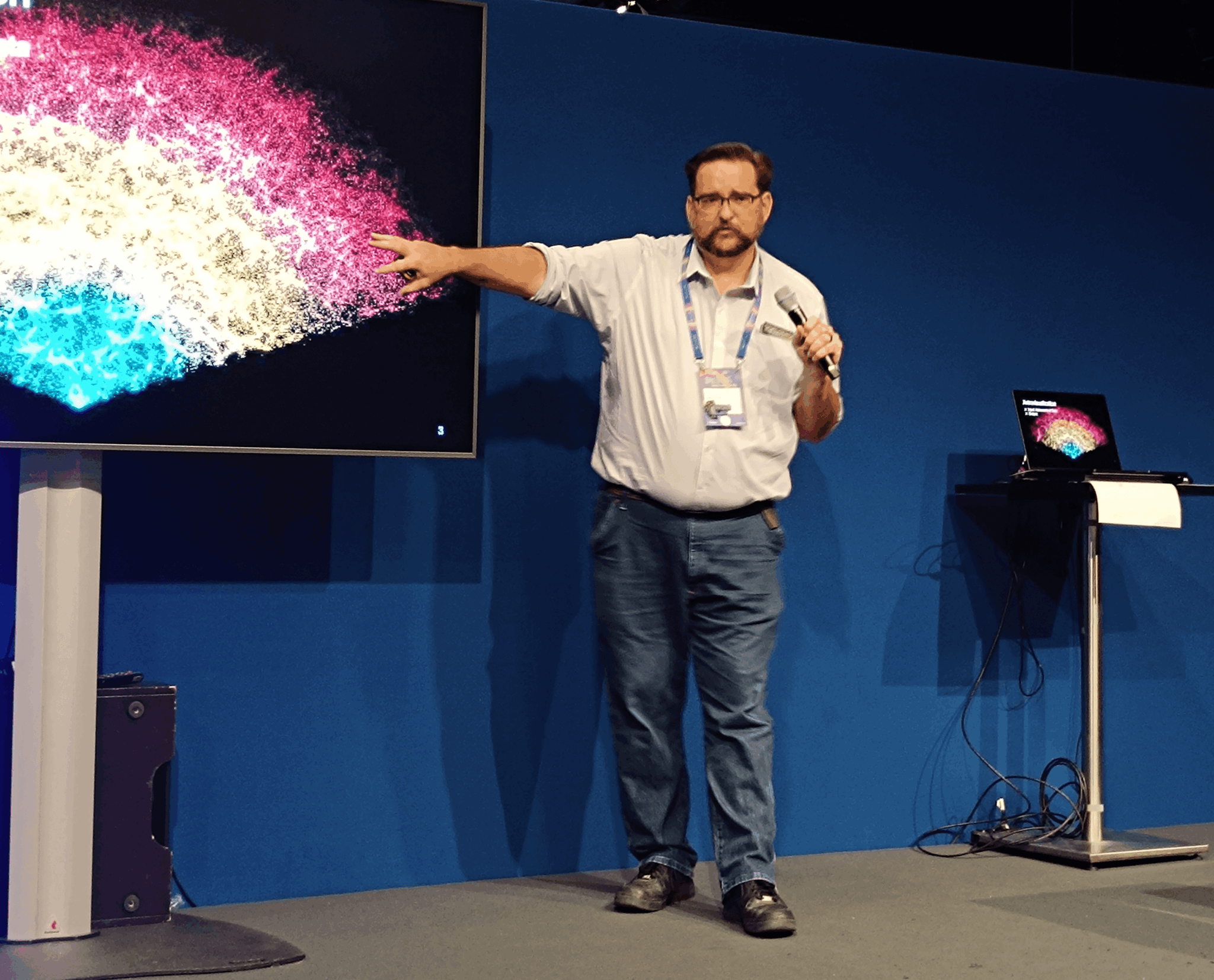
Ron, before we move on to more of these sorts of questions, can you take some time to bring our readers up to speed on you and what you do?
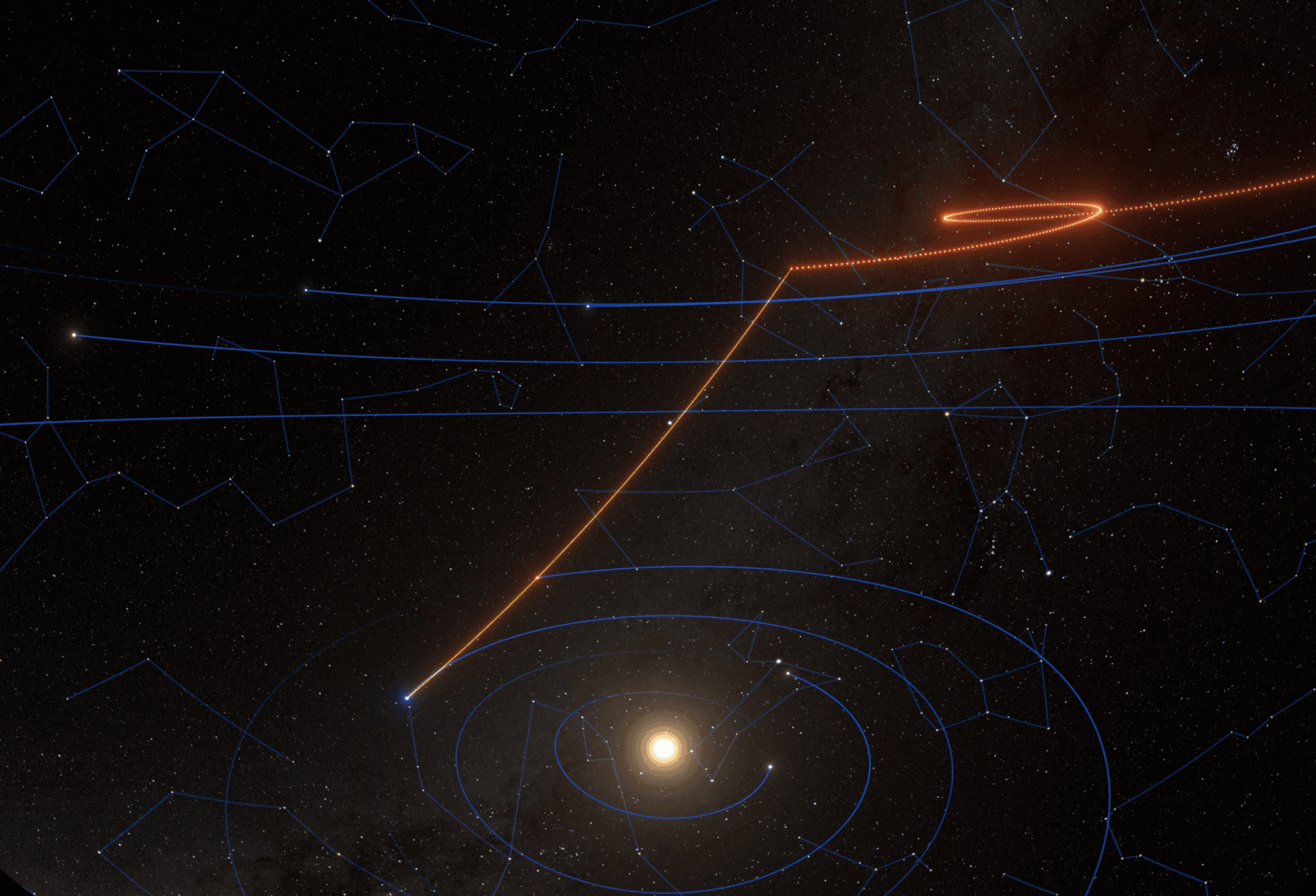
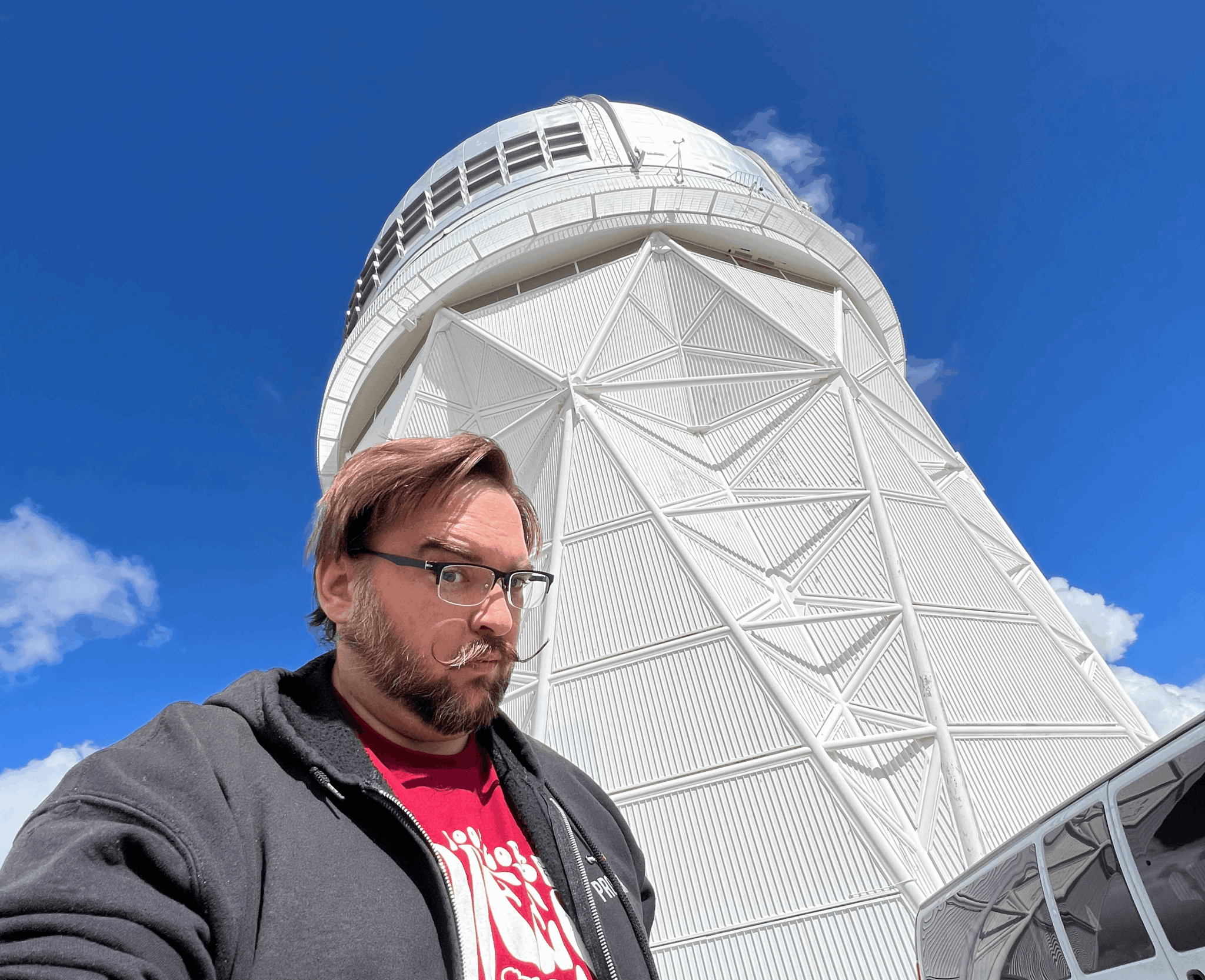
I don’t represent my employer in this interview, but I’m excited to tell you that my day job comes with a night shift: I work with NSF NOIRLab and Kitt Peak National Observatory as a motion graphics designer. My main job is to turn science into art and educational material for the public. I make artist concept illustrations and animations for scientific news releases, along with fulldome planetarium shows and VR content, but I am also helping with the re-development of the McMath-Pierce Solar telescope into an exhibit space. Our Science on a Sphere exhibit is already up and running and we’ll have new exhibits installed in the building soon.
My family and I also operate Proctor Creative on the side: We make planetarium content, art, music and I teach 3D animation with Blender. My family, students and I have also made over 200 cigar box guitars–a hobby I picked up in 2016.
How about pivoting – can you share the story of a time you’ve had to pivot?
My planetarium career began at Weber State University’s Ott Planetarium: Astronomy had been a life-long curiosity; but my Astronomy and Physics professors helped to turn my curiosity into a passion, all while inspiring me to do math in ways that my K-12 education had not. In 2003, I was hired as a student planetarium lecturer. In 2006, a NASA grant enabled me to go full-time as the planetarium’s Production Coordinator. We produced several planetarium shows, including one that won an award from NASA. In 2008 I was becoming known as an expert in using Blender for fulldome planetarium show production. I took advantage of the univerity employee tuition benefit and slowly worked my way through a Bachelor’s of Integrated Studies (BIS), combining studies in Physics, Communication, and Telecommunications; and later a Master’s of Education in curriculum and instruction.
Funding ran low in late 2013 and I separated from Weber State University, but I was picked up by Salt Lake County’s Clark Planetarium in early 2014 and that was a bit of a pivot: It was a much larger planetarium and a unit of the County’s Community Services Division, which required some workplace culture adjustment. While I was there, we created three feature planetarium shows and several innovative interactive exhibits that play like arcade games. I had a lot of fun creating immersive experiences with a great team, but I began developing a brain condition in early 2019 and I lost my job as Clark Planetarium re-organized in late 2019. I had trouble finding a new job in my industry and that led to the biggest pivot of my life.
In January 2020, I started teaching ninth grade Computer Science at Mound Fort Junior High School in my hometown. I joke that 2020 was “the perfect time to start a teaching career,” but to be honest, I was terrified–excited to have a union job, but terrified. The Fort serves Ogden’s inner-city neighborhoods. Students would often arrive in my classroom with something serious on their minds that distracted from learning. Often this looks like sleeping, low-engagement, or unwanted behavior, but it can sometimes get intimidating: Including heated arguments and even a few fights. I had an education degree, but I never actually planned on teaching children in a classroom, yet there I was: experiencing the most massive pivot of my life, all while learning to manage a classroom and my new condition.
Later, my teaching career took me to Texas, where I taught film, photography and animation. I also coached an award-winning DECA chapter and I joined the Odd Fellows Lodge in Waxahachie. I had the privilege of working with my mentor, Chris Miller, Director of the Pogue Planetarium. Chris has done so much for me personally at difficult times in my life, but he also keeps encouraging and empowering me to stay engaged in the planetarium professional community. My condition presented some tough challenges while I was in Texas, but I found improved treatment with support from my network there. I began to get better at managing my condition and then came a great pivot.
Thanks to multiple connections in the planetarium community, I was alerted to the job opening I have occupied at NSF NOIRLab since October 2023. This pivot brought my professional life back into alignment with my long-term goals. Now I am back to work making fulldome content for planetariums and creating artistic educational outreach products that communicate the latest scientific discoveries from NSF’s ground-based observatories. My job is fun and my work is meaningful, but the best part is the people I work with at NSF NOIRLab: It is a community of fiercely passionate, diverse and inclusive people who, despite their differences, come together to invent new ways to see the universe. They execute massively and I get to be part of the team!
So here I am and things are literally looking up, but it sure took a lot of pivots! I am so grateful to my family, my community, my Lodge, God and the Universe itself for placing me here and now.
In your view, what can society to do to best support artists, creatives and a thriving creative ecosystem?
I see AI technology as something that can massively help artists and creatives, but it’s up to the individual person on how they engage with it.
My students and I started monitoring research and discussing the impact of AI technology 2020. As a computer science teacher, I enjoyed sharing the latest research, often presented by Two Minute Papers, SIGGRAPH and other channels on YouTube. We would watch, pause and discuss videos about early AI image generation, audiovisual synthesis and large language models, like the one that gave rise to ChatGPT. Needless to say: My students were horrified at the vision of the AI-augmented future, some of which is unfolding now.
I asked my students to pause and think about the situation. We agreed that, like the industrial revolution, big changes are happening with technology that will affect the way we work. That means we have some decisions to make in our local, state, and national communities about how we want to handle these big changes. I advised my students to stay engaged in local politics, to be educated on the issues that affect them and to vote for the best interests of their families and communities.
I advised students to engage with AI because it was about to be an immediately marketable skill. I encouraged them to get familiar with the use and capabilities of AI tools and to think of ways AI might be used to make work easier. This generated a lot of ideas and sometimes led to discussions questioning the idea of “full time work.” There were also some debates over how to handle AI as a society and what questions we should be voting on. It was some smart discussion from the Gen-Z crowd and I pray that they stay politically engaged.
So I think that one of the best things we can do as a society to support creatives is to do what my students are doing: We need to take AI seriously from a policy perspective and we need to seek ways to leverage AI to make the business of independent art easier.
Contact Info:
- Website: https://proctorcreative.com/
- Instagram: https://www.instagram.com/mrproctorshow/
- Facebook: https://www.facebook.com/ron.proctor.545
- Linkedin: https://www.linkedin.com/in/proctorcreative/
- Youtube: https://www.youtube.com/c/RonProctorProfile
- Other: NSF NOIRLab:
https://noirlab.eduKitt Peak National Observatory:
https://kpno.noirlab.edu
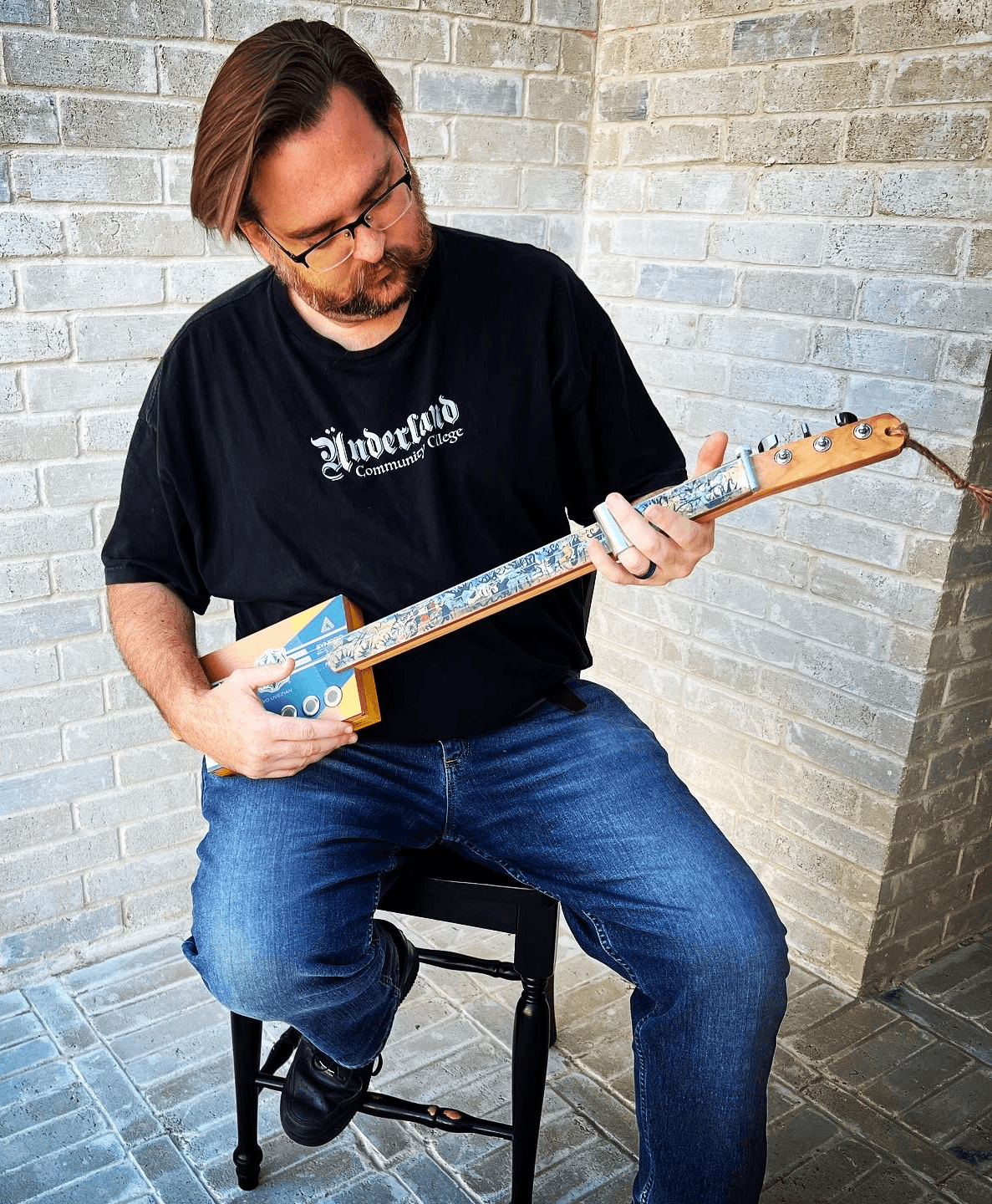
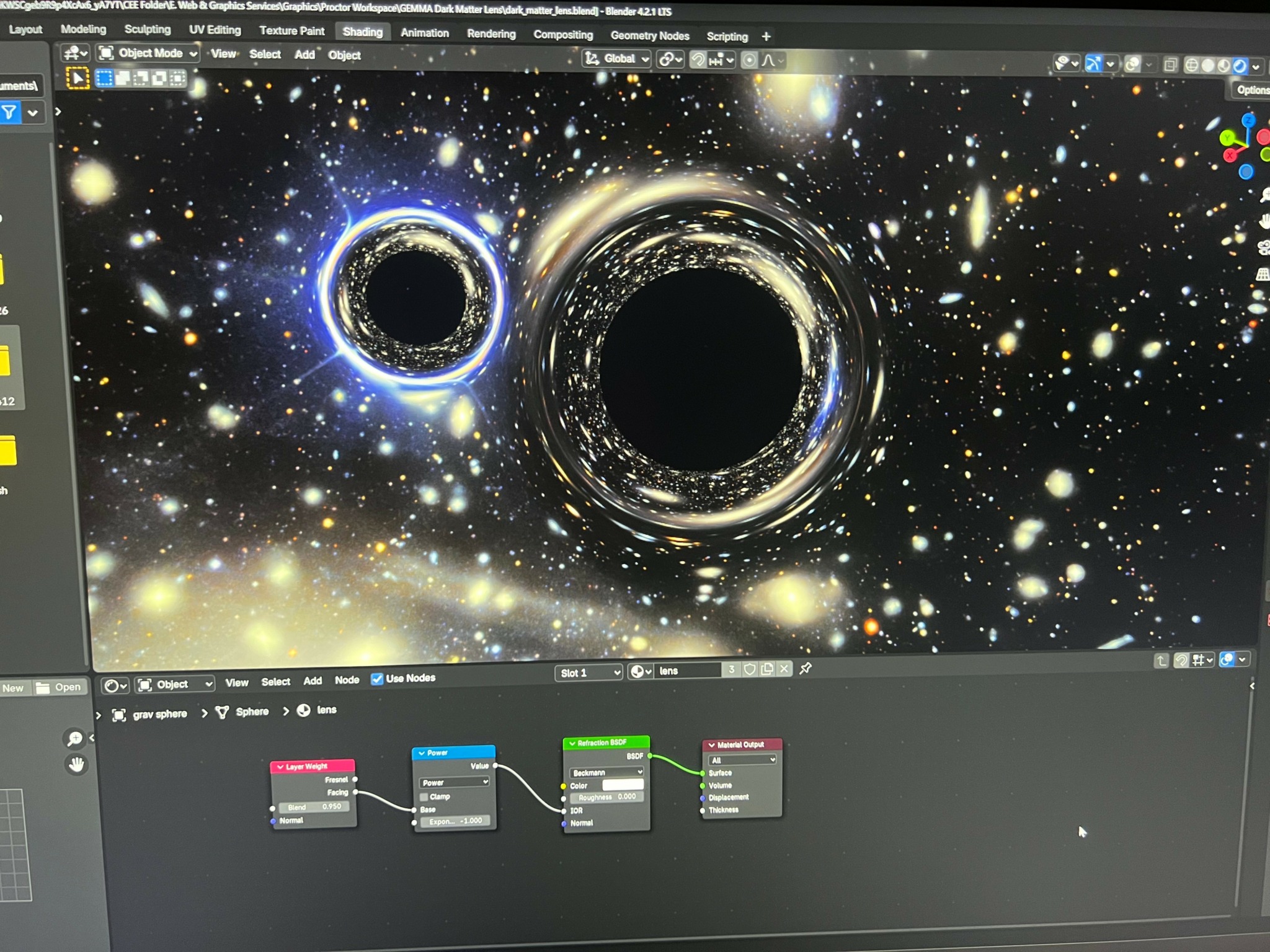
Image Credits
NSF NOIRLab, T. Matsopoulos, R. Proctor