

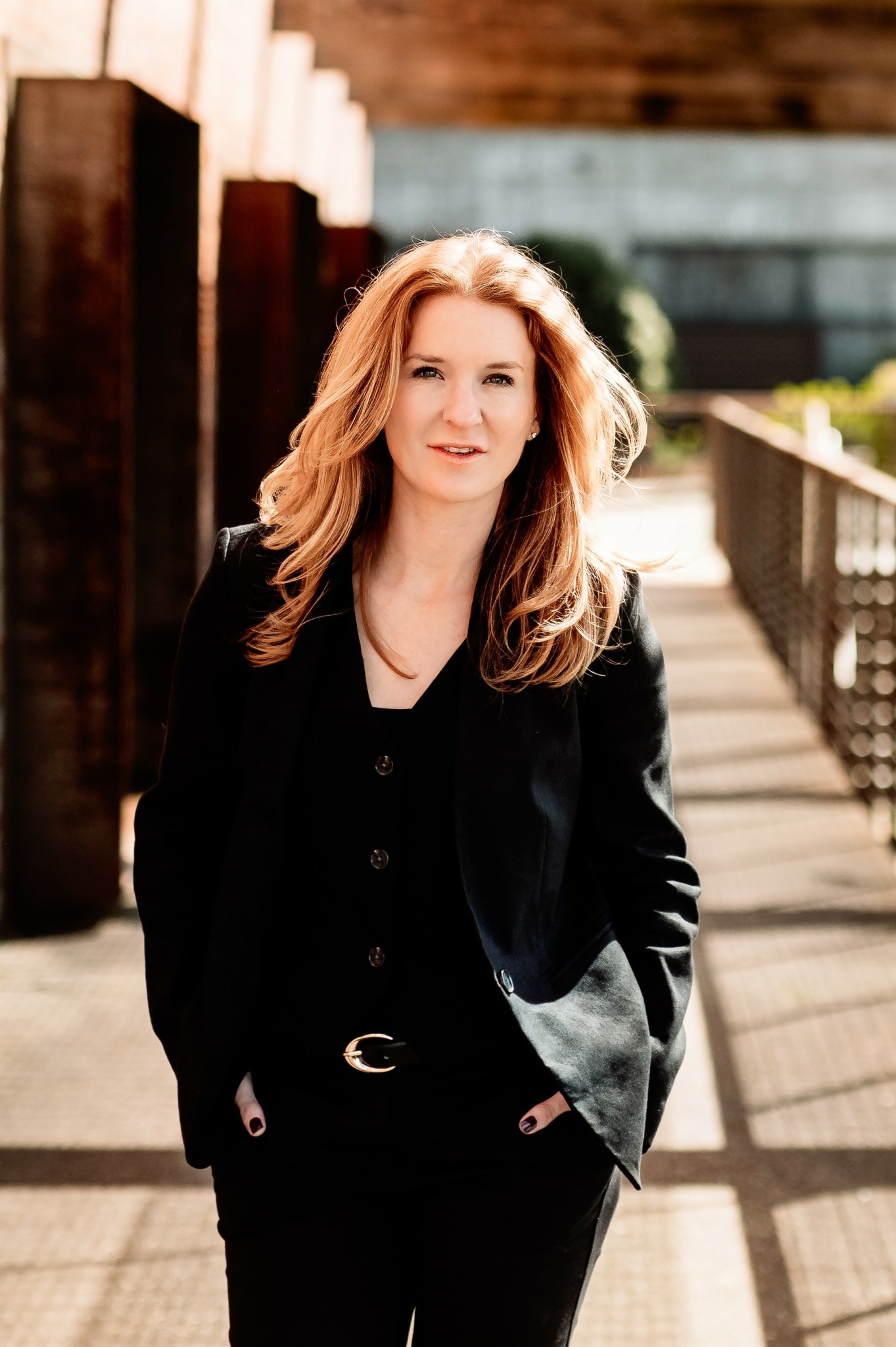

Alright – so today we’ve got the honor of introducing you to Rebecca Kase. We think you’ll enjoy our conversation, we’ve shared it below.
Rebecca, looking forward to hearing all of your stories today. Owning a business isn’t always glamorous and so most business owners we’ve connected with have shared that on tough days they sometimes wonder what it would have been like to have just had a regular job instead of all the responsibility of running a business. Have you ever felt that way?
Am I happy as a business owner? Most days, yes.
Do I sometimes wonder what it would be like to have a “regular” job? Also, yes… but that happens almost always in moments of stress or exhaustion.
Like any role, entrepreneurship comes with its own mix of meaning and pressure. There are things about this work that are uniquely fulfilling, and things that are uniquely hard.
As the founder of a values-driven trauma-training company for therapists, I am deeply tied to purpose. We exist to ease suffering and support healers. In a world that often feels chaotic and overwhelming, my company gives me a place to return to hope. It gives me a way to translate concern and compassion into action. When things feel bleak, my work reminds me that I’m not powerless. I can build something that makes a real difference.
I’m also a natural leader. I feel most alive when I’m building, mentoring, and guiding a team toward something meaningful. In that sense, I’m very much in my element. That’s why I’m happy most days: this role aligns with who I am and what I value.
The moments when I fantasize about a “normal” job usually show up when things are as intense as they can be during periods of financial pressure, team conflict, or HR issues. When I’m losing sleep and stressed out due to business worries, yes, I daydream of running away to work in a garden shop. In those moments, it’s tempting to imagine a simpler life where someone else carries the responsibility.
But through my work in neuroscience and trauma therapy, I’ve learned to recognize that thought for what it often is: a stress response. When your system is overloaded, “escape” starts to look very attractive. It’s a form of psychological flight. I don’t judge myself for it. Instead, I notice the response as a stress response and dig deeper into coping and remind myself that this is a temporary moment and I can do hard things.
Being a sustainable entrepreneur requires building real capacity for uncertainty, risk, and emotional load. It’s scary when revenue slows and cash is tight. Making decisions that affect other people’s lives is high pressure. But it’s also incredibly rewarding to invest yourself fully in something and watch it grow, serve, and evolve.
I don’t stay in business ownership because it’s easy. I stay because it’s meaningful. Because it challenges me to grow. And because it allows me to lead in a way that’s aligned with my values and my nervous system.
For me, success isn’t about avoiding stress. It’s about learning how to meet it with awareness, integrity, and resilience.
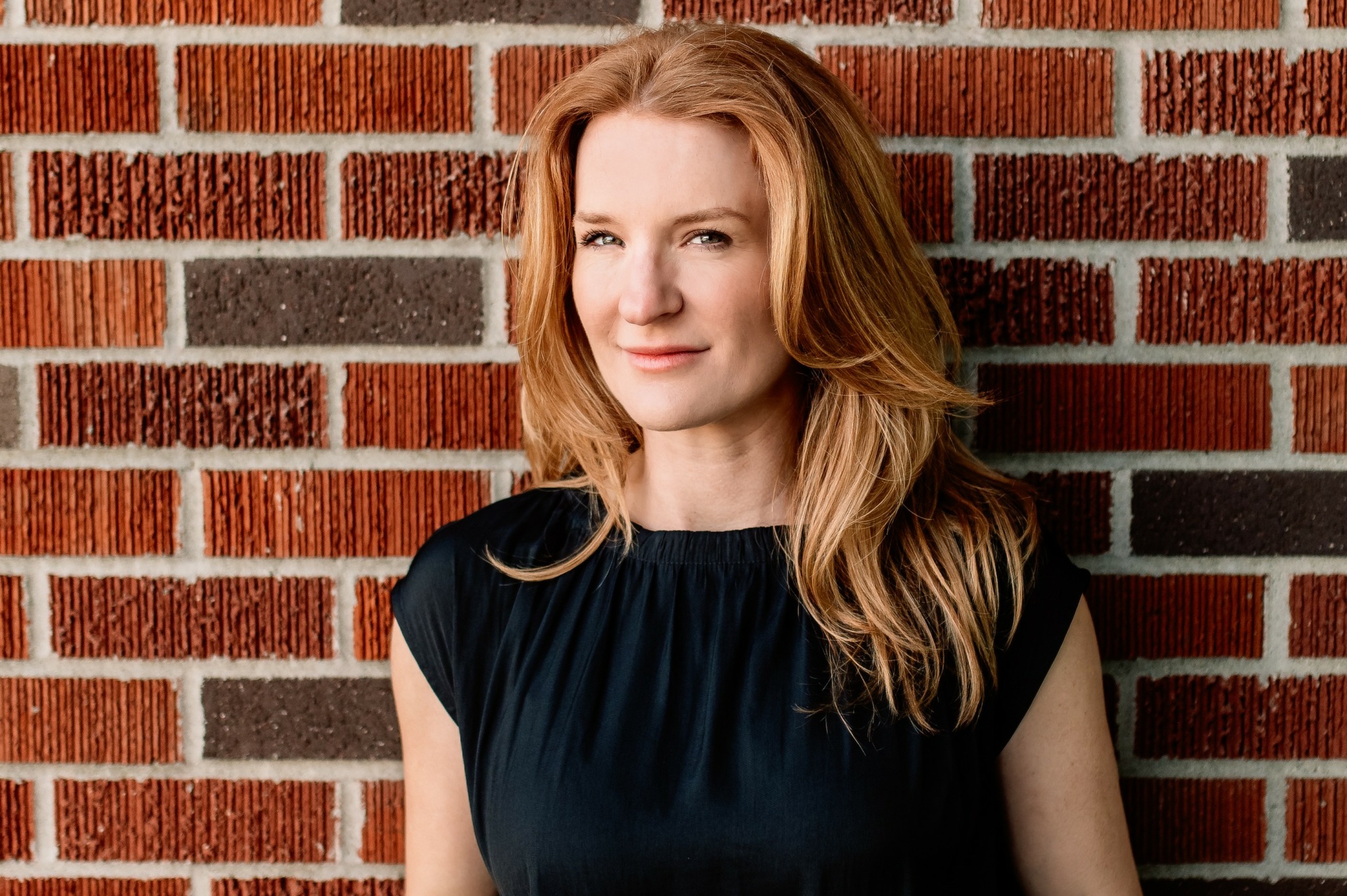
Awesome – so before we get into the rest of our questions, can you briefly introduce yourself to our readers.
I’m a licensed clinical social worker, trauma therapist, educator, author, and the founder and CEO of The Trauma Therapist Institute, a global training company that provides high-quality, neuroscience-informed education for mental health professionals.
What many people don’t realize is that I’ve been teaching almost as long as I’ve been practicing.
I graduated with my MSW in 2007, and while I was still in graduate school, I began leading professional training workshops through an internship at a rape crisis center. I facilitated vicarious trauma trainings as an intern and was hired as a contractor after graduation to continue that work. Looking back now, I sometimes think, “Wow—I’ve been a trainer for nearly 20 years,” and that still amazes me.
From the very beginning of my career, I’ve always walked two paths in parallel: direct clinical work and education.
I’ve worked in community mental health, hospitals, assisted living facilities, domestic violence shelters, homeless shelters, and rape crisis centers. I’ve served as a frontline clinician, supervisor, director, and manager. I’ve worked in private practice independently and within group practices. Alongside all of that, I taught—whether as an adjunct professor in the MSW program at the University of Denver, a clinical trainer at mental health centers, or a workshop facilitator. Teaching was never something I “added on.” It was always part of who I was professionally.
The Trauma Therapist Institute didn’t begin as a company with a large business plan. It began as a small training and consulting practice during a period of profound professional burnout.
At the time, I was working in community mental health, overseeing a large team of EMDR clinicians, and navigating systems marked by organizational chaos and weak leadership. I was deeply committed to my clients and staff, but I was exhausted. I didn’t have the energy to build a private practice from scratch, and I wasn’t sure what my next step should be.
Instead of making a reactive decision, I slowed down and listened—to my intuition, to what energized me, and to where I felt most aligned.
I had been involved in EMDR trainings for about 5 years at that time with other agencies and groups. A colleague and EMDR trainer informed me she was retiring, and offered to sell me her EMDR training materials. It was such an incredible and unexpected opportunity and a moment that I felt the universe was saying “this way now”. I went on to completely rebuild, expand, and modernize the curriculum, align it with neuroscience and my clinical approach, and develop our own systems, standards, and culture. But that opportunity gave me a springboard and was the birth of what is now Trauma Therapist Institute.
I began offering small, in-person EMDR trainings in Denver while continuing to see clients and run consultation groups. At first, I viewed this as a side project. I had no intention of building a large company. I planned to run a few small trainings each year and focus on creating a high-quality, supportive environment.
From the beginning, my priority was psychological safety in an academic setting. I wanted clinicians to feel safe to ask questions, make mistakes, and grow without shame. I showed up authentically and embodied the nervous system principles I was teaching. I focused on creating what I now call “Shame Free Space for Learning©.” That ethos became the foundation of everything.
As clinicians experienced these supportive learning environments, word spread. Trainings sold out. Waitlists formed. I expanded my faculty team, then built an administrative infrastructure to support the growing demand.
The company grew not because I set aggressive revenue targets, but because I stayed focused on serving students well.
Over time, I rewrote and redesigned every aspect of our programs, created new curricula, built a national training faculty, and developed what is now a fully original, values-driven organization.
Today, The Trauma Therapist Institute is a multi-seven-figure company serving clinicians worldwide. We offer comprehensive training in EMDR, trauma treatment, consultation, and professional development, while prioritizing community, inclusion, and sustainability.
Alongside TTI, I’ve built a personal brand focused on neuro-informed leadership and entrepreneurship—bridging clinical neuroscience with real-world leadership and personal growth.
What sets my work apart is that it’s grounded in lived experience.
I’ve been in the therapy room on both sides of the couch. I’ve personally survived multiple traumas, PTSD, depression, addiction, suicidal thoughts, and family mental illness. I’ve worked in under-resourced systems. I’ve managed teams. I’ve experienced burnout. I’ve rebuilt myself, eams, and programs. I understand both the clinical and organizational realities of this field, along with the personal and professional lens.
What I’m most proud of is the community we’ve created, which are spaces where professionals feel safe, supported, and challenged to grow without sacrificing their wellbeing. Helping professionals means my business helps touch thousands and thousands of people’s lives through the work those professionals deliver to their communities. And that feels like a meaningful difference to be a part of.
I’m also proud that we’ve demonstrated it’s possible to build a mission-driven company that is both financially strong and values-based. I reject the idea that meaningful work requires martyrdom.
What I want people to know about my work is this:
I’m not interested in shortcuts, hype, or surface-level inspiration. I’m committed to helping people understand themselves—biologically, emotionally, and relationally—so they can build sustainable careers and lives.
Everything I build starts there.

Can you share a story from your journey that illustrates your resilience?
One of the clearest tests of my resilience came at the end of 2024.
By that point, The Trauma Therapist Institute had grown quickly, and our technology infrastructure simply couldn’t keep up. Our website was timing out for visitors, which damaged our search visibility, disrupted our digital advertising, and frustrated customers. At the same time, customer service demands were skyrocketing. As traffic dropped, revenue declined, and we found ourselves in a precarious position.
It was one of those moments where multiple systems fail at once.
We realized that small fixes weren’t going to solve the problem. We needed to rebuild our entire digital ecosystem—our website, our learning management system, and our backend infrastructure. At the same time, we were in the middle of a planned brand rebrand.
So in the span of about six weeks, we took on what should have been a six-month project: a full rebrand, a new website, and a complete course migration to a new platform.
A small core team and I led the effort. We worked long hours, learned new systems on the fly, and problem-solved in real time. I was working seventy-plus hours a week, managing major expenses, and making high-stakes decisions while watching our revenue dip below projections. We were in the red, and I felt the weight of responsibility deeply.
There were moments when I was anxious, exhausted, and honestly fantasizing about walking away.
But this is where my work in nervous system regulation became essential.
Instead of letting fear drive my decisions, I focused on staying grounded and strategic. I kept returning to the data, the long-term indicators, and the clear evidence that this investment was necessary for our future. I reminded myself and my team that short-term discomfort was the price of long-term stability.
I also stayed closely connected to my team. We communicated constantly, solved problems quickly, and made sure the people going above and beyond felt seen, supported, and appreciated. Maintaining trust and morale during that period was just as important as the technical work.
Within weeks of launching the new systems, we began to see the turnaround. Website performance improved. Customer experience stabilized. Marketing recovered. Revenue rebounded. The infrastructure we built during that crisis now supports our continued growth.
Looking back, that period fundamentally strengthened me as a leader.
It taught me that resilience isn’t about powering through at all costs. It’s about regulating yourself under pressure, making thoughtful decisions when stakes are high, and staying aligned with your values even when you’re scared.
That experience reaffirmed something I believe deeply: calm, grounded leadership is not a personality trait. It’s a skill. And it’s one you can build.

Learning and unlearning are both critical parts of growth – can you share a story of a time when you had to unlearn a lesson?
One of the most important lessons I’ve had to unlearn is the belief that being a good leader meant carrying everything myself.
Early in my career, I worked in under-resourced systems—community mental health, crisis services, shelters, and nonprofit settings—where resources were scarce and needs were endless. In those environments, the people who were praised and promoted were often the ones who could take on more, stay later, absorb stress, and keep going without complaint.
So I learned very early that being “strong” meant over-functioning.
It meant saying yes to everything. It meant fixing problems personally. It meant being the emotional container for everyone else. It meant pushing through exhaustion and telling myself that rest was optional.
For a long time, that pattern helped me succeed. It made me reliable. It made me effective. It made me a trusted leader.
But as my company grew, that approach became unsustainable.
I found myself making too many decisions, holding too much information, and unintentionally becoming a bottleneck. I was tired, reactive, and operating in chronic survival mode—while telling myself that this was just “what leadership looks like.”
The turning point came when I realized that my nervous system was setting the tone for the entire organization.
When I was dysregulated, rushed, or depleted, it rippled outward. When I was grounded, clear, and supported, everything functioned better.
That insight forced me to unlearn the idea that self-sacrifice was a virtue.
I began building systems instead of rescuing. I started delegating instead of absorbing. I learned to ask for help instead of proving I didn’t need it. I invested in my own regulation as a leadership responsibility, not a luxury.
The paradox is that letting go of over-functioning made me a better leader.
My team became stronger. Decision-making improved. Our culture became healthier. And I had more energy to focus on strategy, innovation, and long-term vision.
Now, I measure success differently.
It’s not about how much I can endure. It’s about how sustainably I can lead.
That lesson changed everything.
Contact Info:
- Website: traumatherapistinstit
ute.com; rebeccakase.com - Instagram: traumatherapistinst
itute - Facebook: traumatherapistinsti
titute - Linkedin: Trauma Therapist Institute; Rebecca Kase
- Youtube: Trauma Therapist Institute

Image Credits
Cheri Clark
Moss & Mint Photography