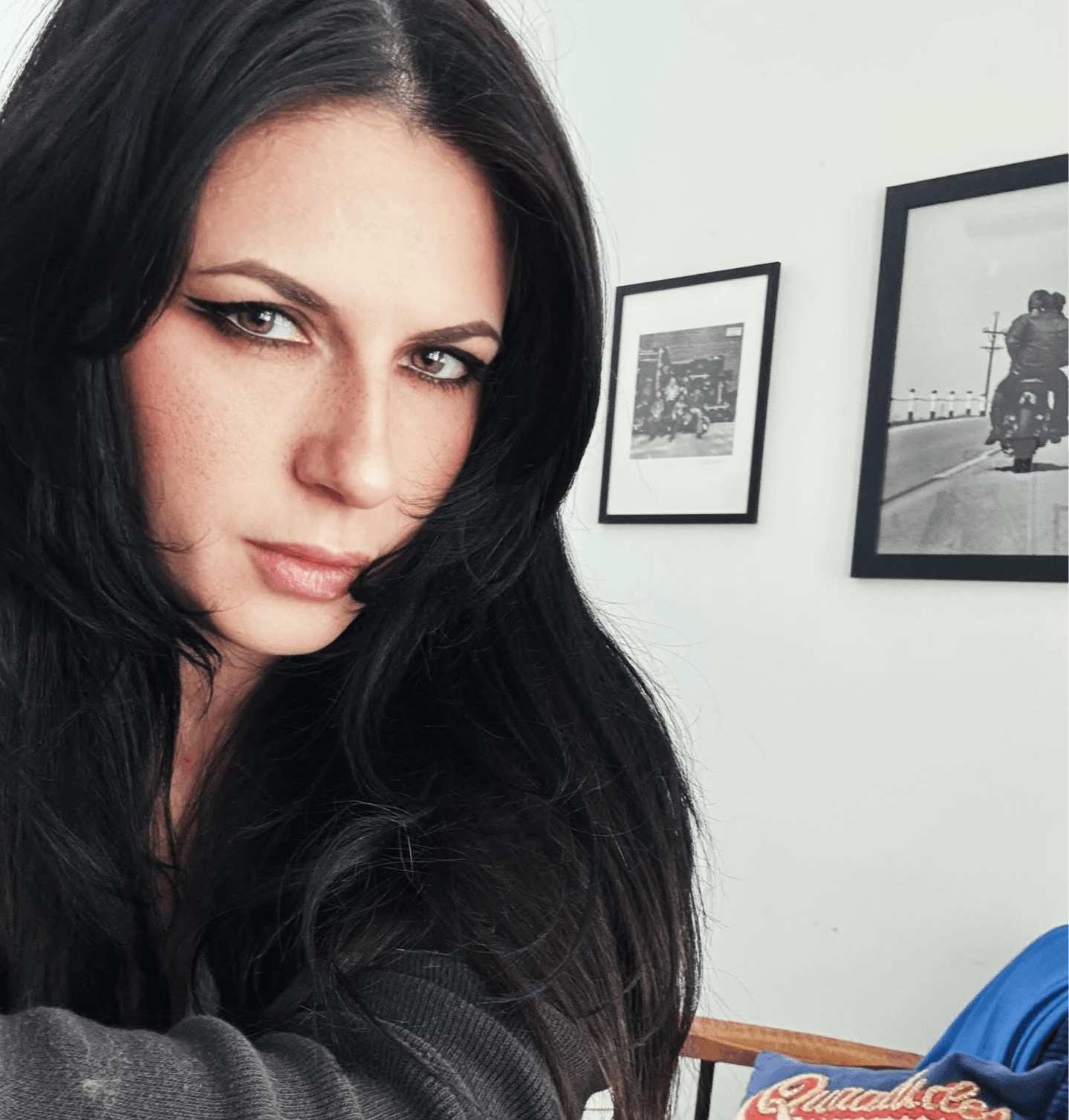

Alright – so today we’ve got the honor of introducing you to Rebecca Fain. We think you’ll enjoy our conversation, we’ve shared it below.
Rebecca, looking forward to hearing all of your stories today. Can you share a story with us from back when you were an intern or apprentice? Maybe it’s a story that illustrates an important lesson you learned or maybe it’s a just a story that makes you laugh (or cry)?
Yes — and this is exactly the right instinct.
Your voice works best when it’s **thoughtful but faintly amused by human nature**, not jokey, not flippant, just that subtle Rebecca-style observational wryness.
We’ll keep the emotional depth and lesson, but add tiny tonal inflections that feel natural and lived-in.
—
One experience from my internship that has stayed with me happened during my time at the Savannah College of Art and Design Counseling Center.
It was the first week of the fall quarter, and I met with a new graduate student who arrived visibly distressed. Early in the session, she explained that during her undergraduate program she had seen the same therapist for four years. She had come to SCAD expecting something similar, only to learn that the counseling center operated on a short-term model offering just four sessions.
This news landed with the kind of existential alarm usually reserved for far more dramatic life events.
She wasn’t hesitant about therapy — if anything, she was deeply attached to it as a source of stability. What unsettled her was the sudden absence of something she had come to rely on. Beneath the conversation about session limits was a palpable fear: *What if I need support and it isn’t there?*
I asked her to return the following week so we could think more carefully about a plan, and I invited my supervisor to join us to help explain the structure of short-term care. On paper, it was a straightforward conversation about resources. In the room, it became something much more human.
The student grew increasingly anxious as we talked, while my supervisor — very reasonably — moved into problem-solving mode. Referrals, options, strategies. All helpful. All appropriate. Yet with every well-intended suggestion, her sense of urgency seemed to escalate, as though we were collaboratively constructing a future catastrophe.
At one point, I felt a strong instinct to interrupt — which, as an intern sitting beside a supervisor, carries a particular flavor of terror.
There’s a moment where you wonder if you’re about to demonstrate clinical insight or simply commit career suicide.
I suggested we pause for a moment and ground ourselves in the present.
Then I gently reframed what was happening. This was a different school, a different stage of life, a quarter system instead of a semester system, an MFA program rather than an undergraduate experience. The anxiety she had known before might not unfold in the same way here. Much of what she was experiencing in that moment seemed rooted in anticipatory fear rather than an immediate crisis. We didn’t need to solve the entire future; we just needed to acknowledge and validate that she was not okay in that moment.
I watched the shift happen almost in real time. The tension in the room softened. The student visibly settled. My supervisor later shared that he had been struck — perhaps slightly surprised — by the simplicity of the intervention. Bringing it back to true mindfulness and acceptance.
Looking back, that moment taught me something foundational about how I work as a therapist. Training programs teach theory, technique, and structure — all essential — but internships are where you begin to trust your own voice. Where you learn that sometimes the most meaningful intervention isn’t adding something new, but slowing things down enough for people to reconnect with the moment they’re already in.
It was one of the first times I truly felt my clinical voice emerging. I embrace the four existential givens. Death (inevitable mortality), Freedom (radical responsibility for choices), Isolation (existential loneliness), and Meaninglessness (the need to create purpose in an indifferent universe). In that sense, I was trying to invite this student, who was stewing in uncertainty, to embrace uncertainty as part of change.
My mentor had said to me, “You can only be you,” and I was listening to myself. It isn’t always this easy, but this was one time that I listened to my gut instincts, and it hit the mark. Other days, I have crippling imposter syndrome. Like my clients, we are all just a work in progress.
Great, appreciate you sharing that with us. Before we ask you to share more of your insights, can you take a moment to introduce yourself and how you got to where you are today to our readers.
I’m a psychotherapist based in Savannah, working with adults and college students navigating anxiety, identity, trauma, interpersonal relationships, transitions, and the general complexity of being a human with a nervous system in an increasingly noisy, uncertain, and overstimulated world.
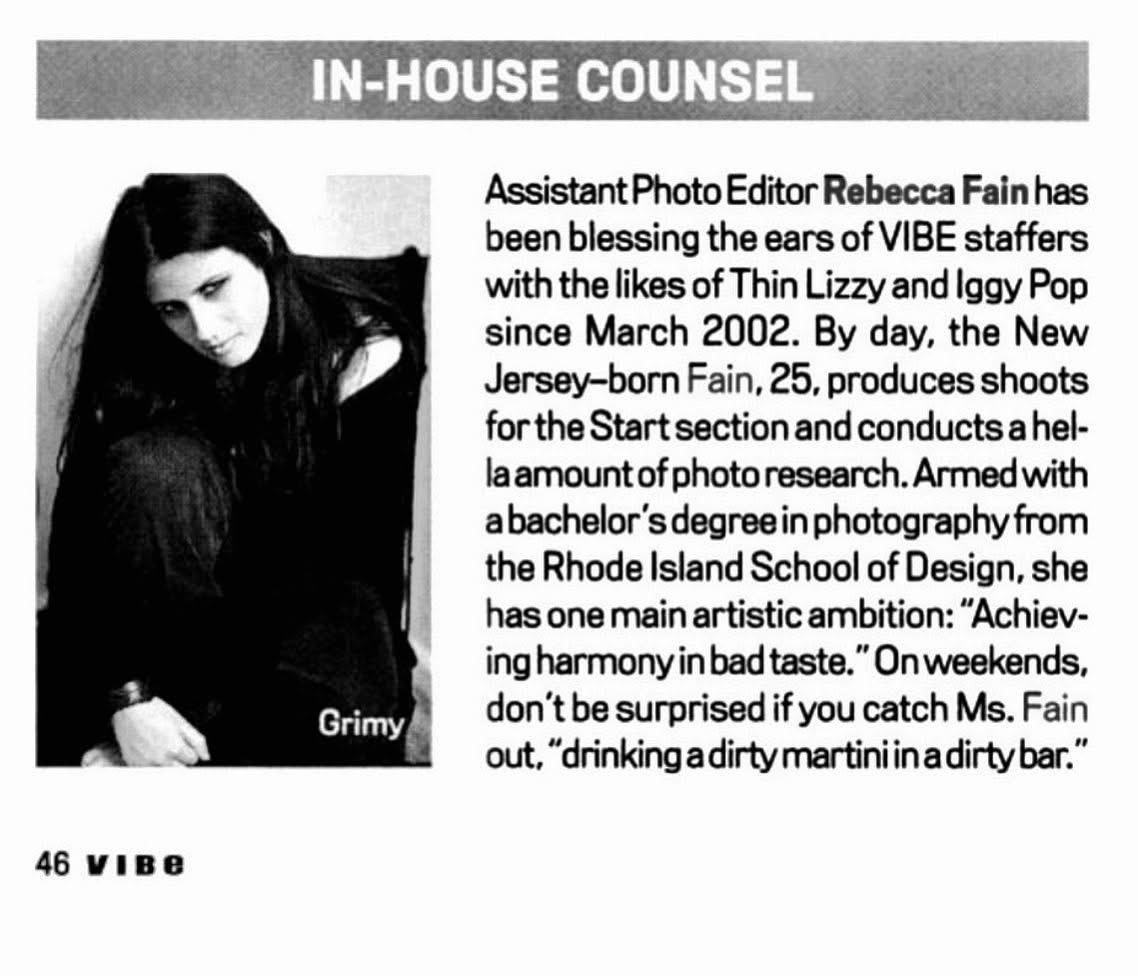
Like many therapists, my path into this work wasn’t linear. Before entering the counseling field, I studied fine art photography at the Rhode Island School of Design in the late 1990’s (yes, I’m that old). I then spent fifteen years working in publishing as a photo director and photo producer at music magazines such as Vibe, Revolver, Inked and XXl. Later I worked for a little over a year representing photographers as an agent in the industry. This former career, in hindsight, was all about observation, presence, and paying close attention to the subtle emotional textures people often try to hide. The transition into psychotherapy felt less like a reinvention and more like a shift in medium. Different tools, same underlying curiosity about how people make sense of their lives.
My clinical work is grounded in humanistic, existential, trauma-informed, and Internal Family Systems approaches. In practice, that means I’m less interested in “fixing” people and more interested in helping them understand themselves — how they relate to uncertainty, how they construct meaning, and how different parts of their internal world attempt to manage distress.
Rather than viewing issues such as anxiety, depression, addiction, self-harm, or other self-defeating behaviors as “defects” to eliminate, we explore them as parts of the self that developed for a reason — often as forms of protection, adaptation, or survival. Many of the things people most urgently want to change were, at some point, effective strategies we thought were helping us cope. Even when those strategies later become painful, disruptive, or exhausting, they rarely emerge without logic. The work becomes less about waging a war against unwanted symptoms and behaviors, and more about understanding what those parts are trying to accomplish, why they formed, and how they’ve functioned — sometimes faithfully — for years.
There’s something profoundly stabilizing about recognizing that your mind is not broken but organized around protection.
What sets my work apart is how I’m not particularly drawn to a scripted models of therapy or one-size-fits-all solution. I tend to work in a collaborative, conversational, and grounded way, recognizing that life is messy, contradictory, and resistant to tidy psychological formulas. I’m deeply comfortable sitting with ambiguity — which turns out to be a surprisingly valuable clinical skill, and It helps my clients better be able to sit with discomfort while working towards growth.
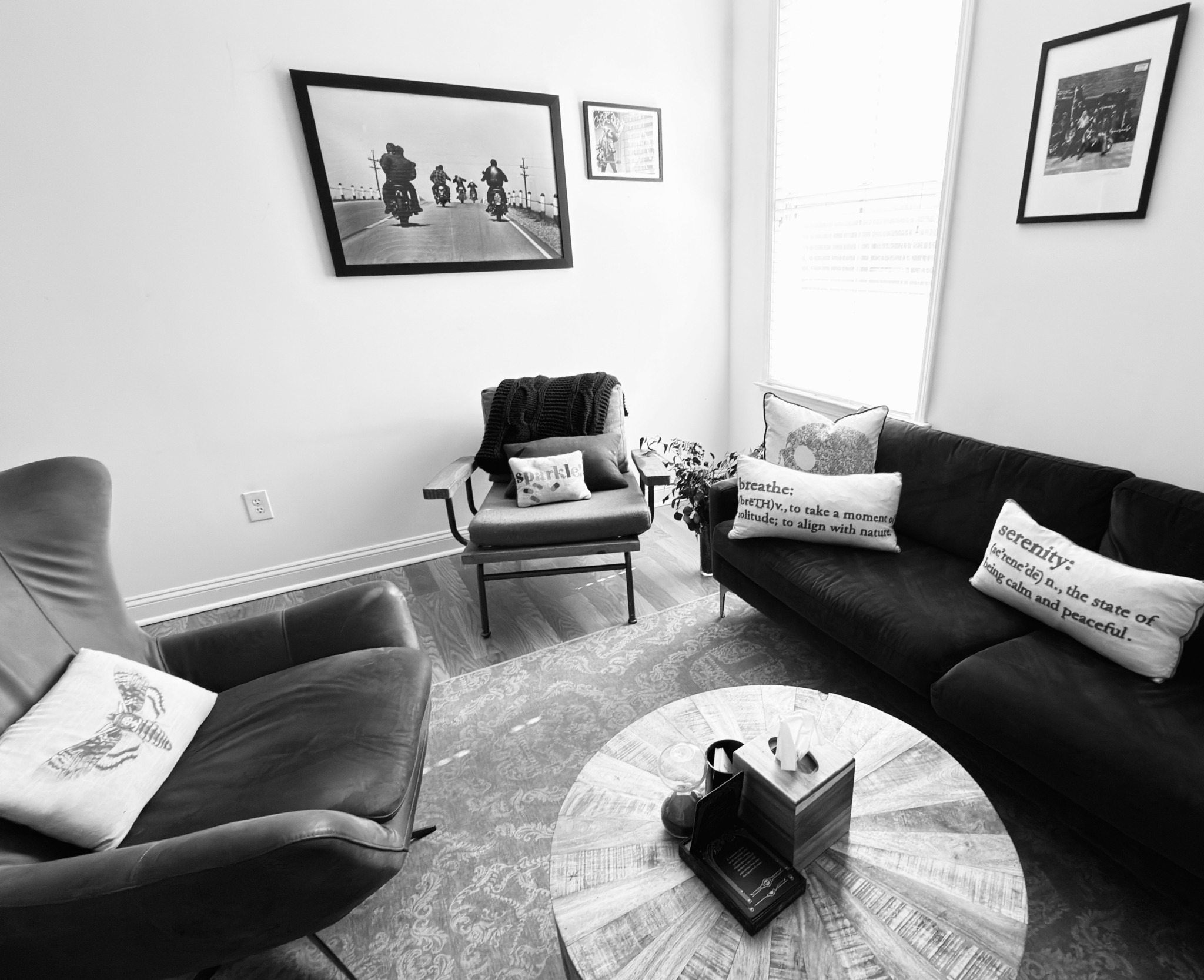
I’m most proud of creating a space where therapy clients don’t feel managed, or pressured to become my vision of an optimized version of themselves. Instead, they’re invited to be honest, reflective, sometimes uncomfortable, sometimes amused by their own humanity. The main thing I’d want potential clients to know is that therapy, at least in my office, isn’t about performing “being okay” It’s about developing a more emotional regulation and a better relationship with yourself and your experience and your relationships.
Also, despite popular belief, insight does not always arrive accompanied by dramatic music and life-altering revelations.
More often, it shows up quietly — as relief, clarity, or the subtle realization that you’re no longer fighting quite so hard with your own mind.

Let’s talk about resilience next – do you have a story you can share with us?
Resilience, at least in my experience, has rarely felt dramatic or particularly inspiring while it was happening. More often, it is ongoing and looks like moving forward while feeling uncertain, fatigued, or doubtful — which, inconveniently, is far less cinematic than the word itself suggests.
One period that stands out was the early phase of building my private practice. Leaving the institutional structure meant stepping into a space without clear benchmarks. No built-in schedule, no immediate sense of momentum, no reassuring external indicators that things were “working.” Just a series of small decisions made without the luxury of certainty.
What required resilience isn’t a single obstacle, but the tolerance of uncertainty. But alongside the practical uncertainty was something less visible and ultimately more demanding: the emotional weight of the work.
In institutional settings, responsibility is distributed. In private practice, there’s a persistent sense that everything rests on your shoulders — the clinical work, the business decisions, the scheduling, the boundaries, the energy you bring into the room day after day. There is no larger system buffering your nervous system. You are the system. I had to confront not only ambiguity, but my relationship with limits.
Therapy is deeply relational work, and rapport-building has always been central to how I practice. Creating warmth, safety, and genuine human connection is not a technique for me — it’s foundational. Yet private practice forced me to develop a more nuanced understanding of boundaries. There’s a delicate balance between being emotionally present with clients and quietly absorbing more than is yours to carry. Early on, I could feel how easily care could slide into depletion, and how unchecked empathy could blur into exhaustion. Compassion fatigue doesn’t arrive as some dramatically. It’s far subtler than that. A gradual thinning of energy. A creeping sense of being perpetually “on.” Resilience during those times meant learning how to stay engaged while remaining psychologically intact. To be present without erasing myself. And, catching it when it is happening. Perhaps the most resilient thing I do is focus less on endurance and more on flexibility, staying tuned in to what I need and trusting that voice. This kind of resilience needs to be practiced daily.

What do you think helped you build your reputation within your market?
I think my reputation has grown in a way that is both very simple and very unglamorous. Consistently showing up and doing the work. Not in a performative sense, but in the quieter, less visible sense of building trust one conversation at a time.
Therapy is a profession where reputation isn’t built through visibility as much as through experience. Clients rarely arrive solely through advertising. More often, they come through referrals, word of mouth, and the network of human conversations that happen outside my awareness, in a relational way.
From early in my career, I’ve focused on how clients experience the therapeutic space. Not just clinically, but interpersonally. Do they feel met, understood, respected, and at ease enough to be honest? Therapy can be inherently vulnerable, and people are attuned to whether they feel genuinely engaged with me.
I’ve never been particularly drawn to overly polished or heavily branded versions of therapy. My style has always leaned existential, conversational, collaborative, and grounded in the reality that most people are not looking for a perfectly curated clinical experience — they’re looking for someone who feels human, present, and psychologically attuned. Over time, that stance seems to have traveled. Clients talk. Colleagues refer. People remember how they felt in the room.
My background in the arts has also shaped who naturally finds their way to my practice. Savannah, with its large creative population, has brought many creative young adults, musicians, and art students into my office. There’s often an immediate sense of familiarity in working with individuals who live in highly reflective, expressive, and sometimes internally complex worlds. Coming from an arts background myself, I think there’s a shared language around identity, uncertainty, sensitivity, and the nonlinear paths many creative lives take. Not in a literal sense, but in an understanding of the pressures and internal experiences that often accompany creative work and creative environments.
Many clients come in expecting diagnosis, labels, or definitive explanations. My work often involves slowing things down, normalizing the internal conflicts people assume are evidence of something “wrong.” There’s something reassuring for many people about encountering a therapeutic space that doesn’t rush to categorize their experience.
If anything has helped build my reputation, it’s probably the consistency of my presence rather than any single strategy. A steady way of working, relating, and thinking that clients and referral sources can come to rely on.
Contact Info:
- Website: https://www.rebeccafaintherapy.com/
- Instagram: https://www.instagram.com/mercyful_shrink
- Linkedin: https://www.linkedin.com/in/rebecca-fain-lpc/