

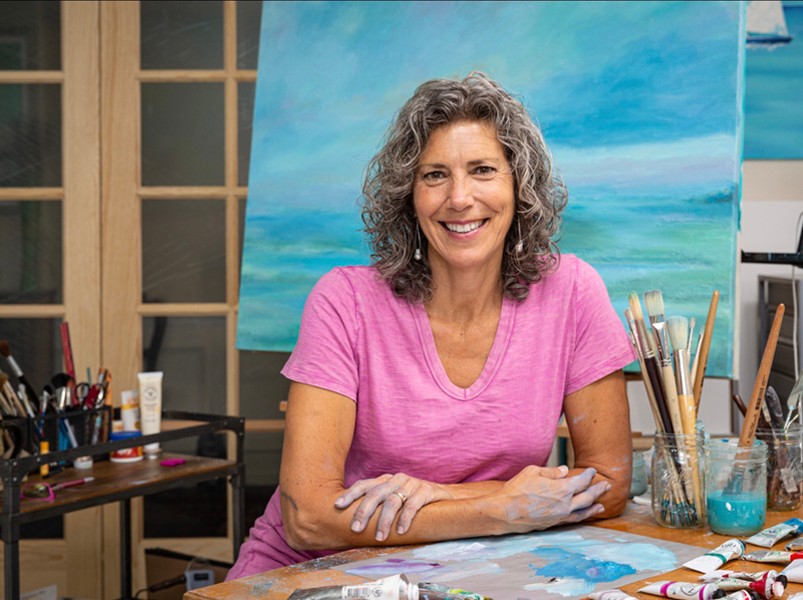

We caught up with the brilliant and insightful Rachael Newman a few weeks ago and have shared our conversation below.
Rachael , looking forward to hearing all of your stories today. We’d love to hear about when you first realized that you wanted to pursue a creative path professionally.
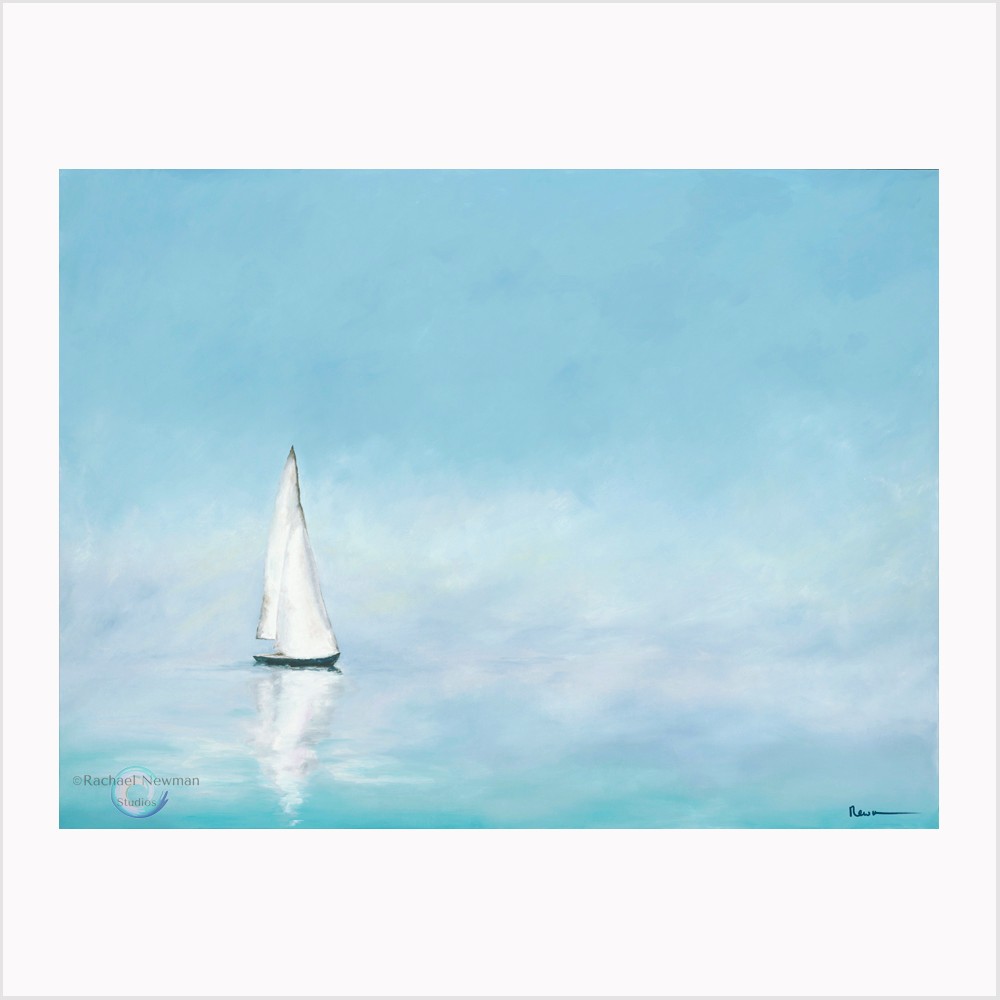
The short answer is always, but in retrospect the journey was clouded by fear. From childhood I was creative. I explored all types of arts and crafts from painting to photography to clothing design. Food turned into art at age 12 when I bought a Gourmet magazine; to this day plating was like painting with food. Snow sculptures, Halloween consumes, woodworking; everything I did fed my creativity. I taught art to kids in the summer and joined a team of youth artists through 4-H every year to paint murals at the State Fair. The tricky part came when I got older. I thought I would get an art major, but I loved biology as well. In high school I used my study halls to be an assistant in the art department and the biology department. Unfortunately, I had a fear that, as a career, I would have difficulty creating on demand. When I went to college, I studied business and fine arts. The school was uninspiring, so I explored other options. I worked in human services serving adults with developmental disabilities. This occupation cultivated my science side; I switched my major to biology. I opened a massage therapy company, but my love of art never faltered. To nurture my creative side, I also opened a part-time landscape design business. Later on a sailing sabbatical, photography took center stage. Back on land, I launched my career as a professional artist. My passion in high school art class was silver smithing, so I started as a jeweler. My career in the Juried Art Show circuit was a success, but over time the artistic element was overshadowed by the responsibilities of running a business. I needed to change. Images in my mind’s eye from sailing took form. I saw vastness, stillness, solitude and ambiguous horizon lines with mist and fog. A solitary boat or a spit of land completed the scene. I decided that I would expand my professional art career and became a painter. So, when did you know that you were going to be a professional artist? Always, but I had to go through my process of accommodating, understanding and working through my fears.
Rachael , love having you share your insights with us. Before we ask you more questions, maybe you can take a moment to introduce yourself to our readers who might have missed our earlier conversations?
I have often been told that I have vast interests, but for me it comes down to a few much simpler components: nature, water, creativity, and solitude.
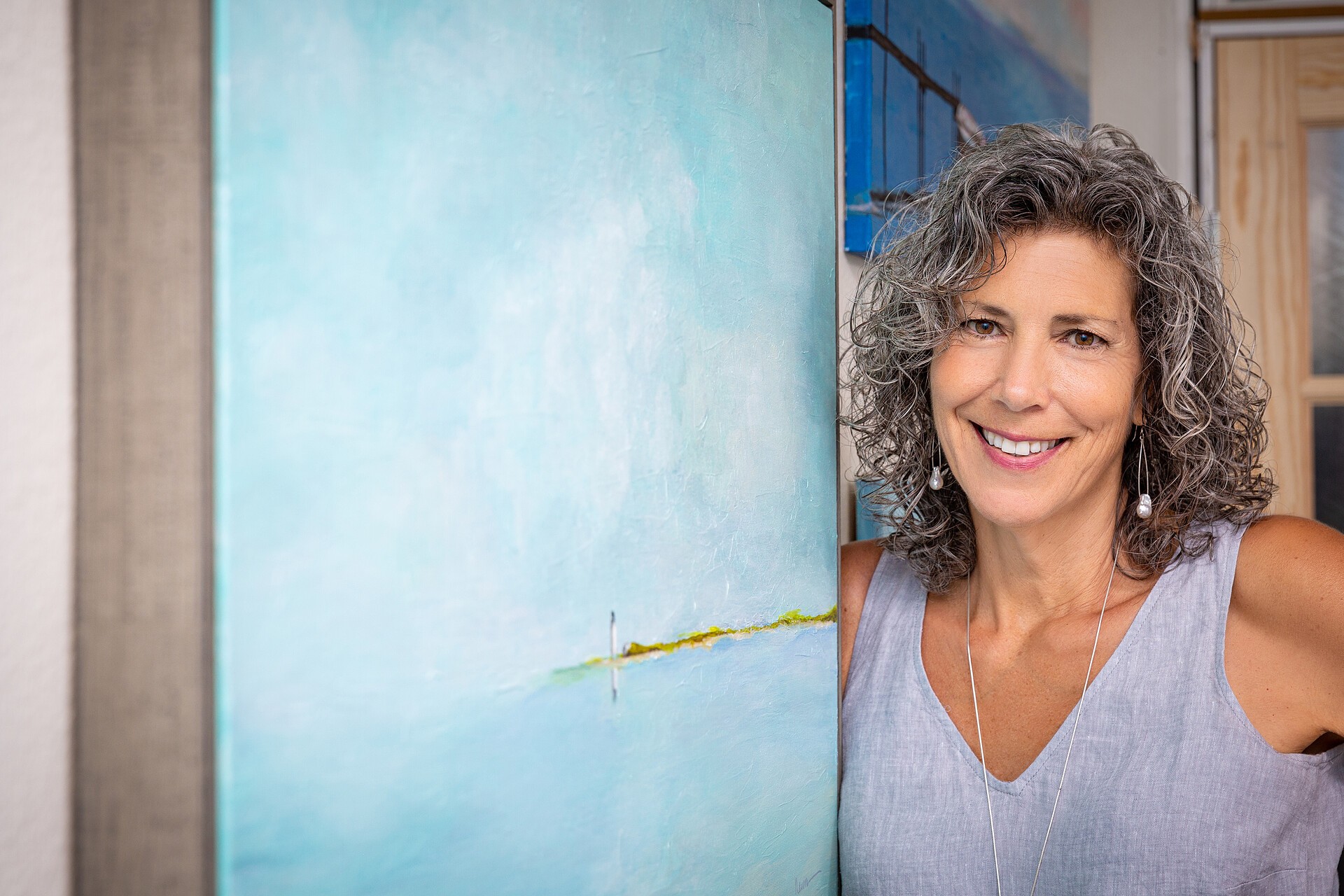
My love of what I now know as art started at the age of 8 when my dad put a camera in my hands on a backpacking trip to the Sierra Nevada Mountains. From that time, I’ve been driven by an innate sense of aesthetics, balance and shape. My childhood was an endless stream of arts & crafts projects, in high school I learned to silver-smith, in college I was a painter. As a young adult I found it difficult to trust my creative abilities enough to be a full-time artist, so my art took the form of hobby businesses such as photography, jewelry making, and clothing design. I worked in Human Services at residential group homes for adults with developmental disabilities. Years later I opened a wellness company focused on massage therapy, nutrition, healing & yoga which was balanced with my first official artistic endeavor in landscape design. I became a full-time professional artist in 2008 showing my art at Juried Art Shows around the country.
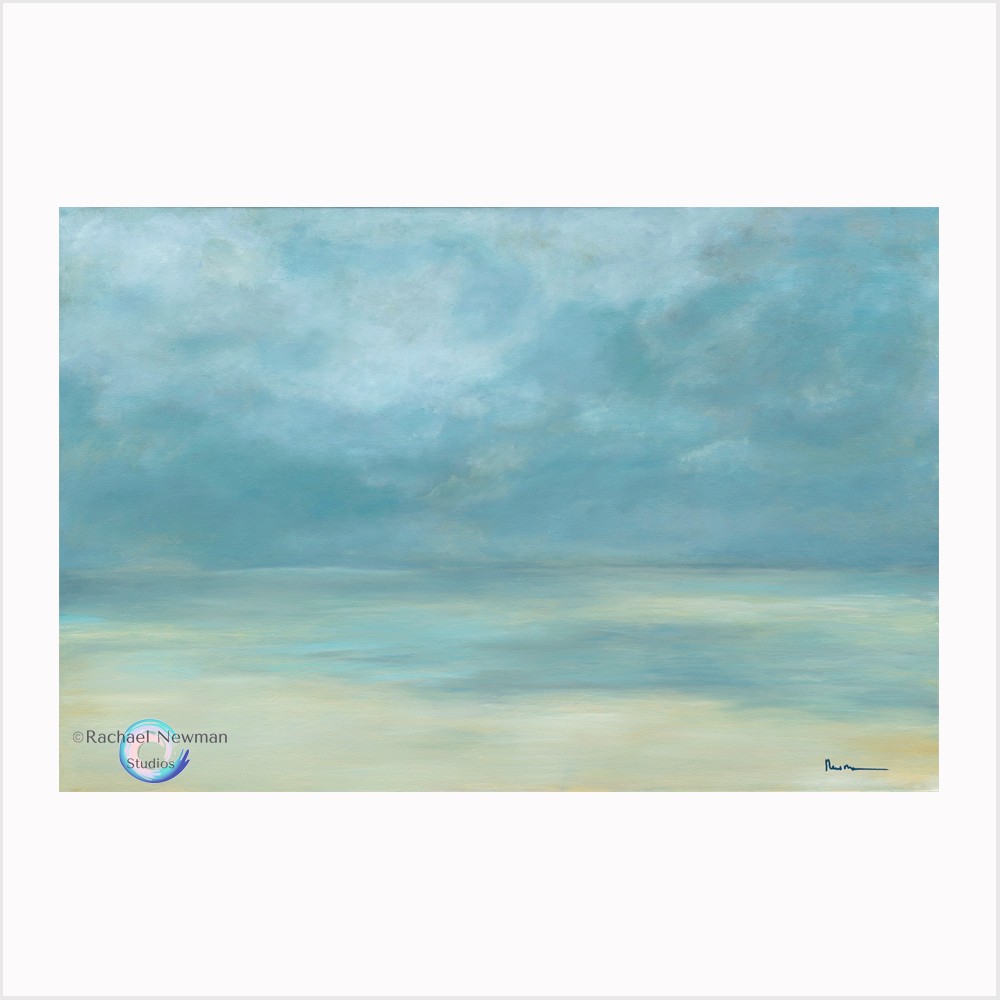
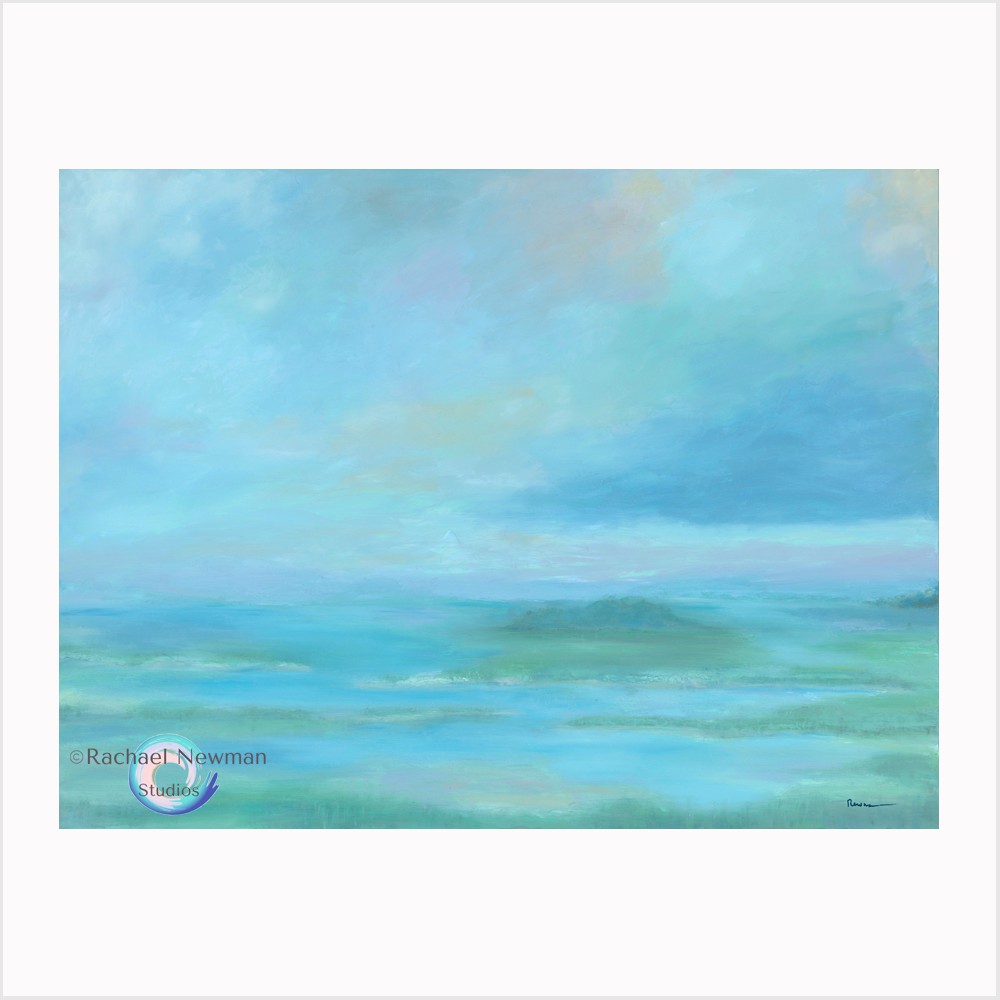
My life has always been surrounded by water. Our home in the woods overlook a pond, summers were spent canoeing, whitewater canoeing, then white-water rafting. As a college student I found blue water sailing on Lake Superior and tall ships in the Maritimes. Our current ocean cruising sailboat has been our home away from home for over 20 years. In 2007/2008 we I took an 18-month sailing sabbatical which is the primary inspiration for my ethereal seascapes. We now live in coastal South Carolina where I find myself on quiet beach walks gazing at the ever-changing sea and sky. You will no doubt see these patterns in the serenity of my atmospheric paintings.
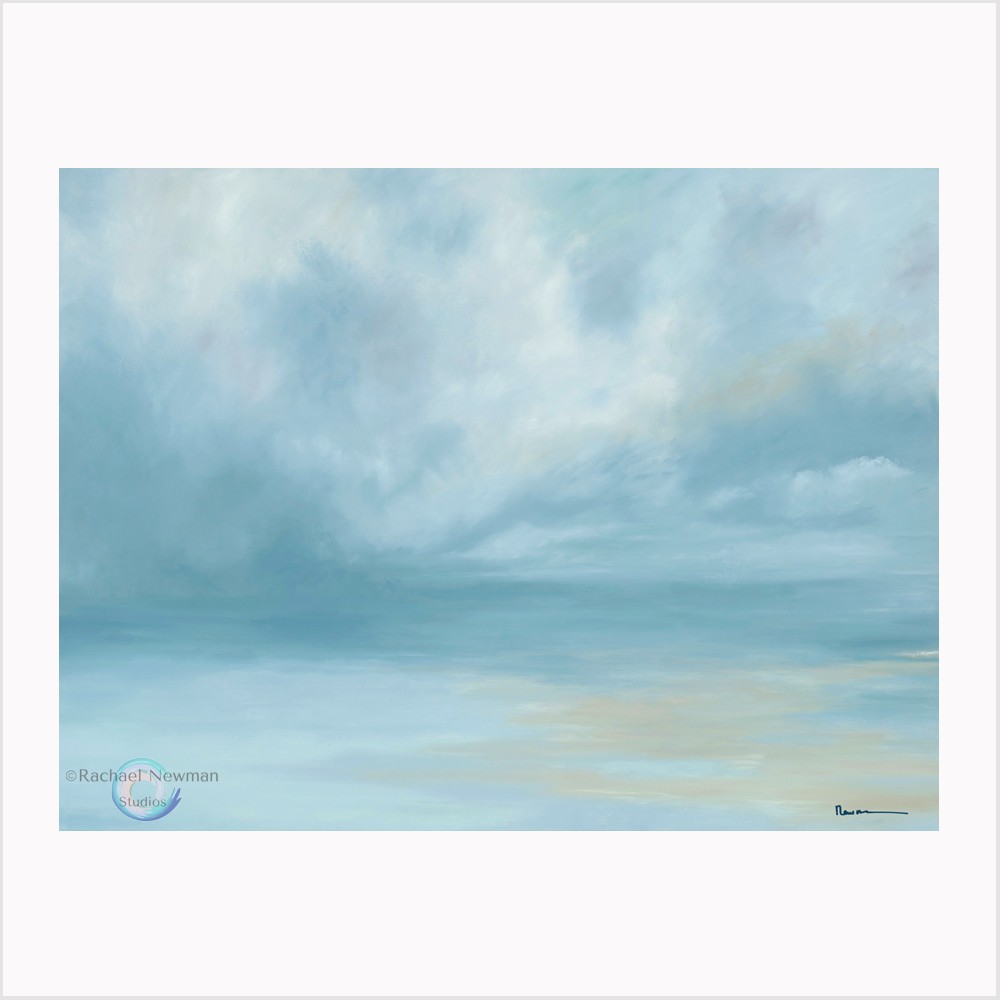
My creative process takes its own meandering path. I would call it more of a journey than a process. Words like process and technique have the connotation of structured methodology which is often contradictory to a creative process. My best work is inspired by being and not thinking. There is an essence of each painting in my mind’s eye as the composition starts to take form. This inner quality comes from years of offshore sailing, walking beaches, watching weather patterns and observing nature. There is not a day that passes that I don’t consciously take note of the sky. I am known for painting clouds and atmospheric seascapes, but it’s not only clouds that I watch. Even on a sky-blue day I look for changes in color from the horizon to the ethers. Perhaps it’s a smokey yellow on the horizon, but later that vista has a hint of salmon. Clouds are a wonder of nature. I am mesmerized by their subtle changes. Every second they change and in mere minutes the sky is totally different. Water is affected by similar principles such as light, shadow & wind. What is hidden below the water is of particular interest to me. Sand reflects differently than rocks; deep water is unique to shallow water. I take in all these elements as part of my life. My phone is overflowing with images of sky & water to help me remember a moment in time that I might someday use in a painting. Ironically, I rarely paint from these images. Somehow, they serve to elevate my consciousness that serves me later as I paint.
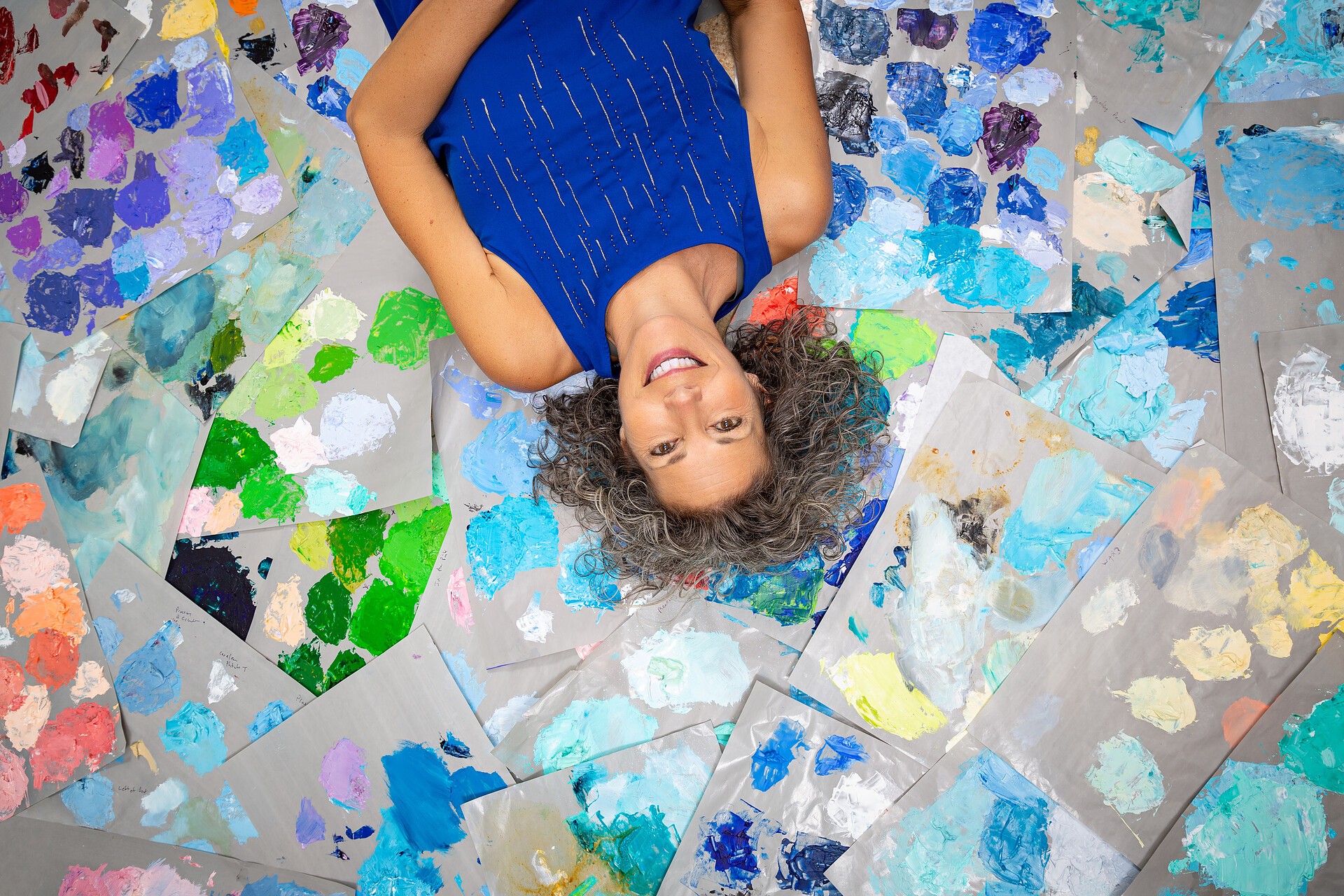
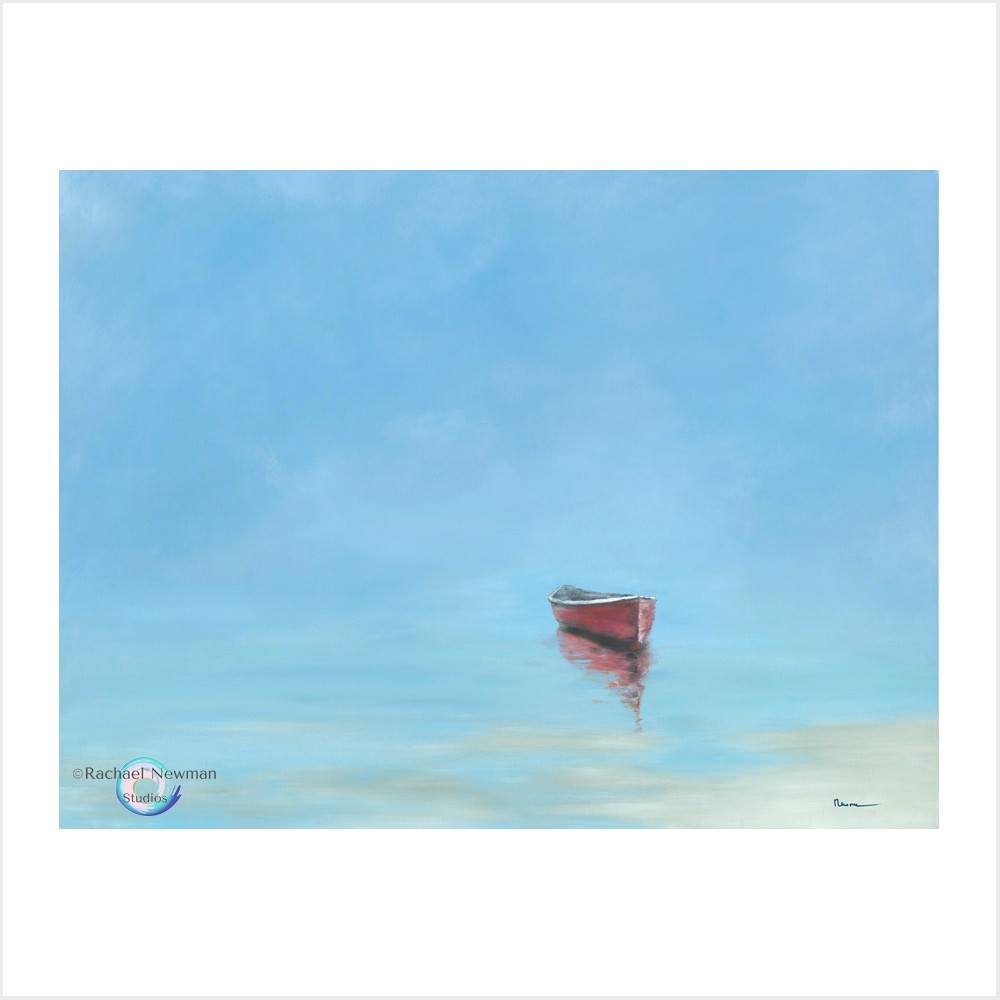
I sketch a basic composition. Although I give this a great deal of thought and often make a very detailed sketch, I usually disregard it shortly after I begin to paint. It gives me the basics: horizon line, cloud structure & objects. I also formulate my color palate. I typically select three colors that will form the foundation of the painting. As I paint, I blend hues and tints of these colors, mix them and add a few new colors for accent. I am drawn to complimentary colors like a teal sea with a red boat or blue water with amber sand.
Ultimately paint meets canvas. Each painting has an under-painting of more bold, vibrant tones that is very different from the ethereal essence that the viewer sees in the completed work. I apply either bold palate knife work for texture or bold washes. This is where the sketch ceases to have relevance. My paintings have a multitude of layers to give intrigue to my minimalist work. This is the point where I say that “the painting tells me what it wants to be”. A metamorphosis occurs that I am part of, but don’t feel like I control. I paint layer after layer of softer colors, I add details to the clouds and reflections, yet I lose track of time and space. I find myself painting in new ways with different brush strokes, unique color combinations or some extra palate knife work. I’m not thinking. I step back or take a break and wonder what happened. How did I create what I see? I am the creator, but another transformation occurs when you are touched by my art. I am moved when viewers tell me of their journey into my paintings. The interactions that occur spark my creative journey of endless possibilities.
More information about me and my art is available on my website: https://rachaelnewmanstudios.com. My art is available at Juried Art Events, on my website, and through conversations with me. I paint commissions and offer complimentary in-home consultations when I’m in your area.
What’s the most rewarding aspect of being a creative in your experience?
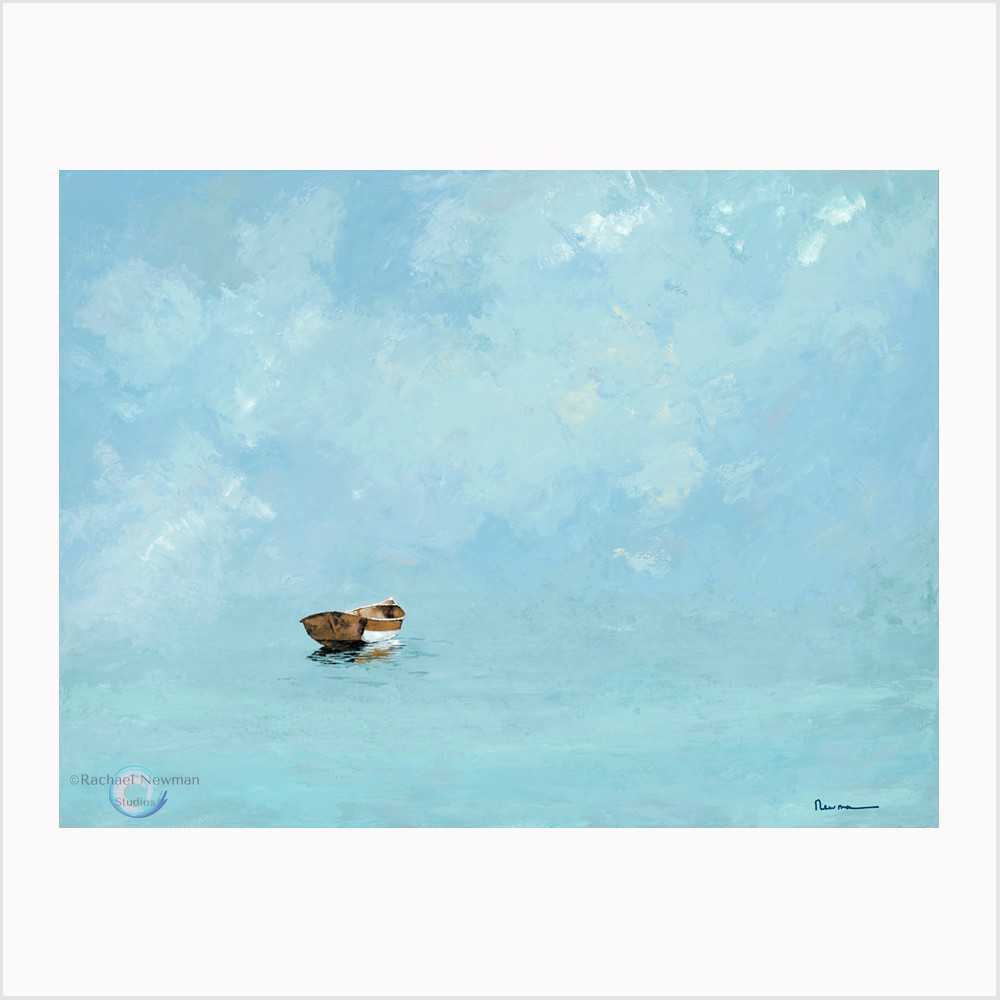
It didn’t take long for me to realize that my paintings were not only nurturing me, but art enthusiasts. People were connecting to my art on an emotional level. Their comments run the gambit, but I’m going to tell the story of four people and a painting called “Old Salt”. First image a large canvas with soft blues. The only object you see is a small rowboat with no one in it, untethered, moving away from you into an ethereal background with no discernible horizon. This is where the story begins. A gentleman comes towards my display walking down the sidewalk with his wife and all of a sudden, he becomes transfixed. Everything around him ceases to exist. His wife is talking, but her words are unheard. He stops in front of my painting, “Old Salt”, and becomes emersed. I approach him and he allows me into his world with my painting. I ask him about his reaction and he tells me his story. He lays a foundation telling me that he is an architect by profession, but also a poet and a photographer. He continues by sharing that his mother passed away recently and that the painting brings him back to his feelings of loss. He tells me that he feels like that small rowboat surrounded by vastness; that “Old Salt” is a metaphor for how he feels about his life without his mother. He said, “I don’t know how I’m going to navigate my world without her. There is so much vastness and uncertainty.”
With permission, I shared his story and a woman told me that “Old Salt” also reminder her of her mom, but her story was very different. She told me that as a child her mom lived on Long Island Sound. She had a little rowboat like “Old Salt” that she took out into the Sound on weekends. She would float around aimlessly and read books hunkered down in the bottom of her boat all day long.
The next day a young man was also mesmerized by this painting. He became overcome by a wave of emotion and started to cry. I approached to learn about his reaction. He didn’t say anything, perhaps he couldn’t say anything, but waves me away and left. He never came back to tell his story.
Finally, at another event, a woman was drawn to “Old Salt”. Her grandpa had passed away the year before. The painting reminded her of their days together fishing in his rowboat. He had left her enough money to purchase the painting in his memory.
Artwork is very personal, and I am inspired by the emotions my paintings evoke.
Can you tell us about a time you’ve had to pivot?
I was in the midst of expanding my art business to include painting when Covid changed everything. I was juried into all my 2020 shows with two mediums: jewelry and painting. For me it was the safe bet, to transition gradually. After two shows in January the whole juried art show industry turned into a perpetual domino effect of delays and cancellations. There was no certainty and no income. Art shows were gradually allowed, and the revival was in full swing by mid-2021. This is where the pivot took place. Perhaps it was a metamorphosis or maybe a way of taking back control of my life, but I changed. I decided to be a painter and left silver-smithing behind. I redesigned my display, rebranded, kept painting and never looked back. I surprised a lot of people including myself, but listening to my intuition and not taking the safe route was the pivot I needed to keep my creative inspiration flowing.
Contact Info:
- Website: https://rachaelnewmanstudios.com/
- Instagram: https://www.instagram.com/rachaelnewmanstudios/
- Facebook: https://www.facebook.com/RachaelNewmanStudios
Image Credits
Caitlin Ryan – https://www.memorylaneportraits.com/