


We were lucky to catch up with Quinn Aiken recently and have shared our conversation below.
Quinn, looking forward to hearing all of your stories today. We’d love to hear about the best advice you’ve ever given to a client? (Please note this response is for education/entertainment purposes only and shouldn’t be construed as advice for the reader)
As a trainer, I don’t have one particular example that sticks out, but the best advice I have found I can give to clients when they first start working with me, especially those looking to lose weight, is that almost universally “feeling better” precedes “looking better.” By this I mean if you have been either completely sedentary or inconsistent with exercise, as many of us have been the last few years more than ever due to the pandemic, the best thing I have found that you can do to optimize your chances of reaching the personal goals you might have is to simply get your body moving consistently, doing simple things like walking daily and ideally incorporating some form of resistance training a couple of times a week is a great place to start. It sounds simple, but if you are looking to lose some weight and “tone up”, as is often the case, it can be difficult to not base your goals and perceived success solely on what the scale says. The scale can be an important metric, but it is not the end all be all and I also cannot stress to people enough that healthy, sustainable weight loss also takes time (1-2 lbs a week is what is widely considered to be healthy and sustainable), it doesn’t happen overnight and ultimately keeping your body healthy and moving optimally is a lifelong endeavor.
That is also why it is so vital for people to do their best to take a more process-driven approach, be kind to themselves, exercise does not need to be (and in my view shouldn’t be) punitive but rather constructive. Focused on finding forms of exercise that you enjoy, have confidence and/or interest in doing, and can see yourself doing consistently. Because once you are able to get your body up and moving, especially if the exercises and movements start to feel good and no longer feel like a punishment, physically and mentally, there is usually a strong positive feedback loop that starts to form where; as the body starts to move better/healthier, people usually start to move more, if they move more they start to physically feel better/health improves, and if you physically feel better day to day you are also more likely to eat better, sleep better, etc. so you can continue to feel better overall both mind and body, and that is when the weight usually starts to drop, you start to see the muscle gains/tone you were looking for initially, but it takes time.


Quinn, love having you share your insights with us. Before we ask you more questions, maybe you can take a moment to introduce yourself to our readers who might have missed our earlier conversations?
I first started my road to creating a career in the fitness industry by virtue of both playing sports, specifically soccer, and always having a deep curiosity about other peoples’ experiences and motivations. These two themes went hand in hand as soccer allowed me to have a rather unique experience of meeting/playing with and against people from all over not only the country but really the world at a relatively young age.
I initially played club soccer back in Buffalo, New York before getting to play very briefly on a touring team in England, and then in college for John Carroll University here in Cleveland, and finally playing for a UPSL team in Southern California after moving there with my family. I also even just by pure chance of getting to train in the same facility as the Western New York Flash, had the opportunity to scrimmage a professional women’s soccer team that included Abby Wambach and some other international-level players. In that same facility, STA Sports Performance, I got to train around a few professional athletes from around the area which showed me there were levels to both athleticism and training intensity that I hadn’t seen before. While I was getting to have some of these amazing experiences playing and training against and with some future professionals from a wide array of backgrounds for the sport that I loved, I also knew for sure that there wasn’t any realistic possibility of playing soccer for a living for a variety of reasons. I saw from these experiences that I was not on the same athletic and frankly work ethic level as these athletes that were on their way to the pros. At the same time, I also was starting to stack up some serious injuries including concussions and major back injuries that made it blatantly obvious by the time I was 20 years old that I needed to find other ways to stay involved in athletics.
Thus, in college, I tried my hand first studying Psychology, with the hopes of becoming a sports psychologist, and then eventually Exercise Science to pursue physical therapy. I enjoyed both endeavors and graduated with degrees in both majors, but I just didn’t have the passion for either enough to want to pursue them in graduate school. However, during my sophomore year while trying to find a yoga studio I could go to for rehabbing my back after surgery I got incredibly lucky again and had the fortune of meeting Kim Curtis, who would become my biggest mentor to this day. Kim just happened to not only own a yoga studio where I could work and do yoga for free, but she was also an elite speed performance coach who had trained Olympic and World Championship level track athletes and was looking for an assistant coach that also had a soccer background as she was getting herself back in the coaching world after recovering from major injuries herself (what are the odds?). That spring she gave me my first opportunity in the fitness world as an assistant speed coach for her spring and then summer camps and training. It was a natural fit and I truly enjoyed every minute of “work” that summer. I continued to work with Kim as her assistant for the next three years through school before I graduated in 2018 and decided to take an office job after balking at graduate school. After trying my hand at a 9-5 office job and being completely away from training and athletics altogether for a year, I realized I was totally miserable. So, when Kim reached out again the next summer about an opportunity to do a soccer and speed summer camp for a week after work, I jumped at it. In that week I enjoyed it so much and felt myself come alive again for the first time in months and realized I had to find a way to do this full time, and ultimately, I decided to quit my job that month and pursue a fitness career. I didn’t know what exactly it would look like, but I knew it was possible, and having a role model like Kim gave me the confidence to make the jump.
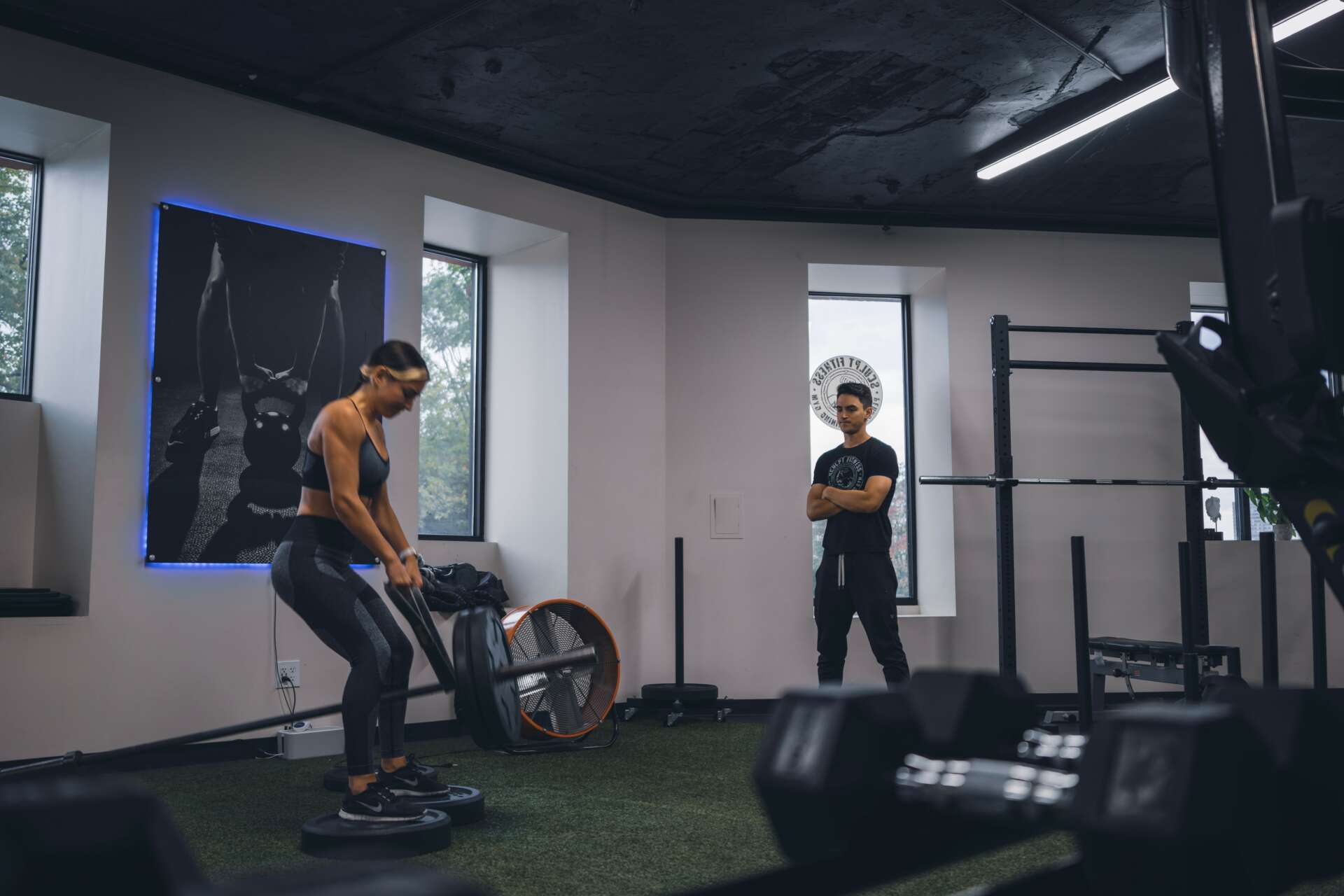
After several years of different struggles putting things together, I am now a private personal trainer at Sculpt Fitness Personal Training Gym in downtown Cleveland. We specialize in personal training in a private environment, so the only people working out in our gym are our members who are working with their personal trainer, so there are only a maximum of 8 total people in the gym at any given time. This allows people to have space and privacy while they work to better themselves. Given the intimacy of the setting, we are also able to give our clients 100% full attention and focus during our workouts, free from distractions that you may have at larger corporate-style gyms.
From a personal standpoint, I pride myself on being able to make a personal connection with each of my clients and find the best way to get them to enjoy the pursuit of bettering themselves every day. I try to make this connection by taking a transformational leadership style approach with my coaching, meaning I do my best to meet my clients where they are that day, whether up or down, and motivate them to get the biggest net positive out of their time we can. I have found this helps build trust and rapport with clients that allows me to push them as much as possible without going over the edge into making the next few days of work or just sitting down miserable. Some trainers just push people as hard as possible regardless of recovery or energy level, and in my view, this is a mistake when it comes to taking a longer view of exercise and health. If we are able to find a way to make exercise as enjoyable as possible, making people enjoy the process, which hopefully will lead to a longer commitment to fitness goals throughout their lifespan.
Putting training and knowledge aside, what else do you think really matters in terms of succeeding in your field?
To me, the thing that is most helpful for succeeding in the personal training field is being personable. Deal with each client on an individual level, and stay away from taking a one size fits all approach. Some of the best advice I ever got was to “communicate with others the way they communicate with you” and that definitely applies to training as well. You need to adjust your training style based on the individual in order to optimize your relationship with them. Some people need you to be more up and energetic, others want to just be given direction and otherwise mostly left alone, but find what works best for them and they are likely to stick with you for the long term. I think taking this approach is what has allowed me to not only always keep a steady client base, but also build genuine relationships with people that can also help to improve your life or enhance your knowledge in a different field, but ultimately I think it just comes down to being kind and personable.


Any stories or insights that might help us understand how you’ve built such a strong reputation?
I think the thing that has helped to build the positive reputation that Sculpt Fitness has as a business as a whole, and also for me personally as a trainer, is genuinely taking a people-centered approach to the business. Yes, you obviously need to generate money in order to have a successful business, but in my personal experience, a consistent and growing client base has come from clients feeling appreciated and comfortable rather than trying to just push the most expensive membership you can on them, especially in a gym where it can be a very intimidating space for people. They need to trust you above all else, knowing that you are solely there to help them, and in many cases, they also just need a friend by their side to make sure they stay accountable and consistent. Taking this person-centered approach has allowed me to consistently work with a very positive and steadily growing group of clients who I have largely had for a year or longer after starting at Sculpt in 2020.
Contact Info:
- Website: https://www.sculptfitnesscleveland.com/personal-trainers/
- Instagram: @qaiken6
- Linkedin: https://www.linkedin.com/in/quinn-aiken-559852104/
Image Credits
Sam Smith