

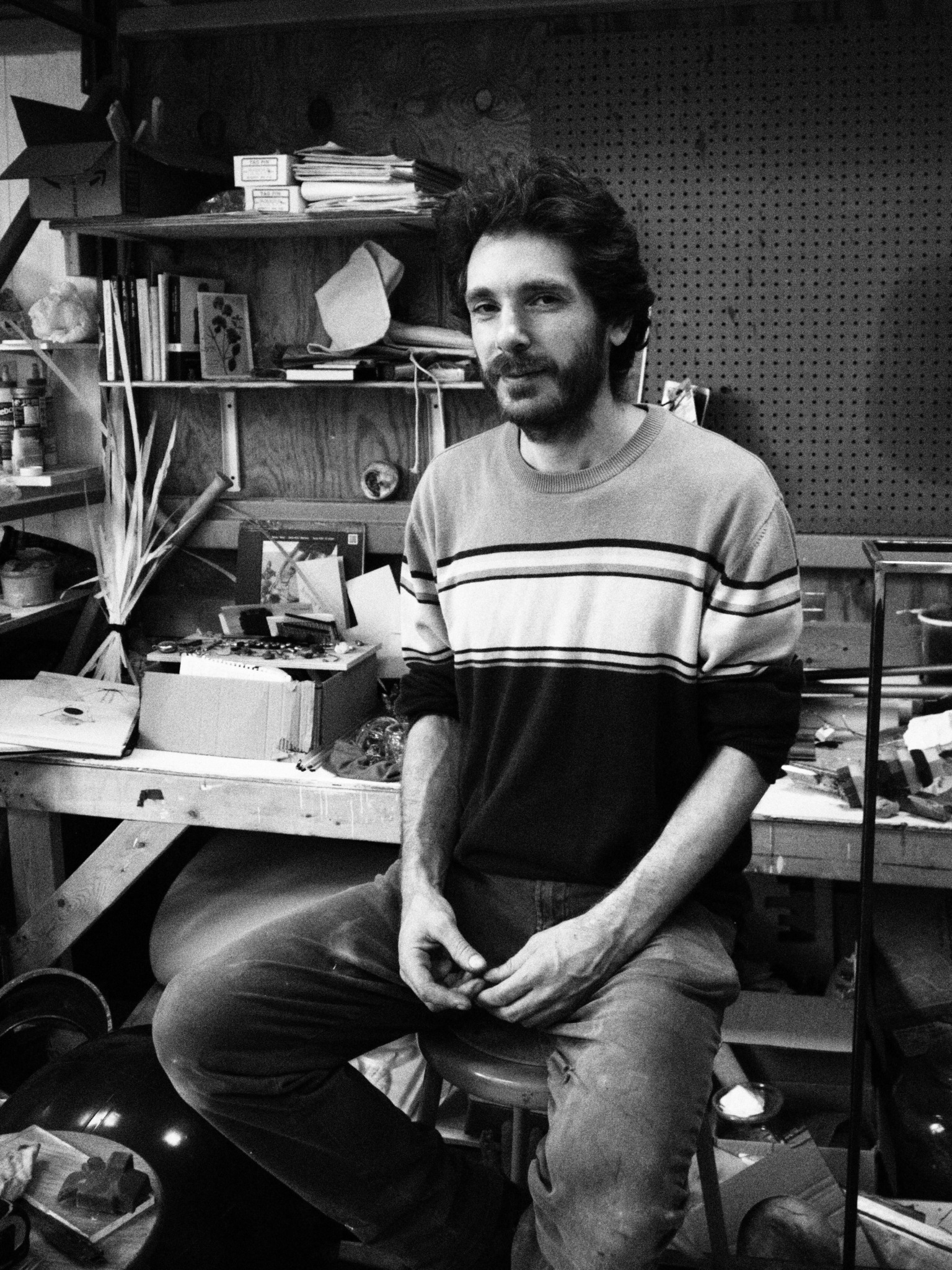

We recently connected with Paz Sher and have shared our conversation below.
Paz, thanks for joining us, excited to have you contributing your stories and insights. Has your work ever been misunderstood or mischaracterized?
My work has been misunderstood many times, particularly since I moved to the U.S., where there is a prevalent approach to understanding that I refuse to set as a goal for my art. Many times, I had this feeling that people look at my work and want to know who I am. However, this is not why I make art for, Even if I think of who I am, I hope I would never have a clear answer. I change, I move, I grow, and I can be many things. I prefer keeping my art (and sometimes myself too) ambiguous and open for possibilities than explicitly defining it into a closed identity. However, when someone doesn’t understand something, it’s easy to slip into misunderstanding. People don’t allow themselves to remain in a space they don’t understand. How hard is it to admit you don’t know something and simply accept it? At this point, it’s important for me to say that I don’t believe people can’t or shouldn’t “understand” my art or any particular type of art. I just think a measure of engagement, effort, and openness must come from the viewer, and not everyone is willing to do that work. Thinking of these terms in relation to my work, it’s more about one’s capacity to resist the self and measure their openness toward an unknown and the world stretched ahead of them.
People have different experiences, sensitivities, ways and levels of thinking, and abilities to see. That’s a fact. I say this with the awareness that a person’s life circumstances impact who they are. It’s still a fact. Some people carry more complex stories than others. These complexities can sometimes enable deeper understanding, but they can also block their minds and not seeing beyond ourselves. Art crosses languages, but I believe art redeems its power through its difficulty in being translated into words. It’s like the allegory of the Tower of Babel—the ultimate project of a never-ending construction of one tower, one language, one divine connection, with the writer’s inherent awareness of its failure. Understanding is deeply rooted in our ability to express thoughts verbally. So why do we need art if we can just speak?
The art discourse in the U.S. fosters a conversation that is self-centric—primarily focused on identity politics and justice (perhaps we are nearing the end of this phase by achieving the integration in the art world everyone wanted). However, it has reached a level where, even as the promotion of diversity changed and broadened the art world, it came with reductions and rules about what art should or should not be, what is accepted and not, what thoughts are “right” and “wrong”, and so on. To include different types of art, it excluded what is not understandable to the majority of people.
In my work, I don’t have these questions or the need to represent my identity, but sometimes it’s hard to bring a different conversation when everything is observed through those lenses.
People have different definitions of art, and that’s fine. However, if understanding is a purpose in art, how does one approach something that isn’t there to be understood but rather to elaborate on an experience and raise a set of questions without definitive answers?
I truly appreciate and agree with Jimmie Durham, whom I once heard say he makes art for people who are smarter than him. I have made work that I needed time to articulate different aspects in it. I like to create things that are bigger than me. I think it’s even more exciting when one doesn’t fully understand what they’ve created—when they break their own limits. I once had a studio visit with a visiting artist during my graduate studies and after sharing my work with him, they told me it seemed like I knew who I was and what I do. That’s where the conversation came to an end. Yes, I did know who I was at that point, but it also freaked me out.
This is why I believe art shouldn’t be about me. Of course, there is an “I,” there are my experiences and views, but art and creative processes are also external to us as viewers. I become external to myself and I don’t seek for confirmations of who I am through the random story of my ancestors. It won’t move me/us forward. I do have a particular story, but it feels so arbitrary—who was born where and why? From this position of “I,” there emerges an “us”—culture, ethics, politics, conflicts, everyday life. I believe artists should take more agency in challenging social norms and mechanisms that traverse time and hold some universality.
In one piece I made, a cast aluminum mimics a neon sign that says “200% Authentic”. This piece addresses the complications of one that doesn’t want to give a definite answer to who they are. On one hand, the notion of two hundred percent removes to the extreme all barriers between “me” and what’s out there, as if being exposed excessively to everything within. On the other hand, the question arises whether such a thing is even possible – isn’t it also a falsehood or a forgery? Why not 100%? Why not simply be authentic without any measure? I think everyone balancing this position unconsciously and that facing this duality could expand our capacity for who we are. The installation, “Anonymous Specter”, in which the neon sign was part of, was full with paradoxes, conflicted feelings, and it rejected to land into a representation of an idea. It’s like taking an ironic position that put everything into doubt, where every indication also points toward its opposite.
Art is a space where freedom is tested in a world that will always work against it. Art today avoids the risk of being inaccessible and misunderstood. It is expected to be polite, entertaining, and, when critical, to wink and play nicely. It’s ironic that art, which once promoted diversity, freedom, and liberation, has turned into a checklist of cultural representations. People shouldn’t be reduced to representations of their identities or ideologies. I don’t expect anyone to immediately understand, and I also don’t think that what you get in the end is exactly understanding.
So, when you are asking about a story in which I was misunderstood, I prefer to share my experience of where and why I encountered it. If we won’t cultivate a space for the parts in our worlds that are not meant to be understood—could be mysteries, questions without answers, or suspended insights for the future—we will fortify ourselves within our own conceptions. It’s better to work on our believes and tolerance to achieve understanding, to agree on truths, and to build an open platform for dialogue to play.
Paz, before we move on to more of these sorts of questions, can you take some time to bring our readers up to speed on you and what you do?
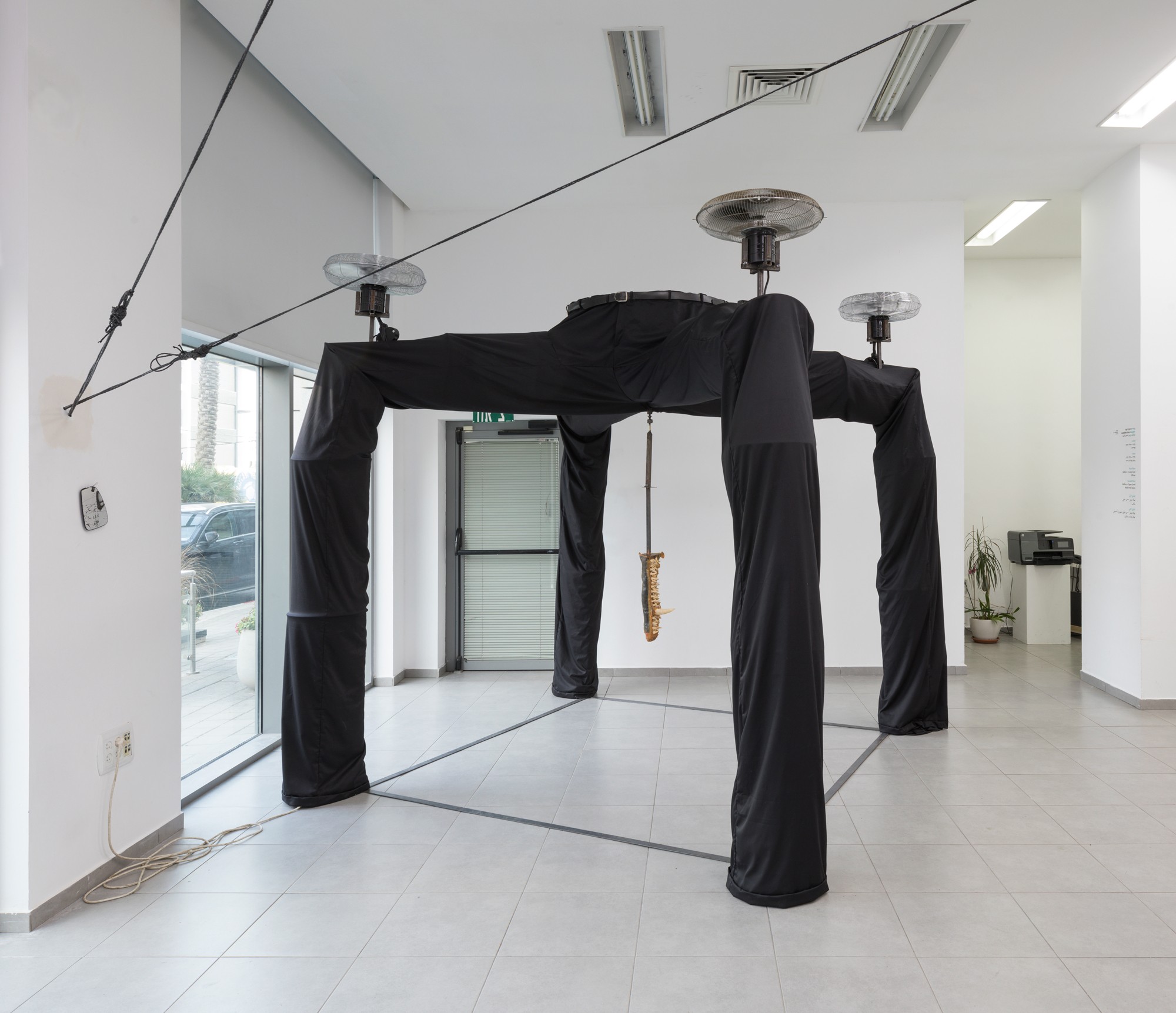
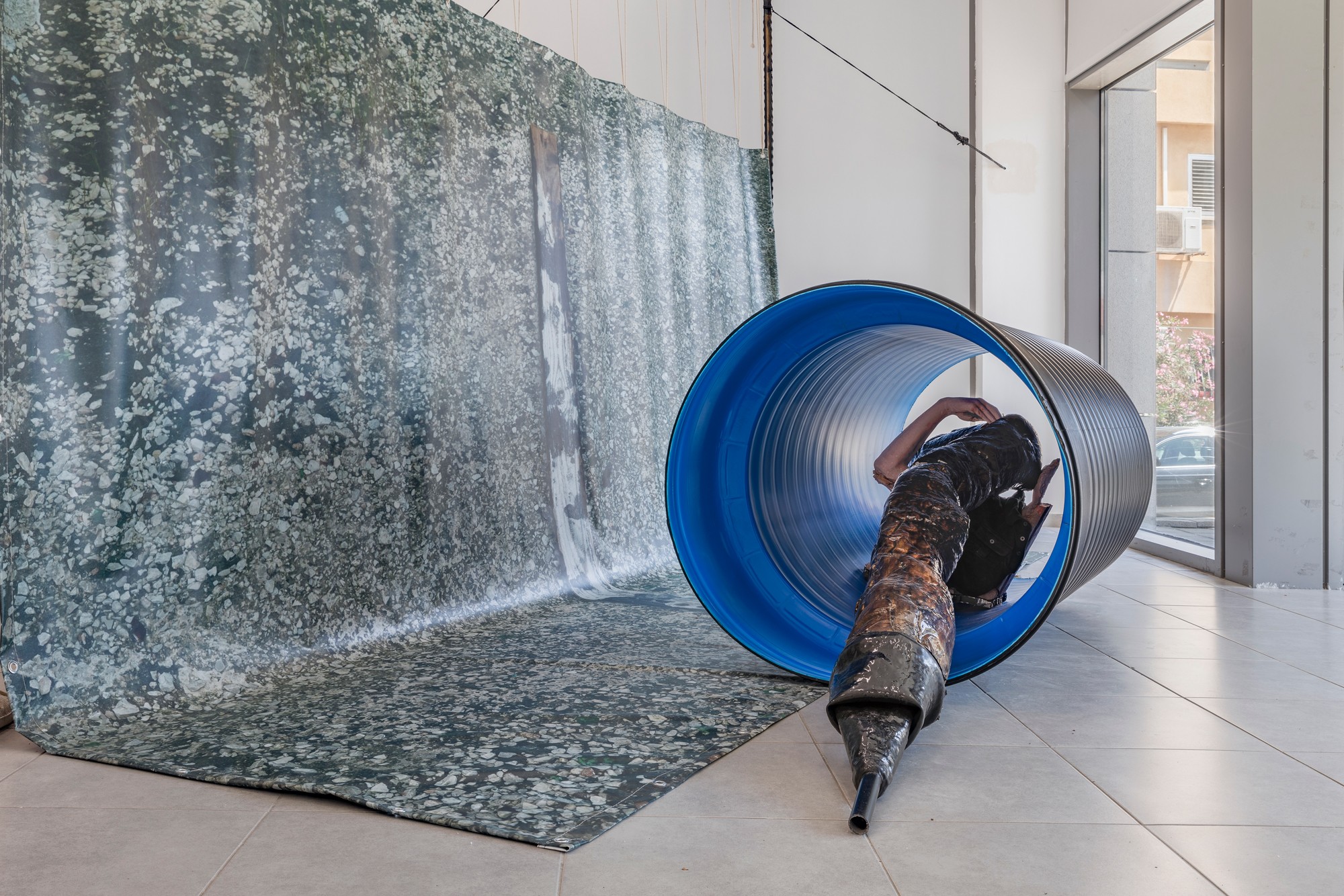
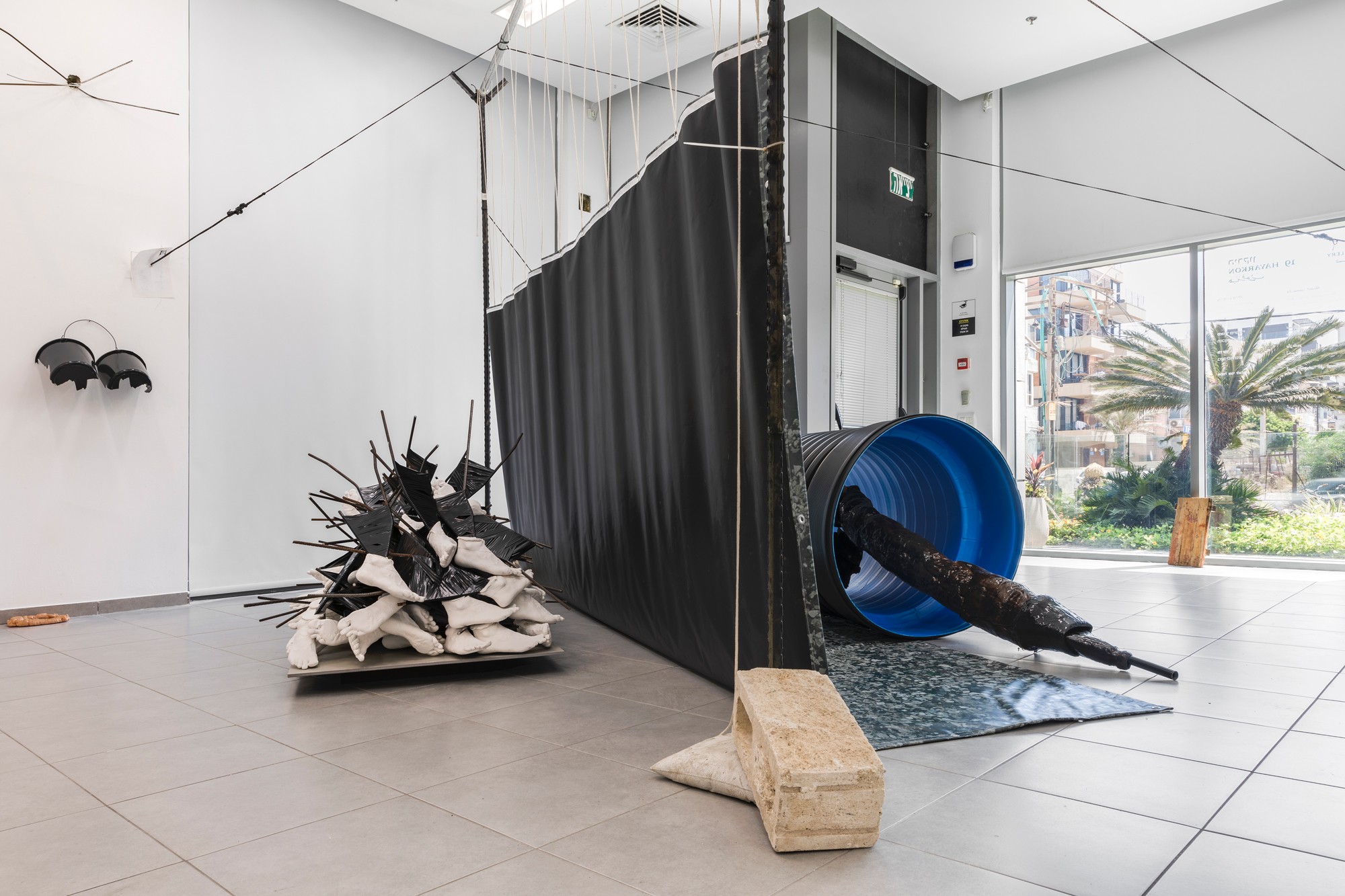
I’m a sculptor and installation artist based in Brooklyn, NY. In my work I orchestrate systems of objects and materials in a space. Each project serve as an adventurous attempt to build a new world and language that resonates with the destructive processes I observe in human nature and in our contemporary moment. I see my work as a poetic gesture paralleling the constant deterioration of societies and humanity around the globe. Many times, my installations have an urgent and acute attitude as a visceral search for hope while struggling with the worse that humans can do.
Recently I had a new definition for my installations – a poetic elaboration. Curious about its precise meaning, I encountered a definition for “elaboration” from the discipline of psychiatry: “an unconscious process of expanding and embellishing a detail, especially while recalling and describing a representation in a dream so that latent content of the dream is brought into a logical and comprehensible order”.
It also refers to some aspects of the previous question about misunderstanding. My installations possess a meticulous, detailed, and imaginative core. A poetic latent content of a dream-like space. Latent content is a little funny, in my opinion, but it makes me like the definition even more. Art doesn’t do anything, it doesn’t change anything, but it brings the possibility for those who are willing/pulled to follow something different. In the psychological aspect of the term, I don’t refer to interpretive processes, but delving into the depth of a human soul as it connects to a collective psyche. Obviously, this exploration critiques social structures, which deeply influence how individuals navigate and shape life.
I like to observe the world from a mythical perspective, recognizing that we live within mythological cycles that shift in form and nuance. The poetic and abstract serve as exploratory currents that can precede and respond to these cycles and our time. I’m not saying I succeed in doing so – it’s not something that anyone could say about themselves – but I am committed to observing and exploring.
The filmmaker, Andrei Tarkovsky, said that Art can replace real life experiences – this is its power. I strive to push against myself and against the viewer to cultivate an uncompromised abstraction of release. Could be also the opposite – uncompromised release of abstraction. This abstraction doesn’t negate the figure; it’s the abstract that loses its words. It’s where language disappears even when we can recognize a form, where we confront the fundamental question of what the hell are we doing here?! Here that is also out there.
I think of my installations as dialectic spaces, where I jump between positions and attempt to give the viewers as much freedom as I can to navigate it. In every exhibition I leave traces and clues to guide shifts from one material to the other, from one object to the one sitting next to it, and from one point of view to its opposite. By doing so, I’m offering a way to rethink what we see and how we move.
Growing up, no one expected me to become an artist. I began drawing at 19, alongside a growing interest in fiction, philosophy, and education. After an eight-month journey to the Far East, I decided to study fine arts. Without a formal background, I started by painting from observation. My time at the academy provided an experimental environment, and I gradually gravitated toward sculpture and installation.
I don’t believe art should be measured by achievements or titles, so I consider such details secondary. More important are my mentors, teachers, and some colleagues who shaped my path, and I appreciate their influence on my development as an artist. I believe they know it.
Last summer, I moved to Brooklyn, and after settling in, I began working on my next project, which I plan to exhibit later this year.
What’s the most rewarding aspect of being a creative in your experience?
I don’t know exactly how to describe it, but it has something to do with a feeling of expansion and growth that allows me to navigate life with greater freedom. Besides, it makes life much more interesting. It doesn’t come easily. Many times, it feels like I’m paying a price for pursuing it. Sometimes, it feels as if I’m living more than ordinary life, and at other times, I wonder if I’m missing the privilege of simple pleasures and joy. But the voice that tells me there is something awaiting me at the end makes every second I run this path worthwhile. It’s what sends me back to the studio every time.
I’ve read somewhere that Goethe argued the greatest ability of artists is that they get to choose the lenses through which they observe the world. I think this also relates to the ability to move between reality and imagination. There’s something about this practice that allows you to see other layers of things. However, the work is largely about how to ground those insights. One related understanding is becoming aware of the decisiveness of our senses: not everything we see, know, or are told is true or real. These days, we live in a world made of countless images we can no longer trust. With this in mind, I seek imagery that questions our foundational values—the values concealed within the visual world that shape people both consciously and unconsciously. Another question connected to this is how art circulates into reality and vice versa. What comes first: our beliefs and how we imagine the world, or reality pushing back against us?
Creation carries a great deal of responsibility because you’re not dependent on anyone to tell you what to do, and sometimes it’s not even you who decides what you’re doing. You give agency to objects, materials, structures, and narratives, letting them decide what they should be, what they are. Authority is always external, and when you submit to it—with the awareness that it’s your own imagination (or perhaps not)—sculptures become proxies and agents of possible existences.
What is this expansion of the self? What is this growth? Where does it end? Is it the hope for everything to stop, or is it about pushing against it, becoming part of it, and letting it be whatever it is?
Are there any books, videos or other content that you feel have meaningfully impacted your thinking?
Can I just share a poem for this question? It is one that inspires my consistency with the work as an artist, and capsules an attitude to whatever coming future. I see it as a supreme reward to keep in mind.
It’s part of a poem by Paul Celan, titled “à la pointe acérée” (to the cutting point), from 1963
[…]
Ways to that place.
Forest hour alongside
the spluttering wheeltrack.
Sel –
lected
small, gaping
beechnuts: blackish
openness, questioned
by fingerthoughts
after —
after what?
After
the unrepeatable, after
it, after
everything.
Spluttering ways to that place.
Something that can walk,
ungreeting
as all that’s become heart,
comes
Contact Info:
- Website: https://www.pazsher.com
- Instagram: https://www.instagram.com/paz.sher/
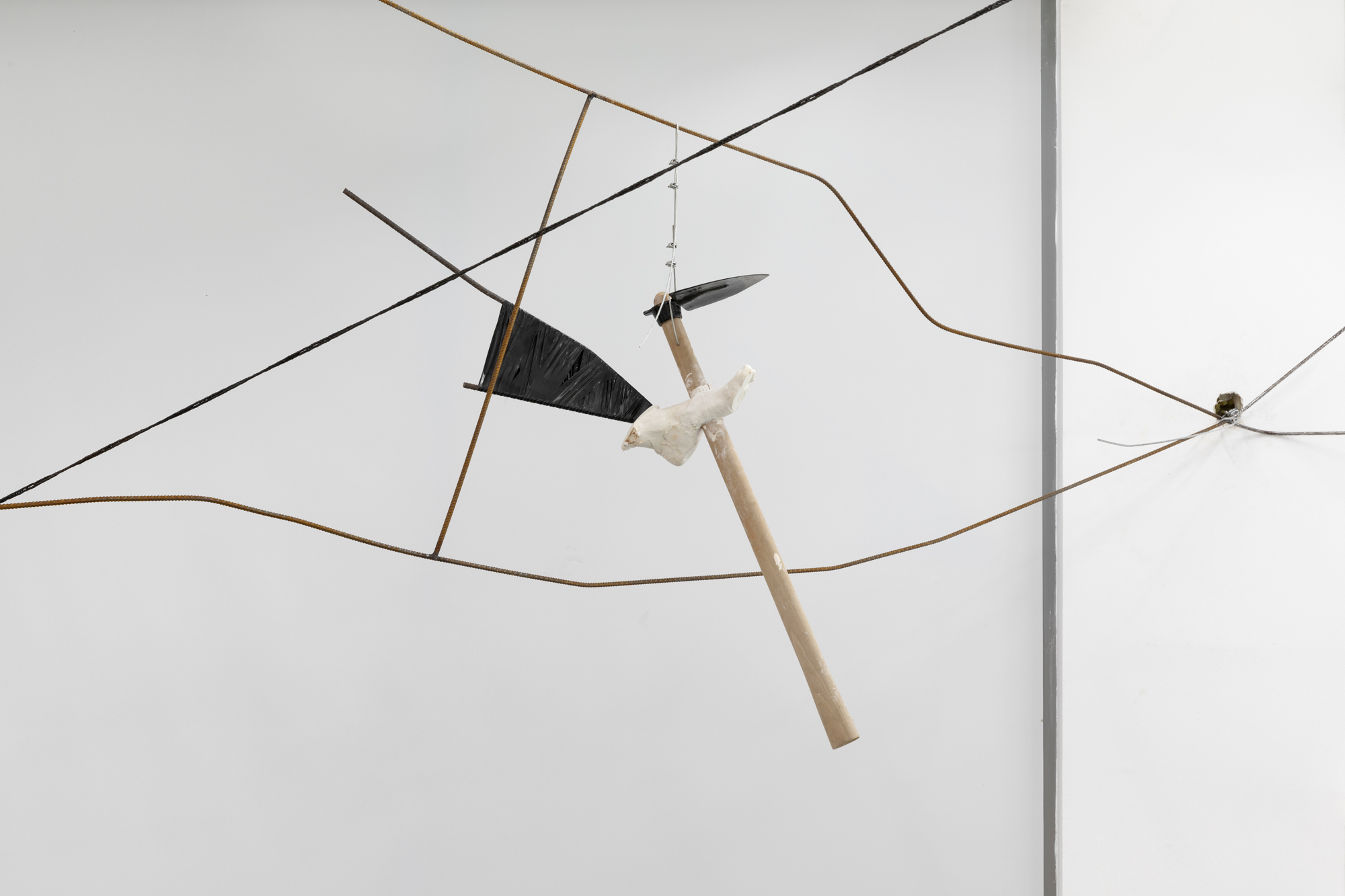
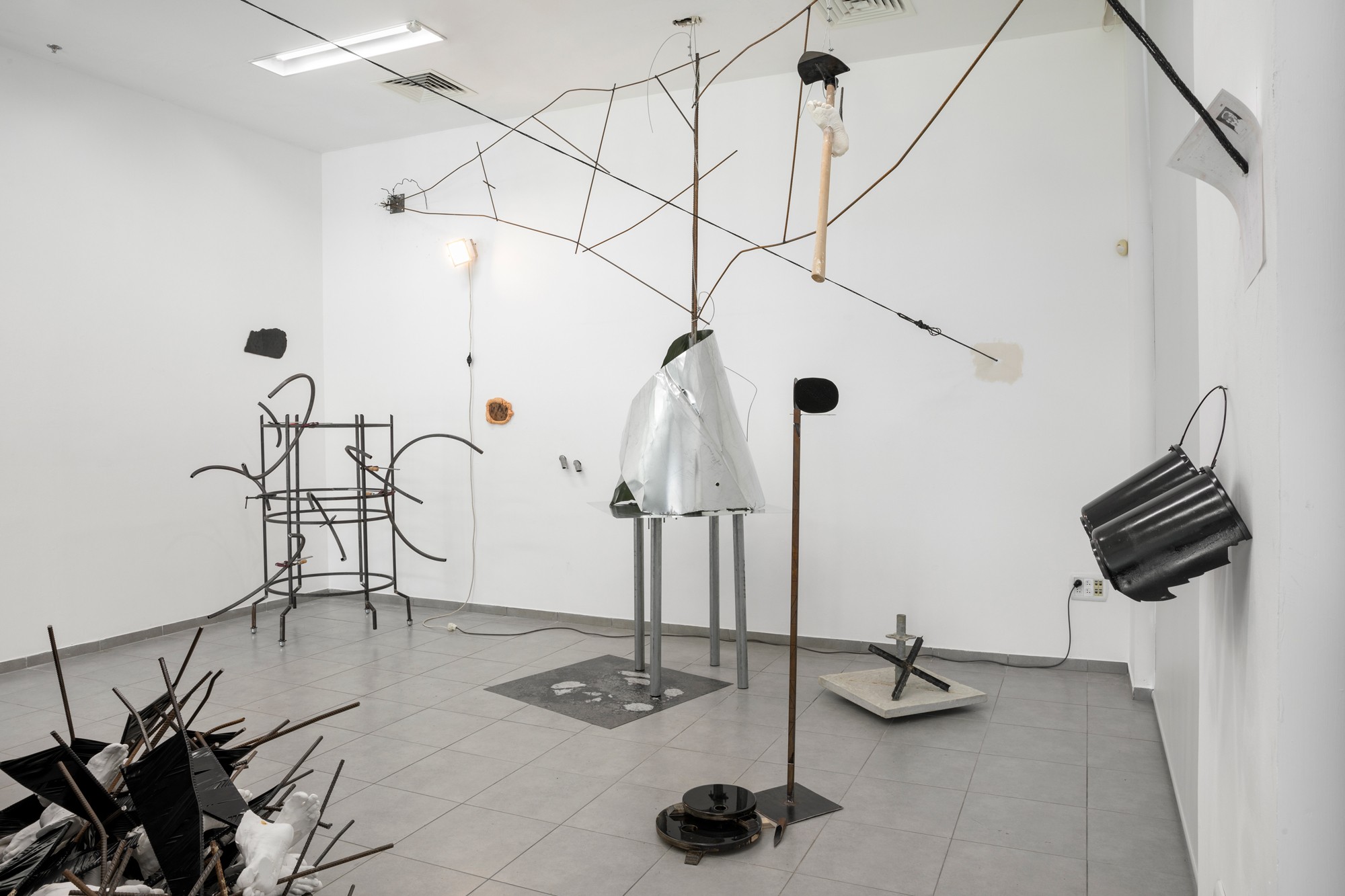
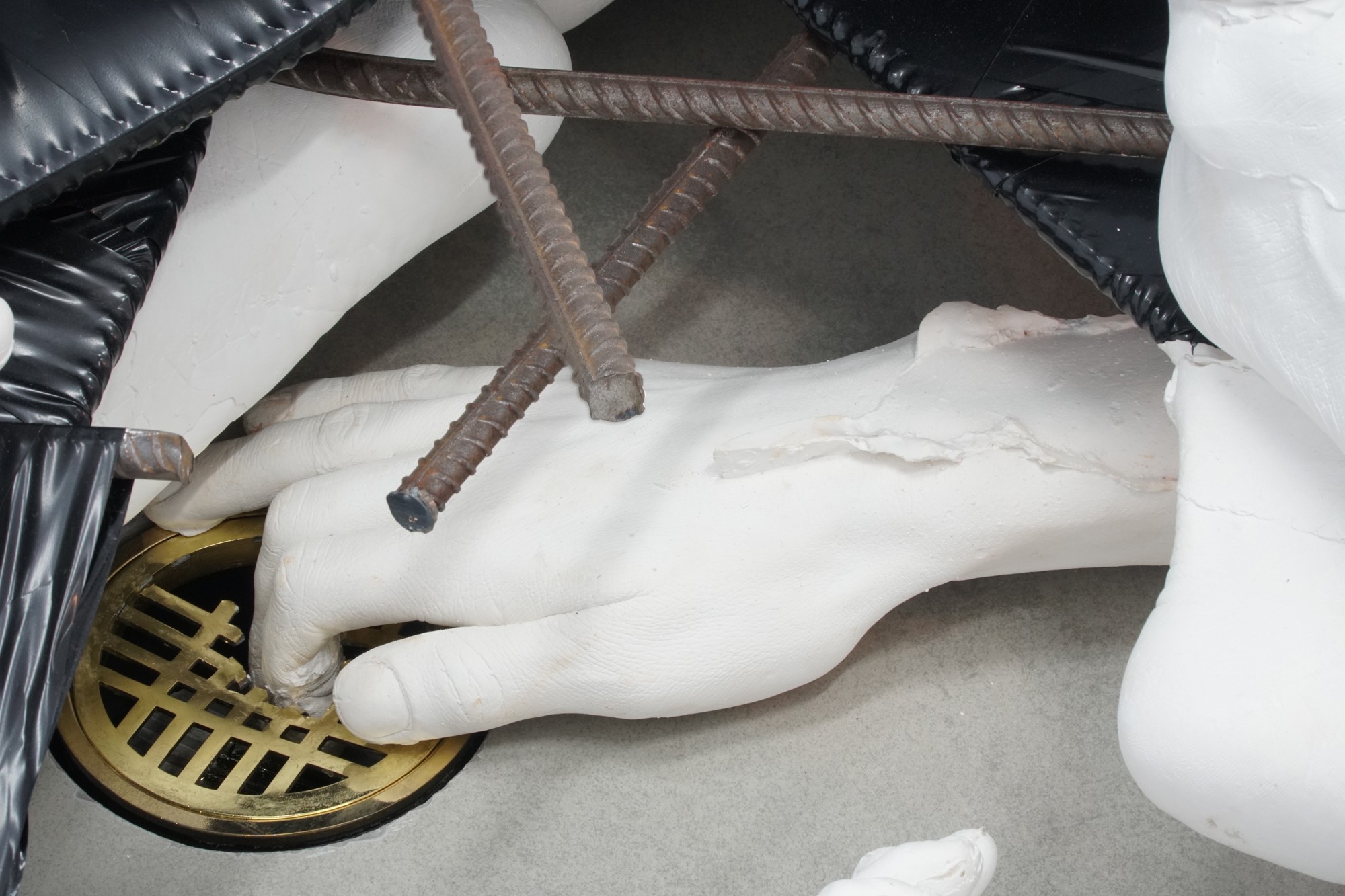
Image Credits
Image 1: Elad Sarig
Images 2,3,4 and 5: Lena Gomon