
Alright – so today we’ve got the honor of introducing you to Paul Talos. We think you’ll enjoy our conversation, we’ve shared it below.
Paul, appreciate you joining us today. What’s been the most meaningful project you’ve worked on?
I’ve had the chance to compose music for some incredible films over the years, but if there’s one project that really stands out to me, it’s collaborating with director Luke Covert on his debut feature Turbo Cola.
This project came in at an unexpected time for me, as I was in the middle of relocating my studio and was planning on taking a bit of time off to ensure a smooth transition. Things didn’t go as planned. On the day I finished packing up the last of my equipment, I got a message from Luke asking if I was available to contribute some score to a film he had shot earlier that year. It was a roughly 90-minute film that already had some music in it, courtesy of punk rock band Arlen Gun Club, but there were a handful of moments that needed a more cinematic sound. On top of that, he explained that he and producer Brandon Keeton were looking to have the film completed within about a month.
Luke and I had crossed paths on social media months prior, and I was very impressed by what I had seen of his work, so even though he couldn’t have caught me at a worse time, this was an opportunity I couldn’t pass up. The rough cut came in later that day and I immediately got to thinking about how I could pull this off with such limited time and resources.
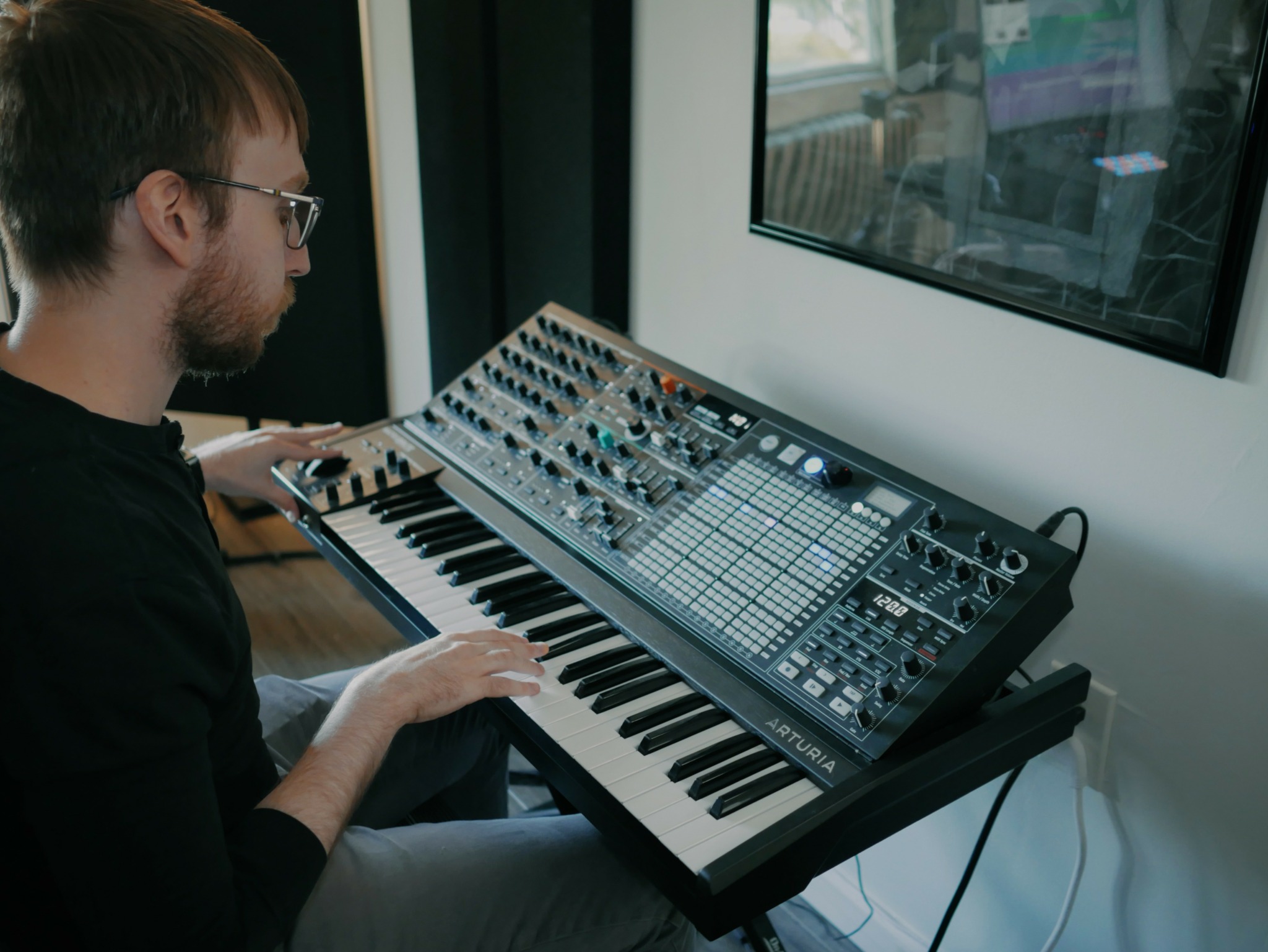
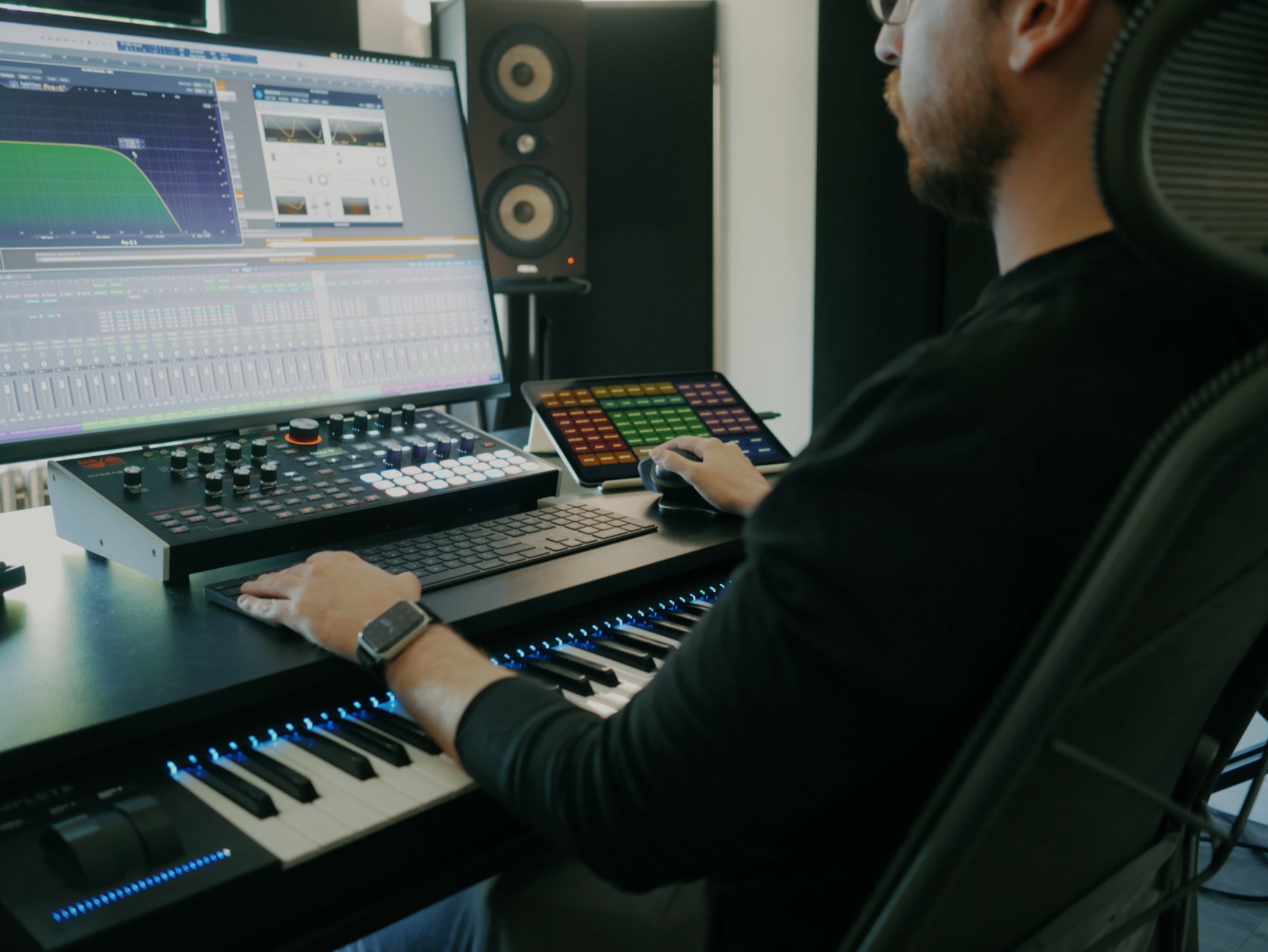
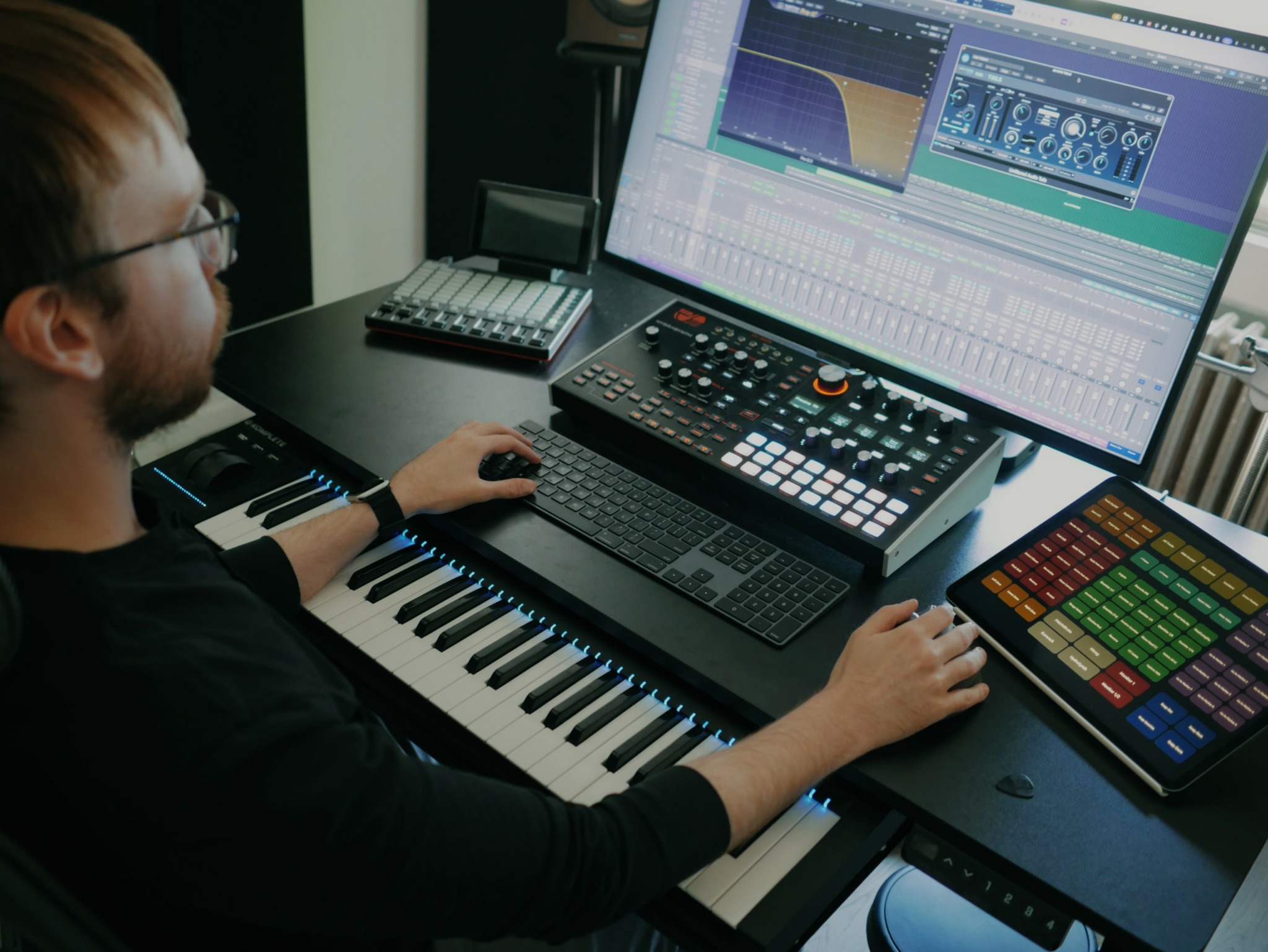
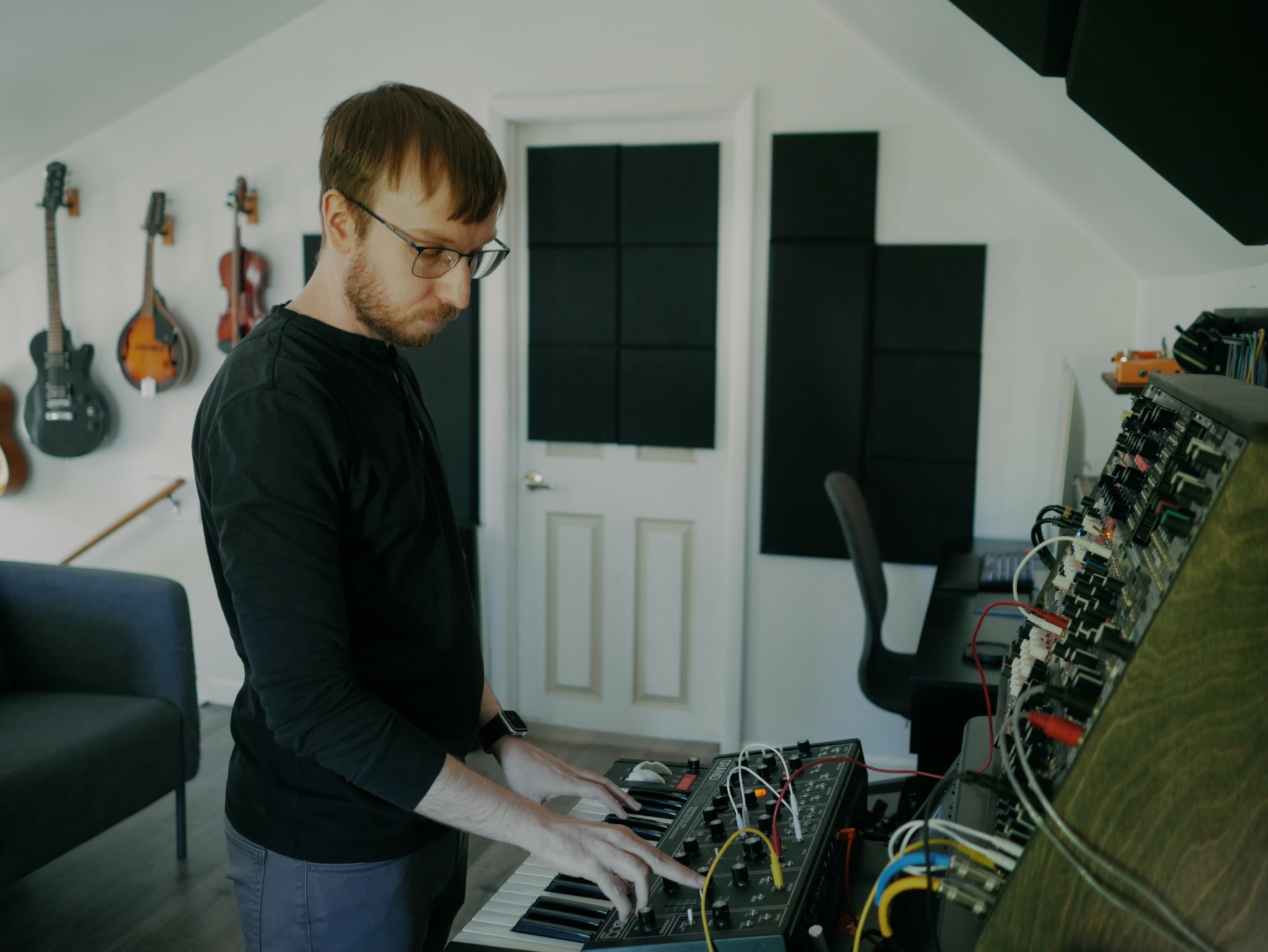
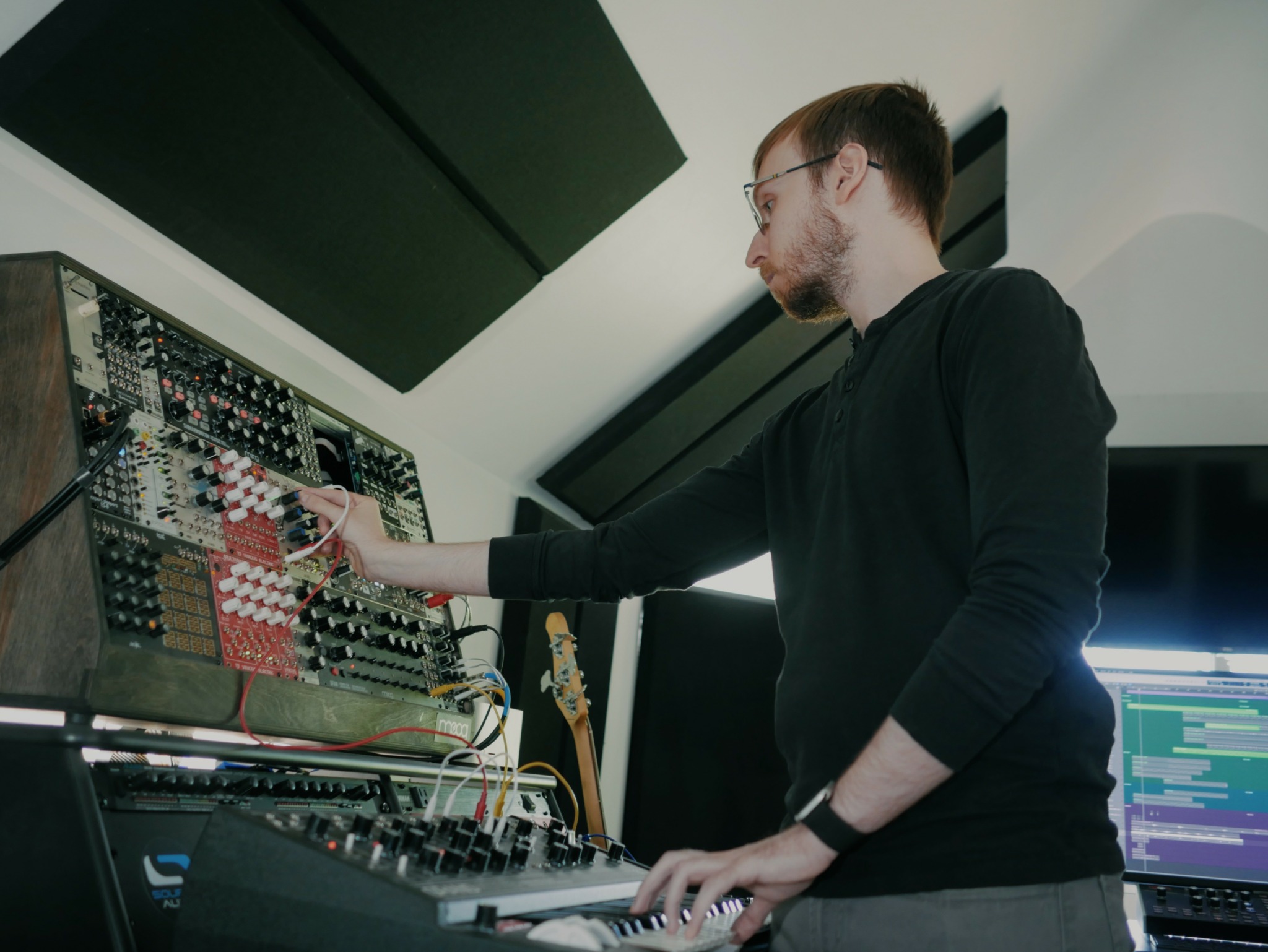
Usually, the hardest part of the creative process is coming up with an initial concept for a score, but after watching Turbo Cola for the first time, I had several ideas in my head already. Since the film takes place on New Year’s Eve in 1999, I ended up taking things in a predominantly electronic direction, relying on analog synthesizers and lo-fi samplling techniques. The idea was to essentially score the film’s setting, drawing inspiration from 90’s electronica and trip-hop to transport the audience back in time. Once I had the concept solidified in my head, I set up a makeshift studio in my living room, with nothing but a computer and a few essential pieces of gear, and got to work.
In the end, the limitations I was working with turned out to be for the better, as it gave the music a clear sense of identity and led me to compose what I think is still some of my best work. But what really made this such a meaningful project was how smooth of a collaboration it all was. As I got to know Luke over the course of the process, it became very clear that we were speaking the same language creatively. In fact, there were several times when he was not only quite open to some of my more unusual ideas, but he even pushed me to take things further. That sense of trust and mutual understanding is not always a given in this line of work, so it’s pretty special when it does happen.
Turbo Cola had a very successful festival run after its completion and went on to receive several awards, including Film Threat’s “Best Indie Picture of the Year”. It is currently distributed by Giant Pictures and is available on multiple streaming platforms, including Amazon Prime and Apple TV.
As always, we appreciate you sharing your insights and we’ve got a few more questions for you, but before we get to all of that can you take a minute to introduce yourself and give our readers some of your background and context?
My name is Paul Talos and I compose original music for films, trailers, and advertising.
I initially got into music as a guitar player, playing in various bands and occasionally dabbling in the world of home recording, before discovering a love of synthesizers and all things electronic music in my early 20’s. Over the years, I became more and more interested in film scores, as I was fascinated by the level of boundary-pushing experimentation I was hearing in that world. In 2017, I had an opportunity to try my hand at composing music for a student film as part of the 48-Hour Film Project and fell in love with the idea of music as a means of supporting a narrative.
In 2019, I decided to launch my film scoring business and landed my first client later that year. Since then, I’ve scored a number of independent films across a variety of genres, many of which have been showcased at film festivals all over the world.
When I compose a piece of music for a film, the most important thing to me is to create a palette of sounds that is as specific as possible to that particular film. Crafting original sounds using an array of synthesizers, acoustic instruments, and digital processing techniques is a big part of my creative process, ensuring that no two projects ever sound the same. Most importantly, music should always be something that elevates the narrative, whether a film needs a bit of subtle ambience or a memorable melodic theme.
Over the years, I’ve learned that this job is more about clear communication and effective collaboration than it is strictly about the technical craft of writing music. Filmmaking is a team sport and understanding how all of the pieces fit together can be the difference between a good idea and the right idea.
How about pivoting – can you share the story of a time you’ve had to pivot?
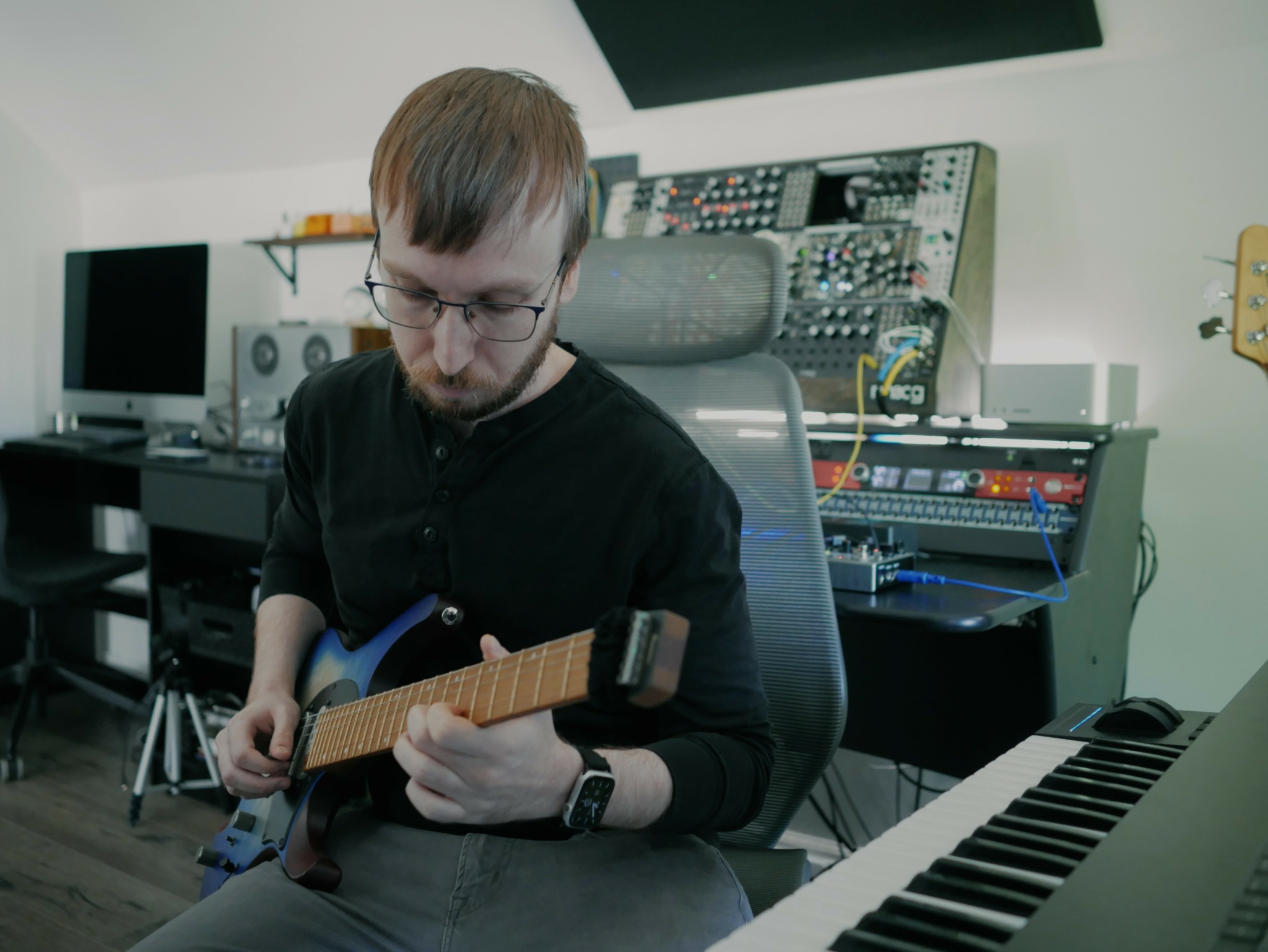
In my early days of playing music, I was obsessed with the electric guitar. I would spend hours practicing in my room, learning every detail of my favorite songs. I eventually decided to study Guitar Performance at Berklee College of Music with the eventual goal of becoming a session guitarist. But as soon as I finished school, it became pretty clear that life had other plans.
First thing out of school, I played in various bands before starting one of my own. I was lucky to have found a few likeminded musicians that I really enjoyed playing with, and before long we had enough original songs written to record an album and start booking our first shows. Things were going well until one night after rehearsal, I started noticing an odd pain in my left hand. I thought nothing of it at first and continued playing through the pain, but eventually it all caught up to me. I got diagnosed with a particularly bad case of tendonitis in the left hand, bringing my guitar playing to a dead stop. It seemed like my body could no longer keep up with my rigorous practice schedule.
The band attempted to continue on regardless, but eventually we lost all momentum and went our separate ways. At this point, I felt completely defeated and was ready to give up on music entirely. It felt like I had wasted over a decade of my life learning a skill that was now useless to me.
It took a while to process all of the emotions surrounding the injury, but as I worked through things, I realized that regardless of my physical capabilities, I still had a strong need to create. I just needed to learn a different skill set in order to be able to express what I was hearing in my head.
So I started exploring the idea of making purely electronic music, using technology to bridge the gap between my ideas and what I was physically capable of. Suddenly, music felt fresh and exciting again. I felt like I had a level of creative freedom I had never had before, since I was writing music entirely on my own without having to depend on anyone else to execute my ideas. This opened up a whole new world and laid the foundation for many of the skills I rely on today in my film scoring work. A few years later, I even made a full recovery, but by then there was no desire to return to playing in bands. I wanted to be more than just a guitarist. I wanted to be a composer.
In the end, what seemed like a devastating setback at the time turned out to be one of the best things that could have happened to me. I just couldn’t see it yet at the time.
For you, what’s the most rewarding aspect of being a creative?
Being a working creative comes with all manner of struggles, but the thing that keeps me doing it is the immense satisfaction I get from collaborating with filmmakers I truly admire. I’m so grateful that I get to meet so many incredible creatives every year, who not only help pay the bills, but also push me to meet them at their level so that we can create something so much bigger than any of us. That outside perspective and sense of collaboration has helped me grow as a composer far more than writing music alone ever could.
But beyond the work itself, many of these creative endeavors have led to lasting friendships that would have never come to be otherwise. That makes the daily uncertainty in this business a lot easier to deal with, since it’s something we can all relate to.
Contact Info:
- Website: https://paultalos.com
- Instagram: @paultalosmusic
- Linkedin: https://www.linkedin.com/in/paul-talos/
- Other: Spotify: https://open.spotify.com/artist/3sbwdXErW3YNVFd1HMWD0x
Apple Music: https://music.apple.com/us/artist/paul-talos/1477969412
IMDb: https://www.imdb.com/name/nm10952300/