


We recently connected with Patsy Dew and have shared our conversation below.
Patsy, appreciate you joining us today. Do you feel you or your work has ever been misunderstood or mischaracterized? If so, tell us the story and how/why it happened and if there are any interesting learnings or insights you took from the experience?
In my mid-twenties I moved to a small college town that had a vibrant arts organization whose mission was “programming in five areas of the arts: Theater, Dance, Visual Arts, Music and Literary Arts.” I immediately became involved in the theater division, performing in three to four musicals or plays each year. My day-job had been teaching teens with learning disabilities until the first of our children was born, and I became the at-home parent with time to take theater and drawing/painting classes at a local college. I continued performing, with my husband’s help covering childcare during rehearsal times.
Fast forward about a decade. I was hired to fill a new position developing programs in youth theater. That job grew into all theater programming, and eventually into a position overseeing all programming in the five areas of the arts, with the exception of the Art Gallery, because the organization’s director had experience in running an art gallery in another city. Part of my challenge was figuring out what there was demand for. When I took that job, there were few offerings for adults in the visual or the literary arts. Classes that had been offered in those areas had not drawn an audience. I found that still to be true. I did succeed in creating a program, Writers’ Nights, for adults in the area who write to read their work to an audience once/month. The theater division continued to thrive, and I was able to grow the dance classes for youth and adults. The Art Gallery continued successfully under the guidance of the organization’s Director and an active volunteer committee.
It seemed like the whole organization was doing well…until some visual artists became disgruntled, claiming that it was favoring the theater over visual arts. There was one board member taking up their cause, and there were heated debates about the mission of the organization, along with threats from some of the visual artists to form another organization devoted solely to visual art forms.
During this period, a friend who was a watercolor artist, told me I should not be in that position, because I was “a theater-artist, and couldn’t possibly know what visual artists needed” from our organization. This was hurtful, and revealing. I thought, “You don’t know me. You don’t know anything about my growing-up years in another town, when my mother, a painter and sculptor, took me along to the Art Center as she helped as a volunteer, and I played in the clay studio, or took painting classes. How my dad built a darkroom for me because I shared his love of photography, etc.”
I learned that one member of a board (esp. of a small non-profit) can do a lot of damage. The director at that time decided that she “didn’t need the job, and quit.” Subsequently there was a weak interim, followed by a mixture of poor directors and excellent directors, and consequently has gone through ups and downs.
For the past twenty years or so I have spent more time developing my photography, showing and selling at art fairs, and area shops. And because of the experience of being told “I could not possibly know what Visual Artists need” I have noticed some programming that did not occur to me at the time…short workshops for working artists in the areas of marketing, grant writing, how to use social media, etc.
While I was still working as a Program Manager, one of the successful classes I offered was in the area of writing. I also took this class, and have been journaling daily ever since. Two years ago I went through my journals, and pulled out the best pieces related to caring for my husband as he suffered with Alzheimer’s. I then spent the next year editing those, and pairing each with one of my photographs for a book which I published, Out of Focus, A Caregiver’s Search for Clarity.
I sense that I am no longer pigeonholed as just a Theater Artist, but as a “Creative,” which I have noticed seems to be a more commonly used descriptor. I like it. It seems to fit me, and is better than “dabbler,” which I used to think I was.

Patsy, love having you share your insights with us. Before we ask you more questions, maybe you can take a moment to introduce yourself to our readers who might have missed our earlier conversations?
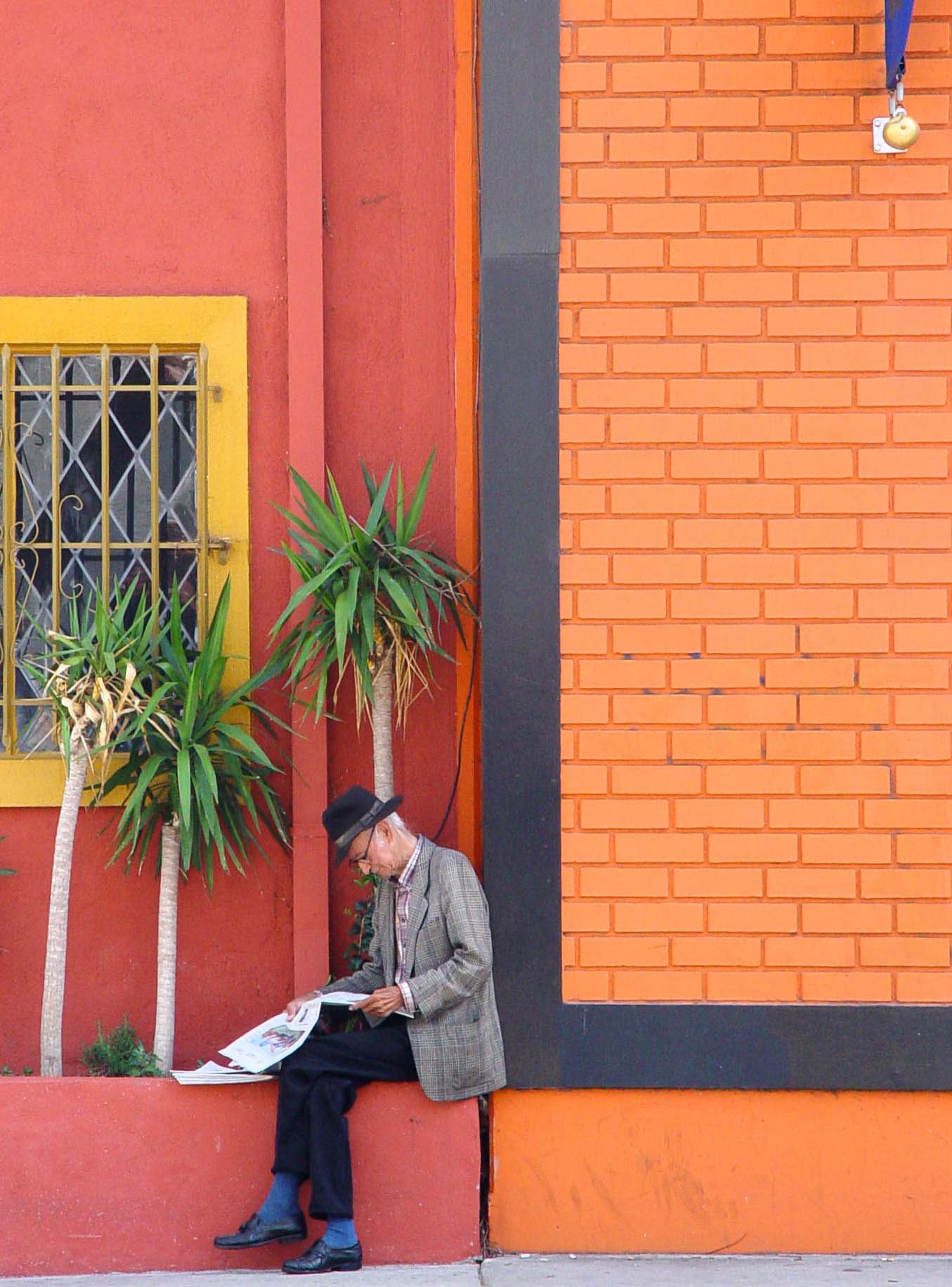
I have loved photography since receiving my first camera when I was eight years old. My early pictures were of our pets, my friends, and an occasional tree. Since then I have played with many different cameras, studied art, learned how to develop and print my own black and white images, and transitioned to digital cameras and digital printing. I started selling my prints and greeting cards at art fairs and in gift shops. One of my early successful images, was a moment I caught in LA while waiting for a ride. A man walked into my view across the street, sat on a wall in front of an orange building and started reading a newspaper. His blue socks matched a blue flag above him. Later I realized that the image had the feel of a painting by Mondrian, with geometric blocks of solid color.
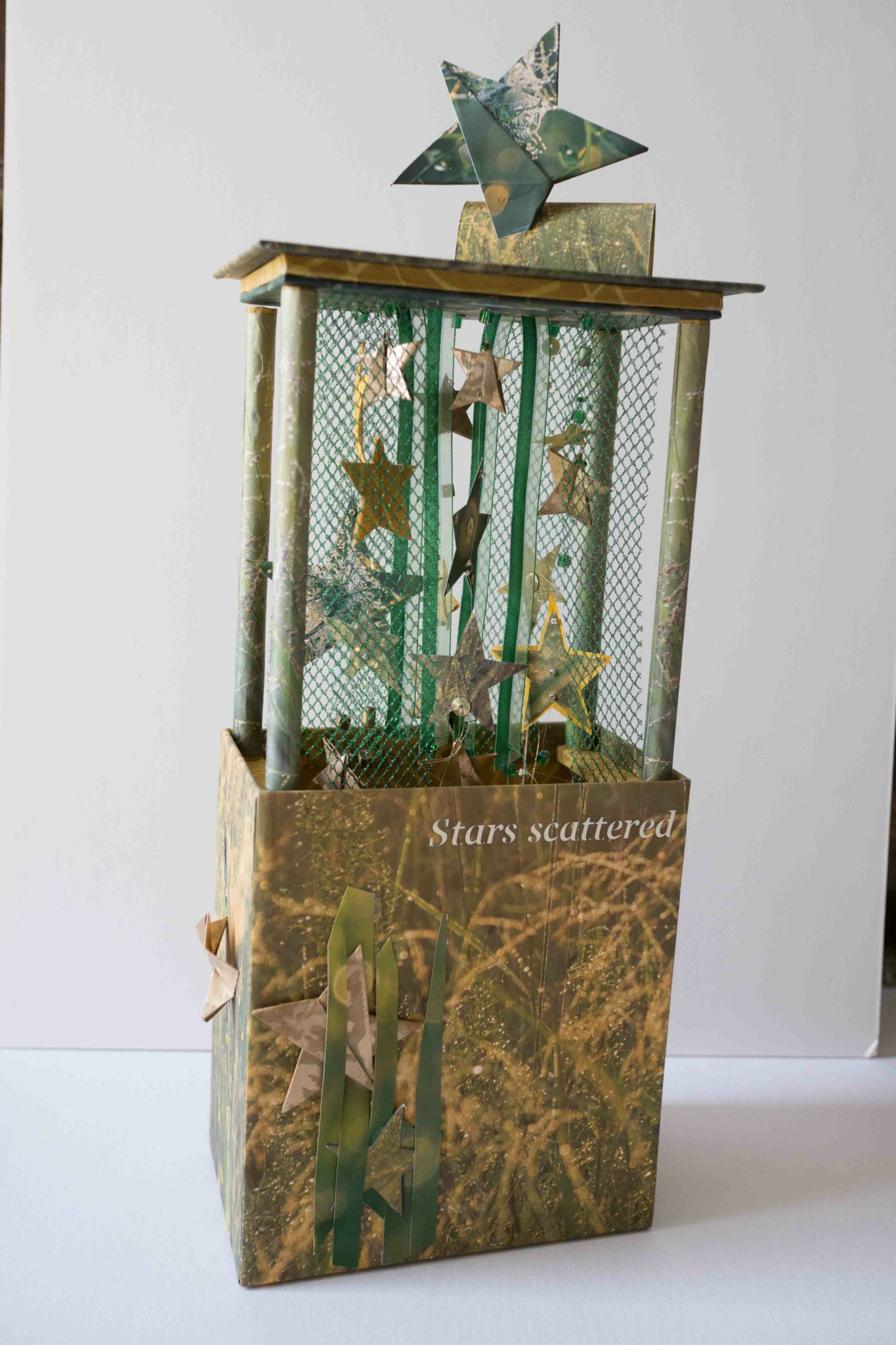
Selling my cards and prints influenced my choice of subjects. I would only sell an image including a person if they were unrecognizable, or if I had their permission, so gradually the patterns and colors of nature or man-made objects dominated my work. I had been introduced to handmade artist-books, so was adding words, or poems to the books of my images. I was intrigued by the designs and words in grates in sidewalks and had taken a series photos of grates. I asked myself, how could I make a “Grate Book Series” out of these images? The answer was to create a small box to hold four of these grate-pictures, each folded into a tiny book. Hence grew my interest in creating boxes out of my images. I loved the hands-on creating, and the endless ways of creating different combinations of images, discovering the use of origami in the structures of the boxes or the books. One idea led to another. I figured out how to imbed origami flowers in the lid of a box so it could be put on “upside down” with the garden on top of the box. Then a friend asked, could I extend the lid and make a taller box…so I figured out how to do that, and added different objects to hang from the top…leaves made of cloth, beads, small photos, etc.
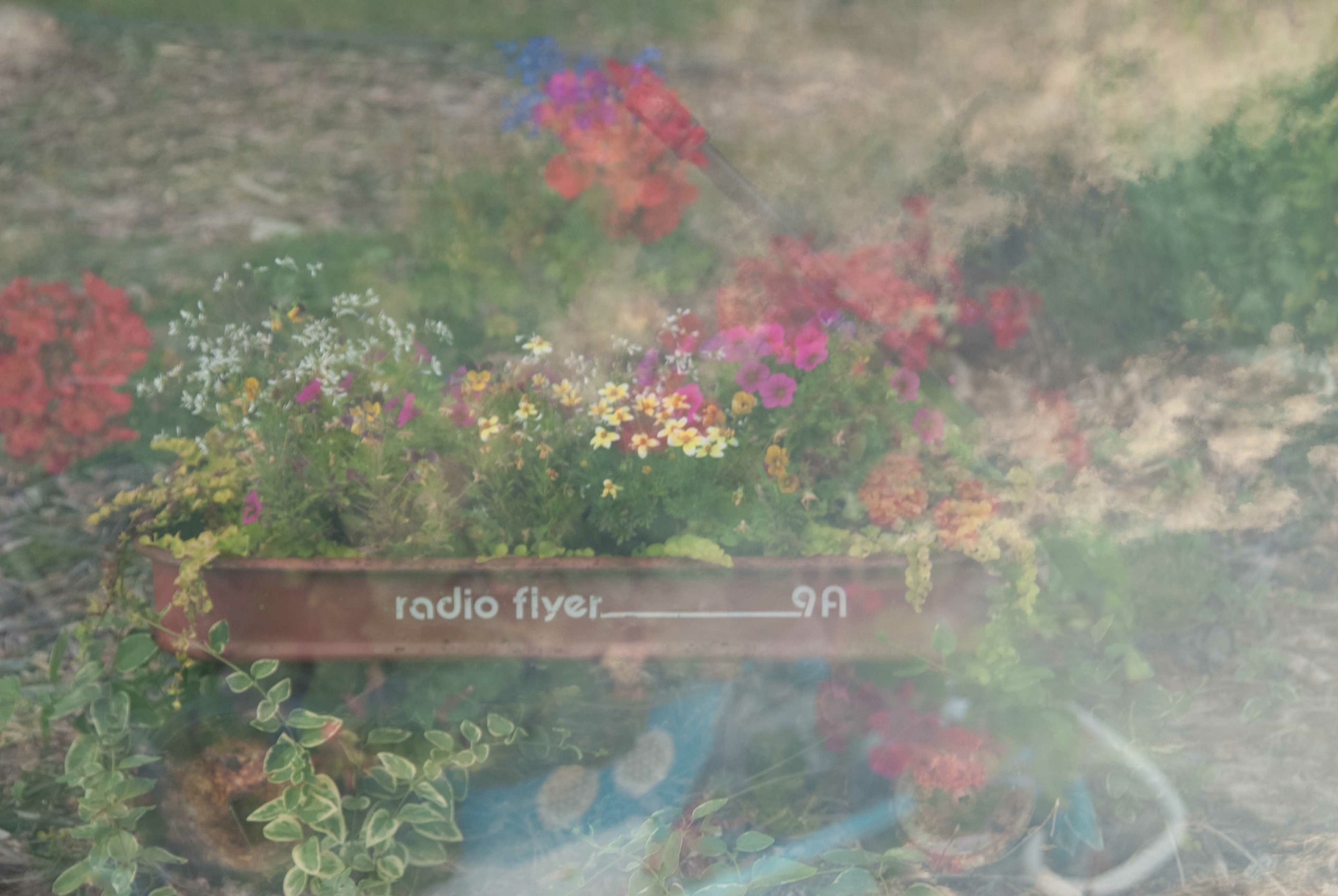
Meanwhile my photographic techniques had evolved, so that many of my images now are multiple exposures or intentional movement of the camera during exposure (“ICM”). Images created this way are more metaphorical than realistic, and I believe more suggestive of emotions.
For the past decade I have been a member of a writers’ group of women who meet weekly to discuss their writing, often to a shared prompt. Now and then my piece would be about my experiences caring for my husband who had Alzheimer, and my friends would say, “You should publish that. Others are going through the same thing and it would be helpful.” After he died, I selected thirty-nine pieces of writing, paired each with one of my images that best conveyed the same feeling, and published a book entitled, Out of Focus, A Caregiver’s Search for Clarity. I feel this book is my greatest accomplishment as an artist, and I know from some who have read it, that it is helpful to others.
What do you find most rewarding about being a creative?
Whenever I am involved in a creative activity I am fully absorbed. My concentration is complete, and I can lose track of time. This is true of performing a character, directing a play, or photographing flowers covered with droplets of dew. Mundane worries fall away, and I am totally present in the moment.
What can society do to ensure an environment that’s helpful to artists and creatives?
Society needs to value people over profit.
Governments (local, state, federal) should provide grant money to artists/creatives, for worthy projects, or ways of furthering their growth, education in their chosen interest. Such grants should also be offered by foundations, which have resulted by amassed wealth (such as the McKnight Foundation).
Public attention to the achievements of artists is vital.
All citizens can support artists through attendance of performances, gallery exhibits, art fairs, and by purchasing art.
Society should also provide opportunities for people for education and to participate in the arts, regardless of age or level of expertise.
Contact Info:
- Website: https://www.patsydewpix.com
- Instagram: patsy.dew
- Facebook: Patsy Dew
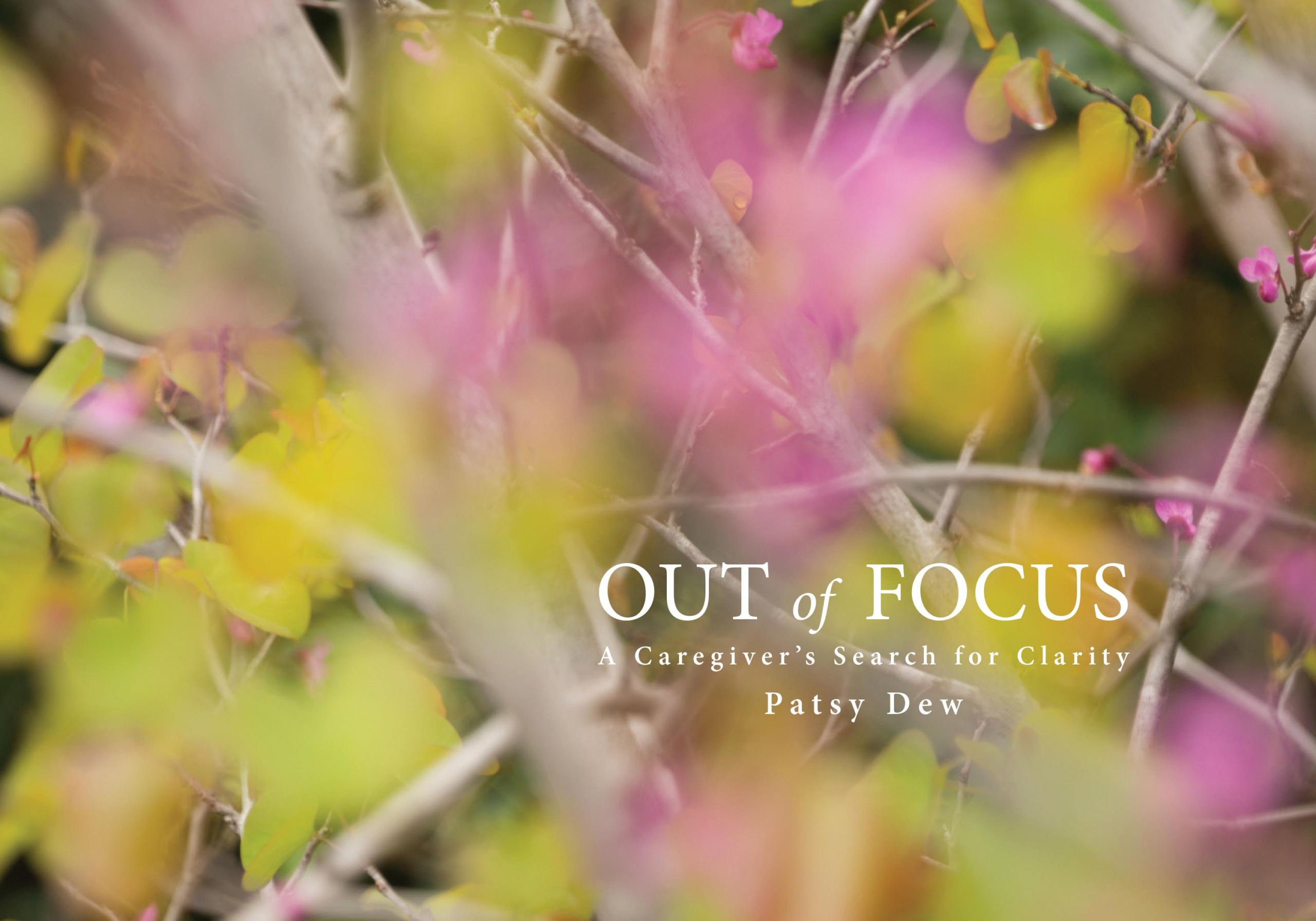

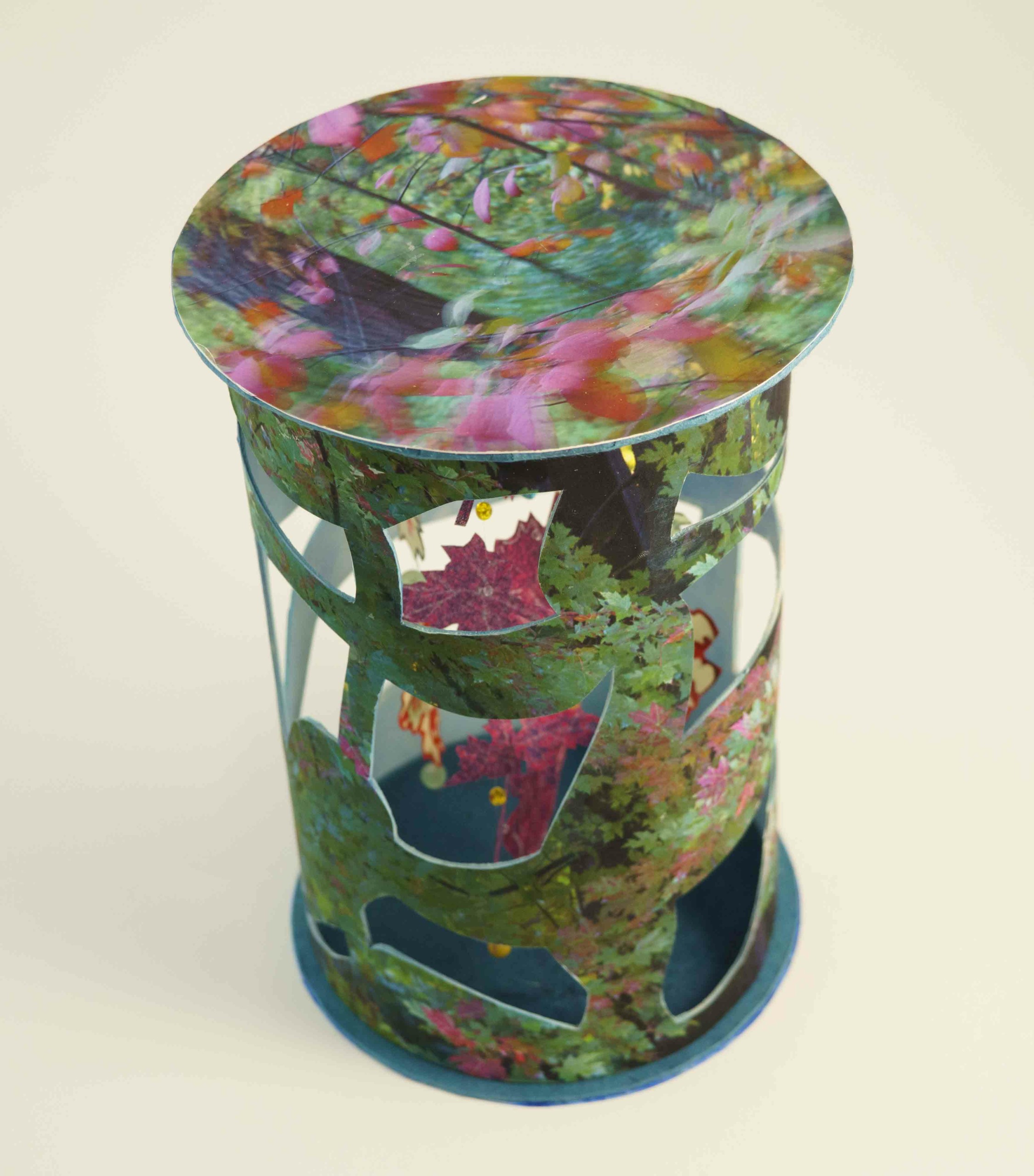
Image Credits
Patsy Dew