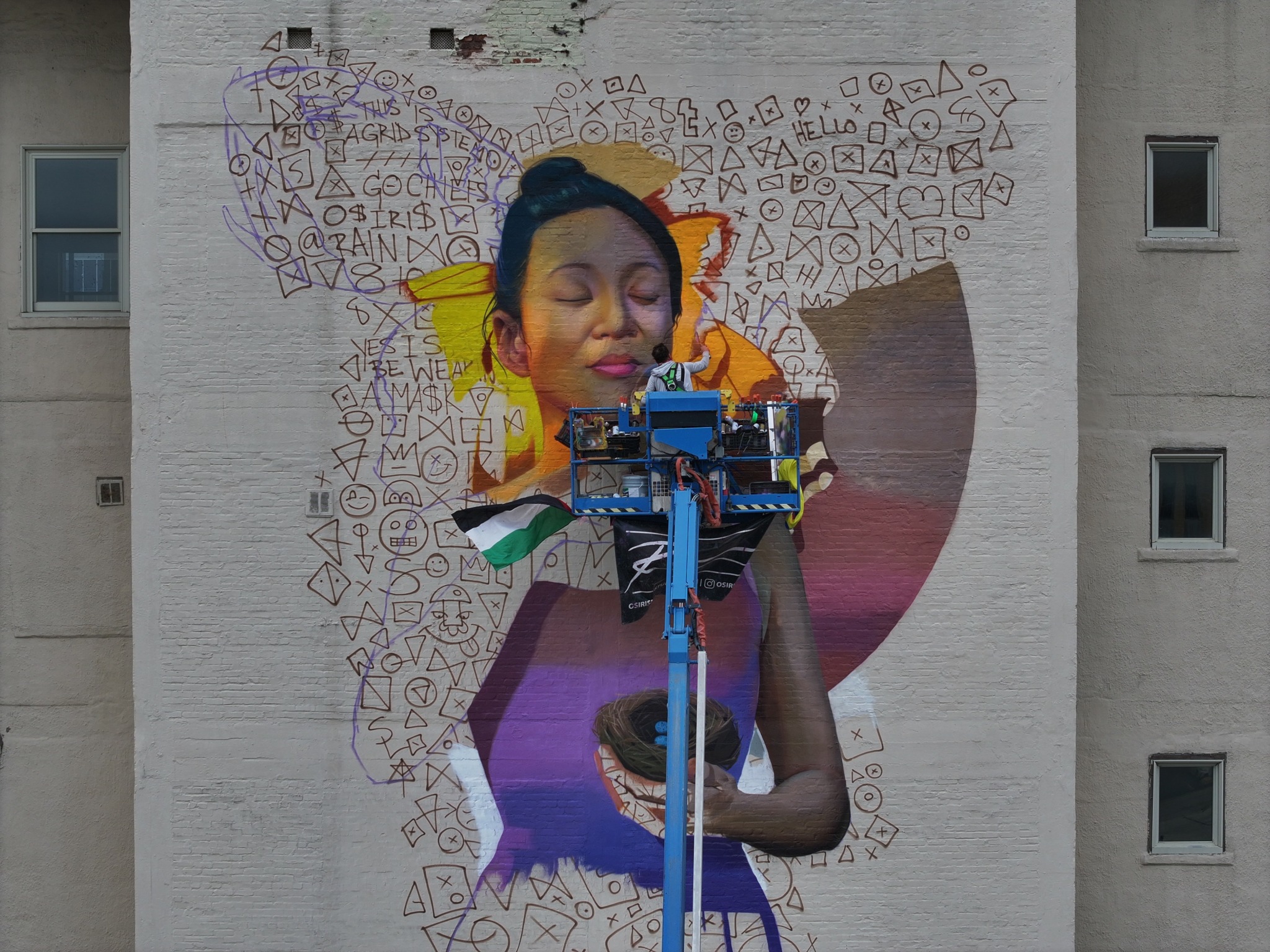

We recently connected with Osiris Rain and have shared our conversation below.
Alright, Osiris thanks for taking the time to share your stories and insights with us today. It’s always helpful to hear about times when someone’s had to take a risk – how did they think through the decision, why did they take the risk, and what ended up happening. We’d love to hear about a risk you’ve taken.
When Pat McCrory eliminated film incentives in North Carolina, the path I’d been on disappeared almost overnight. I had a clear choice: move to Atlanta and keep chasing a film industry that could shift again at any moment, or stay in Charlotte and figure out how to build something on my own. I chose to stay—which, at the time, felt less like confidence and more like committing to uncertainty.
There was no real plan. I started painting signs, taking any job I could get—commercial work, odd jobs, whatever kept me afloat. It was scrappy and inconsistent, but it forced me to get resourceful fast and say yes to opportunities before I felt fully ready.
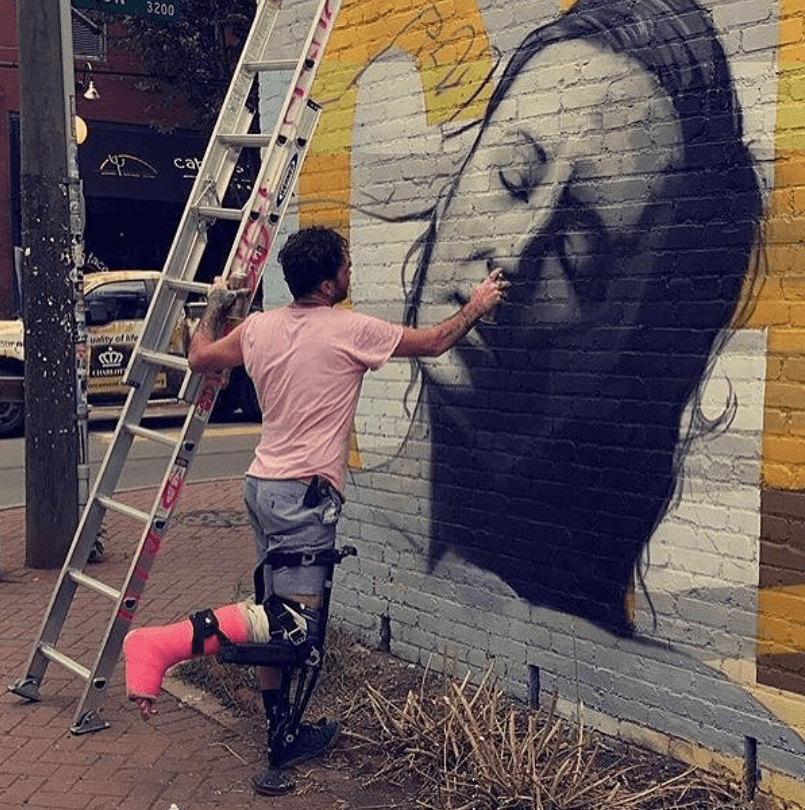
Then an opportunity came through to paint a mural for Stella Artois as part of their national *“Art of the Chalice”* campaign. It was a big leap—high visibility, a corporate client, and a scale of work I hadn’t fully proven yet. On top of that, I was dealing with a broken leg at the time.
I took it anyway.
I painted that first mural in NoDa on crutches—climbing, balancing, and pushing through it because I knew what it could mean if I got it right. It wasn’t comfortable, and it definitely wasn’t ideal, but it sharpened my focus. People started stopping to watch, talk, and question—it turned into something bigger than just a job.
When the campaign ended, I made another decision that didn’t make financial sense on paper: I repainted the entire mural on my own dime to turn it from a temporary advertisement into a permanent piece for the neighborhood. That move mattered. It showed me—and everyone watching—that I wasn’t just passing through this work, I was committing to it.
That project changed everything. It led to more walls, more trust, and eventually a full transition into mural work. But more than that, it marked the moment I stopped waiting for a stable path and started building one.
Looking back, the biggest risk wasn’t painting a mural with a broken leg. It was choosing to stay in a place where my industry had just collapsed—and betting that I could create something new from that uncertainty.
Osiris , love having you share your insights with us. Before we ask you more questions, maybe you can take a moment to introduce yourself to our readers who might have missed our earlier conversations?
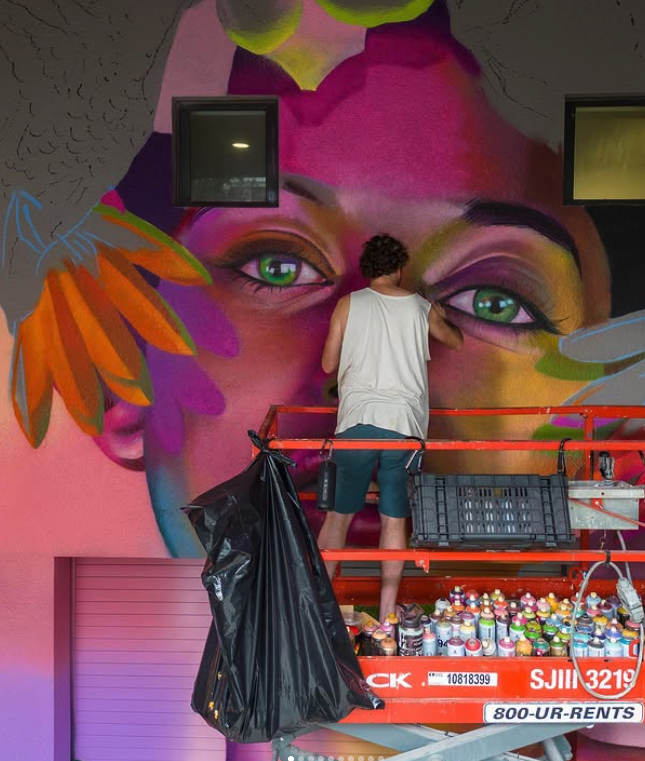
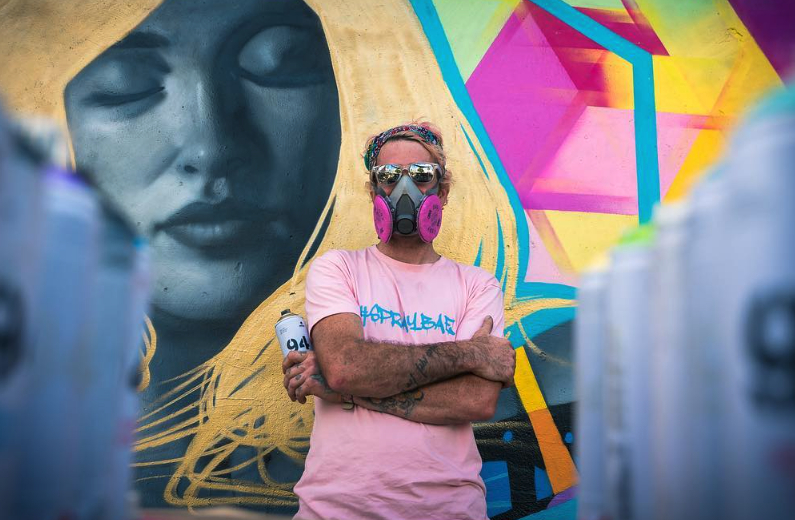
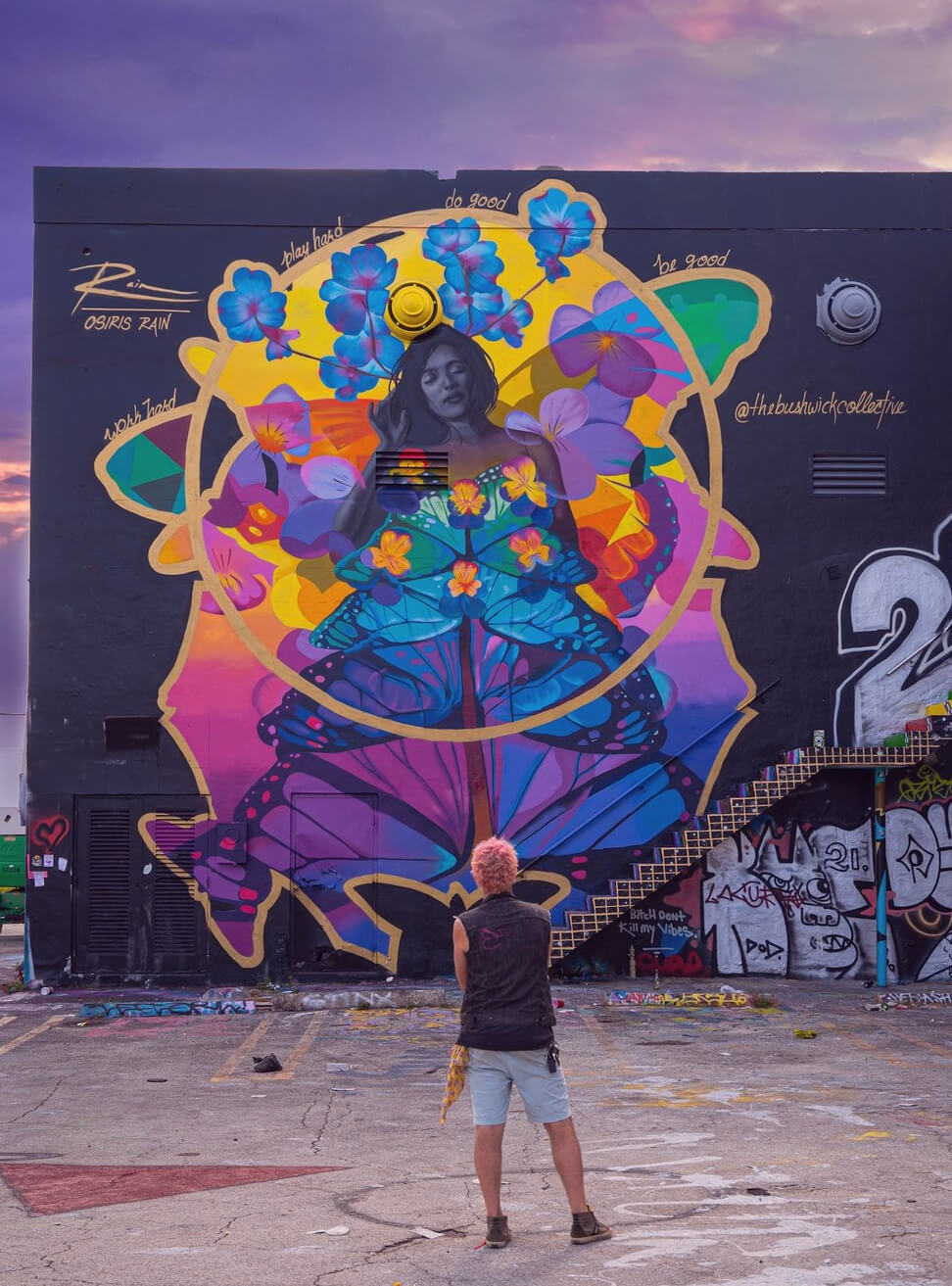
I’m a Charlotte-based muralist and painter, and I’ve been building work across the globe for over two decades. My background is rooted in traditional academic painting—I studied at the Angel Academy of Art in Florence, Italy, and later apprenticed at the Nerdrum School in Norway—so my foundation is very much in realism. But over time, that evolved. What I do now sits somewhere between realism, abstraction, and surrealism—layered, symbolic work that pulls from nature, mythology, and the specific identity of the place where the mural lives.
I didn’t start out intending to be a muralist. Like a lot of people, I came into it sideways. When the film industry left North Carolina, I had to pivot quickly. I started taking on any painting work I could find—signs, commercial jobs, whatever was available. That eventually led to a large public mural project for Stella Artois, and that moment really opened the door. From there, it became clear that murals weren’t just a fallback—they were a way to build something meaningful, visible, and lasting.
At a core level, what I offer is large-scale public artwork that helps define space. I work with developers, cities, and organizations to create murals that don’t just decorate a wall but anchor a location—something that gives people a sense of identity, pride, and connection to where they are. A lot of my work is rooted in research. I spend time understanding the history of a place, the ecology, the people, and then I build that into the design through symbolism and layered imagery. There are usually “easter eggs” embedded in the work—details that reward people who spend time with it or who are from that place.
From a client perspective, I’m solving a few things at once. I’m helping activate underutilized space, increasing visibility and foot traffic, and creating something that people actually engage with—not just pass by. There’s also a branding component. Especially with developers, a mural can become a landmark that defines a property or even an entire district. I’ve worked on projects across the country, and the common thread is always the same: people want something that feels authentic, not generic.
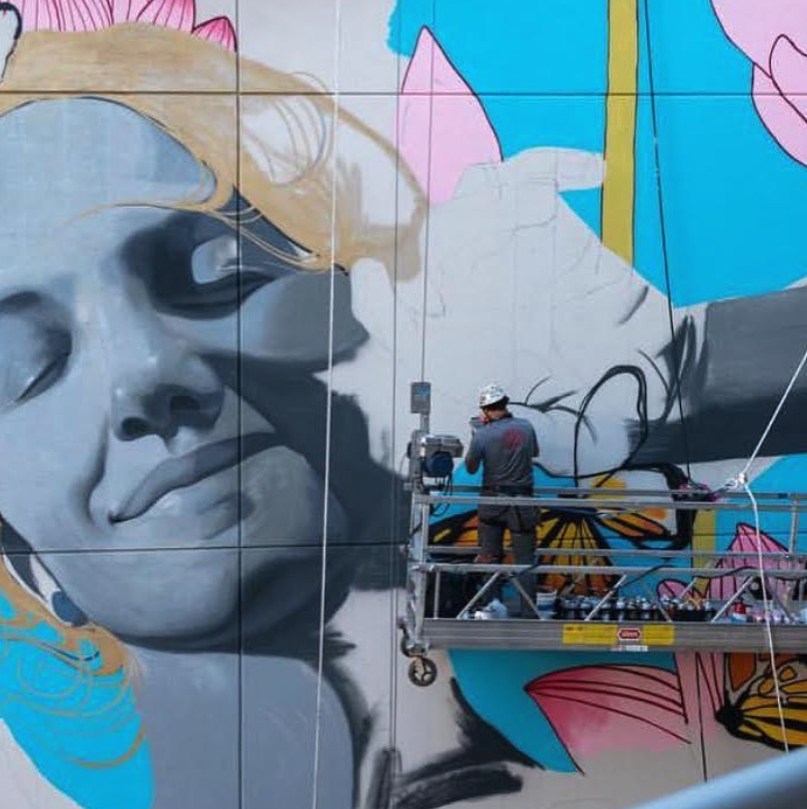
What sets me apart is probably the combination of classical training and street-level execution. I’m just as comfortable building a realistic portrait as I am designing a large, abstract composition that reads from 200 feet away. I also think I bring a level of intentionality to the work—there’s always a deeper structure underneath the visual. It’s not just aesthetic, it’s conceptual.
One of the things I’m most proud of is founding TAOH Outdoor Gallery here in Charlotte. It’s a public-access art space that functions as a living gallery—rotating murals, workshops, and community events. The goal was to create something that lowers the barrier to entry for public art, both for artists and for the community. It’s not just about my work, it’s about building infrastructure for other artists and creating a space where people can engage with art directly.
As far as what I want people to know, my work is about connection. Between people, between humanity and nature, between past and present. I’m interested in creating pieces that feel like they belong where they are, but also operate on a more universal level. And from a practical standpoint, I take the process seriously. I understand budgets, timelines, logistics—I know how to deliver large-scale work professionally.
At the end of the day, I’m not just painting walls. I’m building landmarks that people return to.
Is there something you think non-creatives will struggle to understand about your journey as a creative? Maybe you can provide some insight – you never know who might benefit from the enlightenment.
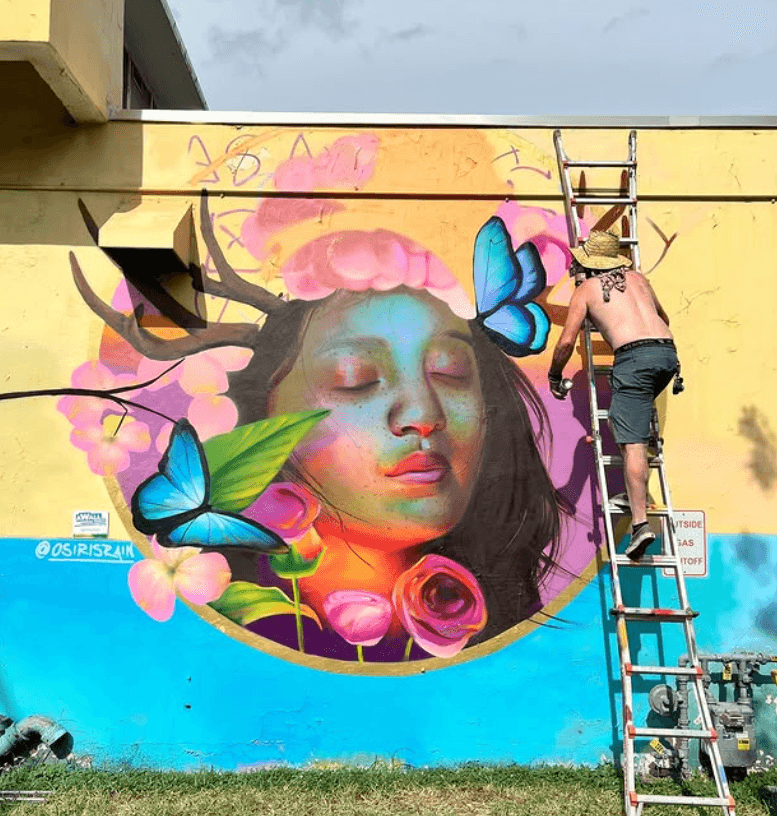
One thing that’s hard to explain to non-creatives is how nonlinear—and honestly how unstable—the path can be, even when you’re doing everything right.
From the outside, it can look like a series of opportunities stacking on top of each other: bigger walls, bigger clients, more visibility. But behind that is a constant cycle of uncertainty. Projects don’t come in evenly. You can go from being fully booked to having nothing confirmed for months. There’s no clear ladder, no guaranteed progression, and no real “arrival point” where it suddenly becomes secure. You’re always building while standing on it.
Another thing people don’t always see is how much of the work isn’t painting. A huge portion of what I do is writing proposals, negotiating contracts, budgeting, coordinating logistics, managing risk, and communicating with stakeholders. The painting is the visible part, but it’s supported by a lot of invisible structure. If you can’t handle that side of it, it’s very difficult to sustain a career long-term.
There’s also a misconception that creative work is driven purely by inspiration. In reality, it’s discipline. You show up whether you feel inspired or not. You solve problems in real time—weather, equipment, surfaces, timelines—and you’re often making permanent decisions at a large scale, under pressure. There’s no undo button on a 60-foot wall.
I think the biggest thing, though, is that you have to be willing to bet on yourself repeatedly, without immediate validation. There are long stretches where you’re investing time, money, and energy into something that hasn’t paid off yet—and might not. That can be difficult to understand if you’re used to more traditional paths where effort and reward are more directly linked.
If there’s any insight to take from that, it’s that sustainability in a creative field doesn’t come from talent alone. It comes from resilience, adaptability, and a willingness to keep moving forward even when the outcome isn’t clear.
How can we best help foster a strong, supportive environment for artists and creatives?
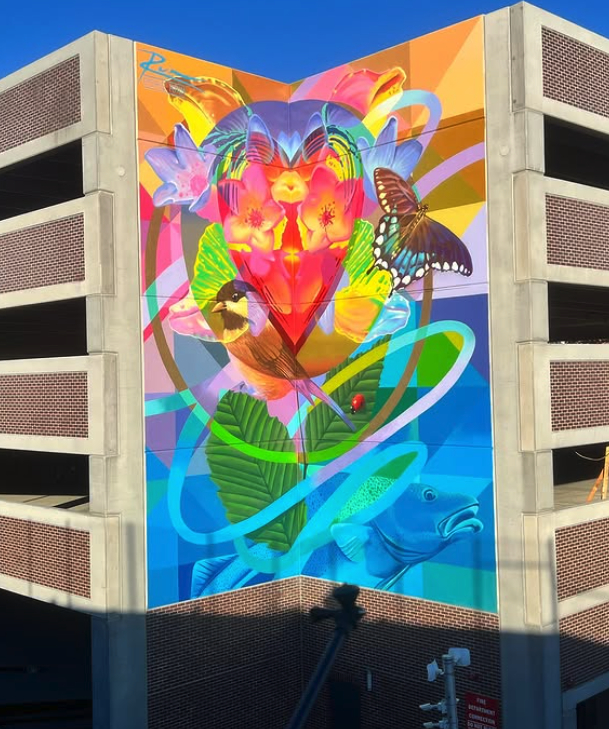
The biggest shift society can make is recognizing that art isn’t a luxury add-on—it’s infrastructure. It shapes how people experience a place, how communities see themselves, and how cities compete culturally and economically. When that’s understood, support becomes less about occasional funding and more about intentional integration.
At a practical level, that starts with embedding artists into projects early. Too often, creatives are brought in at the end to “decorate.” The strongest work happens when artists are part of the conversation from the beginning—working alongside architects, developers, and planners to shape the identity of a space. That leads to work that feels rooted instead of applied.
There also needs to be more consistency in funding and policy. One-off grants are helpful, but they don’t create stability. Programs that provide recurring support, percent-for-art allocations, and clear pathways for public art commissions give artists the ability to plan long-term and build sustainable careers. Just as important is cutting unnecessary friction—simplifying permitting, approvals, and contracting so projects can actually happen without months of stalled momentum.
Another piece is valuing artists as professionals. That means fair pay, clear contracts, and respect for the time and expertise involved. There’s still a tendency to treat creative work as something driven by passion alone, which leads to undercompensation. In reality, artists are small business owners managing budgets, timelines, liability, and execution at a high level.
On the community side, access matters. Spaces where people can encounter and participate in art—public walls, workshops, open studios—help build a culture that supports creativity from the ground up. That’s a big part of why projects like TAOH Outdoor Gallery matter. When people can engage directly with the process, it demystifies the work and builds a real connection.
And finally, there has to be room for risk. Not every project needs to be safe or universally agreeable. The work that actually moves culture forward usually challenges something—visually, conceptually, or socially. Supporting a thriving creative ecosystem means allowing artists the freedom to explore, experiment, and sometimes fail.
If those pieces are in place—early inclusion, consistent support, professional respect, community access, and room to take risks—you start to see a shift. Art stops being something occasional and becomes something embedded in everyday life.
Contact Info:
- Website: https://www.osirisrainstudios.com/
- Instagram: https://www.instagram.com/osirisrain/