
We were lucky to catch up with Misty Carter recently and have shared our conversation below.
Misty, looking forward to hearing all of your stories today. Alright, so you had your idea and then what happened? Can you walk us through the story of how you went from just an idea to executing on the idea
I didn’t start with a business plan.
I started with noticing.
The idea didn’t arrive as a lightning bolt or a polished vision. It came quietly, through conversations, community gatherings, and moments where I realized people were already coming to me for space. Not for answers, but for room to think, to untangle, to be heard without being rushed.
At first, I didn’t call it a business. It felt more like a responsibility I was being trusted with.
The first real step wasn’t launching, it was listening.
I began paying attention to patterns. What people consistently asked me for. Where conversations slowed when I was present. What kind of space people said they couldn’t easily find elsewhere.
The next phase was quiet and internal. I spent months clarifying what this work was and just as importantly, what it wasn’t. I had to unlearn the idea that value only comes from urgency or output. This work lived in process, relationship, and trust.
Practically, that meant journaling, reflecting after gatherings, tracking what felt aligned, and saying no to things that didn’t fit even when they looked like opportunities.
Only after that clarity began to settle did I start building structure around it. I slowly created language for the work, set boundaries around my time and energy, and learned the administrative pieces needed to make it sustainable. The goal wasn’t speed, it was integrity.
There wasn’t a single launch day. There was a gradual crossing.
One day, I realized I wasn’t just responding when asked, I was intentionally inviting. I was naming the work publicly and trusting that the people meant to find it would recognize it.
What moved me from idea to execution wasn’t confidence it was commitment. Commitment to listening first, letting the work evolve organically, and building something that could be held with care, not rushed into form.
Looking back, the most important step wasn’t deciding to start a business.
It was deciding to steward the work.
Misty, love having you share your insights with us. Before we ask you more questions, maybe you can take a moment to introduce yourself to our readers who might have missed our earlier conversations?
At my core, I am a community steward, facilitator, and cultural organizer whose work sits at the intersection of wellness, leadership, and collective healing. I didn’t come into this work through a traditional wellness or business pathway. I came into it through lived experience by being present in community, listening deeply, and responding to what was missing.
My background spans disaster recovery, Indigenous advocacy, economic development, and leadership training, but the throughline has always been people. Over time, I noticed that whether I was working in recovery spaces, professional settings, or cultural gatherings, the same need kept emerging: people were looking for spaces that were thoughtful, relational, and rooted in care not rushed, transactional, or performative.
That noticing led to the creation of Wahine Wellness Resilient Hawai’i and later the Ka Lokomaika‘i Collective™.
Wahine Wellness was born out of a need for spaces where women especially Indigenous women could slow down, reconnect with themselves, and tend to what often gets neglected in leadership and caregiving roles: emotional processing, nervous system regulation, storytelling, and collective support. The work centers on healing circles, reflective practices, mending and creative processes, and facilitated conversations that allow people to be fully human. These are not clinical spaces, and they are not motivational spaces. They are spaces of listening, safety, and intentional presence.
Ka Lokomaikaʻi Collective grew as an extension of that work, focused on leadership, economic empowerment, and community-building through values-based practice. Inspired by Queen Liliʻuokalani’s benevolent society, the Collective centers generosity, reciprocity, and mutual uplift. It brings together women leaders, entrepreneurs, and community practitioners to share resources, build skills, and support one another in ways that are collaborative rather than competitive. The emphasis is on sustainability of people, of businesses, and of community relationships.
Across both platforms, the services and offerings I provide include facilitation, convening, curriculum development, leadership circles, workshops, retreats, and community-based programs. I also support organizations and leaders who are navigating transition, growth, or recovery by helping them slow down enough to clarify their values, strengthen relationships, and build structures that are aligned rather than extractive.
The problems I help solve are not always easily named, but they are deeply felt. People come to this work when they are overwhelmed, disconnected, burned out, or carrying responsibilities without adequate support. Organizations come when they sense that something is misaligned, when productivity has outpaced care, or when community trust needs to be rebuilt. My role is to help create the conditions where clarity, repair, and forward movement can emerge naturally.
What sets my work apart is that it is process-centered, culturally grounded, and relational. I don’t rush people to outcomes. I don’t impose one-size-fits-all frameworks. I design spaces with intention, honor what is already present, and trust that when people feel safe and supported, meaningful change follows. The work is as much about how we gather as what we do.
What I am most proud of is not a single program or milestone, but the trust that communities place in this work. I’m proud that people return, bring others with them, and carry what they’ve learned back into their families, workplaces, and communities. I’m proud that the work remains rooted in integrity, even as it grows.
What I want potential clients, collaborators, and community members to know is this: this work is not about fixing people. It’s about creating spaces where people can listen to themselves, reconnect with one another, and move forward with greater care and clarity. Whether through Wahine Wellness or the Ka Lokomaikaʻi Collective, the invitation is always the same to gather with intention, to act with generosity, and to build something that can be sustained.
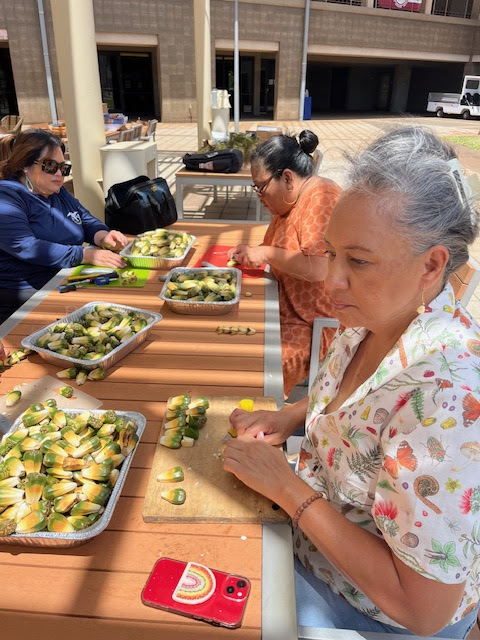
Let’s talk about resilience next – do you have a story you can share with us?
Wahine Wellness was born from grief.
At a relatively young age, I lost three of the most significant pillars in my life my grandmother, my husband, and my mother. Each loss reshaped me, but it was the convergence of life and death that truly changed my path. I gave birth to my fourth child just days before losing my mother; at the same time, I was turning thirty-five. That season held birth, mourning, postpartum recovery, and profound transition all at once.
I wasn’t prepared for how layered that experience would be. There was no roadmap for grieving while nurturing new life, no space where the emotional, physical, and spiritual realities of that moment could coexist. What I noticed—both then and in the years that followed was how often women are expected to move through major life transitions without adequate support or acknowledgment.
As time passed, I began to see how common these moments were. Women navigating abrupt career changes. Caring for young children while also becoming primary caregivers for aging parents. Experiencing loss, identity shifts, and responsibility overload all at once. These transitions often happen quietly, without ceremony, community, or pause.
Wahine Wellness emerged from a desire to meet women in those spaces to create containers where transitions are honored rather than rushed, and where grief, growth, and responsibility can be held together. The work prioritizes slowing down, listening deeply, and creating safety during moments when life is asking a lot from us.
This lens has also shaped my deep care for incarcerated individuals and issues of recidivism. At the heart of that concern is the same understanding: people are often navigating enormous life transitions without the support systems needed to heal, stabilize, and move forward. Whether in community, family, or institutional spaces, the absence of care during transition can have lasting consequences.
Resilience, for me, has meant learning how to hold complexity, how to allow grief and purpose to coexist, and how to transform lived experience into work that supports others. Wahine Wellness is not just a business; it is a response to what I lived, what I witnessed, and what I believe is possible when we meet each other with care during life’s most pivotal moments.
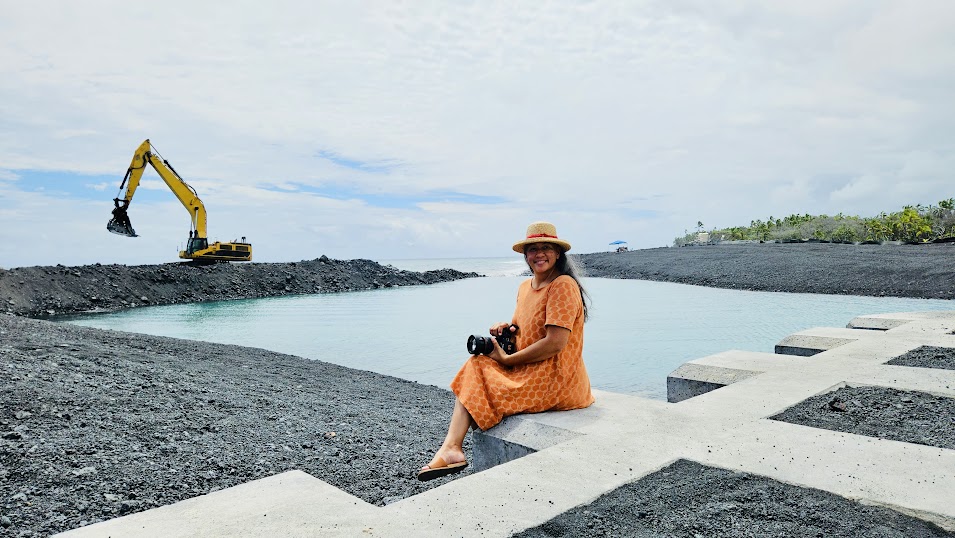
How’d you build such a strong reputation within your market?
I believe my reputation was built through honesty, consistency, and the way I show up in relationship with people.
From the beginning, I’ve been open about what I can offer and equally honest about what I cannot. I don’t present myself as having everything figured out, and I don’t separate my humanity from my work. Sharing openly about learning, grief, transition, and growth has helped create trust, because people can feel when something is real.
Another important factor has been having a strong support system at home. That grounding allows me to show up in community with clarity and steadiness. When your personal foundation is supported, you’re able to model integrity, care, and accountability in your public work. People notice when your words and actions align over time.
I’ve also been intentional about not cutting corners, even when it would have been easier or faster. I prioritize relationships over visibility and process over performance. That means listening carefully, following through, and being willing to have honest conversations when things are misaligned.
Ultimately, my reputation wasn’t built through marketing, it was built through trust. By showing up with care, staying transparent, and being supported enough to remain grounded, I’ve been able to do work that people feel safe engaging with and confident recommending to others.
Contact Info:
- Instagram: wahine_wellness