
We were lucky to catch up with Michelle Roberts recently and have shared our conversation below.
Alright, Michelle thanks for taking the time to share your stories and insights with us today. Often outsiders look at a successful business and think it became a success overnight. Even media and especially movies love to gloss over nitty, gritty details that went into that middle phase of your business – after you started but before you got to where you are today. In our experience, overnight success is usually the result of years of hard work laying the foundation for success, but unfortunately, it’s exactly this part of the story that most of the media ignores. Can you talk to us about your scaling up story – what are some of the nitty, gritty details folks should know about?
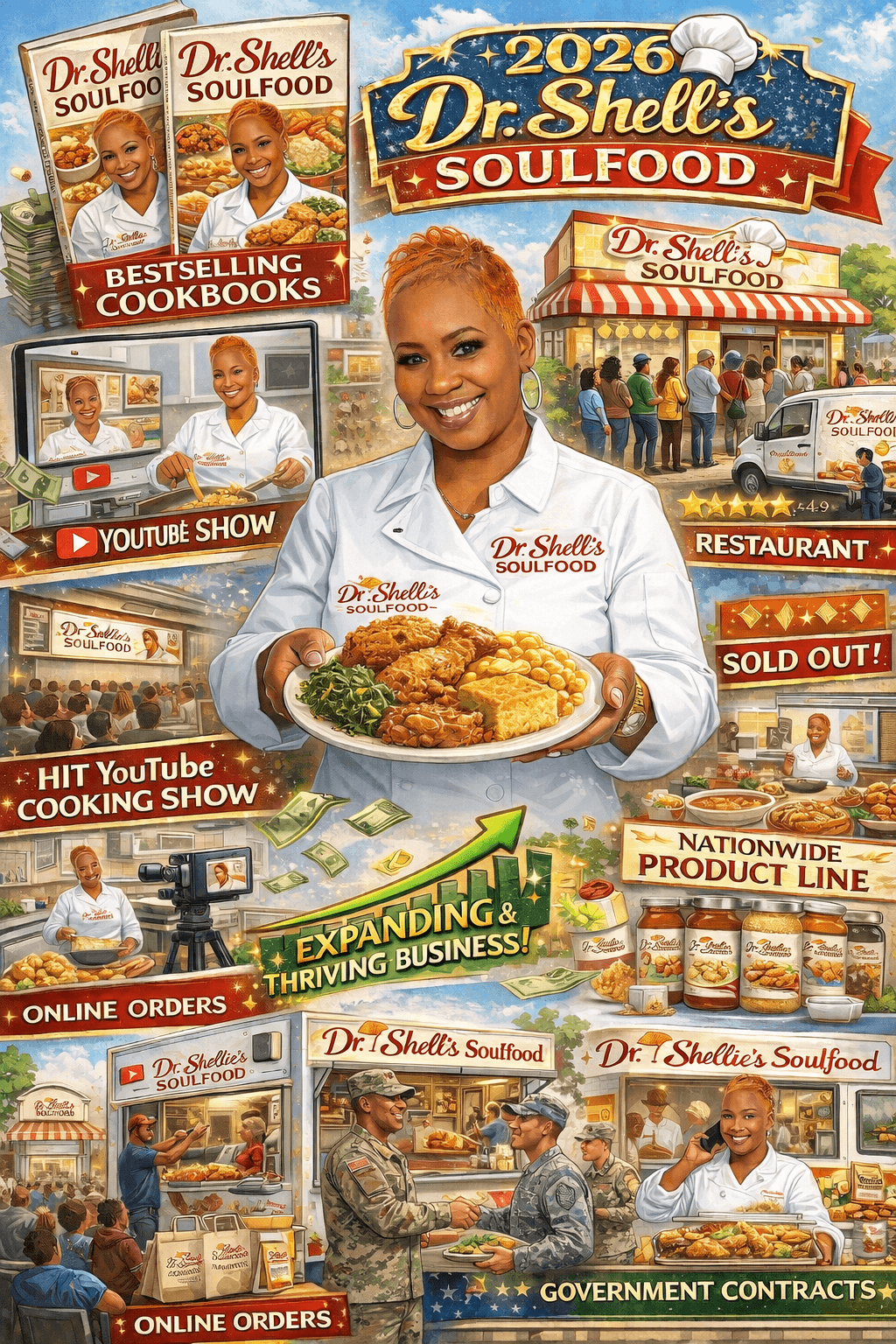
From the outside, Dr. Shell’s Soul Food looks like it rose quickly — growing catering contracts, winning government work, expanding brand presence, increasing visibility online.
But there was nothing overnight about it.
I launched during the pandemic in 2020. The world was uncertain. Events were canceled. Restaurants were closing. And I was building something from scratch.
Phase 1: Survival Mode (Foundation Building)
In the beginning, I wasn’t scaling — I was surviving.
I was:
Cooking every meal myself
Designing menus
Managing orders manually
Marketing on social media
Delivering food personally
Working a full-time corporate role
There were no automated systems. No staff. No formal invoicing workflows. No government contracts.
Just consistency.
The first lesson I learned:
Talent attracts attention. Systems build stability.
Phase 2: The Systems Wake-Up Call
I hit a ceiling.
I was booked — but exhausted. Revenue was increasing, but so was stress. Every event required me personally.
That’s when I realized something hard:
If the business cannot operate without you, you don’t own a business — you own a job.
So I shifted.
Instead of focusing on cooking better, I focused on:
Standardized recipes and portion controls
Production logs
Vendor relationships
Clear pricing tiers
Written SOPs
Invoice templates and tracking
Contract compliance structures
This was not glamorous work.
No one posts about building a compliance matrix.
But that’s the phase that changed everything.
Phase 3: Strategic Positioning
Winning a government contract did not happen by accident.
It required:
Registering properly
Understanding NAICS codes
Building a capability statement
Creating documentation systems
Learning how agencies actually purchase food
I stopped thinking like a cook.
I started thinking like a vendor.
That mindset shift was massive.
Instead of asking:
“How do I book more events?”
I began asking:
“How do I become procurement-ready?”
That decision opened doors I couldn’t access before.
Obstacles & Mistakes
Let’s be honest:
I underpriced early on.
I said yes to jobs that drained me.
I overextended myself trying to prove I could do everything.
I waited too long to delegate certain tasks.
But every mistake taught me something operational.
And scaling is operational maturity.
Meaningful Turning Points
Investing in formal culinary education (Escoffier) — confidence + credibility.
Separating brand identity from daily execution.
Documenting processes instead of relying on memory.
Treating catering like a structured enterprise, not a hustle.
What Scaling Actually Felt Like
It wasn’t glamorous.
It was:
Long nights building spreadsheets.
Learning procurement language.
Rewriting menus to meet specs.
Fixing mistakes quickly and professionally.
Building relationships, not just invoices.
Scaling felt like discipline.
The Real Takeaway
People celebrate the visible wins:
Contracts
Followers
Media features
Growth numbers
But what actually built my business was invisible work:
Structure.
Documentation.
Consistency.
Strategic thinking.
Overnight success is usually five years of disciplined decisions stacked quietly.
If someone is in that middle phase right now — exhausted but committed — my advice is this:
Don’t just work harder.
Build smarter.
Document everything.
Think long-term.
Position yourself before you feel ready.
That’s how you scale.
Awesome – so before we get into the rest of our questions, can you briefly introduce yourself to our readers.
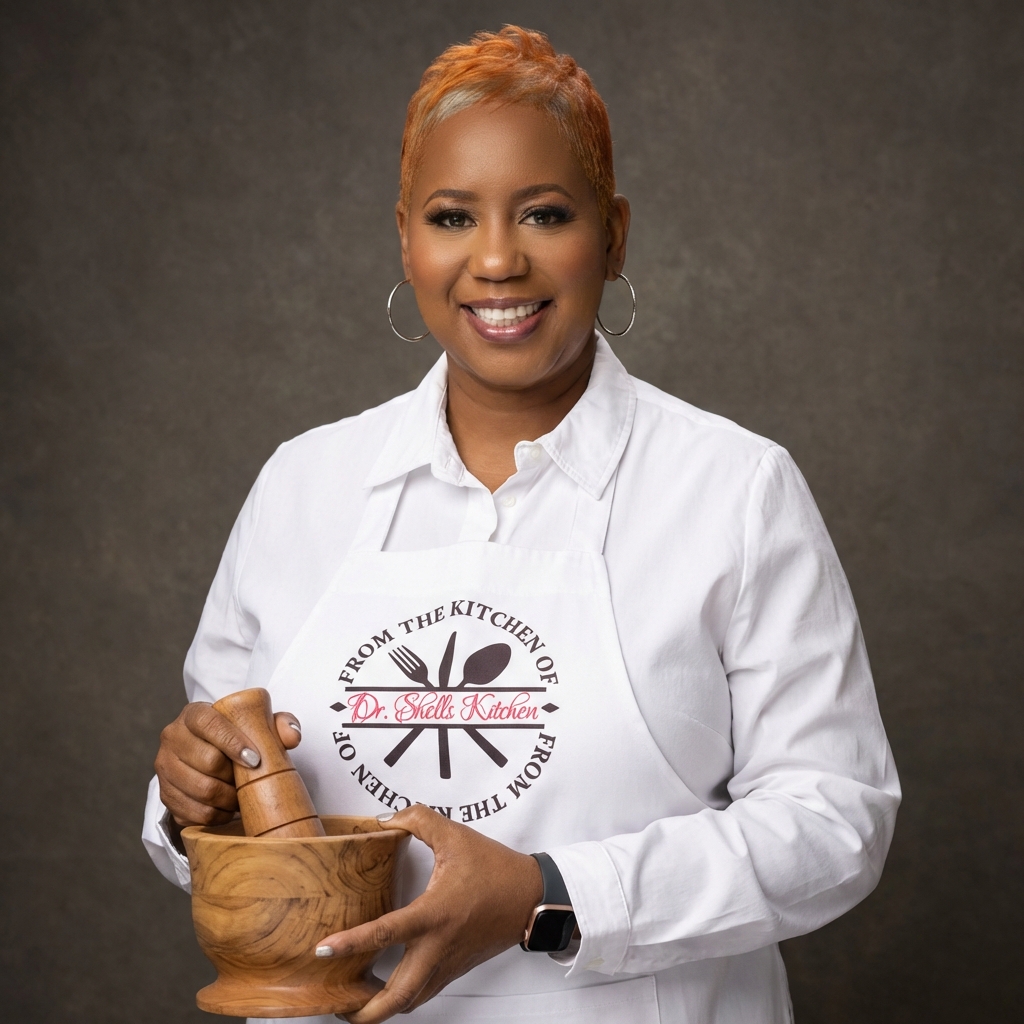
I’m Dr. Michelle A. Roberts, widely known as Chef Dr. Shell — Founder and Executive Chef of Dr. Shell’s Soul Food Kitchen.
I didn’t start in a commercial kitchen. I started in corporate America.
For years, I built a career in systems, compliance, and structured environments — learning how organizations operate behind the scenes. But food was always my foundation. Cooking wasn’t just a skill; it was how I connected, served, and built community.
In 2020, during the uncertainty of the pandemic, I launched Dr. Shell’s Soul Food Kitchen. What began as a leap of faith quickly became something much bigger: a structured catering and food service enterprise rooted in legacy, excellence, and operational discipline.
I later formalized my culinary training through the Escoffier Culinary Program, strengthening both my technical skills and professional credibility.
What We Provide
Dr. Shell’s Soul Food Kitchen specializes in:
• Full-service catering (corporate, weddings, private events)
• Government and institutional food service contracts
• Structured meal prep programs
• Large-scale buffet and plated service
• Down-home soul food elevated with professional presentation
• Customized menus built around client needs and specifications
We serve everything from executive meetings to military contracts — always with consistency and compliance.
The Problems We Solve
Most people think catering is about good food.
But for our clients — especially corporate and government partners — it’s about reliability.
We solve problems like:
• Vendors who don’t show up prepared
• Inconsistent portion control
• Poor documentation or invoicing
• Lack of professionalism
• Failure to meet dietary and regulatory specifications
We bring structure to soul food.
Our clients don’t just get flavor.
They get process.
They get accountability.
They get a vendor who understands procurement language as well as seasoning.
What Sets Me Apart
I think like an operator, not just a chef.
My background in corporate systems and compliance gives me an advantage most culinary entrepreneurs don’t have. I understand documentation, reporting, specifications, and workflow design.
I built during adversity.
Launching during the pandemic forced discipline. There was no room for waste or ego. Only strategy.
I scale with systems.
Every menu item has structure.
Every contract has documentation.
Every event has process behind it.
I bridge creativity and compliance.
That’s rare.
Many chefs are artists.
Many vendors are administrators.
I operate as both.
What I’m Most Proud Of
Winning and executing a government contract.
Not because of the title — but because it validated years of invisible preparation: compliance readiness, structured pricing, production logs, vendor alignment, documentation.
It confirmed that a Black woman-owned soul food brand can operate at enterprise level standards.
I’m also proud that my brand continues to grow without compromising its roots. We still serve food that feels like home — but we execute it like a structured business.
What I Want People to Know About My Brand
Dr. Shell’s Soul Food is not a hustle.
It is a disciplined enterprise built on:
• Legacy
• Systems
• Community impact
• Excellence
• Faith
• Structure
We are expanding intentionally — into government contracting, strategic partnerships, and scalable food service models.
For clients:
You can trust that we will show up prepared.
For aspiring chefs:
You can build something bigger than a kitchen.
For the community:
We are building tables where everyone has a seat.
How did you build your audience on social media?
How I Built My Social Media Audience Organically — From 3,000 to 28,000+
I didn’t grow my social media following overnight, and I didn’t buy followers.
When I started taking my business seriously, I had around 3,000 followers. They were mostly friends, family, and people from my local community.
Today, that audience has grown organically to over 28,000 — and it happened through consistency, referrals, and real relationship-building.
1. I Treated Social Media Like a Relationship, Not a Billboard
In the beginning, I wasn’t posting polished marketing content. I was posting real moments:
Food prep behind the scenes
Event setups
Personal reflections
Wins and lessons
Faith-based encouragement
Community involvement
People don’t just follow food.
They follow people.
I made sure my audience knew who I was, not just what I cooked.
2. I Asked for Referrals — Directly
This is something many people are afraid to do.
When clients were happy, I asked them:
“Can you tag me?”
“Can you refer me?”
“Can you share this?”
“Can you leave a review?”
I didn’t assume support — I invited it.
Word-of-mouth still works. Social media just amplifies it.
A large part of my growth came from satisfied clients sharing their experience publicly.
3. I Showed Up Consistently — Even When Engagement Was Low
There were times when posts got very little traction.
But I stayed consistent.
Consistency builds recognition.
Recognition builds trust.
Trust builds business.
Many people quit at 1,000 followers.
They quit at 5,000.
They quit when a post “flops.”
Growth requires emotional discipline.
4. I Leveraged Real-Life Events
Every catering event became content:
Before
During
After
Instead of seeing events as one-time revenue, I saw them as brand visibility.
A wedding for 90 guests could turn into:
5 new referrals
10 new followers
2 future bookings
When you treat every event as a marketing opportunity, growth compounds.
5. I Shifted From Posting Food to Posting Positioning
At first, my page was mostly plates.
Over time, I started sharing:
Business lessons
Government contract milestones
Leadership insights
Behind-the-scenes operations
Strategic thinking
That shift attracted a different audience — not just food lovers, but entrepreneurs, CEOs, and decision-makers.
Your audience grows when your identity evolves.
Advice for Someone Just Starting
Here’s what I tell people who want to grow:
1. Start Before You Feel Ready
Your first content won’t be perfect. Post anyway.
2. Pick a Lane
Don’t try to be everything. Decide:
Are you the comfort food expert?
The event specialist?
The government contractor?
The business mentor?
Clarity attracts followers faster than volume.
3. Engage More Than You Post
Comment.
Respond.
Encourage.
Network.
Social media is social.
4. Focus on Depth, Not Just Numbers
3,000 engaged followers will outperform 30,000 passive ones.
5. Be Patient
Organic growth is slower — but stronger.
When your audience grows through trust, they buy, refer, and advocate for you.
What I’m Most Proud Of
I built my platform without shortcuts.
No fake engagement.
No gimmicks.
No viral stunts that didn’t align with my brand.
Just authenticity, strategy, faith, and consistency.
Are there any books, videos, essays or other resources that have significantly impacted your management and entrepreneurial thinking and philosophy?
ooks That Shifted My Framework
1. Good to Great by Jim Collins
This book taught me the importance of disciplined people, disciplined thought, and disciplined action. In other words:
You build greatness by focusing on fundamentals — not hype.
Level 5 leadership isn’t about ego; it’s about humility and results.
This mindset helped me structure our internal processes long before external recognition came.
2. The E-Myth Revisited by Michael E. Gerber
The core idea here is critical:
👉 You don’t build a business by working in it — you scale it by working on it.
This book forced me to stop being “the chef who does everything” and start building business systems that operate without me at the stove.
3. Start With Why by Simon Sinek
Understanding my why wasn’t just motivational — it became a strategic anchor for our brand. When people know why you do what you do, they connect more deeply.
This shapes how we tell our story, attract followers, and convert clients.
🎥 Videos & Talks That Rewired My Approach
Simon Sinek – “How Great Leaders Inspire Action” (TED Talk)
This reinforced that leadership isn’t about tactics; it’s about clarity of purpose and communication.
Gary Vaynerchuk: Content Strategy Talks
I learned:
Attention is currency
Authentic content beats perfect content
Consistency compounds
His approach always reminded me to create first and refine later — which was essential in the early days.
🧠 Essays, Newsletters, and Thought Leadership
Seth Godin’s Blog – daily insights on marketing, value, and community building.
His emphasis on tribes and permission marketing influenced how I built an audience that actually cares — not just scrolls.
Ben Horowitz – The Hard Thing About Hard Things (Blog/Podcast)
This resource stripped away entrepreneurial myths and taught me that hard decisions don’t always have easy answers — and that’s okay.
🧩 Management Tools & Frameworks I Lean On
Beyond books and talks, I regularly use strategic frameworks to run my business:
OKRs (Objectives and Key Results) — to align focus across teams
SOPs (Standard Operating Procedures) — to ensure quality and consistency
Capability Statements & Compliance Templates — to compete at enterprise and government levels
These frameworks aren’t sexy — but they’re what make a business scalable.
What All These Resources Taught Me
Across all these books and voices, three core themes consistently shaped my thinking:
🔹 Strategy Over Tactics
Tactics get you traction. Strategy gets you longevity.
🔹 Systems Over Personal Brilliance
Your business can only scale when it doesn’t depend on only you.
🔹 Clarity Over Noise
When you know who you are and who you serve, every decision becomes easier.
Final Thought
I read, watch, and listen with a discerning eye: not everything fits every business.
But the resources above helped me:
✔ Build a scalable business structure
✔ Grow a loyal audience organically
✔ Lead with purpose and discipline
✔ Navigate uncertainty with confidence
If someone today asked me where to start — I’d say this first:
Invest in your mindset before you invest in your marketing.
Everything else flows from that.
Contact Info:
- Website: https://www.drshellssoulfood.com
- Instagram: dr.shellskitchen
- Facebook: https://www.facebook.com/drshellsoulfood
- Linkedin: https://www.linkedin.com/in/drshellssoulfood/