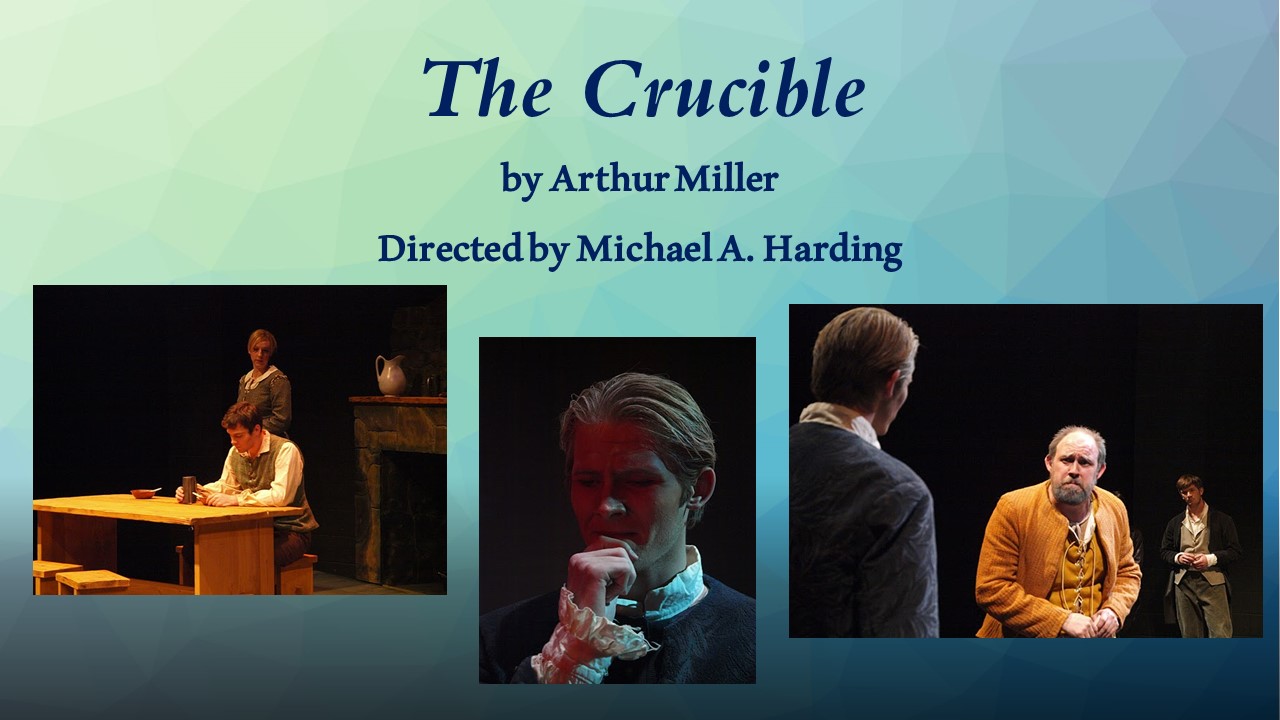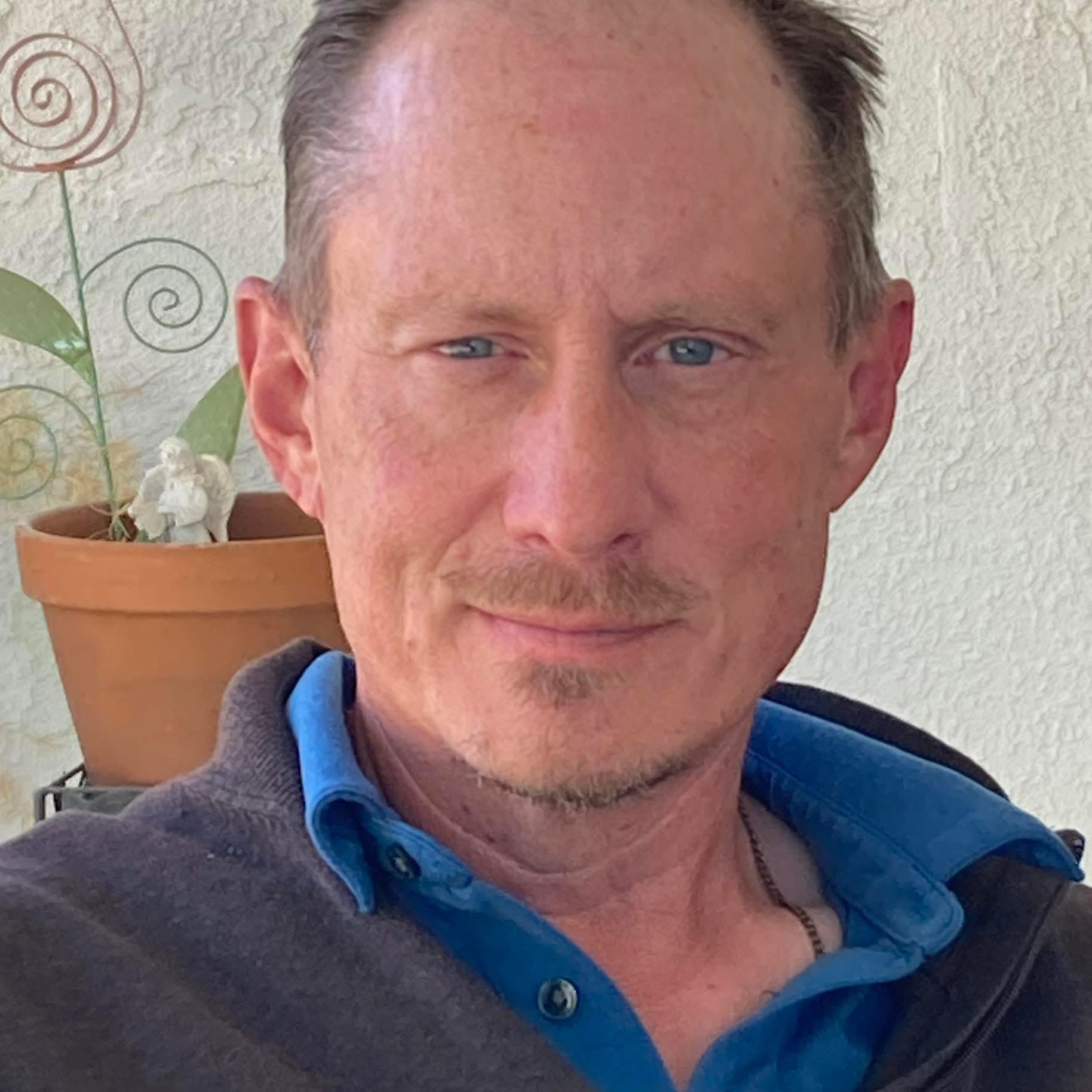

We caught up with the brilliant and insightful Michael A. Harding a few weeks ago and have shared our conversation below.
Michael A., thanks for taking the time to share your stories with us today Can you talk to us about how you learned to do what you do?
This question implies that I’ve actually learned what it is I do. Nothing could be further from the truth as is the case with any true artist. The problem is that there is no lasting ‘product’ that we supply. A performance of any sort is fleeting… there but for a fraction of a second and then gone to be either remembered (good or bad) or forgotten. Even in cases wherein the ‘product’ is ‘lasting’ – a painting, sculpture, transcribed musical piece, play script, etc. – it is only present as a springboard of the audience’s perception and interpretation. Because of this, the farthest I’ve learned thus far is how to begin the journey towards finding what it is I do, knowing how to take the first step on a long journey at whose end is… well, I don’t know.
I’m not sure I’d ever want to speed up my learning process. The only thing I can think of would be to start sooner. I’m proud of my artistic career and output thus far. Had I started sooner, I might have more under my belt but I don’t know that the quality of my work – perhaps I should say ‘effectiveness’ – would be any different or ‘better’ than it is today. I am what I am and my art is merely a reflection of me.
The most essential skill for me – and for any artist, I would assert – is aggressiveness towards the work, the questioning, the search. When one becomes complacent or satisfied, the end of art has arrived. There is not a single work of art that is complete, that is perfect, that is everything it could be and might become. To reference my earlier statement, the artistic product is something that will be interpreted and perceived again and again and again, even if only in memory of the experience. It all exists in the form of an experience had once but never again except in recollection. One of my favorite pass-times of late is watching reaction videos on streaming platforms. I enjoy watching others react to things I’ve experienced – music, films, texts, live performances, etc. I get a similar rush watching others being affected.
After a recent staged reading of one of my plays, an audience member asked, ‘What is it you’d like to have your audience take with them after seeing this play?’ The question stumped me. I know that the question begged an answer about my stance(s) on the subject matter, the point I’d like to have preached, the perspective I’d liked to have had presented. But the only honest answer I could muster was, ‘I wanted to have the audience leave the theatre having been through an extraordinary experience, an effective series of moments that would live in their memories both for the feeling they evoked and the thoughts they fostered.’ I must admit I was both bemused and stunned by the audience’s bafflement at my response. The result of my answer was a silence, awkward and a bit too long. I flatter myself, however, in assuming some of those individuals took with them a seed of thought that was a window into my intent.
I was asked, once, why I write plays. The answer could be extended to any sort of art I create, whether live or as product of time and crafting. I write because I like to write. I like to ask questions and see what answers occur to me. I like the ironic reality that most often those answers come in the form of new questions. I don’t believe in art that preaches any particular view. These pieces of publicly declared ‘art’ are merely rhetorical devices that are designed for a given audience and moment. I believe true art is ‘question.’ I have said before – and I’ll say it again – ‘A truly great play presents questions to be answered rather than answers to be questioned.’
The biggest obstacle to my artistic endeavors? It is not one, but a series of never-ending challengers; lack of time. lack of motivation, laziness, reality.
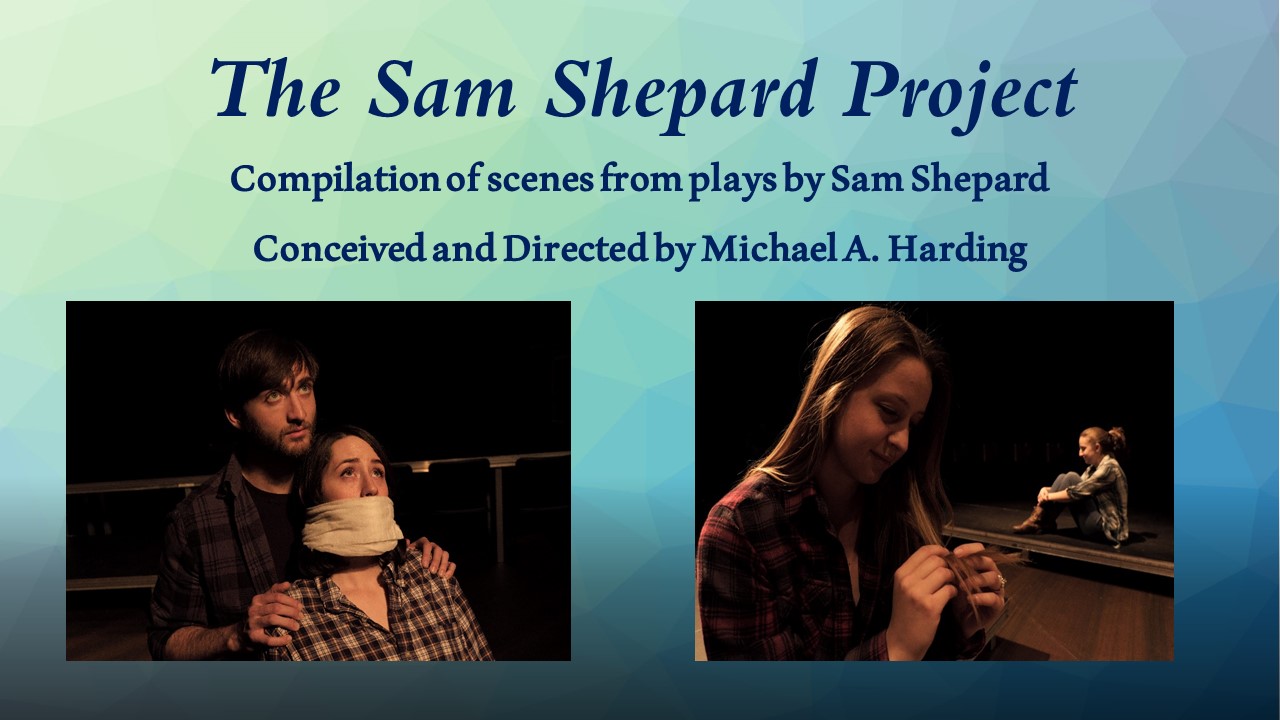
Great, appreciate you sharing that with us. Before we ask you to share more of your insights, can you take a moment to introduce yourself and how you got to where you are today to our readers.
I am an artist, plain and simple. I’m proud of that. I work hard at remaining a true artist. I stand behind the notion that a person who can play ‘chopsticks’ on the piano is not necessarily a pianist. A person who can dance the entirety of Michael Jackson’s Thriller video is not necessarily a dancer. A person who can produce tears in a given moment is not necessarily an actor. These people are only in it for the product, a chance to show off a skill they’ve perhaps mastered.
I took piano lessons. I prided myself on my ability to learn to play pieces of transcribed music quickly and accurately. Indeed, I could play a piece much quicker and with more technical accuracy than was necessary and/or appropriate. My teacher approached my arrogance in a way I’ll never forget, a way that has influenced every artistic endeavor I’ve made since. He had me play the piece through the way I wanted, too fast, a bit too loud and perfectly memorized so he could hear my brilliance. Then he asked me to play just the right hand. I couldn’t. He asked me to play just the left hand. I couldn’t. He then asked me if I truly knew the piece. I didn’t. I hated him for that. But only for a moment.
I got into the theatre for a girl. I was in the 8th grade and she was a beauty, at least by middle-school standards. She did plays and I wanted to be around her, so I did plays as well. I never got the nerve to ask her to the prom but I did discover that I liked to act. I pursued it for a few years throughout the rest of my High School experience and throughout my college career. I became a professional actor. After a while, I realized that I had a lot to learn in order to become a truly marketable commodity, so I went to grad school. I dropped out after the second of a three-year program because I was confident in my abilities. I continued my professional acting career. In Seattle, I performed in a play wherein I disagreed with the Direction of the piece. I decided then and there that I was much too arrogant to be ‘just an actor’, so I went to grad school again to become a director. There, I did learn some skills in directing for the stage, but was also introduced – through a truly nerdy curiosity – to the world of playwriting. The works of Shakespeare had always been a tremendous part of my training and I figured there was no better teacher for writing plays than one often asserted as the greatest playwright of the world. (I have since come to be a part of the sacrilegious sect of theatre artists that challenges that assertion.) I began writing a play as he would have done. Instead of approaching his canon from an ‘outside-in’ perspective – looking at his texts as they exist today – I was more interested in using an ‘inside-out’ approach, attempting to get into the mind of the artist who created the work.
The result was a play written as a model of another’s work. An interesting thing happened. As I attempted to recreate ‘him’, choices of my own slipped in. Hence, an artist named ‘myself’ was born. Since then, my collection of writings has grown and continues to do so. I’m giddy to share that the forms and styles being explored have become increasingly diverse. People sometimes ask me what type of writing is mine. I honestly don’t know. I simply ‘write.’ And sometimes, the result is something that fits into some type of genre.
In a nutshell, I started as a musician because that’s what most kids did with private lessons. Then – to rebel against my family that was made up of musicians of many levels and dedication and dreams, as well as attain the affections of a girl – I took up acting. Then I became too arrogant to be ‘just an actor.’ Then I became a director. Then I was too arrogant to be just a director so I became a playwright as well. I never fully gave up any of the artists I’d been before. Now I’m just a mashed-up blob of artistic endeavors and questions creating output of any sort that strikes my fancy at any given time on any given day in any given circumstance. People may never ‘know’ my work, but I will have asked a lot of questions and as a result I will have been satisfied and spurred by a lot of answers.
What do you think is the goal or mission that drives your creative journey?
My goal is to have someone grapple with the same question(s) I’ve got. Though we may not share the same context, perspective or reaction, how wonderful to be ‘not alone.’
I am often frustrated to learn that a brilliant idea of my own was stolen by someone else in the past. But a perspective thought has given me solace. It was presented in a play by Alan Bennett a few decades ago, The History Boys. Though I think it is a wonderfully crafted play and a credit to the art form, I don’t like it. I don’t agree with it or the premise on which it is built. This ultimately doesn’t matter. (Mr. Bennett, if you are reading this, I admire and congratulate you on creating a play that ‘succeeds.’ It engaged and affected me. Bravo!) The fact remains that within the text is a short speech that affects me and my identity as an artist:
“The best moments in reading are when you come across something – a thought, a feeling, a way of looking at things – which you had thought special and particular to you. Now here it is, set down by someone else, a person you have never met, someone even who is long dead. And it is as if a hand has come out and taken yours.”
I want to offer that hand to someone; anyone. And I hope they take it.
For you, what’s the most rewarding aspect of being a creative?
The most rewarding aspect of being an artist AND creative is that I am getting to know myself.
Of course I hope to affect someone else. I hope to be admired, respected, challenged, heard, lauded, preserved, etc.
But I will know myself deeper than a shallow reflection of how others treat me. I will know my questions and my resultant answers. I will take joy in the journey. I will revel in allowing myself to feel extraordinary depths of feeling while being mired necessarily in the drudge of reality. I welcome such emotions, unheard and explored, experience by so few. I take pride and am giddy to experience what I can only sum up as, ‘Joy so great you mistake it for sorrow.’ This is a quote from a play I wrote.
Some say it is arrogant of me to quote myself. I agree. But it makes me happy. And that’s cool. That’s art.
Contact Info:
- Other: michael.a.harding2020@gmail.com