

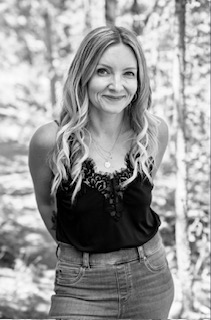

We recently connected with Megan Rogers and have shared our conversation below.
Megan , thanks for taking the time to share your stories with us today We’d love to hear about how you went about setting up your own practice and if you have any advice for professionals who might be considering starting their own?
When I decided to specialize in integrative psychotherapy, I was still working in agency mental health. Starting a private practice is a dream for many, but grad school doesn’t teach you a thing about running a business! I had to figure it out as I went — leaning on mentors, taking business classes for creative entrepreneurs, and doing endless research.
The biggest hurdle wasn’t logistics — it was mindset. Impostor syndrome whispered: “Are you really qualified? Will anyone want to work with you?” I realized I needed clarity: what kind of practice did I want, what did I naturally excel at — for me, blending nutrition and mental health — and who I wanted to help. Passion was essential, but so was flexibility; you can always pivot as you grow.
I also learned the hard way that trying to do everything yourself is a trap. I nearly threw my laptop out the window building my first website, so I outsourced tech, web, and SEO work. That freed me to focus on what mattered most: my clients and building a practice that felt true to me.
For anyone thinking about starting their own practice, my advice is simple: “Do the groundwork, find mentors, and don’t let fear hold you back.” Lean into your strengths, hire support for the rest, and let your passion guide you — everything else will follow.

As always, we appreciate you sharing your insights and we’ve got a few more questions for you, but before we get to all of that can you take a minute to introduce yourself and give our readers some of your background and context?
Hi! I’m Megan Rogers — a licensed clinical social worker, holistic nutritionist, board-certified health and wellness coach, and yoga teacher based in Denver. I love helping people feel more balanced, energized, and capable by looking at mental and physical health together.
I got into this work after seeing so many people struggle with anxiety, depression, stress, or gray-area drinking, and noticing that therapy alone sometimes wasn’t enough. I wanted to create a space where clients could explore not just their thoughts and emotions, but also lifestyle, nutrition, movement, and overall wellbeing. Over the years, I’ve trained in ACT, DBT, EMDR, attachment theory, mindfulness, mind-body methods, and yoga teaching — and I blend all of that with holistic wellness coaching to support each person as a whole.
In my practice, I help clients break free from patterns that hold them back and build habits that actually stick. What sets my work apart is that it’s integrative and practical: we combine science-backed therapy, mindful movement, and everyday tools for living well, so clients leave sessions with more than insight — they leave with action.
I’m most proud of creating a practice that feels authentic, client-centered, and flexible. I work with people in Denver and virtually worldwide, and I want anyone reading this to know: this is a place where curiosity is welcomed, growth is encouraged, and real change happens. My goal is simple — to help clients feel empowered, resilient, and capable of designing a life that truly works for them.
Have you ever had to pivot?
One of the biggest pivots in my career came early in my private practice. When I first started, I thought I could focus solely on traditional psychotherapy — that was the training I had, and it felt “safe.” But very quickly, I noticed a pattern: many clients were struggling with anxiety, depression, or stress in ways that weren’t fully addressed by therapy alone. Nutrition, movement, and lifestyle factors were playing a huge role, and I realized I wanted to support people in a more integrative way.
Making that pivot wasn’t easy. It meant investing in additional training — holistic nutrition, wellness coaching, and yoga teaching — and reshaping how I structured my practice. I had to rethink my services, my messaging, and even how I spent my time. There were moments of self-doubt: “Am I stretching myself too thin?” and “Will clients understand this approach?”
But the decision paid off. By combining therapy, coaching, and mindful movement, I created a practice that feels uniquely mine and that truly meets the needs of my clients. The pivot taught me a lot about flexibility, curiosity, and the importance of following where the work is calling you, rather than sticking to what feels safe or expected.
For anyone considering a pivot — whether in business or life — my advice is simple: listen to the patterns in your work and in your life, be willing to learn and grow, and trust that adapting is a sign of strength, not failure. Some of the most rewarding growth happens when we step outside our original plan and respond to what people — or life — really need.
Let’s talk about resilience next – do you have a story you can share with us?
One of the defining moments of resilience in my life came when I made the decision to take a year off to focus on my own sobriety. For years, I had been navigating the demands of running a practice, supporting clients, and juggling multiple roles, all while noticing that alcohol had quietly become a crutch in my life. I knew I needed to step back and give myself the space to heal, reflect, and rebuild.
It wasn’t easy. Taking a year off meant stepping away from clients, income, and the familiar structure of my daily routine. I faced uncertainty, self-doubt, and the challenge of confronting patterns I had long ignored. But I also found clarity, strength, and a renewed sense of purpose. That year taught me to set boundaries, prioritize my wellbeing, and trust the process of personal growth — lessons that profoundly shaped both my life and my practice.
When I returned to work, I did so with a deeper sense of empathy and understanding for my clients, especially those struggling with addiction, stress, or emotional overwhelm. I realized that resilience isn’t just about pushing through; it’s about taking intentional steps to care for yourself, even when it feels disruptive or uncomfortable.
For me, that year off was transformative. It reinforced that true strength comes from honesty, self-compassion, and the courage to make difficult, necessary changes. Today, I carry those lessons into my work, helping clients not just survive challenges, but build the tools and mindset to thrive.
Contact Info:
- Website: https://www.megan-rogers.com
- Instagram: @meganrogers_therapy.coaching
- Facebook: https://www.facebook.com/mindbodywellnesswithmegan/
- Linkedin: https://www.linkedin.com/in/meganelisabethrogers/

Image Credits
Britt Nemeth