

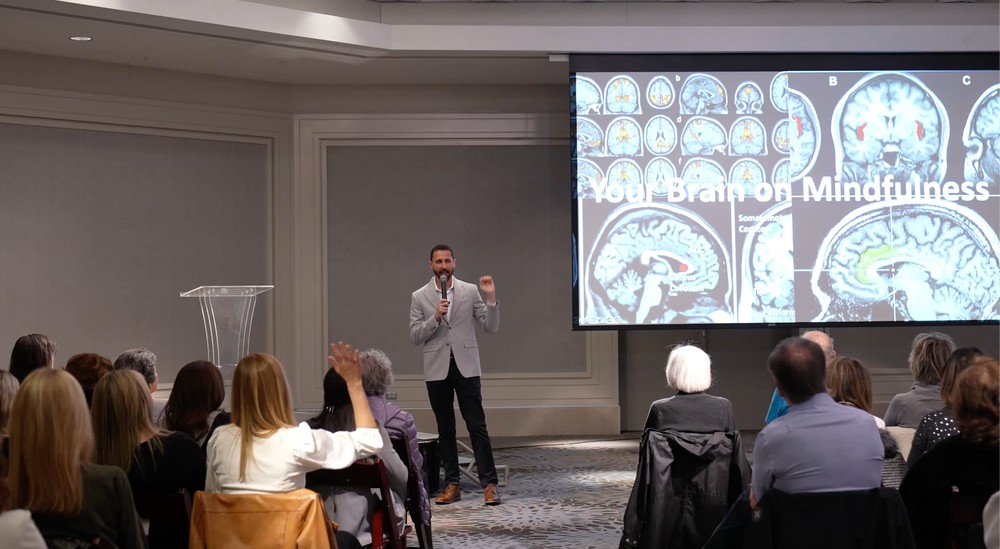

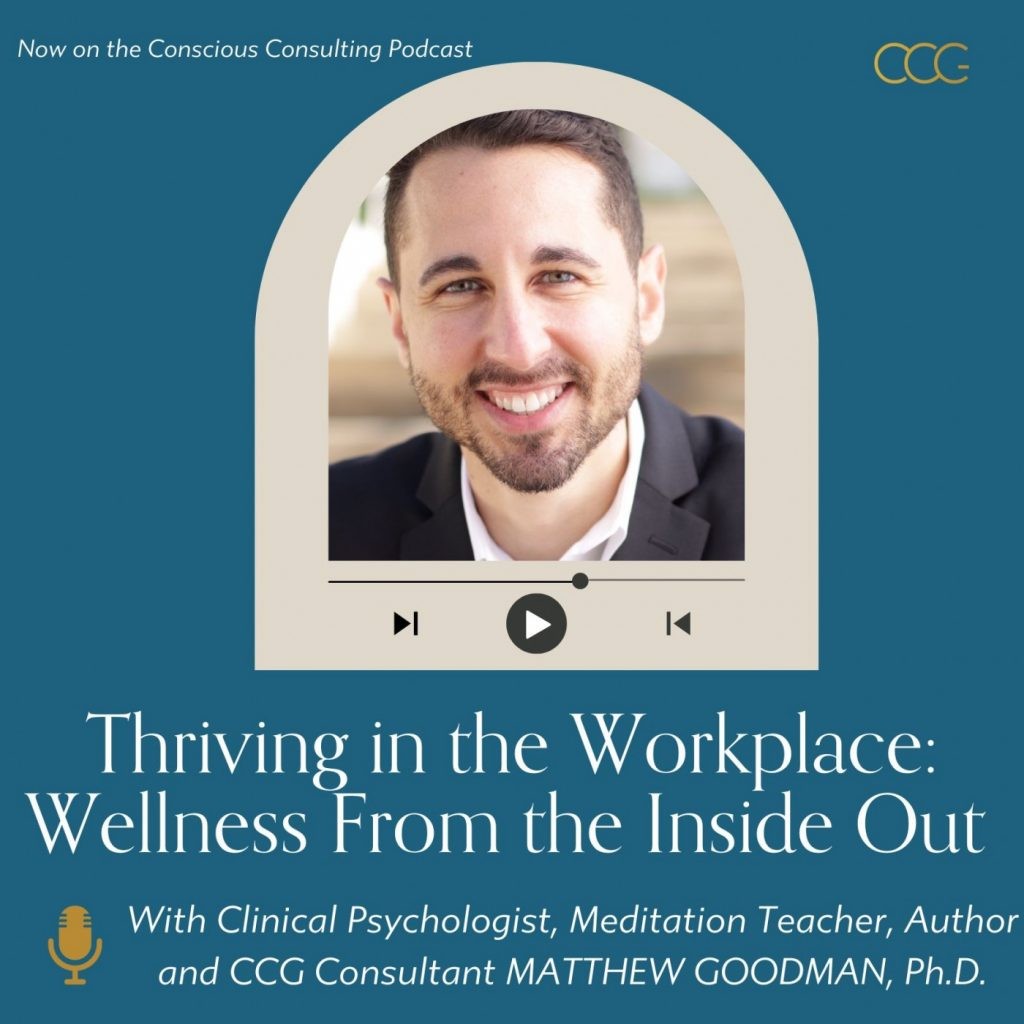
We caught up with the brilliant and insightful Matthew Goodman a few weeks ago and have shared our conversation below.
Matthew, appreciate you joining us today. We’d love to go back in time and hear the story of how you came up with the name of your brand?
“The Middle Way” is a term that refers to the Buddhist path towards enlightenment. The Middle Way Consulting is not by any means pitching enlightenment – or anything close to it – but it does draw on principles from Buddhism (as well as contemporary science) such as mindfulness, compassion, and interconnection/interdependence. This is inspired by my personal mission is to help human beings realize our interconnectedness and common humanity.
But there’s actually a double meaning/purpose behind the company name. Part of our work is focused in the social and political realm, where there is clearly a ton of polarization and divisiveness. The Middle Way cares about bringing people together. We do this by creating spaces for deep listening and productive conversation to take place, both on the individual and collective level. But make no mistake – we’re not advocating for simply finding a middle path of “compromise,” “moderate” political/social views, or something of that nature. Instead, we believe in a collective search for truth – wherever and whatever “side” that brings us to. In order to go on this collective journey towards truth, we must embody the qualities that the Buddha pointed towards: presence, humility (e.g., “not knowing”), compassion, and seeing through unhelpful self-identification and ideologies.


Great, appreciate you sharing that with us. Before we ask you to share more of your insights, can you take a moment to introduce yourself and how you got to where you are today to our readers.
I am trained as a clinical psychologist. But even early in my training, I knew I wanted to work more on an organizational or “systems level.” I’m interested in how the principles of wellness – biologically, psychologically, and spiritually – translate from the individual to the collective level. I believe we can unlock creative solutions to the world’s problems by seeing larger systems (e.g., economies, nations, ecological habitats) as “giant organisms,” which is consistent with a growing literature from the field of complexity science.
Even though I always wanted to head in the direction of consulting and speaking, to be honest, it was a confrontation with my own health that finally forced me in this direction. Working full-time at a university (during the height of the pandemic), I became extremely burnt out from clinical work. I knew I needed a change; I needed to risk giving up the security of that job to follow my passion.
Over the last few years, I’ve been slowly building up my consulting business. I’ve also ventured into other territories that absolutely light me up – for example, teaching improv classes focused on personal growth (called “Zen-prov!”). I’ve been an improv student for several years (and even thought about pursuing comedy in lieu of my clinical psychology training). As an independent entrepreneur, I find it exhilarating to do whatever I want with my business. I’m able to incorporate my creativity and what gives my life meaning. This is of course filled with a lot of uncertainty, but for me, it’s totally worth it.
My current work with organizations focuses on team-building, communication, and wellness. I bring in a lot of improv games and exercises (which is so much fun… and companies have been very fond of). I also draw from my experience as a psychologist and mindfulness teacher to create spaces for presence, deep listening, and empathic communication to occur. What I do is very different from normal ways of communicating and problem solving. I really encourage people to be attentive; to step into “not knowing”; to connect with other’s common humanity; and to allow their own creativity and wisdom to unfold by being compassionate and open towards their own mind. These are qualities of consciousness that we can bring to conversations that allow something different – a different type of intelligence – to emerge, and facilitate deeper relationships and creative solutions.
I also work with leaders in the realm of executive coaching, leadership, and systems-level change. But it’s different than one might expect. There is a new paradigm of leadership emerging that is less focused on “top down” control, and more focused on being able to integrate the collective intelligence and participation of a group. It is said that the future of leadership lies in the capacity to listen. I find this very interesting and, in addition to practicing deep listening as a consultant and facilitator, enjoy watching others develop this capacity as well.

Where do you think you get most of your clients from?
By far the most effective source of new clients is through people I know on a personal level. They say networking and “who you know” is what matters, and that’s been true for me at this point in the game. The connections I’ve developed with new colleagues (and now friends) have often led to them referring my name to a potential client.
Have any books or other resources had a big impact on you?
Definitely.
One helpful book for small business owners (any field) is “How to Grow Your Small Business” by Donald Miller. I picked it up one day while at the airport.
For me as someone working in organizational consulting and systems change, I’ve also found the following books helpful:
1. “Thinking in Systems,” Donella Meadows
2. “Reinventing Organizations,” Frederic LaLoux
3. “Theory U,” Otto Scharmer


Contact Info:
- Website: https://www.the-middle-way.com/
- Instagram: https://www.instagram.com/matthewgoodmanphd/
- Linkedin: https://www.linkedin.com/in/matthew-goodman-ph-d-18599330/
- Youtube: https://www.youtube.com/channel/UCmga5Z4JdHziQjtCdnVhYuw
- Personal Website: https://www.matthewgoodmanphd.com/ Zen-prov! Classes: http://zen-improv.com/