



We were lucky to catch up with Maria Caruso recently and have shared our conversation below.
Maria, thanks for joining us, excited to have you contributing your stories and insights. We’d love to hear the backstory behind a risk you’ve taken – whether big or small, walk us through what it was like and how it ultimately turned out.
At nineteen, just out of college, I made a decision that many would have called reckless: I founded a dance company with no financial safety net, no institutional backing, and no roadmap. I only had a very clear vision of what I believed artists deserved and who I believed belonged on stage.
That vision was deeply personal. As a young dancer, I often felt that my body didn’t align with the traditional expectations of ballet, even when my technique and artistry did. I knew what it was to be capable, committed, and passionate, and still felt as though I didn’t quite “fit.” I reached a point where that narrative no longer made sense to me, and I wanted to create a company rooted in classical and contemporary ballet that honored excellence, but expanded the definition of who could embody it. A space where multiple genres could coexist, and where dancers of all body types could feel powerful, respected, and fully seen.
Instead of waiting for permission, I chose to build it.
That choice came with very real consequences. I had no capital, so I sold my car to fund my first performance in Brooklyn. I took out cash advances, high interest, high risk financing, to produce an entire inaugural season. I committed to paying artists, securing proper rehearsal space, and presenting work at a level that reflected my values, not my bank account. There were no guarantees, no audience base, and no donor support. Just a belief that if the work was honest and the environment was right, people would respond.
I remember the weight of that moment vividly. The risk wasn’t just financial, it was personal. If it failed, it wasn’t simply a project that fell apart; it was a very public reflection of my judgment, my leadership, and my worth as an artist. But I also understood, even then, that waiting for ideal circumstances is often just another form of inaction.
So I moved forward.
The first show sold. Not instantly, not without effort, but it sold out. The work connected. The dancers felt the difference in how they were treated, and that translated to the stage. Audiences responded, and that initial leap created momentum. Momentum became a season. The season became a company. And that company became what is now an arts brand focused fully on health and wellness, a place for Everybody and Every-BODY: Bodiography.
Looking back, that risk did more than launch an organization, it established a philosophy that continues to guide everything I do. It proved that rigor and inclusivity are not mutually exclusive and that you can demand excellence while broadening who has access to it. It showed that when risk is anchored in purpose, it becomes less about chance and more about intention.
I still take risks, even larger ones now, with greater visibility and higher stakes. That first leap remains the most defining. It set a precedent: that I am willing to invest in a vision that challenges the status quo, even when it requires everything I have to bring it to life.
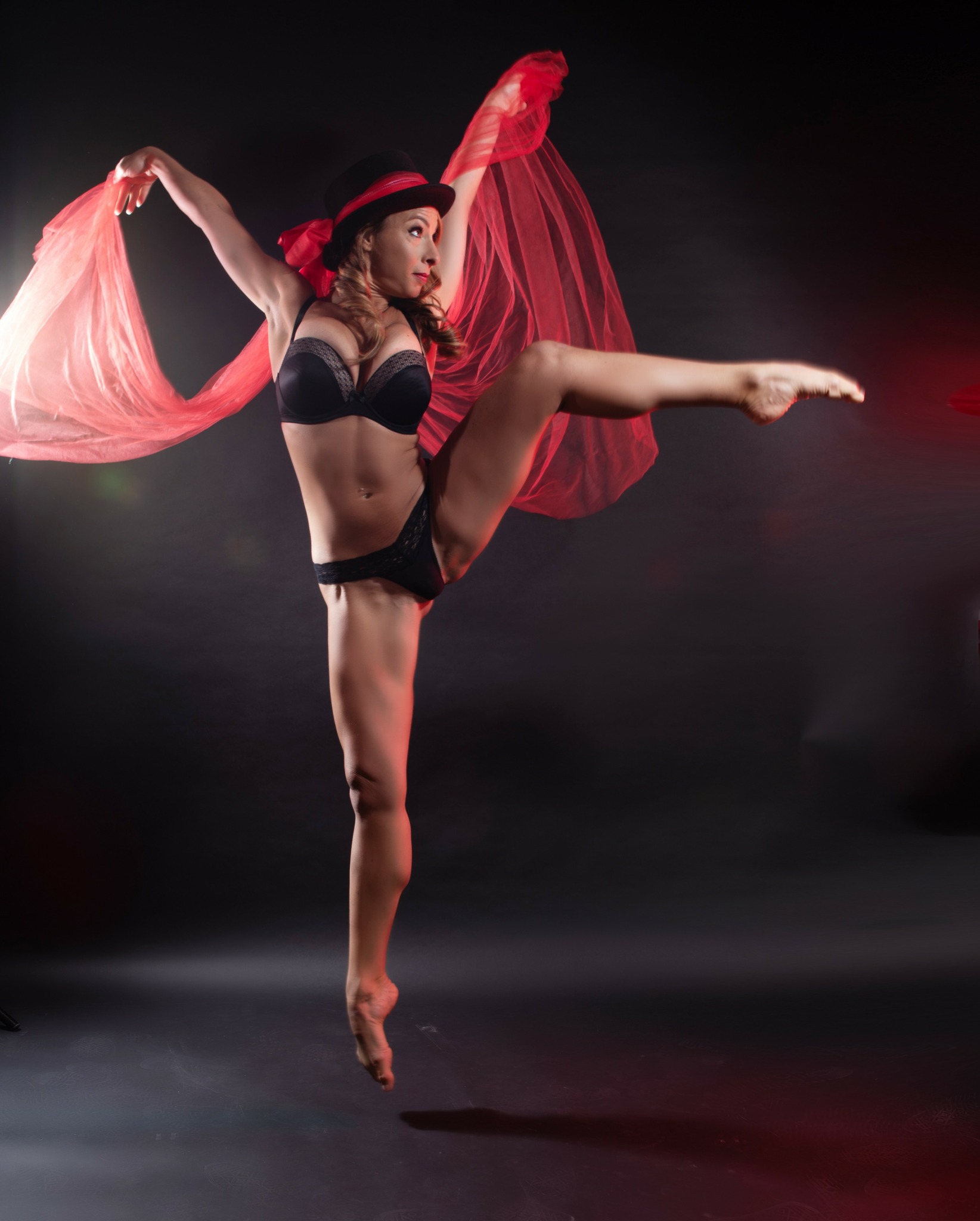
Great, appreciate you sharing that with us. Before we ask you to share more of your insights, can you take a moment to introduce yourself and how you got to where you are today to our readers.
I am the Founding Director of Bodiography Contemporary Ballet and the creator of a multi-platform arts and wellness ecosystem that sits at the intersection of performance, education, and innovation. My career began as a dancer and choreographer, but very early on I realized that I was equally driven to build systems, not just participate in them.
I founded Bodiography at nineteen, immediately after graduating from college, out of both necessity and vision. I wanted to create a space rooted in the rigor of classical and contemporary ballet, but one that expanded who belonged in that space. That decision set the foundation for everything that has followed.
Over time, that single company has evolved into a much broader infrastructure. Bodiography is now not only a professional contemporary ballet company, but also includes the Bodiography Center for Movement, a pre-professional training program and academic partnership with La Roche University, as well as a wide range of community, youth, and adaptive programming. In parallel, I founded M-Train Productions to support theatrical, film, and media projects, allowing my work to extend beyond the stage into cinema, education, and global distribution.
As a choreographer and director, my work spans full-length ballets, contemporary dance theatre, and interdisciplinary productions that often integrate original music, text, and emerging technologies. Recent projects explore themes such as identity, spirituality, and the relationship between human creativity and artificial intelligence. These works are presented internationally across the United States, Europe, Asia, South America, and beyond, often paired with educational outreach that brings the work into direct dialogue with students and communities.
What I offer, at its core, is both an artistic product and infrastructure. On the performance side, that includes original choreography, touring productions, and film adaptations. On the educational side, it includes training programs, university partnerships, intensives, and curriculum development. On the community side, it includes access, scholarship, and engagement initiatives designed to remove barriers to participation in the arts.
The problem I have always been interested in solving is access, not just access to training, but access to opportunity, visibility, and longevity within a career in the arts. Too often, talent is limited by economics, geography, or outdated standards. My work is structured to challenge that by creating multiple entry points into the field, whether through performance, education, or digital platforms.
What sets my work apart is that it does not operate in a single lane. The artistic, educational, and entrepreneurial components are intentionally integrated. A performance is not just a performance, it is connected to training, to community engagement, to film, to conversation. That ecosystem allows for both depth and scalability, and it creates a model where art is not isolated, but actively embedded in people’s lives.
I am most proud of the sustainability and evolution of what I built. Bodiography has grown from a self-funded first performance into a nationally and internationally recognized organization with multiple branches, long-standing partnerships, and a deeply rooted community presence. I am equally proud of the artists who have come through the organization, many of whom have gone on to build significant careers of their own.
What I want people to understand about my work is that it is both rigorous and expansive. I believe in high standards. I believe in discipline and technical excellence. But I also believe that those standards should not be exclusionary. My work is about widening the frame without lowering the bar.
At this point in my career, I am continuing to build on that foundation through new productions, international collaborations, film projects, and expanded educational initiatives. The throughline remains the same: to create work that is meaningful, to build platforms that support artists, and to ensure that the experience of dance has the power to reach, engage, and transform as many people as possible.

Let’s talk about resilience next – do you have a story you can share with us?
Resilience, for me, was not a single moment. It was a series of decisions made when it would have been far easier to stop.
After founding my company at nineteen and financing my first season through selling my car and taking out cash advances, I truly believed I could build a for-profit dance company. I believed that if the work was strong enough and the artists were treated with the respect they deserved, the model would sustain itself.
But show after show, that wasn’t the reality. Ticket revenues did not exceed expenses. In fact, with every performance, I went further into debt. And yet, I refused to compromise on the experience. I had assembled thirteen of the most extraordinary dancers New York City had to offer, and I was committed to treating them like the artists they were. That meant proper housing, proper pay, and an environment that reflected excellence, even if it came at my own expense.
At the final stop of that tour in Florida, everything caught up with me.
I remember sitting in a beachfront penthouse I had rented for the entire company. Champagne was flowing, everyone was celebrating what had been, artistically, a beautiful and successful run. And I was nineteen, sitting in the bedroom with my mother, holding her hand and crying in complete panic. I had just reviewed the ticket reports, and the financial reality hit me all at once. It felt overwhelming, almost paralyzing.
One by one, dancers came into the room to check on me. I will never forget one of them saying, “Martha Graham once performed for seven people, and look at what she built.” In that moment, they weren’t just artists I had hired, they were a community that believed in something larger than the immediate outcome.
That night, after everyone left, I dried my tears. My mother looked at me and offered to take out a second mortgage on her home to help me recover. It was one of the most generous and sobering moments of my life.
The next year, I made a different kind of commitment. I was going to carry this forward, but I was also going to take full responsibility for the reality I had created.
I worked three jobs while continuing to run the company. I started my mornings folding towels at a gym at 5am. I taught dance throughout the day. I hosted a jewelry show on the National Shopping Network. Every dollar I earned went toward paying off the debt I had accumulated in pursuit of that first vision.
And I did pay it off. Every dollar.
That experience reshaped me. It taught me that passion alone is not enough, but that passion paired with discipline, accountability, and endurance can carry you through almost anything. It also reinforced something I still hold onto today: if you are going to build something meaningful, there will be moments where the cost feels greater than you anticipated. The question is whether you are willing to stay the course and evolve through it.
I am still here. Still building. Still taking risks, but with a deeper understanding of structure, sustainability, and strategy.
Resilience, to me, is not about avoiding failure. It is about refusing to let it be the final outcome.

In your view, what can society to do to best support artists, creatives and a thriving creative ecosystem?
If we want a thriving creative ecosystem, the responsibility cannot sit solely on the artists. It has to be shared by the entire community.
We need people to show up. It sounds simple, but it is the most critical piece. Live performance does not exist without an audience. Buying a ticket, attending a show, bringing a friend, those actions are not passive. They are direct investments in the survival of the art form.
We also need a shift in how society values artists. There is still a pervasive expectation that artists will create out of passion alone, often without sustainable compensation. If we want excellence, innovation, and longevity in the field, we have to be willing to support the people who are dedicating their lives to that work. That means funding, sponsorship, philanthropy, and institutional support that recognizes the arts as essential, not optional.
At the same time, artists and organizations have a responsibility to meet that support with rigor, relevance, and connection. We have to create work that engages audiences, that invites them in, and that makes the experience feel vital and necessary.
For me, it comes down to shared ownership. Audiences, donors, corporations, educators, and artists all play a role. When that ecosystem is functioning, the impact extends far beyond the stage. The arts build community, develop empathy, create opportunity, and inspire critical thinking.
But none of that happens if seats are empty.
If there is one thing I would emphasize, it is this: support the live arts in real, tangible ways. Attend. Invest. Advocate. Because every time someone chooses to show up, they are helping ensure that this work continues, not just for today, but for the future.
Contact Info:
- Website: www.bodiography.com, www.mtrainproductions.com
- Instagram: https://www.instagram.com/metamorphosismac/
- Facebook: https://www.facebook.com/MariaCarusoMetamorphosis/
- Linkedin: https://www.linkedin.com/in/mariaangelicacaruso/
- Twitter: https://x.com/carusomtrain

Image Credits
Simon Hunt and Fernanda Kirmayr