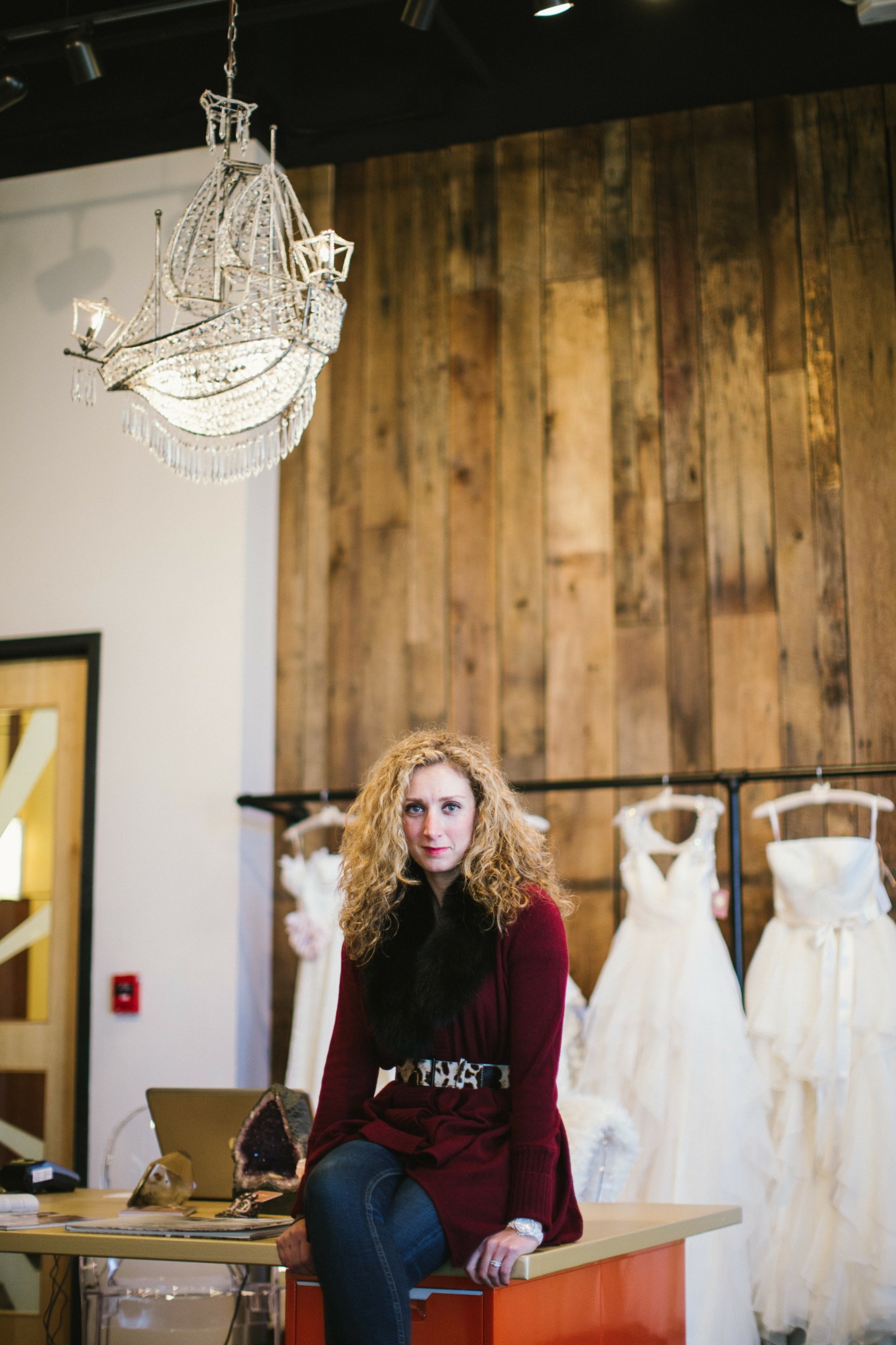
We’re excited to introduce you to the always interesting and insightful Margaux Weinstock. We hope you’ll enjoy our conversation with Margaux below.
Margaux, looking forward to hearing all of your stories today. Can you tell us about an important lesson you learned while working at a prior job?
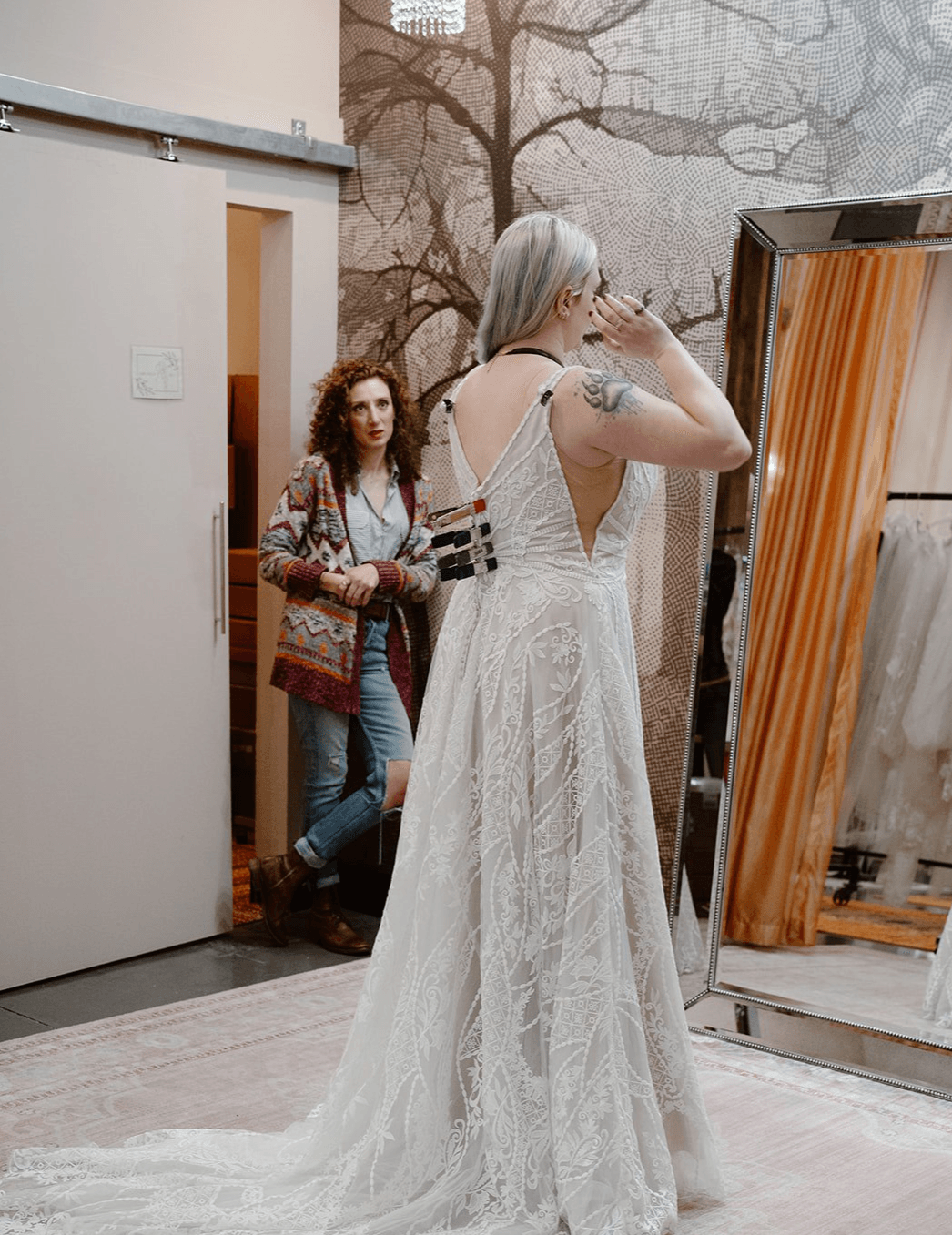
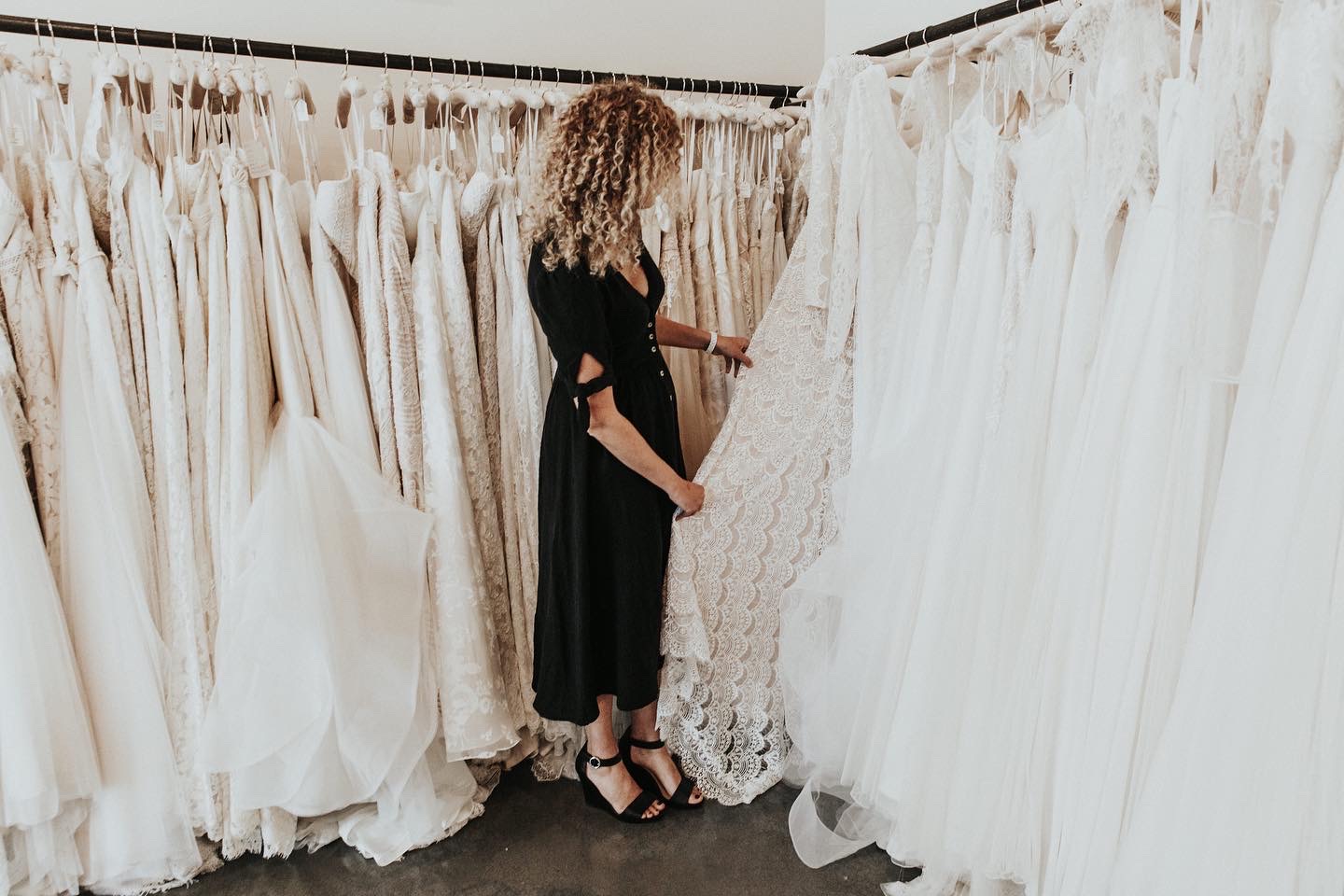
I was a social worker in my former life before opening Wildflower Bridal in January 2014. I often say that my days as a social worker were the absolute best training I could have ever had for what I do now. As a social worker, my primary client-facing task was being a good listener and observer. That is also my primary task when working with brides and ultimately guiding a bride to her chosen gown. While the world at large generally perceives bridal stylists as retail workers, in reality it is 90% a service and hospitality-driven position. I am constantly using the skills I honed during my social work days- active listening, observing body language, meeting the client where they’re at, reframing, working with family dynamics, etc- all throughout each bridal appointment I conduct. Applying these skills allows me to partner with the bride and help her navigate the fun yet sometimes overwhelming and intimidating process (hello body image issues, tense family dynamics, grief, etc!) of trying on gowns and sifting through all the literal, psychological and visual noise and zero in on the gown that makes her feel beautiful, joyful, confident, and like a bridal version of herself.
Awesome – so before we get into the rest of our questions, can you briefly introduce yourself to our readers.
I was born and raised in NYC, and I always knew I was going to be in the fashion industry- but I didn’t know exactly where or how. I would never have imagined that I’d end up in Asheville, North Carolina opening and owning a bridal shop!
I met someone based in Asheville and started a long-distance relationship just as I was finishing up my undergraduate career at Boston University. We did long-distance for two years, and as we both grew weary from the complexities of the long-distance aspect of our relationship, we agreed we either needed to live in the same area or move on from one another. I happily moved to Asheville in June 2007.
While I worked in the local retail industry upon relocating to Asheville, I quickly realized that if I wanted to stay in this area that I needed to re-evaluate my career ; this was long before covid and the era of remote work, and the only way to work in the domestic fashion industry at that time meant living in either New York or LA. I therefore began to research and entertain alternative career paths. Psychology has consistently been a strong interest of mine. I looked into local graduate degrees and programs in the Psych and related studies, and discovered a graduate program that fit all my criteria. I applied and was accepted into the Clinical Mental Health Counseling program at Western Carolina University.
My romantic relationship naturally evolved over time and we got engaged at the end of my grad school program. Once I started planning my own wedding I fell in love with the wedding industry and the dedication, attention to detail, creativity and artistry all of my wedding vendors exhibited. I concurrently realized that no bridal shops in the area or even in the region truly spoke to me and my vision for my gown. All the local and regional bridal shops felt too traditional, too mainstream, too expected in their gown selections as well as their physical presentation. I wanted a gown and a gown shopping experience that felt simultaneously elevated and effortless. I began to realize that this type of selection and experience did not exist anywhere around the WNC region.
Thus, a seed was planted in my spirit. I thought, “hmm, maybe this is how I can do fashion in Asheville.” However, I was still newly in my professional social work field and felt I needed to put more time into social work before I truly considered pivoting (again). I therefore continued to work in the field for a few years. The local mental health industry can be grueling and unforgiving, and like many others in the field, over time I found myself experiencing burnout. I started to allow myself to daydream about opening a bridal shop. I daydreamed (and night dreamed) for several months about this bridal shop fantasy, until one day in September 2013 my (then) husband, my parents and myself had a pow-wow and everyone encouraged me to move forward with this dream. I began looking for spaces that same month, started opening accounts with gown manufacturers in October, found my dream location and signed a lease on Halloween Day 2013. I also began brainstorming business names and logos, and gave my 2 weeks notice to my supervisor that November.
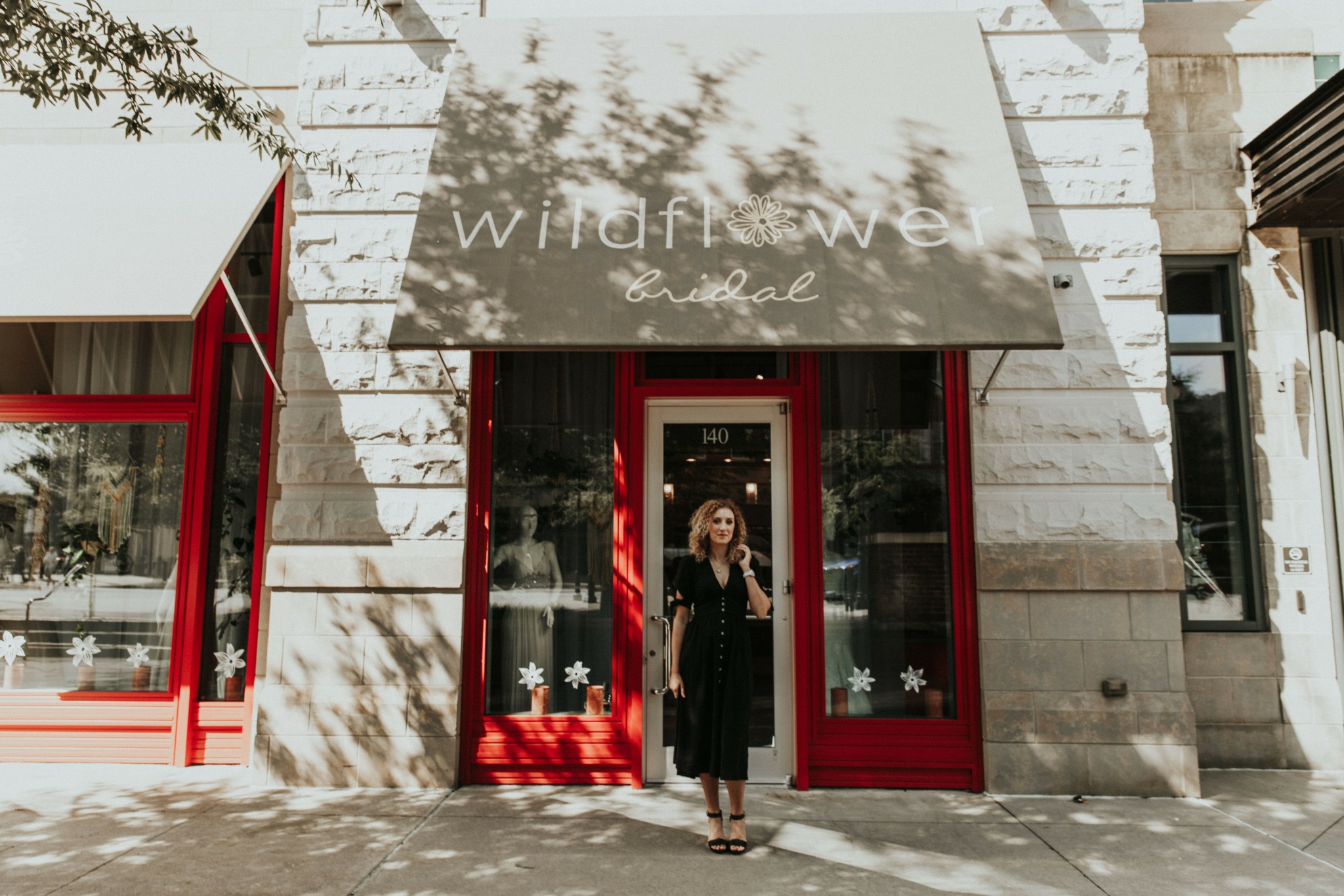
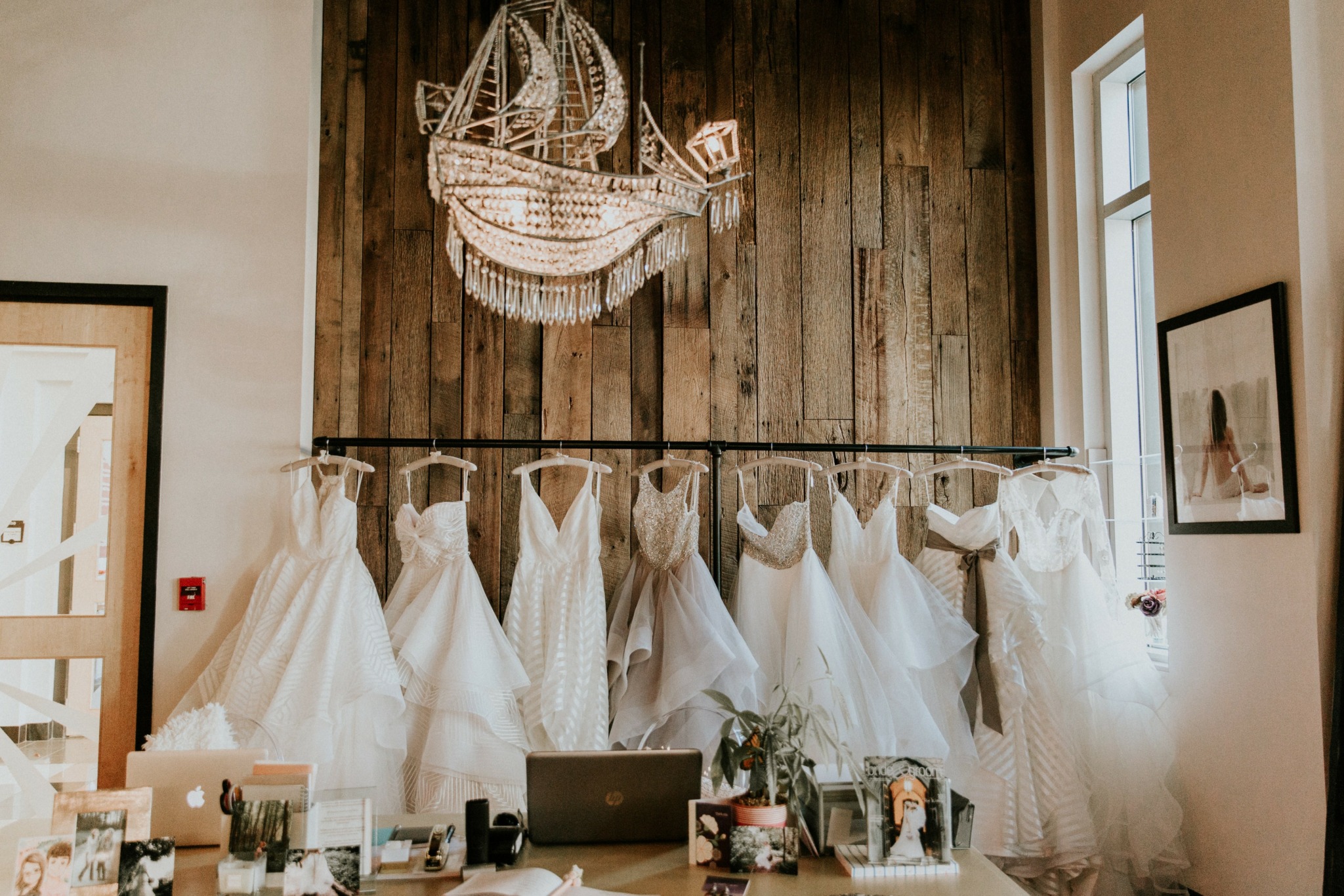
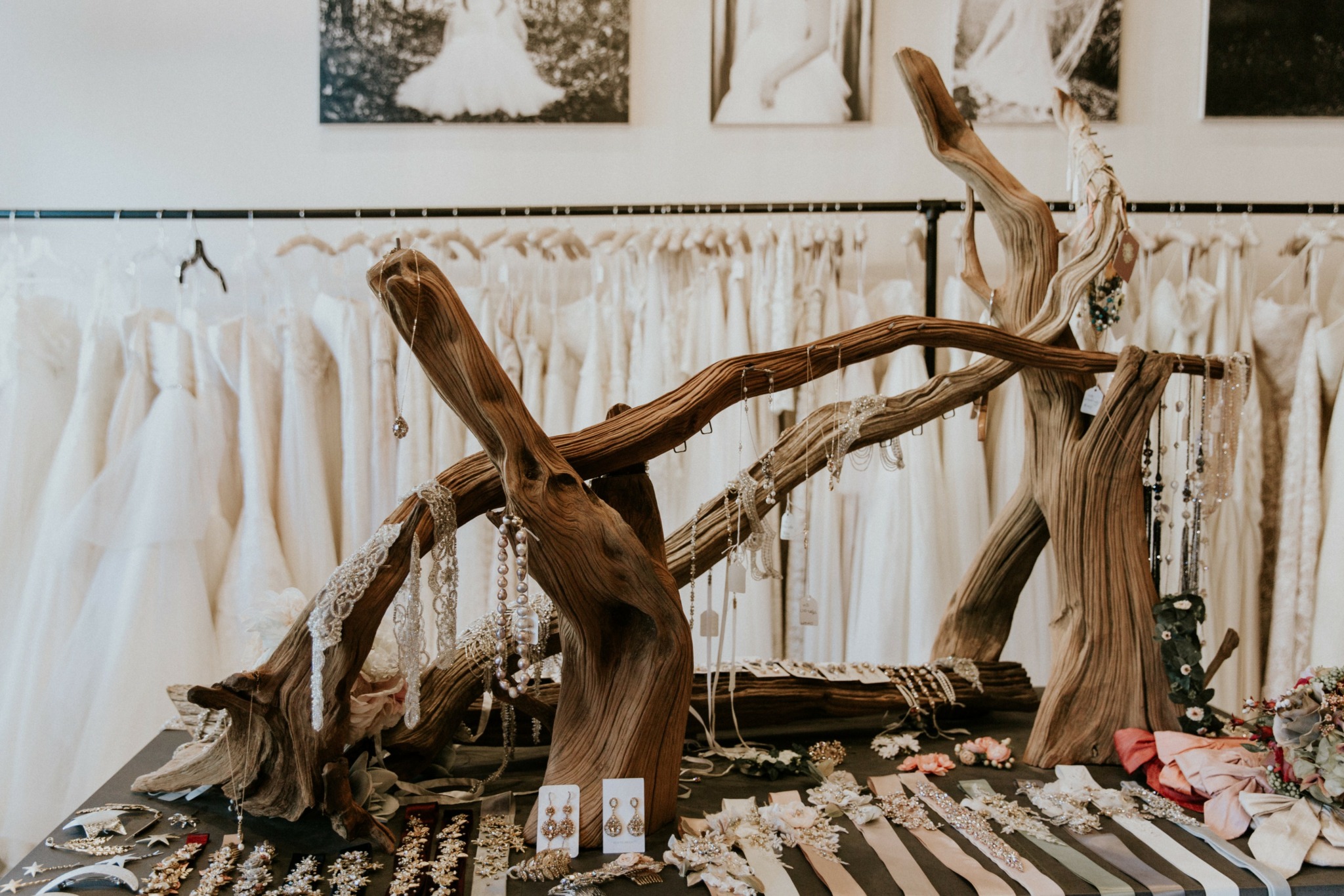
Wildflower Bridal officially opened on January 10, 2014. We offer romantic, ethereal, boho, unique, elevated and well-priced wedding gowns and accessories in a shop environment that is beautiful yet approachable.
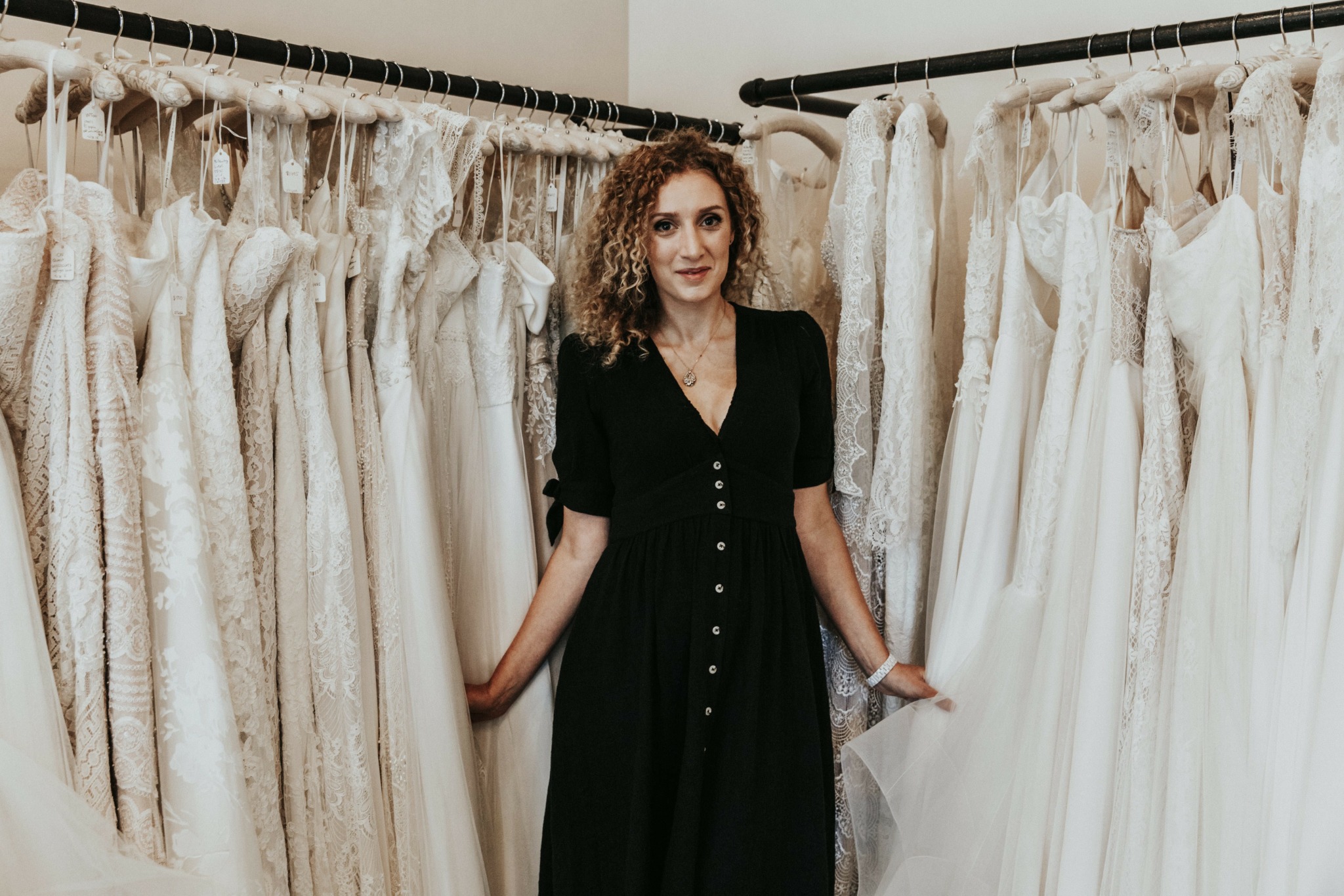
My background in fashion means I have an eye for aesthetically unique and exclusive gowns that are not available at your average bridal shop, while my experience in social work has provided me the skills to build rapport with my customers and make them feel welcomed, validated, acknowledged and cared for. Wildflower Bridal’s motto is, “Craft. Connection. Care.”
Any stories or insights that might help us understand how you’ve built such a strong reputation?
There’s no single thing that helped build my reputation, but rather a smattering of several things:
1. I know my stuff. I’m an expert in my field. There is no replacing the experience and knowledge one gains from logging thousands of hours of experience.
2. I am fully present with each and every client. I only take 3 appointments a day (at most), because being that present and devoted in real time to my customer requires loads of bandwidth and energy.
3. I focus on the uniqueness and quality of my product selection.
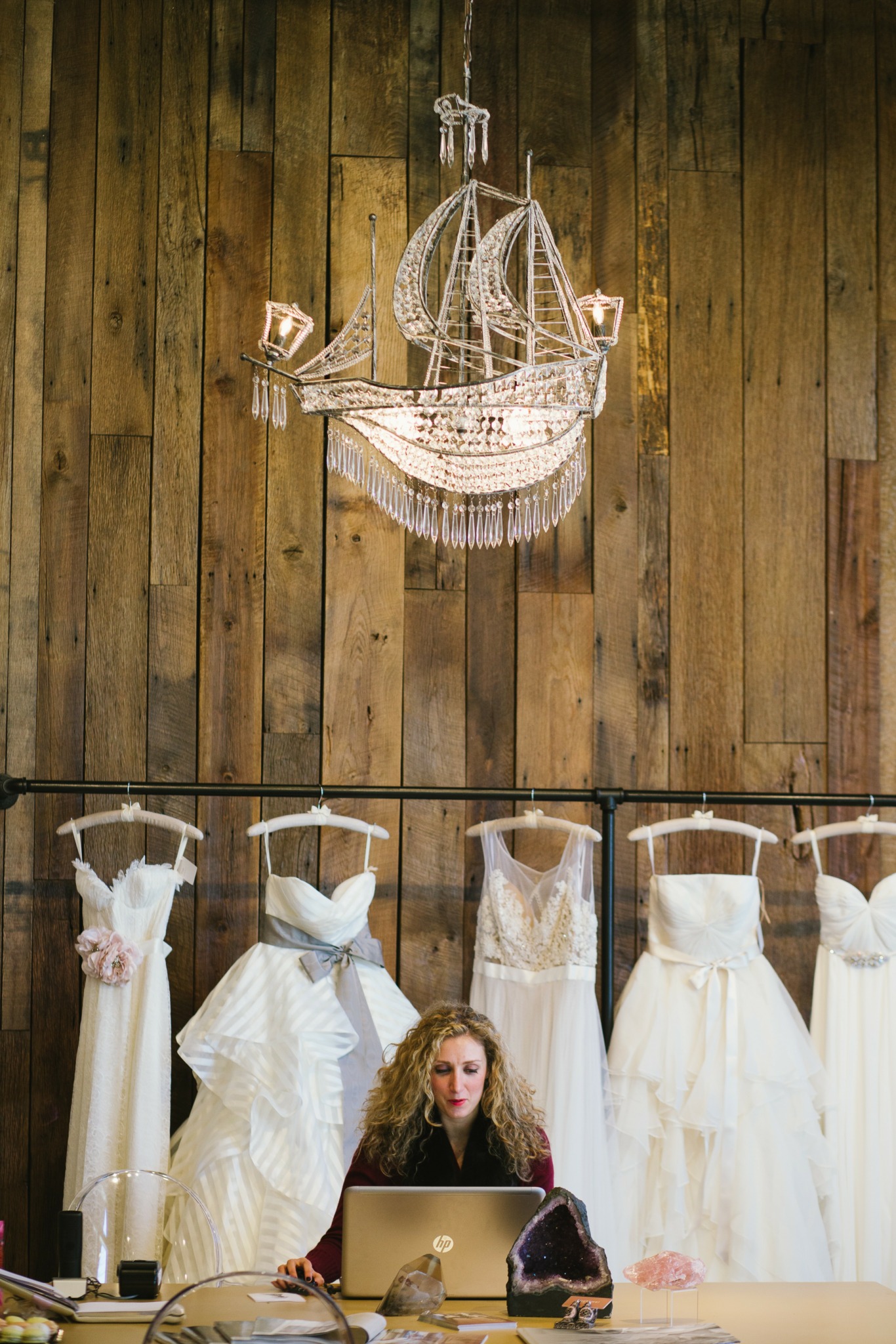
4. My branding, which is intentional, authentic, elevated, creative and completely congruent with the aesthetic of the gown selection, as well as the decor of the store itself. The business is called Wildflower Bridal (and it’s trademarked and copywritten, and yes I have had to send cease and desist letters in the past), and we specialize in effortless, romantic and bohemian gowns- the kind one can envision wearing while frolicking in a field of wildflowers- but the gowns still have an unexpected quality to them and are not the stereotype or caricature of “wildflower”. Similarly, the branding and logo fits the aesthetic but not in an expected way. There is no actual flower in the Wildflower Bridal logo.
5. Every now and then there’s bound to be a hiccup. If the hiccup is my fault, I take full accountability for it with the client. If the hiccup is not my fault (for example, a vendor is running behind on delivering a dress that was supposed to ship to me by x date), I still go out of my way to do whatever I can to resolve it, and I communicate to my customer all the steps I am taking to prioritize resolution. I have found that clients and customers are generally very understanding when issues arise as long as they feel acknowledged and that the business owner/employee is doing whatever they can to resolve the issue. This is perhaps my biggest takeaway of all, and the point I’d like to impart most strongly to any other small business owner.
6. I have prioritized asking my customers for Google reviews (the reviews are not incentivized at all, as I don’t believe in that). I have almost 500 reviews now.
Learning and unlearning are both critical parts of growth – can you share a story of a time when you had to unlearn a lesson?
There’s a common piece of advice that we have all heard, and it’s “hire to your weaknesses.” As a small business owner, I don’t recommend hiring an employee who is better at or more knowledgable on something than the employer, as I have experienced first-hand that this can lead to unhealthy power dynamics between employer and employee. As small business owners, we have the responsibility to fill in any holes of experience or knowledge by teaching ourselves (or hiring teachers to teach us) said skills rather than delegating those skills to an employee. Having said that, if there’s some business-related task that I loathe doing (for example, social media content creation), then I can delegate that to an employee- as long as I know I’m competent and capable of managing the social media if I had to. Delegating means passing on a task that I don’t like doing to an employee, but it does not mean passing on a task I don’t know how to do or can’t do well enough on my own. If I can’t do it well enough on my own, I have to put time and effort in to getting better at that rather than having someone else do it.
Contact Info:
- Website: https://www.wildflowerbridal.com
- Instagram: https://www.instagram.com/wildflowerbridal/
- Facebook: https://www.facebook.com/wildflowerbridalasheville