

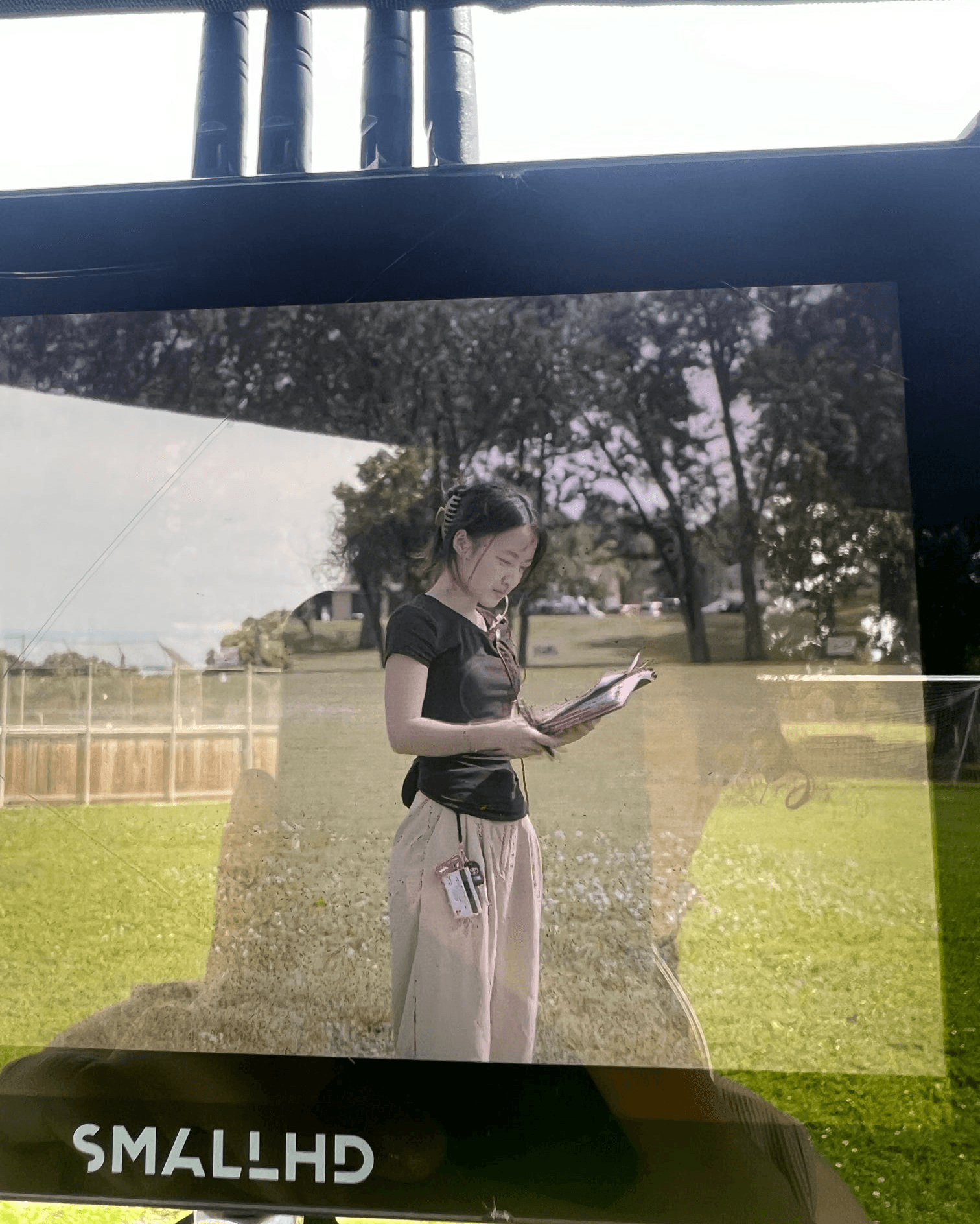

We recently connected with Mai Moua Thao and have shared our conversation below.
Mai Moua , thanks for taking the time to share your stories with us today We’d love to hear about a project that you’ve worked on that’s meant a lot to you.
Collaborating with performers Kalala Kiwanuka-Woernle and Skye Reddy under the direction of Cláudia Tatinge Nascimento, the most meaningful project I’ve worked on so far is “Reasons for Moving,” an interdisciplinary, multilingual performance about geopolitical displacement. Presented at the historic Southern Theater in Minneapolis, MN, this devised dance-theater piece was anchored in intergenerational stories of moving away from the places we call home. The performance contained found and original texts of migration and diasporic narratives, as well as fragments of real and imagined memories of our own families’s (im)migration– memories that we hypothesize to fill in the blank pages of history books, memories we dream up to fill the gaps in the stories our elders have passed down.
“Reasons for Moving,” motivated me to dig deeper into my family’s history and my Hmong heritage. As a part of this process, I journaled and talked to my parents to re-remember experiences from childhood, of coming to the U.S. from a refugee camp in Thailand. I remembered being six years old and learning English for the first time but having to be the translator for my parents at the doctor’s office. I remembered my father working late night shifts and finding comfort in singing to himself after midnight. I remembered my mother missing home, wanting to return home. I remembered wanting to be American so badly– whatever being American meant.
Through this project I also learned of Kalala and Skye’s family histories, in relation to Idi Amin’s dictatorship in Uganda and the partition of the subcontinent independent India and Pakistan, respectively. We pulled apart all the differences between us and the ones who came before us, and pieced together how we are all connected by the act of, and consequences of, colonialism and imperialism, greed and fear, but also hope and resilience.
As Minnesota is home to a number of refugee/immigrant communities, this performance was designed to spark conversations of the audiences’ own cultures and homeland-histories. During the talk-back discussions and in passing, after-show conversations, audience members shared how they saw their experiences reflecting back at them in the performance. The show transformed into a space of remembering, affirming, and healing. Moving, both natural and forced, is a process that disconnects us, which in turn connects us all.
Awesome – so before we get into the rest of our questions, can you briefly introduce yourself to our readers.
My name is Mai Moua Thao and I am a performer and filmmaker. At the root of both of these professions is my love of storytelling. My artistic journey is rooted in self-serving reasons as well as a purpose bigger than myself. With my upbringing being immersed in Hmong tradition, shamanism, folklore, and culture often serve as starting points in my writing for fantastical journeys into the past, the afterworld, and everywhere in between. In my work, I highlight the humanity and interconnectedness of immigrant/refugee communities. My stories are guided by the understanding that identities and cultures are always transforming. Deeply inspired by Sadayaki Murai’s Perfect Blue and Wong Kar Wai’s Chungking Express, my work is filled with unfinished narratives and fragmented memories. Such stylistic choices from these director-screenwriters help me write complex relationships and unique experiences. Through very different narratives, my writing in both film and the stage put forth my desire to bring the audience into an intimate view of the socio-cultural systems that nurture a character, that nurture us all.
Is there a particular goal or mission driving your creative journey?
When I was in elementary school, my dad came home one night with a shiny block of glass. Engraved in a purple hue was his name and the words “Award for Best Creative-Nonfiction”. I asked him what it was. He said it was a trophy he won for a story he wrote in his English Language Learner class. It was an award for the story of his life. I think I write, I make films, I perform, I tell stories because of my parents. I am carrying forward their experiences, their lives, their dreams.
As a Hmong-American woman I am also concerned with preserving my heritage since it is historically reliant on oral recollection. In performance and film, I can provide alternative entry points into Hmong history and culture. Accessibility is important to me. I aspire to be a filmmaker whose work can be attained and understood across languages, generations, and beyond. Succinctly, I desire to take up space in the arts, a world systemically, historically kept out of reach from people like me.
Are there any books, videos or other content that you feel have meaningfully impacted your thinking?
The arts is a field that does not guarantee even a fraction of the money that you put into getting yourself inside the doors will come back so, when you can access resources for cheap, please take advantage of it! As a filmmaker I have found podcasts and youtube channels to be extremely helpful. In particular, I subscribe to the “NoFilmschool Podcast” and the “Women in Film and TV” podcasts. I’ve gotten “work for free now so you can build a portfolio and get paid later,” which is real but it doesn’t hurt to ask. When you can get paid, make sure you get paid!
Contact Info:
- Instagram: https://www.instagram.com/inmaidreams
- Linkedin: https://www.linkedin.com/in/maimoua-thao/
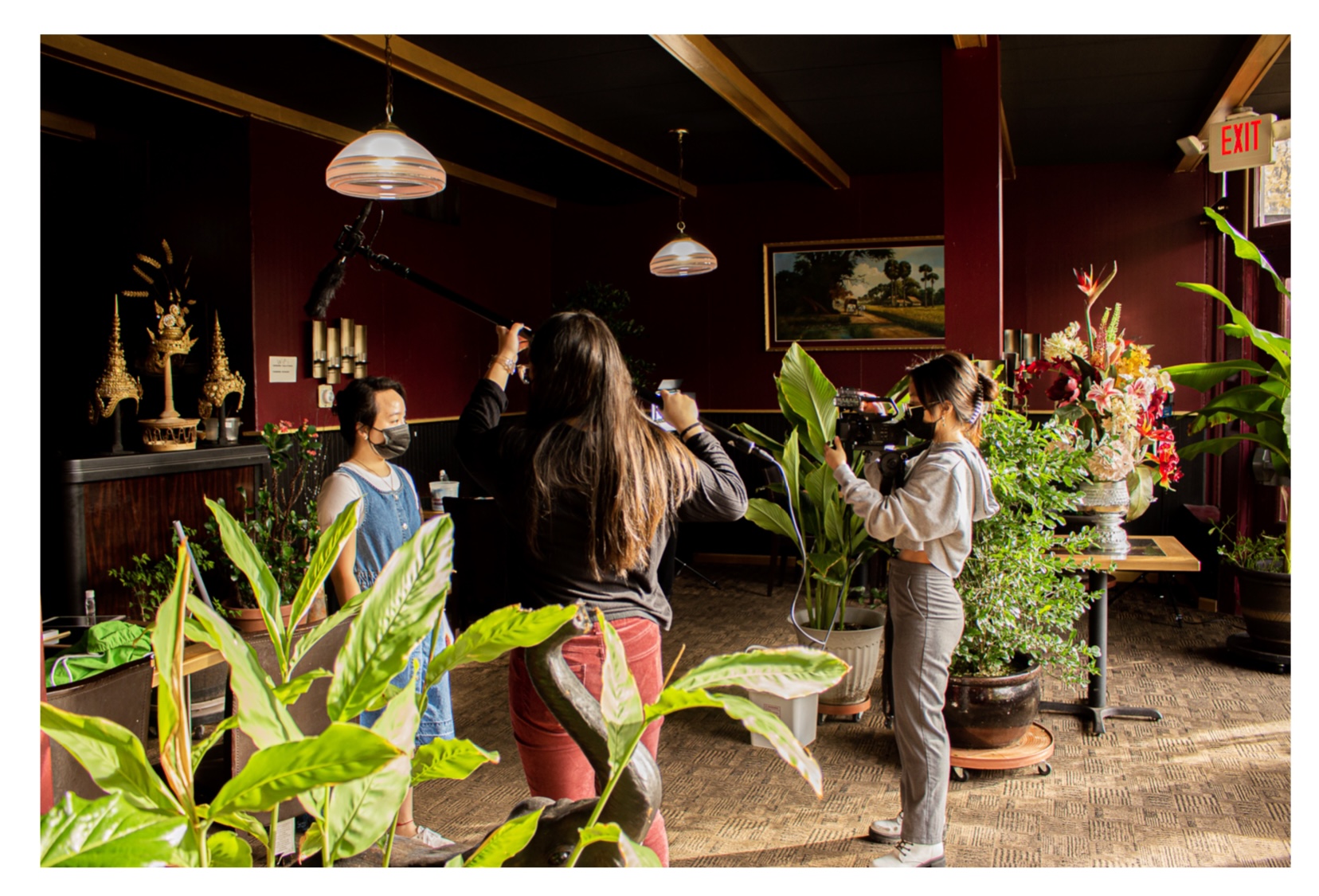
Image Credits
Long Xiong, Len Sanqui, Chue Zeng Yang, Lucia Elena