


We were lucky to catch up with Loretta Pulwer recently and have shared our conversation below.
Loretta, thanks for joining us, excited to have you contributing your stories and insights. Did you always know you wanted to pursue a creative or artistic career? When did you first know?
I used to sit in my room and just… talk. Not even full sentences. Just sounds. Trying things out. My voice, different tones, weird noises. It sounds a bit insane when I say it like that, but that’s kind of how singing started for me. I didn’t really have a lot of friends back then. I felt out of place most of the time. My mom would say I was just “different.” Later people called it a “unicorn,” which is cute, but growing up it didn’t feel cute. It just felt like not really belonging anywhere.
So I did what I thought you’re supposed to do. I tried to make sense of things. I got really into understanding people, life, meaning—probably also because of the stories in my family. My grandmother survived a concentration camp. When you grow up knowing that, you don’t really take life at face value. You keep asking… why? What actually matters?
I thought I’d find answers if I just went deep enough. Studied communication, political science. Then journalism. The whole idea of “searching for the truth.” I really believed in that.
But the deeper I got into it, the less clear everything became. There wasn’t this one truth waiting at the end. It was all perspectives, framing, context. And at some point it stopped feeling exciting and just felt… empty. Like I had pulled everything apart and didn’t know how to put anything back together. I spiraled for a while. I got severely depressed. There were moments where I genuinely didn’t see a point in continuing.
And the only thing I kept coming back to—almost without thinking—was singing.
I remember standing in my room again, just singing, not for anyone, not for anything. And for a few minutes, everything in my head got quiet. Not solved. Just quiet enough to breathe again. And I kept going back to that.
It didn’t magically fix my life, but it gave me something I could hold onto when everything else felt like it was slipping. It grounded me. In a weird way, it kept me here. And at some point I realized that what I had been searching for all along wasn’t some final “truth.” It was meaning. And meaning, for me, only ever showed up through stories—through voice, through music, through performance.
So choosing a creative path wasn’t this big, confident decision. It was more uncomfortable than that. It was admitting that the thing that quite literally helped me stay alive is also the thing I want to build my life around.
And once I saw that clearly, not choosing it didn’t feel like an option anymore.
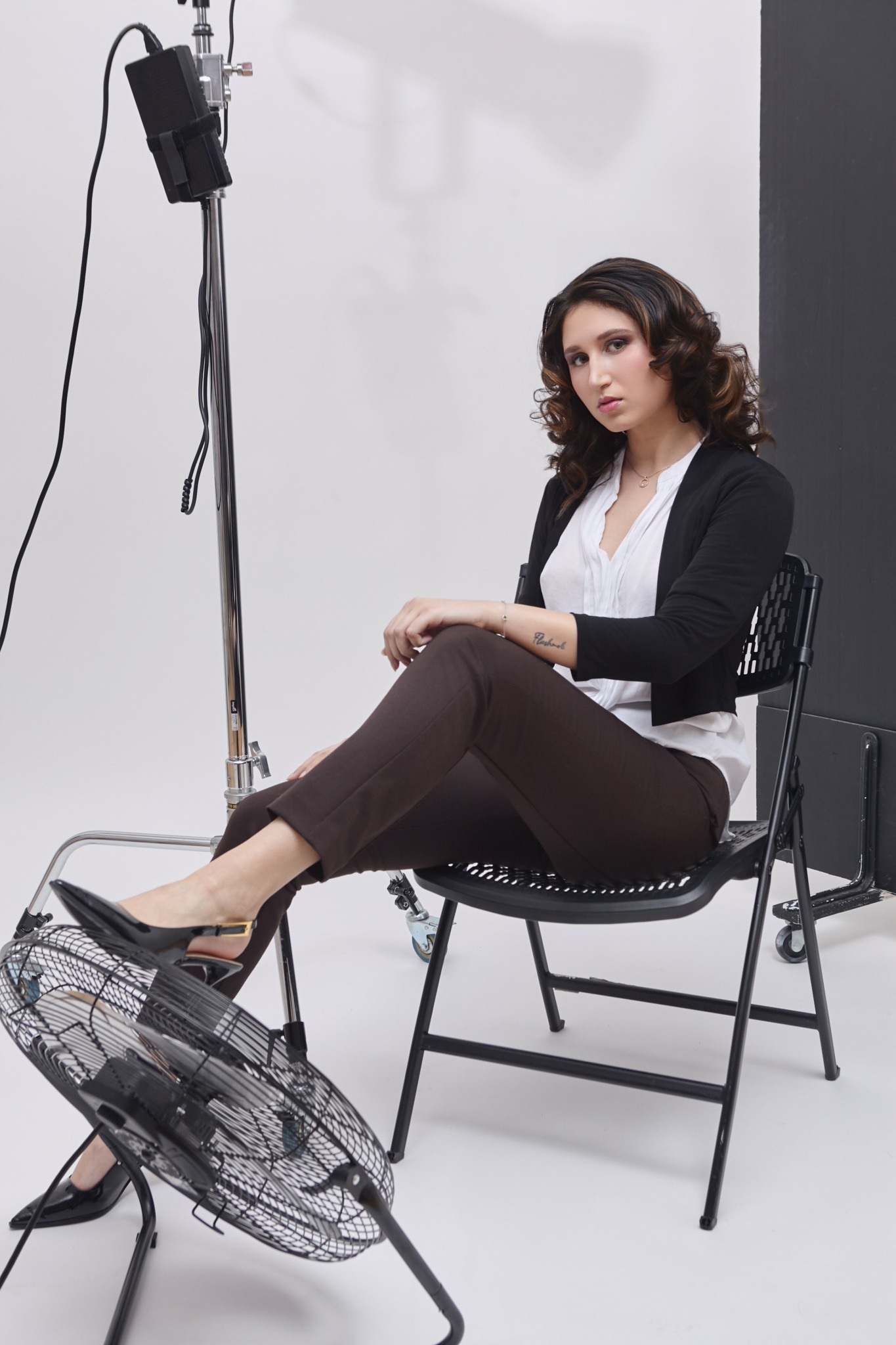
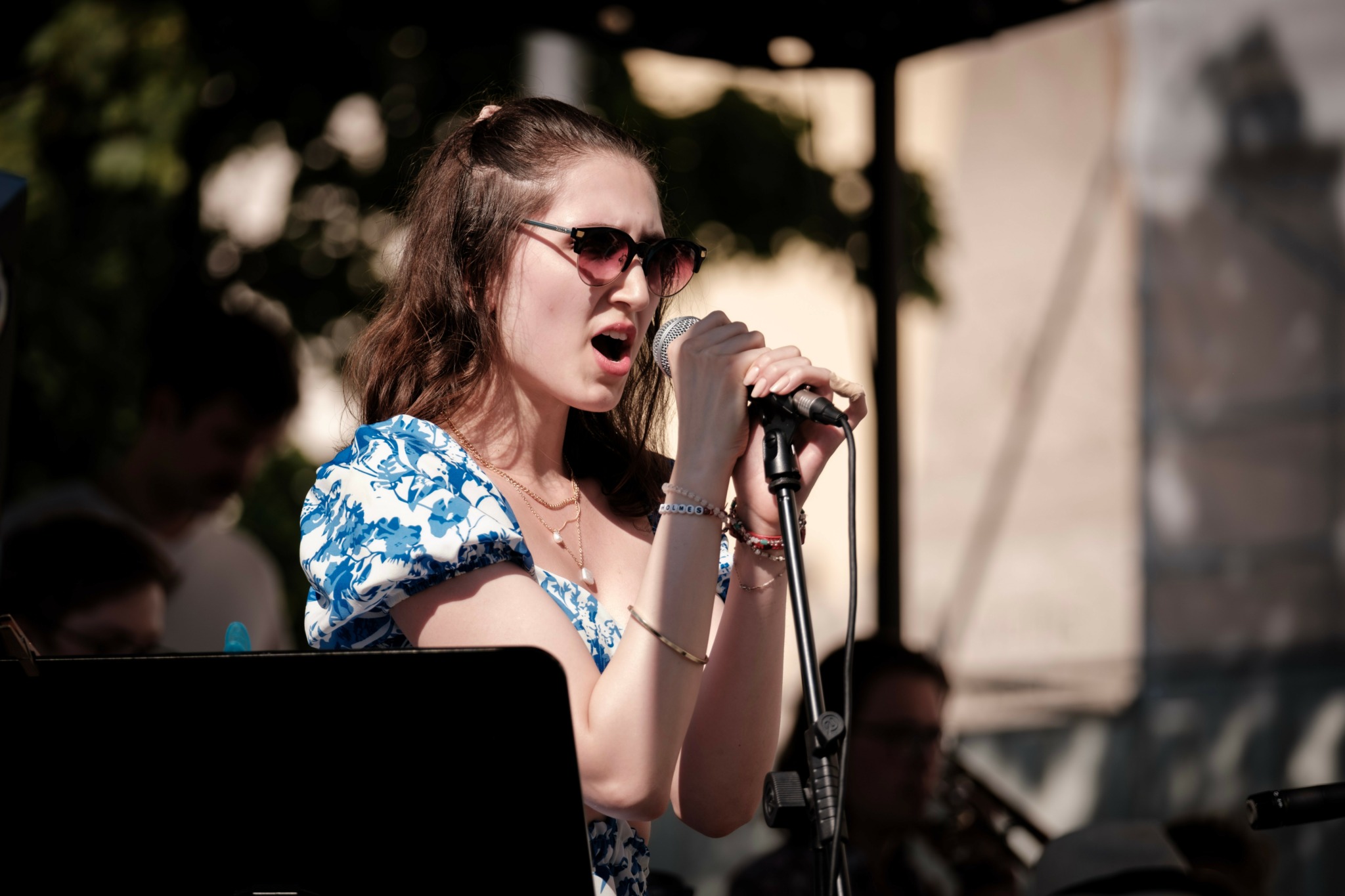
Loretta, before we move on to more of these sorts of questions, can you take some time to bring our readers up to speed on you and what you do?
I was studying communication, political science, later journalism—sitting in lectures, reading theories about how people think and act, how stories are shaped. And then I’d leave and go to rehearsal, or sing, or work on something creative that felt a lot less structured but somehow more real.
At first, those felt like two separate lives. One where I was trying to understand the world, and one where I was just… in it.
That separation didn’t hold up for long.
I remember being out in the field for a story, talking to people, writing things down, trying to capture what was happening. And then later, standing in a completely different space—rehearsal room, no notebook, no questions—just a voice, a body, a moment.
And weirdly, I was doing the same thing in both places. Listening. Translating. Trying to get to something underneath what’s being said.
That’s when it clicked that I wasn’t actually choosing between different paths. I was circling the same instinct from different sides.
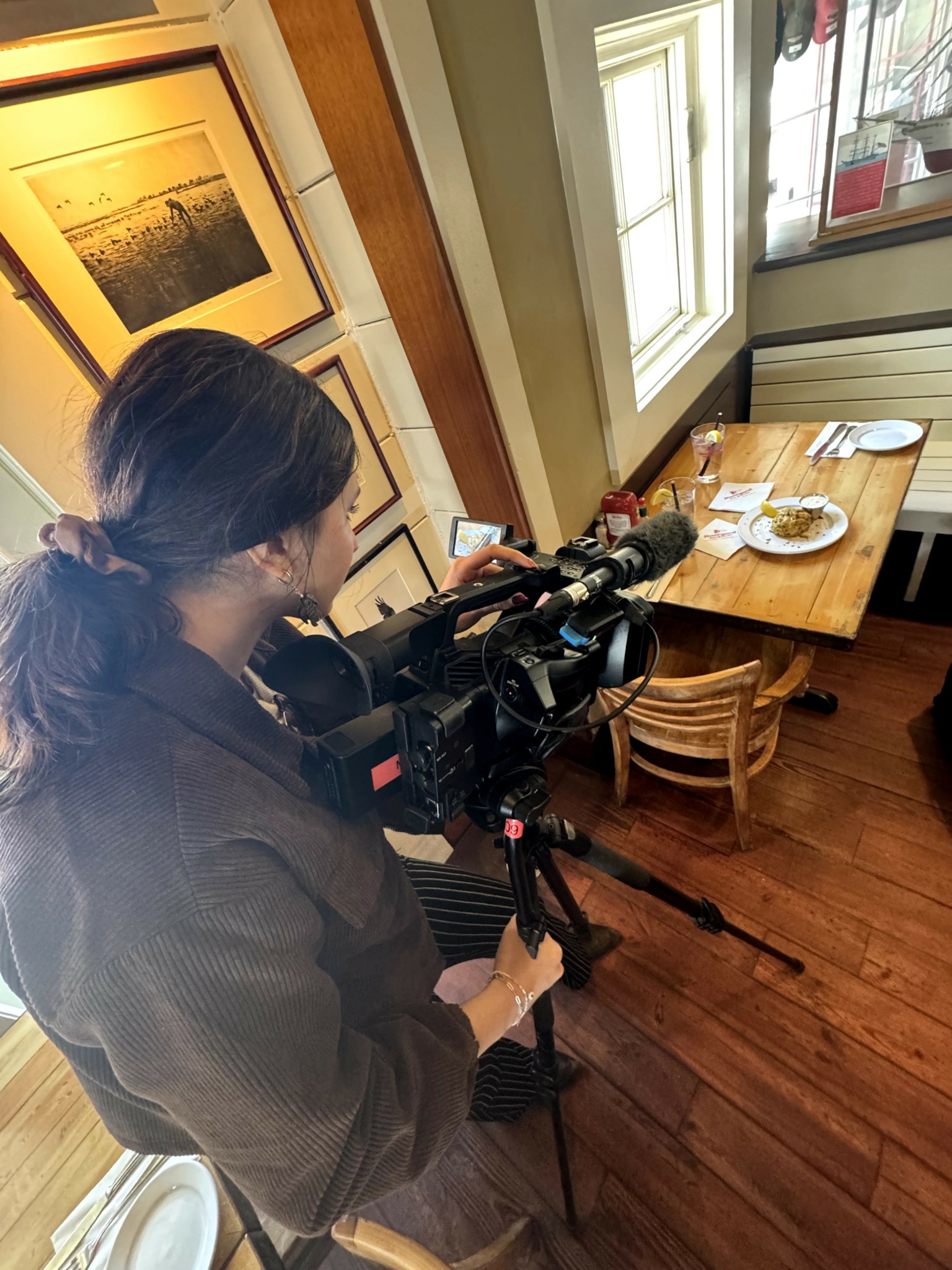
Now I freelance, which means I move between those worlds all the time. Right now I’m working on two documentaries for Everyday Canvassing—spending time with people, hearing their stories, figuring out how to shape them without losing what makes them real.
And then I step into performance or music, and it’s the same process, just without the camera. You still have to listen. You still have to find the truth of something. You just express it differently. I don’t really see those as separate anymore. It’s all storytelling.
What matters to me is that something feels honest. Not perfectly explained, just true enough that someone recognizes themselves in it, even if they don’t know why. The projects I’m most proud of are the ones where that actually happens—where something is grounded in real experience but still lands on an emotional level.
And I think that’s also what defines my work. I don’t stay in one lane. I follow the story and use whatever form gets closest to it.
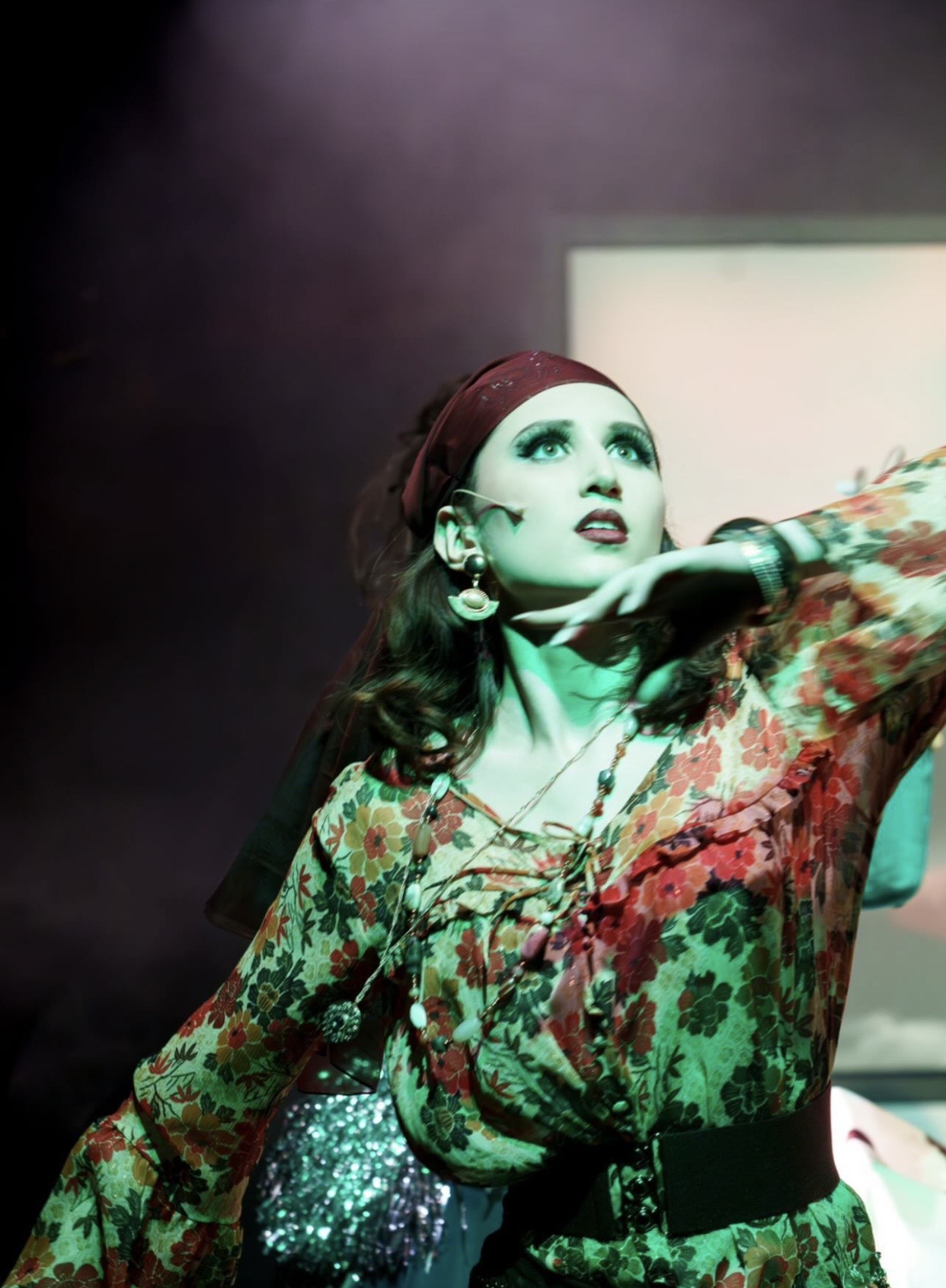
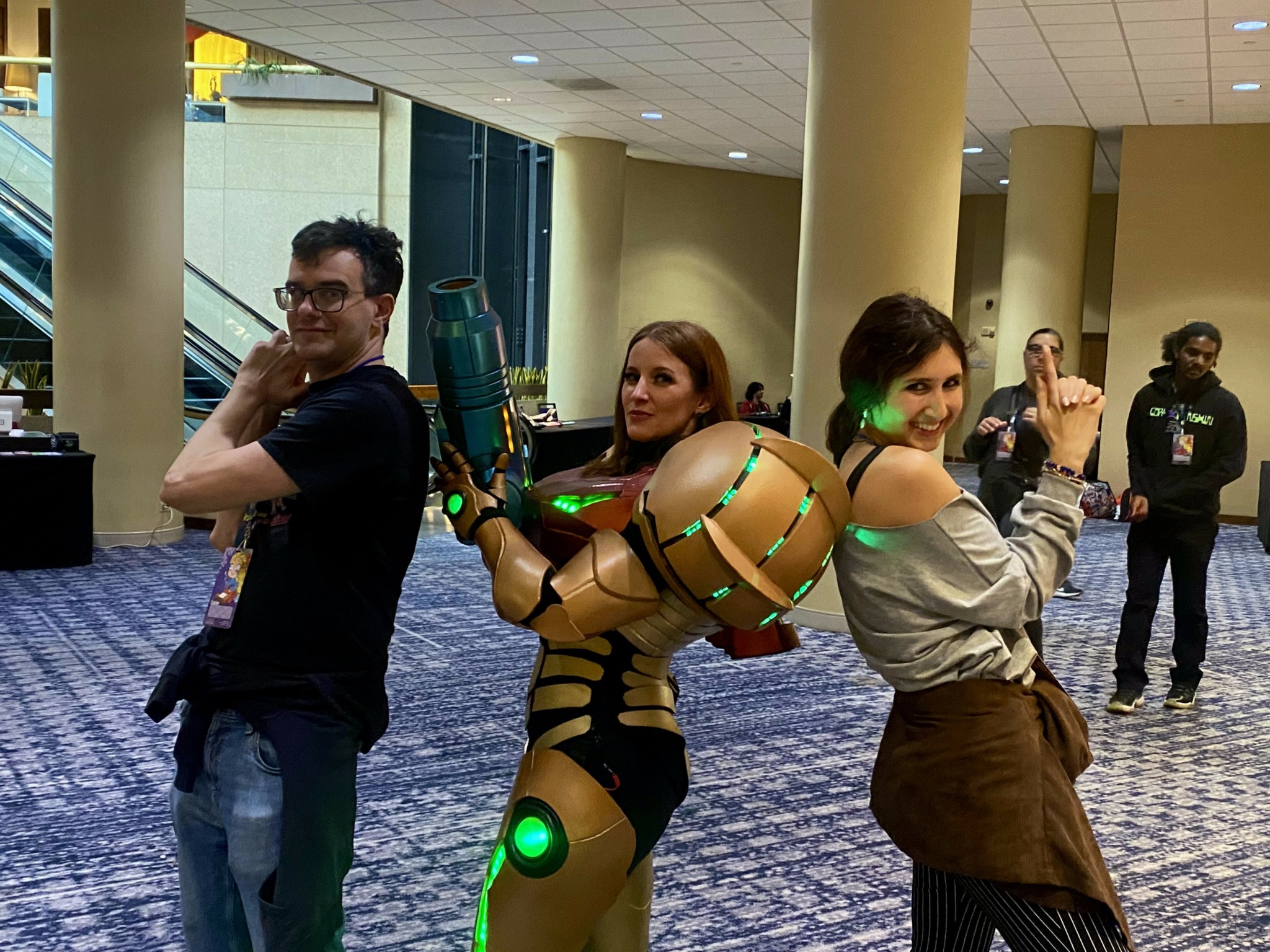
Is there a particular goal or mission driving your creative journey?
I don’t think I’m driven by one specific end goal. I get way more pulled in by what happens inside the work.
I’ve had this a lot doing interviews, where I walk in thinking I understand the situation, and then someone says something small, almost in passing, and suddenly the whole thing shifts. Not in a dramatic way, just enough that you realize you were too quick to make sense of it. And I catch myself doing that all the time.
You think you get it, you label it, you move on. But the more people I meet, the less that works. Things are rarely that clear. I think that’s what I’m trying to hold onto. That moment right before you jump to a conclusion. Just staying there a second longer.
In my work, I want to create that kind of pause. Not something that tells people what to think, just something that makes them hesitate for a second and maybe look at something twice.
Because usually, once you do that, things already start to shift on their own.
I don’t really care that much about one specific place I need to end up. I care more about being in rooms where something is happening, where I’m learning, where people bring their own perspectives into the process and it becomes something bigger than what you planned.
I love watching that in other people too. Seeing where my friends are going, what they’re building, how their stories unfold. That excites me more than any fixed outcome.
So if there is something like a mission behind it, it’s probably just that.
Let’s talk about resilience next – do you have a story you can share with us?
I think for a long time, I didn’t really see myself as someone who would have a future.
That started pretty early. I grew up in a chaotic environment with a lot of conflict and fear, and after a while that just became normal. You don’t question it, you just learn how to function around it.
When I was around 14, I ended up in a mental hospital, and I remember already being pretty sure at that point that my life wasn’t really going anywhere. Like a quiet certainty that sat in the back of my head. And back then, mental health was still heavily stigmatized, so when people found out, you could feel it immediately. People kept their distance and it just confirmed what I already believed, that something about me wasn’t right.
After that, I stopped talking about it almost completely. It just became something I carried on my own.
That way of thinking stayed with me for years. I remember sitting with people while they talked about where they saw themselves in five or ten years, what they wanted to build, where they wanted to go, and I would just sit there thinking that it didn’t really apply to me, because I probably wouldn’t be here by then anyway. So there was no point in planning anything.
Life kept moving on the outside. I studied, I worked, I even moved to a different country at some point because I thought maybe a new environment would change things. But internally, nothing really shifted. You don’t leave your past behind that easily.
In 2024, it reached a point where I was very certain I wanted to end my life, and what made it so intense wasn’t just the pain but how clear it felt. It didn’t feel like giving up, it felt like a decision that made sense.
And that’s actually the hardest part to explain. When you’re in that place, you’re not confused, you feel sure.
What changed after that wasn’t a big turning point or some moment where everything suddenly got better. It was much smaller than that. I just didn’t follow through, and then the next day I didn’t either, and slowly that created a bit of distance between me and that certainty.
Around that time, something else shifted in how I saw myself. For years, I had treated everything as something that needed to be fixed first. The diagnoses, depression, anxiety, OCD, body dysmorphia, it all felt like a list of problems I had to solve before I could actually start living.
At some point, I realized I could keep waiting forever to be “fixed,” and nothing would change. So instead, I started to accept that those things are part of my experience. They don’t define everything about me, but they are there, and they’ve shaped how I see the world.
That didn’t make things easy, and the thoughts didn’t just disappear, but it changed how much control they had over me.
I’m still figuring things out, and I don’t feel like I have some clean, finished version of this story. But I’m here, and for now that’s what resilience looks like for me. Not everything resolved, just choosing to stay, even without knowing what comes next.
Contact Info:
- Instagram: @lorettaplw
- Linkedin: https://www.linkedin.com/in/loretta-pulwer-037342220
Image Credits
Agata Belova, Celina Larab, Florian Messmer, Joey Barke