
We caught up with the brilliant and insightful Lance Allen Kramer a few weeks ago and have shared our conversation below.
Lance Allen, thanks for taking the time to share your stories with us today Let’s jump right into how you came up with the idea?
There was no single moment the idea hit me. It came together slowly, over years of auditions.
I’m an actor and a producer. I’m in post on a feature called “Mattress Mack” right now, about Houston legend Jim “Mattress Mack” McIngvale. I play Daryl, the director of his commercials. So I’ve been on the actor’s side of this problem for a long time.
You get sides on a Tuesday. The self-tape is due Wednesday. And you’ve got nobody to read with.
My wife isn’t an actor and she’s busy. My actor friends have their own auditions to deal with, so when I’d grab one of them I’d rush the scene because I didn’t want to waste their time. I could pay a professional reader, but that’s expensive, and half the time I couldn’t book one on a twelve-hour turnaround anyway.
For a while I just recorded myself doing every voice in the scene, mine and theirs, and played it back in the car between errands. I’d hear the whole scene a hundred times before the audition.
Then a few apps showed up that offered something similar. But the voices were obviously synthetic. Flat, over-articulated, the kind casting directors clock in two lines. That’s death in a self-tape.
The thing is, a scene partner isn’t just saying lines at you. Any actor will tell you rehearsal is mostly adjustment. Try it lower. Pause before that line. Push back here. The apps couldn’t take direction.
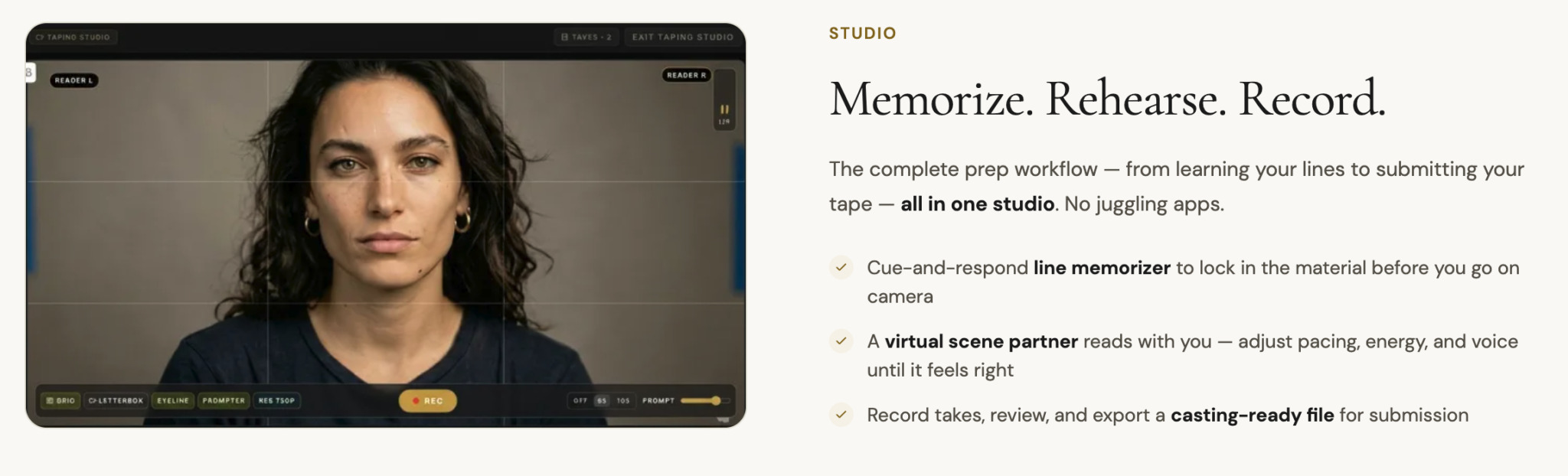
So I started building my own. First, characters with more human cadence. Then a feature I call Actor Mirror. You give the virtual reader a line read yourself, basically “no, say it more like this,” and it plays the line back in their voice, using your timing and inflection. You direct them the way you’d direct any real reader.
That’s what became ActorBook. It’s still the only way I prep now. And I know it’s going to help a lot of actors!
Lance Allen, love having you share your insights with us. Before we ask you more questions, maybe you can take a moment to introduce yourself to our readers who might have missed our earlier conversations?
I’m an actor, producer, and the founder of ActorBook, a virtual scene partner app for actors.
The acting came first. I trained at the University of North Carolina School of the Arts and came out of their conservatory program with an MFA in acting. Since then I’ve been a working actor in film, television, and commercials. Recent on-camera credits include Taylor Sheridan’s “1923” Season 2, the film “ICK,” and “The Senior,” plus more than thirty national commercials. I also have a side life as a chef, which led to appearances on Food Network’s “The Great Food Truck Race” and “Supermarket Stakeout.”
Right now I’m a producer on “Mattress Mack,” a feature about Houston legend Jim “Mattress Mack” McIngvale. I also play Daryl, the director of his commercials. That film is what I’m most proud of right now. It’s the first project where I got to be on both sides of the camera, as an actor and as a producer, on something this size. Hard to beat that.
ActorBook came out of the other half of my life. Every working actor knows the panic of getting sides on a Tuesday and needing
to self-tape by Wednesday with no one to read with. I built ActorBook because I kept running into that wall myself. It’s a virtual scene partner app, built for actors. The core feature, Actor Mirror, lets you give the virtual reader a line read yourself (“no, say it like this”) and the reader plays the line back in their voice, using your timing and inflection. You direct the reader the way you’d direct a real one.
The other feature I lean on hardest is Driving Mode. A huge amount of my prep happens in the car, between auditions, callbacks, or everyday errands. Driving Mode runs the scene hands-free, so you can rehearse out loud while you’re behind the wheel. It’s the feature I wish every other app had.
What sets ActorBook apart is that it’s built by an actor, for actors, with the craft in mind. Most of the AI reader apps that showed up over the last few years sound synthetic. Casting directors clock it in two lines. The apps can’t take direction either, which is what rehearsal actually is. ActorBook is designed around how actors work, not how an engineer thinks we work.
The thing I want people to know is this. I didn’t build ActorBook to leave acting. I built it because I’m still in it. Mattress Mack is in post right now. My reps still send me sides. I still prep every scene using the app. If it ever stops working for me, on a real audition, on a real twelve-hour turnaround, I’ll know before anyone else does. That’s the standard.
Do you think there is something that non-creatives might struggle to understand about your journey as a creative? Maybe you can shed some light?
Acting, from the outside, looks like memorization. From the inside it’s almost entirely adjustment.
The lines are the smallest part. A good actor spends maybe 10% of their prep time memorizing and 90% figuring out who the character is, what they want, why they’re in the scene, what they’re hiding, where the beats fall, what they do when they listen. You don’t know any of that until you try things out loud with another human, and then adjust. Try it lower. Pause before that line. Push back there. Be angrier. Try it again but tired this time. Rehearsal is just that loop, a hundred times.
That’s the thing that surprised me most when I started building software for actors. A lot of the tools that have shown up in the last couple of years treat acting like typing. Input a script, output a performance. That’s not the shape of the work. You can tell those products were built by people who have never had to prepare a scene themselves. The voices are too clean. The pacing is wrong. They can’t take a note. A casting director hears that in the first two lines, and your self-tape is dead on arrival.
The other thing non-creatives tend to underestimate is how much invisible work goes into a single audition. Every self-tape is hours of prep, a full production setup, lighting, reading, performing, re-performing, editing, all on a 12-hour turnaround, and all unpaid. You might do ten of those in a month before anything hits. People see an actor’s IMDb page and assume that’s the work. The work is mostly the auditions that didn’t make the page.
That’s why I ended up building ActorBook. I kept running into the same gap that nobody else seemed able to close. The tools that existed were built by people who didn’t understand rehearsal, and the actors who understood rehearsal weren’t building tools. I had a foot in both camps, and enough patience to try.
Learning and unlearning are both critical parts of growth – can you share a story of a time when you had to unlearn a lesson?
Wait for permission. That’s the lesson I had to unlearn.
Most actors get trained, directly or indirectly, to wait. Wait for an agent. Wait for the right audition. Wait for casting to call. Wait for the industry to notice you. I spent years doing all of that. I put in the work on my end, took the classes, kept my instrument in shape, and trusted that the right opportunities would show up if I was good enough and patient enough.
The problem is that patience can look exactly like inertia. Especially in this industry. You can wait a very long time for somebody else to hand you the part, and while you’re waiting, nothing in your life is actually moving.
The moment that shook it loose for me was the moment I realized I could produce. Not just audition for roles, but help make the films. That’s how I ended up as a producer on “Mattress Mack,” the feature I’m also acting in. I didn’t wait to be cast in a movie I loved. I helped make one.
The same shift happened with ActorBook. I had been complaining for years about how hard it was to rehearse alone between auditions. I could’ve kept waiting for somebody to build the right tool. Instead I started building it myself. If you’d told me earlier in my career that I’d be doing that, I would have laughed. Engineers build software. Actors act. That was the script.
Turns out nobody was going to build what working actors actually needed. So I figured I might as well try.
The backstory, if there is one, is just years of auditions that didn’t land, and a long-overdue realization that I didn’t have to wait for the industry to move first. Mattress Mack is what happened when I stopped waiting. ActorBook is what happened next.
Contact Info:
- Website: https://www.actorbook.studio
- Instagram: https://instagram.com/lanceallenkramer