

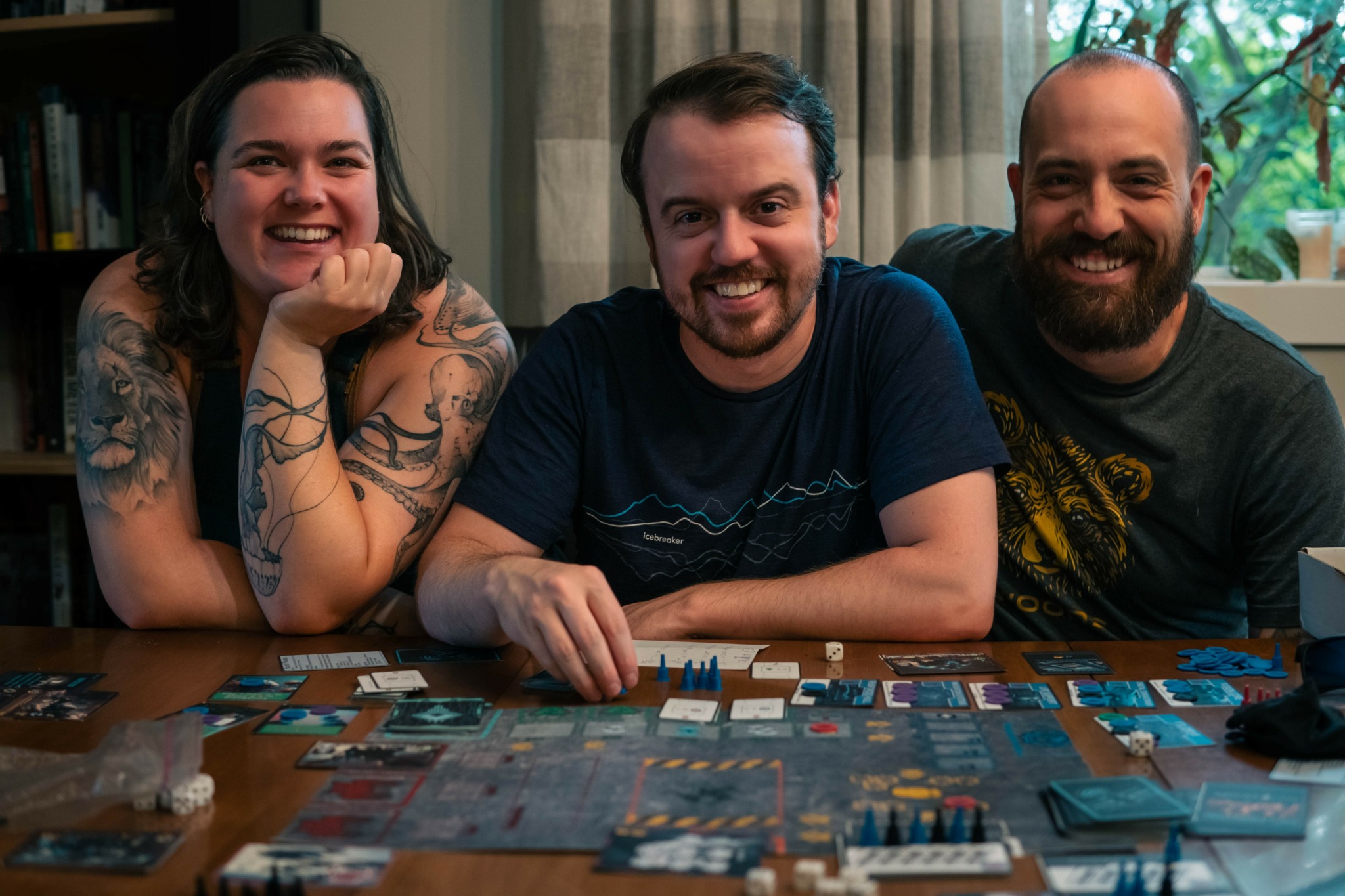

We caught up with the brilliant and insightful Kyle Crane a few weeks ago and have shared our conversation below.
Kyle, thanks for joining us, excited to have you contributing your stories and insights. Let’s start with what makes profitability in your industry a challenge – what would you say is the biggest challenge?
It’s commonly said among the tabletop game design and publishing community that if you’re in it to make money, you’re in the wrong industry. Most people think of games like Monopoly and Scrabble which are staples in most households and are always on store shelves, but the reality is that the vast majority of board games don’t end up being mass-produced or making a ton of profits. And in fact, a lot of designers are making games that they know from the beginning won’t have a place on department store shelves, but might do well enough in a specialty boardgame store.
To be clear, this wasn’t news to us going into the industry. While we believe we have some ideas that would do well as mass-market games, and others that fill a smaller niche, we’ve kept our expectations tempered from the beginning. We’d all love to make enough money to be able to make games full-time, but we’re nowhere near quitting our day jobs yet. There are a lot of obstacles to overcome before that can happen.
For anyone designing games, getting a publisher to consider making their game is a challenge right off the bat. The saying “ideas are a dime a dozen” rings true, and fighting for publisher attention is a slog we wanted to avoid. That’s why we opted to become publishers ourselves, so that we had full control in making our own content. While this sounds good in theory, the amount of work that goes into publishing a game far exceeds what goes into designing a game, and with no prior games under our belts, we’ve been in a position of trying to promote games without being known in the broader community. Gaining a loyal following is critical for most game publishers to ensure successful game launches, so that’s been our biggest uphill battle.
That’s particularly true when it comes to crowdfunding. We’re limited in how much money we can invest into our own games from our personal funds, so we rely quite heavily on getting our game launched via community pledges. Lack of community interest can be a huge barrier to getting a game launched, and it may not be an accurate reflection of whether the idea itself has enough appeal, simply because it can be so difficult to even be seen. Ultimately, if a company is not dissuaded by poor crowdfunding results, they may be forced into doing smaller print runs, which means having inflated manufacturing cost, and narrow profit margins.
It’s also a highly competitive industry, particularly after COVID surged the popularity of tabletop games. Today, the toolkit for tabletop game creation is very accessible and constantly growing, to the point that it’s easy enough to take an idea and get it to a fully-functioning prototype within a matter of hours. The competition for making games is intense, and getting seen among the plethora of new games is a challenge not just during a game’s conceptual phase, but all the way through to the phase of distribution.
These are all hurdles we’ve had to face, but through careful planning and ongoing community growth, we expect to continue to see our games successfully hitting the market.
Kyle, love having you share your insights with us. Before we ask you more questions, maybe you can take a moment to introduce yourself to our readers who might have missed our earlier conversations?
We’re a group of four friends who all grew up with a passion for tabletop games, each of us regularly playing games of various genres dating back as early as the late 1980’s, and spending ample time at our local game stores being immersed in the tabletop gaming scene. We started Silverspire Games about three years ago, after a consensus that it was about time we started pursuing game design more seriously. We already knew we had a knack for understanding what makes a great game, as so much of the time we played games with altered house rules or significant modifications to improve on the game’s mechanics.
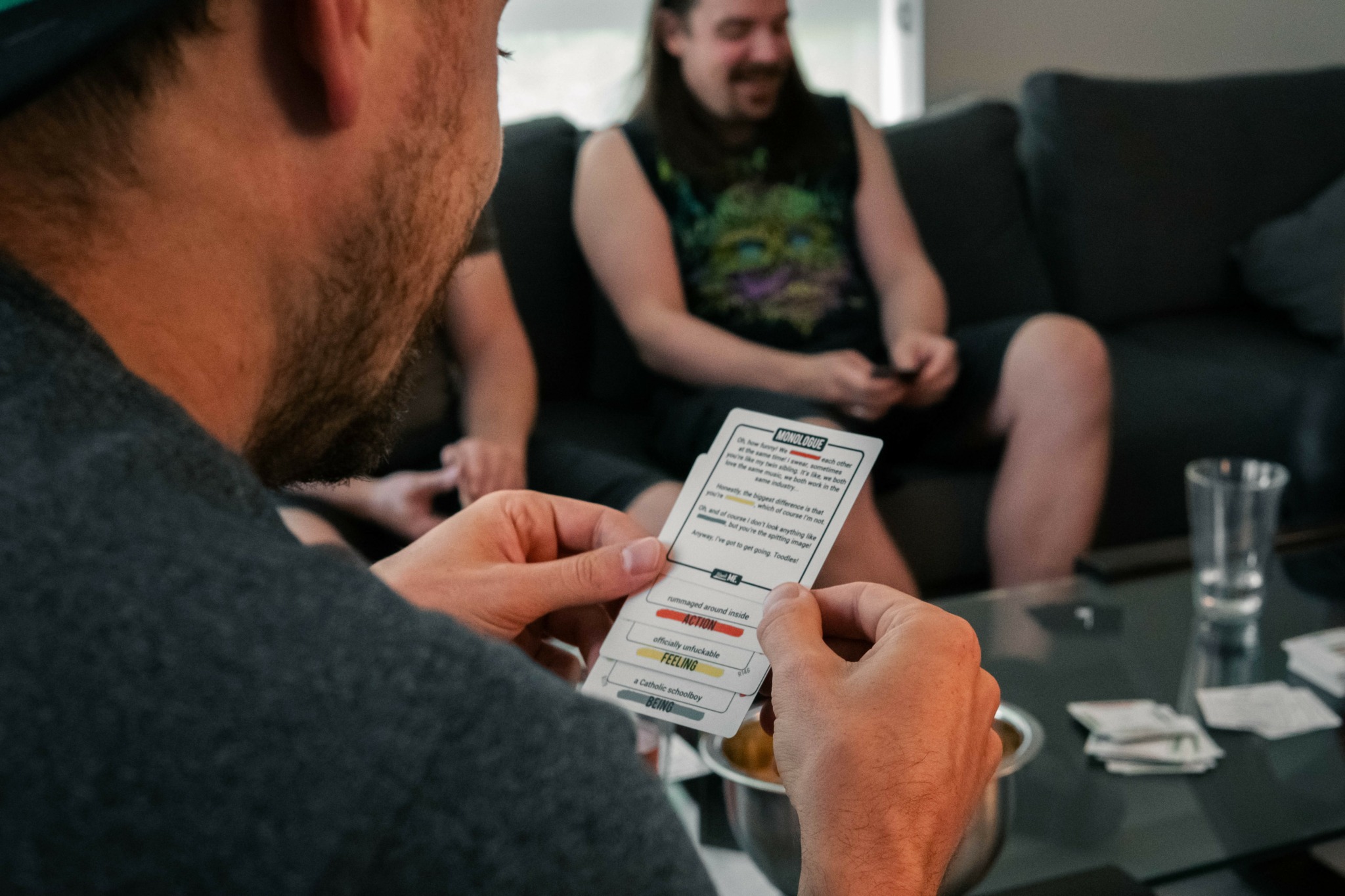
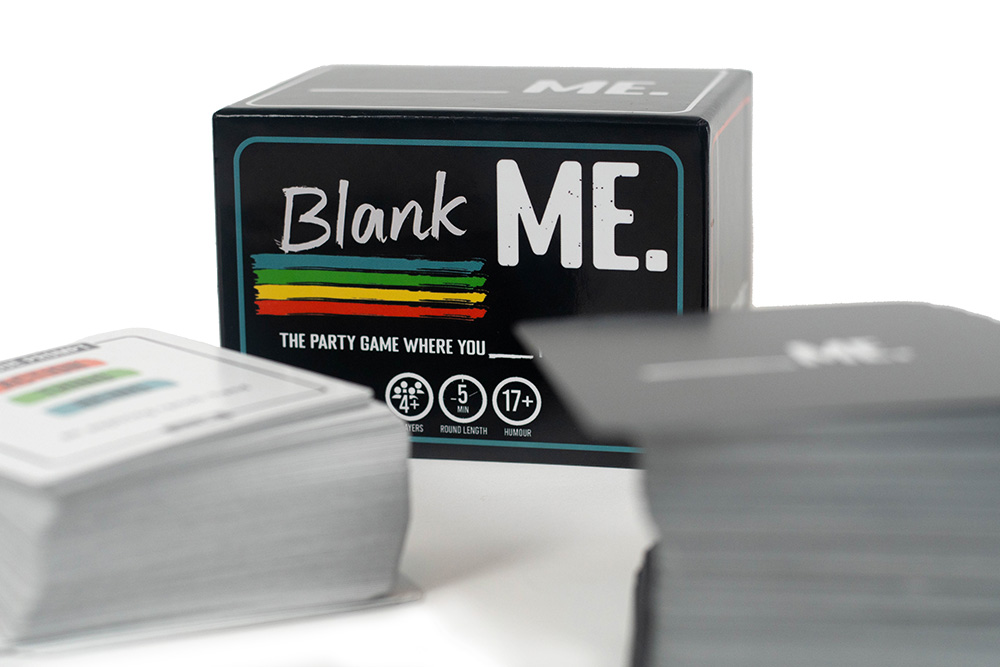
I think the most important thing for people to know about us as a company, is that we take a lot of pride in being extremely thorough when it comes to game design, with a goal of always improving and innovating on game mechanics. We try to get as many eyes on our designs as possible to ensure we’ve tested every suggestion and ironed out every kink help a game realize it’s potential. Blank Me is a great example of this. While it’s a simple game conceptually, we had all spent years playing other games in the genre and identified an array of mechanical issues in those games. We specifically avoided recreating those same issues within our game, and solved a lot of problems that are inherent to some of the most well-known party games out there. Over the course of two years, we play-tested rigorously and solicited feedback from everyone we knew, especially more critical crowds at boardgame cafés and stores. Ultimately, we did everything we could to make sure we got the final product right, and we couldn’t be more proud of it.
What’s been the most effective strategy for growing your clientele?
With our party game, Blank Me, we realized right away that we were going to have an uphill battle of trying to get noticed in a saturated market. It became clear that people needed to play Blank Me to lose their preconceptions from other games, and to fall in love with something new. That meant we needed to take a much more active approach to the marketing process.
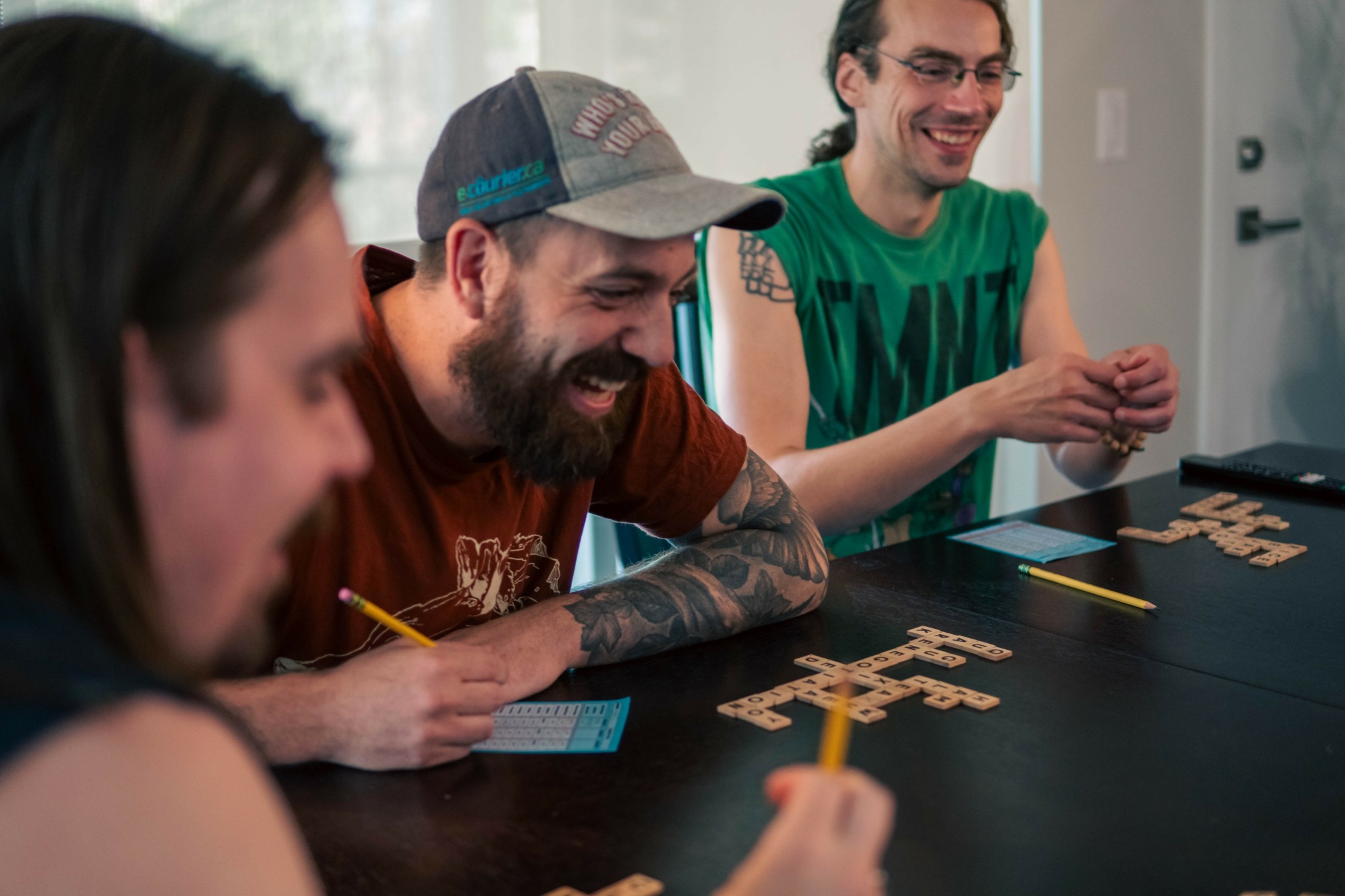
Fast forward to today, and we now attend as many local conventions as we can, and we have a constant cycle of people joining us at our booth to actually play our games. Regularly those interactions result in a sale, but even in cases where someone doesn’t buy something, they often sign up for our newsletter and go tell others about the game. We’ve had a huge up-tick in word-of-mouth sales, and people are now seeking us out at conventions or online. So ultimately, while I think we initially downplayed the importance of grassroots, local sales, we’ve really embraced making a solid footprint in our city as a top priority. Local connections also allow for a more personal touch and an opportunity to build friendships instead of just customer relationships. All of this will make launching future games easier, because we will have a loyal, local community we can trust to support us every time.
When it comes to the broader global market, none of us like being marketed to, and now that we’re trying to sell a product of our own, it has become almost a point of principle to refrain from blasting people with ads that wouldn’t want to see as individuals. Consequently, we’ve taken a more relaxed approach when it comes to social media. Our social media manager doesn’t view the people he chats with as sales targets or leads or numbers. He views them as real connections and, increasingly, as online friends. They seem to see him that way too, because many of them are now our company’s biggest advocates when it comes to promoting us. Social media for an indie company these days is really about building relationships, because sales naturally flow from people who truly have an emotional stake in your success, whether they buy something directly or share it with people they know will have an interest. And while keeping up those relationships might be hard to manage as growth continues, having a human connection in the realm of social media keeps us sane while growing the brand.
How do you keep your team’s morale high?
There’s a lot of work that goes into any company or product, and in our case, because of our unique structure of being an equal partnership of friends, we knew from the beginning that our friendships would be tested through the stress of trying to run a business with each partner having a full-time job and different life demands.
To remedy this, we try to make sure we all have the same weight in company decisions, and we foster an environment where opinions are valued and where, generally speaking, majority consensus can move things forward when we’re stuck.
While that approach has been great for the big decisions, we’ve also learned to really trust each other when it comes to the small things–things that people might prefer one way or another, but that ultimately won’t have any real impact on the company. This trust has been a huge boon to morale, and of course to efficiency, since we don’t get hung up on small things. There was a time in the early days where we all tried to be helpful by being involved in everything, and in the end it just resulted in more work and stress as we spent extra hours making all kinds of revisions to try out everyone’s ideas.
One day we just decided to define informal roles for each of us based on our individual strengths, and we gave the people leading those roles more leeway to make the final decision in cases where we’re at an impasse. This has helped keep everyone happy and heard, and the ball keeps rolling forward.
Contact Info:
- Website: https://silverspiregames.com
- Instagram: https://www.instagram.com/silverspire.games/
- Facebook: https://www.facebook.com/BlankMeGame/
- Youtube: https://www.youtube.com/@silverspiregames
- Other: https://www.instagram.com/blankme.thegame/
https://www.threads.net/@blankme.thegame
Threads is our primary social media platform.
Image Credits
Stacy Crane