


We were lucky to catch up with Krystal M. Chuon recently and have shared our conversation below.
Krystal M., thanks for taking the time to share your stories with us today Let’s jump to the end – what do you want to be remembered for?
The subject of legacy became more prominent in my 20s. I thought about my family and all the missing gaps in our familial history as a result of the genocide in Cambodia. I didn’t want our future descendants to be left with more questions than answers. This is one of the core reasons why I write. My writings and books will still be here long after I’m gone, including digital traces of my business and other published content. My wish is that my future descendants can seek out my work and learn more about where and who they come from which can help shape their identity and overall understanding of their lineage. It’s not so much about what I hope to be remembered for, but more so how beneficial my work can be for the future of my family and community for years to come.


Krystal M., love having you share your insights with us. Before we ask you more questions, maybe you can take a moment to introduce yourself to our readers who might have missed our earlier conversations?
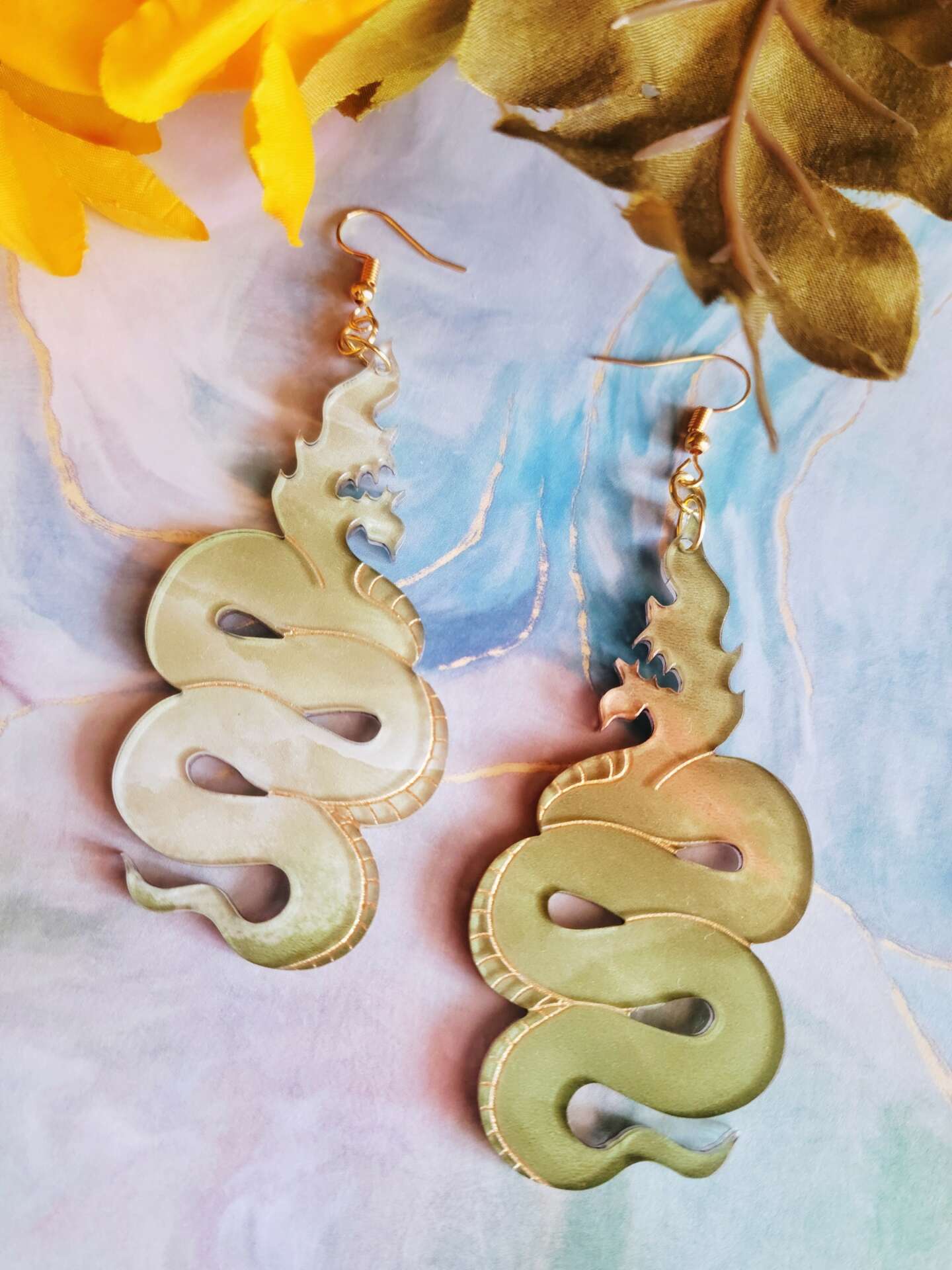
My name is Krystal M. Chuon and I am a 2nd generation Khmer/Krom American writer, artist, and maker born and raised in San Francisco/Bay Area. I own a small business called Mealea Collection. “Mealea” is a Khmer word meaning “wreath, garland, and braid made of flowers.” I chose this name because I wanted something in my mother tongue that was not only easy to pronounce, but also sound a bit airy and feminine. I was also inspired after visiting an ancient temple in Cambodia called Beng Mealea in Siem Reap, Cambodia. My small business started off selling earrings made with laser cut acrylic and since then, I’ve been able to offer necklaces, brass jewelry pieces, and pins. I take inspiration from Cambodia and my Khmer culture for all of my designs, presenting contemporary unique takes on deities, motifs, and more.
For those who aren’t familiar with the Khmer (pronounced like kuh-my) American community, we are part of the Southeast Asian diaspora. Many of us came to America as a result of the Khmer Rouge regime (1975-1979) and genocide in Cambodia. Like many Khmer families, my family had to escape to refugee camps in Thailand by foot through dense jungles all the while trying to avoid hidden landmines and Khmer Rouge soldiers seeking to kill survivors. Unfortunately, our stories are not as known to the world and the Khmer community is often forgotten and left out of conversations. So, among the goals for my business was to create visibility for my community and jewelry is one of the most visible ways to express yourself. Customers have voiced their enjoyment in getting to wear my one of a kind pieces that reflects who they are and also connects them to their culture. It’s been incredible to see the positive impacts of my art. That’s how I know I’m doing something right.

We’d love to hear the story of how you built up your social media audience?
Prior to starting my business, I was already sharing my writings and artwork. So I had a good chunk of people who knew me for that and as time went on, my audience began to grow more and more. When I became a business, people found me through other people’s shares, hashtags, word of mouth, and from being featured on other social media accounts. It’s a lot of slow work that definitely did not happen overnight. My advice for those just starting to build their social media presence is don’t get caught up with the numbers. Continue to post your work, share your stories, and make yourself stand apart from the rest. Eventually, the right people will discover you!

We’d love to hear a story of resilience from your journey.
During the communist Khmer Rouge regime, many artists (traditional artists, ceramicists, dancers, actors, musicians, etc.) were targeted and killed (others who weren’t outright killed died from disease or starvation). Pol Pot, the leader of the Khmer Rouge, had a goal to turn Cambodia into a self-reliant, classless, agrarian society. This meant ridding the country of anyone who represented outside influence – the “decadent Western culture, ” deeming them as enemies. As I developed my business, I thought about all of these artists we lost and how I needed to be unwavering in my pursuits. I do what I do for those who couldn’t. This dark history provides me the resilience that I need to keep on going and to keep a piece of the Khmer arts alive.

Contact Info:
- Website: https://mealeacollection.com
- Instagram: https://instagram.com/mealeacollection
- Facebook: https://facebook.com/mealeacollection
- Goodreads: https://goodreads.com/krystalmchuon
- Medium blog/think pieces: https://krystalmchuon.medium.com/
- Monthly newsletter: https://krystal-m-chuon.eo.page/t62s2