

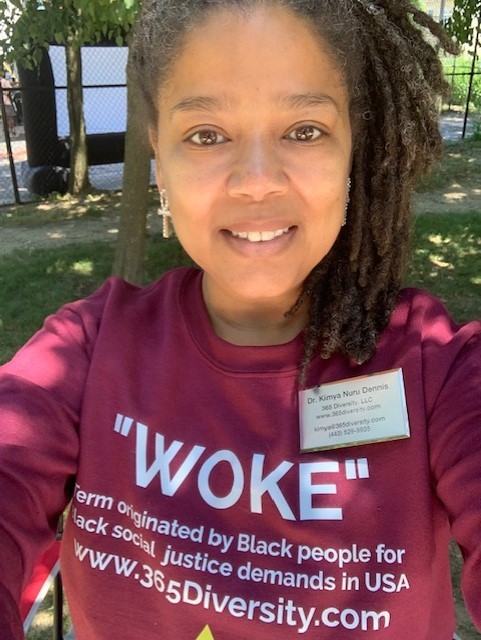

We recently connected with Kimya Nuru Dennis and have shared our conversation below.
Alright, Kimya Nuru thanks for taking the time to share your stories and insights with us today. So, let’s start with a hypothetical – what would you change about the educational system?
I will share my experiences as a Black girl in predominantly Black public schools that teach a narrow version of knowledge, and this shaped my goals as a Black girl, as a Black woman, as an academician, and as a Black community advocate.
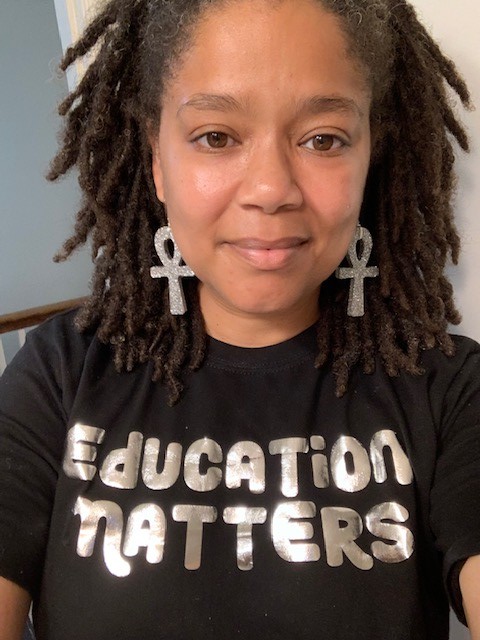
As always, we appreciate you sharing your insights and we’ve got a few more questions for you, but before we get to all of that can you take a minute to introduce yourself and give our readers some of your background and context?
Dr. Kimya Nuru Dennis is a community advocate, sociologist and criminologist, educator, and qualitative researcher connected with local, national, and global communities, schools, businesses, and organizations. As founder and CEO of 365 Diversity, Dr. Dennis contributes to demographic and cultural changes in policies and actions, 6-month and annual program evaluations and assessments, curriculum and class materials for K-12 schools and colleges-universities, medical and health organizations and facilities, community groups and community events, job skills and workforce development services, and collaborative financial advising and economic growth.
Dr. Dennis and 365 Diversity invest in measurable and lasting equity and justice regarding race and ethnicity, socioeconomics, sociopolitical, health and medical, gender and non-gender, sexuality and asexuality, and reproductive choices for people with minoritized and underserved demographic and cultural identities.
An example of Dr. Dennis’s work in equity and justice is that Dr. Dennis is a childfree Black woman and childfree Black sociologist who conducted the first known Black childfree research in parts of the world in 2013 and created and taught the first known childfree course. This research and this course resulted in connecting global childfree Black people, public writings, presentations, and showing medical and health professionals ways to improve access to services needed for Black people with various cultural needs and various life decisions.
Dr. Dennis and 365 Diversity services also specialize in physical and mental disabilities, mental health, physical health, substance use, and suicide. Dr. Dennis connects this with community programs, presentations, conducting training, and teaching undergraduate and graduate courses. This also connects with Dr. Dennis as the former grant writer and grant coordinator for a partly Black-led non-profit and partly Black-owned coffee shop and cafe’ in Baltimore that reached Baltimore youth and young adults ages 16-24 with health conditions and life difficulties such as school performance, lower socioeconomic status, domestic violence, police altercations, homelessness, unemployment and under-employment, and mental illness.
Prior to moving to Baltimore in 2019, Dr. Dennis was in North Carolina for 17 years as a doctoral student and university instructor and then as full-time faculty at a college and part-time staff at another university. As a community-based Black sociologist and criminologist with a criminal justice background, Dr. Dennis remained community focused to increase equity and justice by planning and hosting community programs such as Black meditation sessions, volunteering on board of directors and community communities, and as part of the health committee for the Annual Juneteenth Festival.
Dr. Dennis was born and raised in Richmond, Virginia.
Can you share a story from your journey that illustrates your resilience?
I encourage Black small business owners and Black creatives to find professional networks that provide resources and opportunities that do not conflict with personal background, personal goals, professional background, and professional goals.
Depending on the career and focus, there are certain occupations and certain acclaimed goals that are hypocritical and dishonest if pursuing profit and making profit is on the backs of other Black people.
It is impossible to claim to want social equity and justice, socioeconomic equity and justice, and equity and justice in business funding and business success if you are willing to market yourself and profit yourself through the harms of minoritized people.
What’s a lesson you had to unlearn and what’s the backstory?
I had to unlearn the “one size fits all” approach to business development.
There are wonderful business advisors and wonderful personal-and-business financial planners capable of connecting with people whose identities and purposes are not “one size fits all.”
It is meaningless to have advisors, planners, and marketers whose concepts and methods are the same for everyone regardless of demographics and cultures, regardless of audiences and customers, regardless of GIS coding done in cities to describe populations, and regardless of purpose and goals.
Contact Info:
- Website: https://365diversity.com/
- Youtube: https://www.youtube.com/watch?v=i-RpQq30TA0&t=261s
Image Credits
Dr. Kimya Nuru Dennis