

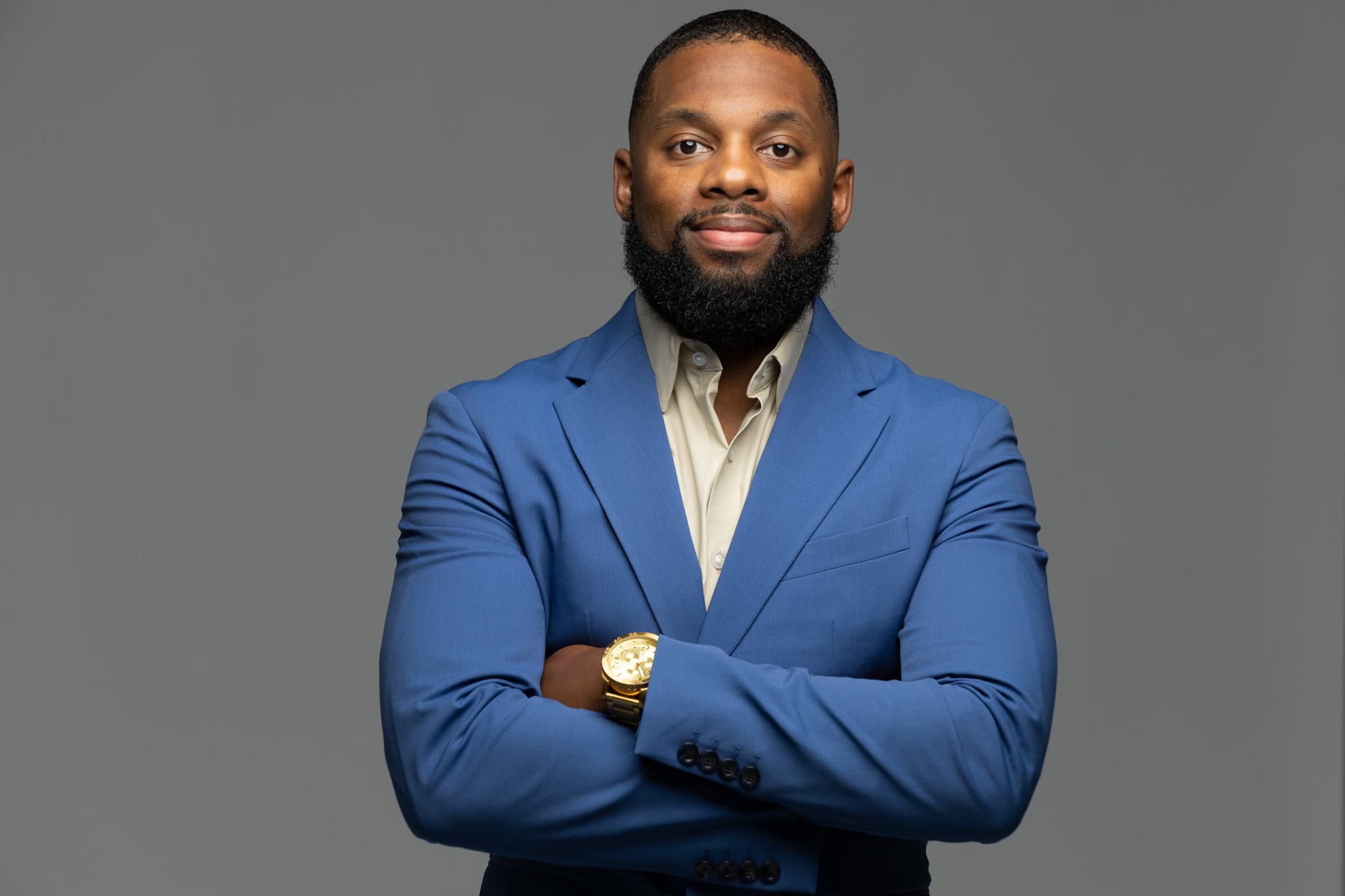

We recently connected with Kaylan Adams and have shared our conversation below.
Alright, Kaylan thanks for taking the time to share your stories and insights with us today. Can you talk to us about how you learned to do what you do?
I learned comedy from a mixture of classes, books, 1-on-1 mentoring, observation, watching stand-up specials, watching live shows, and feedback from peers.
Knowing what I know now, I would have built better habits and systems earlier to get better faster, like testing material smarter, tracking joke order, laugh score, joke placement, and what actually worked on stage.
The most essential skills were public speaking and observation, and the biggest obstacles were not knowing what I did not know, the amount of tribal knowledge in comedy, and the fact that some things can only be learned through stage time.
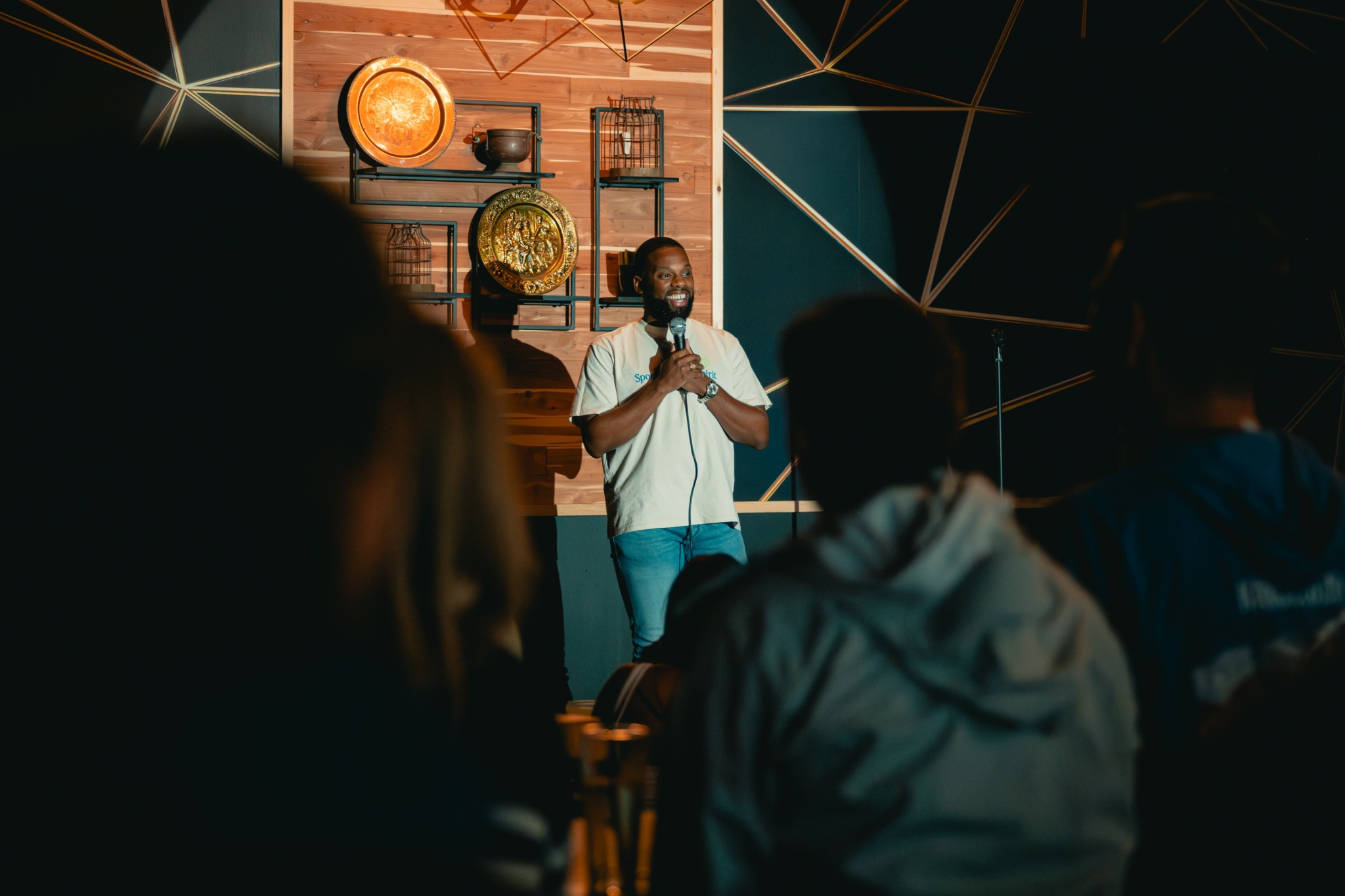
Awesome – so before we get into the rest of our questions, can you briefly introduce yourself to our readers.
I’m Kaylan Adams, a stand-up comedian from Aiken, South Carolina, now based in Charlotte.
Before comedy, I took the practical route. I got a degree in mechanical engineering and later earned a master’s in engineering management. So my background is very structured, very analytical, very “let’s build a spreadsheet before we make a decision.” Comedy was not the original plan. Comedy was something I fell into.
One of my mentors gave me an assignment: try stand-up comedy. That was it. No dramatic backstory. No childhood dream of holding a microphone.
I did my first five-minute set in May 2023. After that, I wanted to get better so I found a class and the rest is history.
What sets me apart starts with my name. Most people see “Kaylan Adams” and assume I’m a woman. Then I show up as a Black man with a beard, and suddenly everybody’s brain has to reboot.
My style is observational, thoughtful, and analytical. I like taking everyday assumptions about identity, race, dating, family, work, and culture, then showing where the logic breaks.
One of the things I’m most proud of is producing and performing in my own comedy show for my 33rd birthday. I brought together family, friends, and supporters, and turned a personal milestone into a real comedy experience. That showed me I was not just trying comedy anymore. I was building something with it.
The main thing I want people to know about my comedy is simple: you have permission to laugh.
You can laugh at assumptions. You can laugh at awkward truths. You can laugh at the contradictions in culture, dating, work, family, and yourself. I’m not trying to lecture people. I’m trying to make the truth easier to hear by making it funny first.
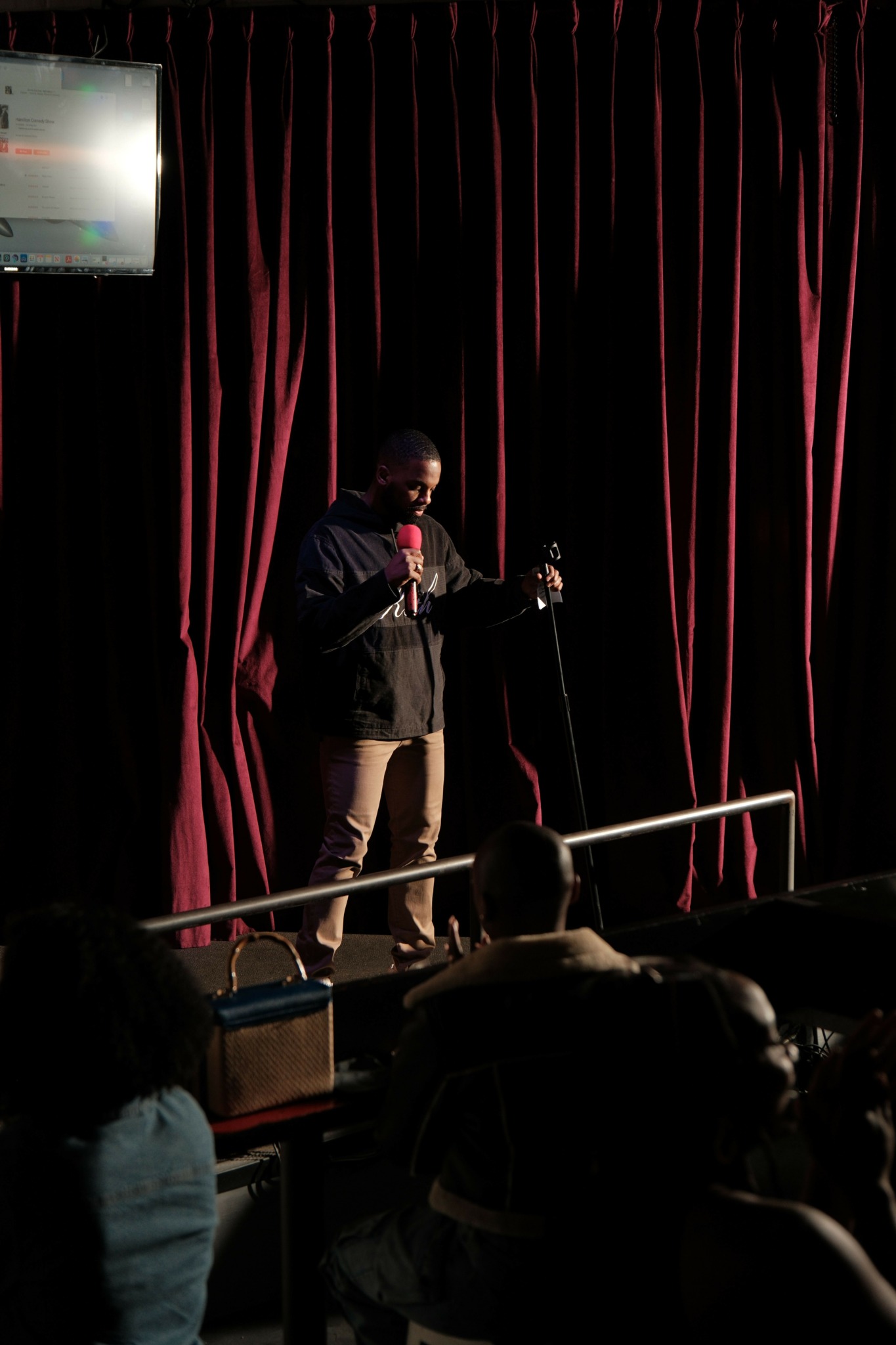
What’s the most rewarding aspect of being a creative in your experience?
For me, the most rewarding part of being a creative is seeing comedy bring people together.
There is something powerful about watching a room full of different people laugh at the same idea. For a few seconds, everybody agrees. That does not happen often.
I love seeing people smile, hearing which joke they thought was the funniest, and finding out which part of the set resonated with them the most. That feedback is valuable because it shows me the joke did more than get a laugh. It made people feel seen.
It also means a lot when people want to take pictures after a show or when people I work with find out I do stand-up and come support me. That reminds me comedy is not just performance. It creates connection.
The most rewarding part is the unifying aspect. Comedy gives people permission to laugh together, even if they come from different backgrounds, jobs, beliefs, or life experiences. For me, that is the real value of the work: creating a moment where people feel lighter, more connected, and less alone.
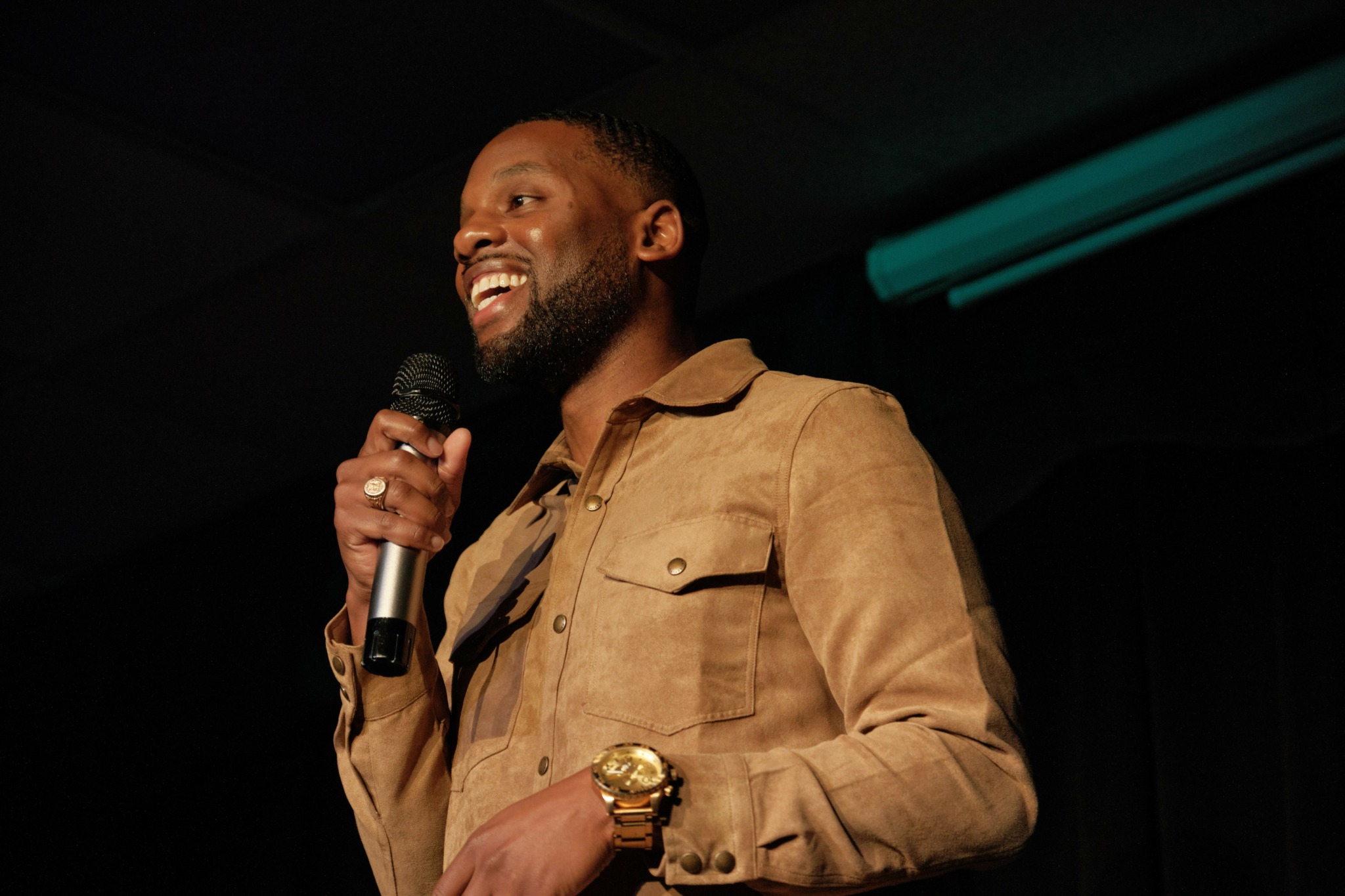
Learning and unlearning are both critical parts of growth – can you share a story of a time when you had to unlearn a lesson?
One lesson I had to unlearn is that I can know whether something is funny by thinking about it alone.
I come from an engineering background, so my instinct is to analyze everything first. In engineering, you can run the calculation, check the model, review the assumptions, and know if something works before anyone sees it.
Comedy does not work like that.
With comedy, the crowd is the calculation.
I had to learn that I do not really know if a joke works until I perform it in front of people. I can think a premise is clever. I can love the wording. I can convince myself the punchline is strong. But until strangers laugh at it, it is just a theory with confidence.Now I understand that writing is only half the process. The audience completes the joke. Their laughter, silence, timing, and reaction tell you what is actually there.
So the lesson I had to unlearn was believing my opinion was enough. It is not. Comedy has to be tested in public.
Contact Info:
- Instagram: https://www.instagram.com/kaylanbadams/
- Youtube: https://www.youtube.com/@KaylanBAdams

Image Credits
Geo Soto / @artbysoto
Deon / @deonjphotography
Barels & green soto, red mic and button up deon