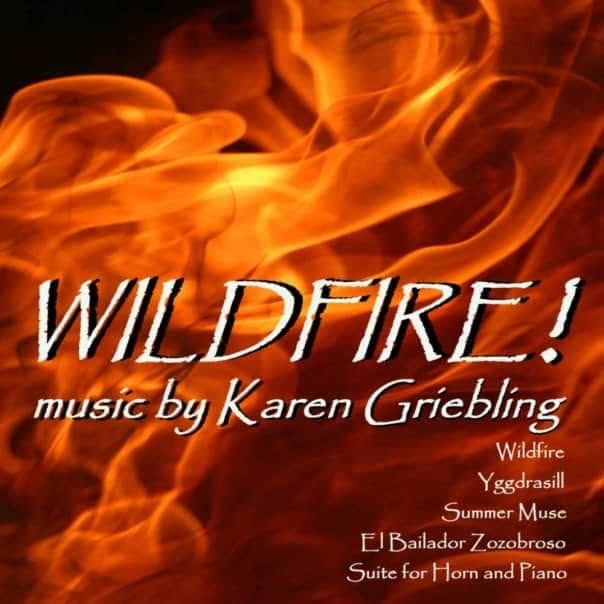
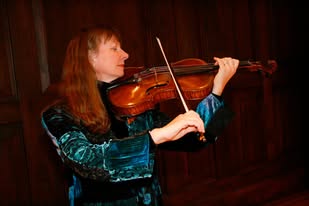
We recently connected with Karen GRIEBLING and have shared our conversation below.
Karen, love having you share your insights with us. Before we ask you more questions, maybe you can take a moment to introduce yourself to our readers who might have missed our earlier conversations?
I began my music studies at the age of four, guided by my mother who was herself a composer, music theory, and piano teacher and observed me attempting to mimic my father playing the piano at that age. A little while later, she introduced me to her former teachers at the Cleveland Institute of Music who took me on. A year or so later, our family moved to the UK because of my father’s job, where we remained for about four years and where I started school and began studying piano and singing in children’s choirs. Mom and Dad made the most of our time there with frequent trips around Europe as well as England, and instilled a sense of adventure and curiosity about other cultures, languages, food, history, etc.
When we returned to the USA, I resumed my studies at the Cleveland Institute of Music and began composing in earnest and by the time I was twelve I was considering myself a ‘composer with a capital C,’ studying Hindemith’s Elementary Training for Musicians and Fux’s Gradus ad Parnassum. Inspired by having heard the principal violist of the local orchestra as soloist in the Bartok Viola Concerto, and having learned that Hindemith claimed to have learned to play every instrument he composed for, I took up viola, bassoon, and voice lessons, in addition to piano and music theory and composition lessons, and soon began winning composers’ contest, some of them were judged by famous composers like Howard Hanson and Vincent Persichetti whose insightful comments were encouraging and sometimes challenged me to explore other ways of creating music. This was, after all, the late ’60s and early ’70s when mid-century-modernism in classical music included the use of electronics, extended techniques, aleatory, and serialism. I also attended summer music camps for young composers where I rubbed elbows with young composers that were later to become famous in their own right. At the same time, I became more focused on playing the viola, and participated in youth orchestras and competitions as a performer, as well as continuing to sing with children’s choruses, including the Cleveland Orchestra Children’s Chorus, where I was very fortunate to have the experience of singing with one of the greatest orchestras in the world under several famous conductors.
After high school, I attended the Eastman School of Music, earning a Bachelors of Music in Composition and Viola Performance there, followed by a Master of Music degree at the University of Houston as the violist in the graduate string quartet while earning a degree in composition, and finally, I earned my doctorate in music composition and theory at the University of Texas at Austin while freelancing as a violist and holding a teaching assistantship in music theory.
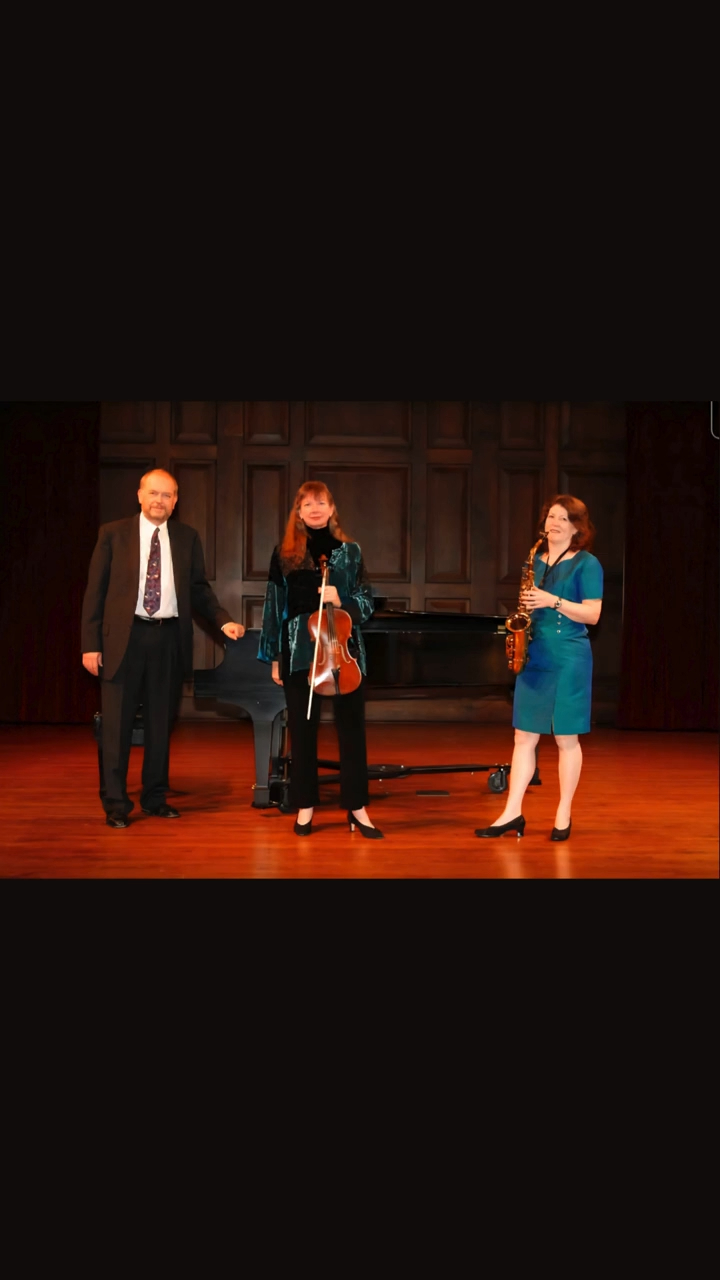
After finishing in Austin, I was hired to a tenure-track professorship at Hendrix College, a private liberal arts college, where I was able to indulge my multiple interests as violist, composer, conductor, and teacher of music theory, composition, and world music, and founded the college orchestra. Meantime, I also won a position in the viola section of the Arkansas Symphony Orchestra, and continued performing in various chamber music ensembles, notably Die Kegelspieler Trio (clarinet, viola, and piano) in the 1990s, and The Cross Town Trio (saxophone, viola, and piano) from 1999 until 2018. This latter group was very important to me as its saxophonist championed my work as a composer and arranger and together we toured internationally and recorded my compositions.
In the 1990s I began to receive many commissions of my music by local artists, some of whom honored me, not only with repeat performances and recordings, but also repeat commissions. However, my principal job and income were from my academic and symphony positions, not my creative work. Still, in academe, professional productivity is important and is valued, so while my work might not have rewarded me financially in any direct way, it ensured my visibility in the local artistic community and supported my advancement in terms of rank and tenure.
One of the most disconcerting times for me as a composer took place right after finishing my doctorate at the University of Texas. For a variety of reasons, some personal, I experienced my first ever sustained ‘dry spell.’ I was later told that this is not unusual, and that many recently graduated composers find this is a ‘make or break’ time in their lives; that they either push through the block and grow and mature as artists, or they give up altogether.
For me, this time was marked by being prematurely self critical. I continued sketching ideas, but found myself rejecting them as ‘derivative’ or ‘too contrived’ or ‘trite’ or whatever, before even giving them a chance. In the aftermath of having composed a ‘watershed’ piece, an opera, for my doctoral thesis in which I had explored a central tension, the essential argument, of what was happening in classical music in the mid-1980s, when Post-Modernism was just gathering strength, I found myself on the horns of the dilemma of whether to continue writing using the styles and techniques of Mid-Century Modernism that I’d learned about in school, or striking out on my own to write in with a more lyric modal style. This is actually an essential aspect of the opera that was my dissertation which was an adaptation of Federico Garcia Lorca’s ‘The House of Bernarda Alba.’ In the opera, the music associated with the title character, a dictatorial matriarch, is represented musically by angular, mid-century modern music, while her daughters who rebel against her authority are represented by lyric modal music. That was deliberate. However, when it came time for me to write the next piece, I wasn’t sure which was ‘my real voice’–after all, I’d just spent ten years cultivating the techniques and styles that made me a ‘card carrying’ modern composer; and yet, it didn’t feel natural to me.
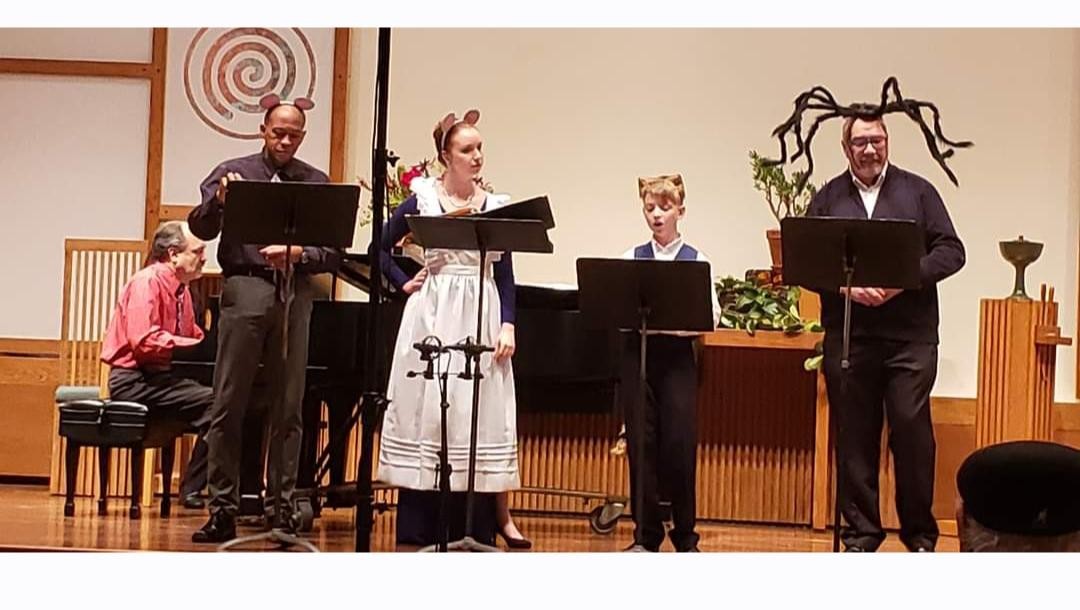
My breakthrough came in the early 1990s, when, for the first time, I organized a vacation that had nothing to do with family or professional obligations–I chased the source of Georgia O’Keeffe’s inspiration for her paintings into the desert southwest, specifically Northern New Mexico wondering if I could create in sound something like what she had created on canvas. It was the austere beauty of the landscape and unique quality of light, the colorful mix of cultures that captured my heart; that week changed my musical language forever, and I returned there nearly every summer until 2017. The first works I penned after the initial trip included ‘Dancing Ground of the Sun’ for string quartet, Songs from ‘This Dancing Ground of Sky,’ Two Fiesta Impressions’ for Orchestra, ‘Leaf Monster’ and ‘Coyote Dreams,’ narrated works, ‘Formations,’ ‘Petroglyph Dances,’ and many others. In New Mexico I had found my spiritual home and a rich source of inspiration.
Meantime, by 2000, performing with the Cross Town Trio and other musical trips took me to Slovenia, Thailand, Iceland, Scotland, Sarawak, and Singapore, and I had also begun teaching World Music at the request of my department chair. Having embraced a more lyric and modal style with occasional references to Native American and Latin music in my Southwest pieces, I found that travel to other destinations, particularly those in Asia, were also creatively stimulating, so by the early 2000s, Asian musical influences began to infiltrate my work in pieces such as ‘Asian Souvenirs’ and ‘Bhairav/Bhairavi’ and my ballet, ‘Midas.’
Teaching at a small Liberal Arts College meant that I regularly rubbed elbows with colleagues in other disciplines and took part in teaching interdisciplinary courses. Several of my closest friends were women teaching in the Natural Sciences, a Chemist, a Mathematician, and a Physicist, as well as the Choreographer and Dance Professor. and a Classics Professor These friendships have led to a number of collaborations such as ‘moduli mundi,’ a musical representation of the Music of the Spheres Theory; ‘Sappho Dances’ a ballet treatment of translations of Sappho’s poetry by colleague in the Classics Department, ‘Aniketos’ a ballet celebrating the 2004 Solar Eclipse that was commissioned by my friend in the Physics Department, etc.
My most ambitious project so far, though, has been my third opera, ‘Richard III’ which explores the period of English history during the Wars of the Roses from 1460 until 1485 in four acts in about four and a half hours of music, and seeks to reveal the historical figure of Richard (from my own research in the UK) rather than the Shakespearean villain. The work was completed in 2015, the year in which the king’s mortal remains were reinterned, and several excerpts from it were premiered and recorded that same year by vocalists from Opera in the Rock and instrumentalists from the Arkansas Symphony under the baton of its then Associate Conductor, Geoff Robson.
My interest in the historical figure stems from having taken a class on Shakespeare in high school. I was fascinated by the anti-hero character that Shakespeare drew–he is deliciously evil and the play is a theatrical masterpiece; however, I was curious about whether the man was as evil as he had been portrayed, and asked the school librarian about him. She emerged from the stacks with a tall pile of books and, after reading them, I became determined that some day I would try to answer Shakespeare’s portrayal of him with a work of my own that might set the record straight. I knew that at that time I didn’t have the skills to tackle such a daunting project, but I continued to read new material as it became available, and finally, in 2012 when the king’s skeletal remains were uncovered in the Leicester Carpark, I knew it was time. Id composed two operas already, and, as an academic, had had access to rare books and manuscripts in British libraries, had studied French and Latin, read lots of middle English, studied 15th century English music, etc., so I now knew I was equipped to take on the challenge.
That opera, however, was life-changing in a personal way and led to my retiring from both the symphony and my academic position, and moving to England where I married an Englishman who I’d met while researching Richard III. Eight years late, I’ve returned to the USA and am now in the process of editing for publication my life’s work, which amounts to some 300 titles. I don’t think I have stopped composing, yet–I hope I have more to say–and I am still performing as a violist, but the work of editing has taken the lion’s share of my time and attention lately, largely motivated by the fact that the music software that I sue withdrew from the market in 2025, and I am anxious to preserve my work before it becomes unusable.
Can you share a story from your journey that illustrates your resilience?
When I left my position as professor and symphony violist in the USA and moved to the UK in 2018, I moved to a part of the world where I had no connections and had to start over from zero. Similarly, in 2019 I moved from the UK to NE OH where I had grown up but not lived since 1976, in order to take care of my aging parents. Both situations required starting over fresh, but had different challenges.
In the UK, I had to obtain visa, work permit, and was an immigrant in a large northern city (not London) and finding work as a freelancer and symphony violist, conductor, and educator required patience and perseverance and networking. It was challenging and, at times, quite discouraging due to the ‘Catch 22’ situations I encountered trying to obtain the visas and permits. Right before I left, though, I was regularly gigging as a quartet and orchestra musician, was hired to perform as soloist to perform two concerti with an orchestra, obtained a teaching position with a music academy, and won a conducting position with an orchestra. Had I stayed rather than moving back to look after my parents, I feel confident that I was on the cusp of ‘landing on my feet’ and being able to make a decent go of it.
When I returned to Ohio to look after Mom and Dad, in some ways, it was even more challenging, since I was there only six months before the Pandemic shut everything down; but within a month of arriving, I had secured four part-time academic positions as Adjunct Professor of Music, and was beginning to freelance, subbing in the viola section of the professional orchestras in the area, and contributing regularly to the Composers Guild concerts. Again, networking and perseverance and patience were essential.
After Mom and Dad left us, my English husband and I decided to return to the area in which I had lived and worked from 1987 until 2018, and I have been able to slip back into playing as s sub in the viola section of the symphony, and have revived the Composers Guild I co-founded 15 years ago, that had gone dormant during the pandemic. I am retired now, though, so the projects I undertake are the ones that interest me, chiefly editing and publishing my life’s work as a composer. But in the past, I often quipped that my teaching, playing, and conducting ‘supported my composition habit.’
Looking back, are there any resources you wish you knew about earlier in your creative journey?
While I was searching for a way to preserve my late parents’ legacy as composers, I learned about some resources for my own work. Dad passed in 2020 and Mom passed in 2023. As an academic, I knew that the archive at the university near them housed a collection of materials from the Composers Guild, and I was able to make a deed of gift of their musical manuscripts and related materials to the archive there.
However, since I cannot really be said to be a composer of that area, and looking ahead to the next twenty years or so, it occurred to me that I needed to think about my own legacy. I secured permission from the archivist at the university in my area to do the same, but, in the meantime, with the withdrawal of Finale Music Notation Software from the market, I began to worry about how to preserve my work in a meaningful and accessible way. In 2023, shortly after Mom passed, I ‘discovered’ the American Composers Alliance through the suggestion of a friend on social media. It has been around for many decades, but oddly, I don’t recall any of my professors or colleagues ever mentioning it to me. It is a Non-Profit publisher and archive for American Composers that was started by some very famous ones under the umbrella of BMI, with which I am affiliated. So far, I have had nothing but great experiences with them and wish I had known about this organization when I was first getting established as a young professor.

Contact Info:
- Facebook: Karen Griebling Composer on Facebook; Karen Grieblingmusic.my.canva.site; Karen Griebling at composers.com; Karen Griebling at BMI