

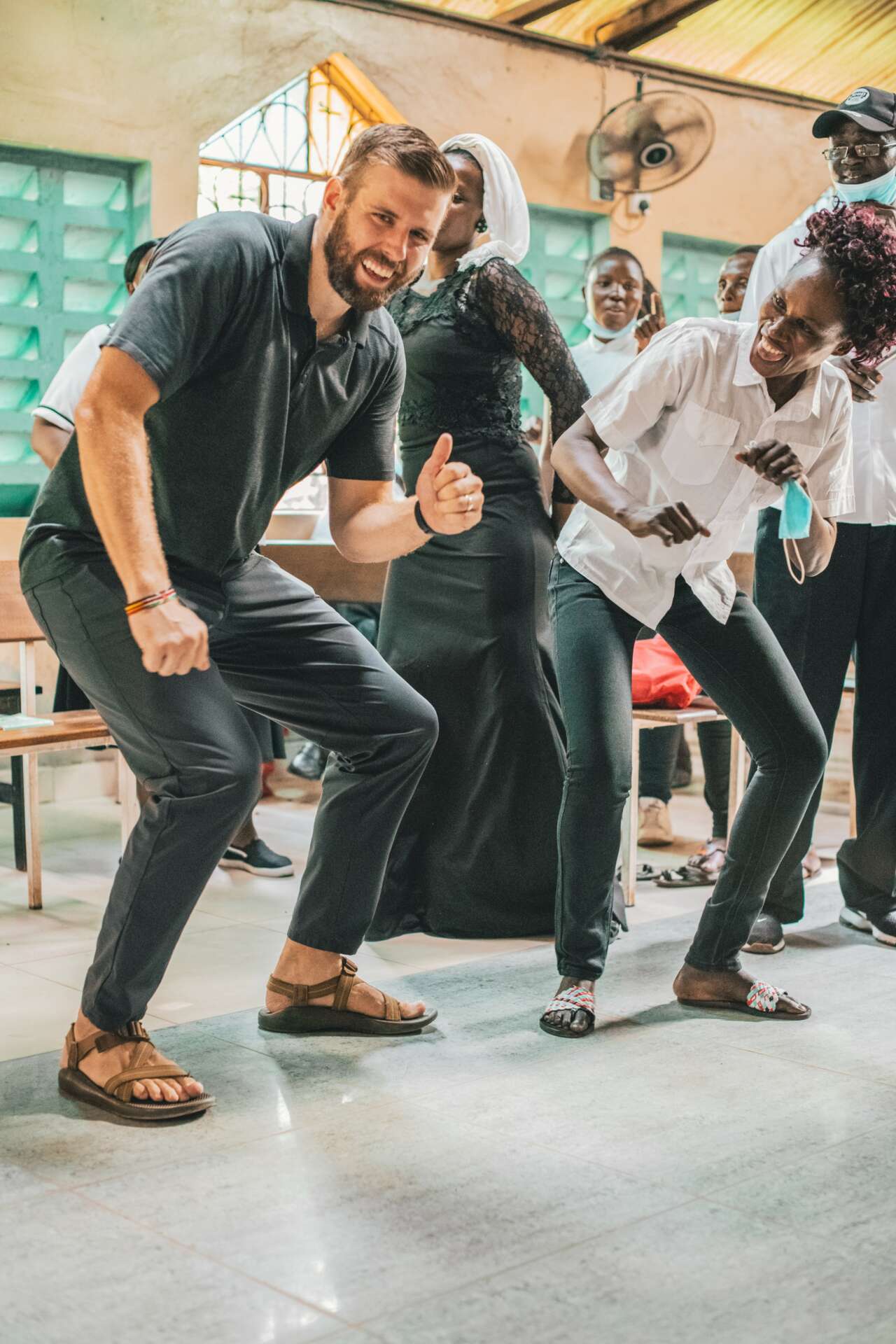

We’re excited to introduce you to the always interesting and insightful Justin Miller. We hope you’ll enjoy our conversation with Justin below.
Justin, thanks for joining us, excited to have you contributing your stories and insights. What’s the kindest thing anyone has ever done for you?
In 2006, my friends and I dreamed up this harebrained idea of going to Kenya to film a documentary about the AIDS pandemic. We believed that the American church was neglecting its mandate to show compassion to one of the most marginalized groups of people in the world. Four 19-year-olds going to Kenya for a month- what could go wrong?!
As we prepared for that trip, we realized that we were in way over our heads. When it looked like the trip may fall apart, we were introduced to an American living in Kenya, Kim Pace. She ran her own nonprofit there, and in an act of radical generosity, she offered us two of her top leaders to support us during our filmmaking trip for a month. Ironically, at the time, she probably didn’t see this as an extravagant act of kindness – it was just her nature.
However, just six months later, those two men, Cornel Onyango and Duncan Kimani, would become my co-founders of our new nonprofit, CARE for AIDS. That was a defining moment for me, and ever sense, it’s been a personal mission of mine to imitate Kim’s action by sharing any relationships I have that could be an encouragement to someone else. Generosity begets generosity.
Unfortunately, a few years ago, Kim passed away in a tragic accident, but her act of kindness lives on in my life and our organization as we corporately commit to “live with an abundance mindset” with our resources and relationships.


As always, we appreciate you sharing your insights and we’ve got a few more questions for you, but before we get to all of that can you take a minute to introduce yourself and give our readers some of your back background and context?
My family and I have lived in Grant Park for the last decade. I was part of the founding team of Untold (formerly CARE for AIDS) 15 years ago and have served full-time as the CEO for the past 13 years. Honestly, I reluctantly accepted the challenge to start and lead this organization. I had never considered a career in nonprofit leadership, but it’s now hard for me to imagine doing anything else.
Untold exists to embrace and equip people to live a life beyond AIDS. This is in service to our vision of a world where no story is cut short or silenced by AIDS. The way we accomplish this mission is by operating centers in 90 churches across East Africa. Each of these locations serves a cohort of 80 HIV-positive clients for a nine-month period. The program is designed to address four critical aspects of our clients’ health: physical, spiritual, emotional, and economic. We believe these are key to flourishing. We facilitate this transformation through one-on-one counseling, group therapy, economic empowerment training, savings groups, medical interventions, nutritional support, and spiritual care. We have graduated over 27,000 clients from our program who represent over 86,000 dependent children. We are very proud of the fact that we have 250 full-time staff in East Africa and 100% of them are indigenous to the region where they work. We believe this is one of the keys to our success. Finally, I would say to readers that the AIDS pandemic is not over with as many as one million HIV-related deaths every year, and the greatest enemy we face is stigma. Stigma is more deadly than the sickness because it prevents people from getting tested, seeking care, and having hope for the future. We are fighting the sickness and the stigma, so thousands of people can live a life beyond AIDS.


How about pivoting – can you share the story of a time you’ve had to pivot?
The word “pivot” may widely be considered the most overused word of the pandemic, but my biggest organizational pivot came this year and had nothing to do with COVID. After operating as CARE for AIDS for the past 14 years, we went through a complete rebrand to the name Untold. For some people, the idea of 1) losing 14 years of brand equity and 2) abandoning a name that was so descriptive of our work was confusing for them, but we knew, without a doubt, that this was a necessary step for our organization. Our previous name, for all its benefits, was no longer congruent with our values as an organization. We care deeply about reducing stigma around AIDS, and at times, our name was creating stigma for our staff and clients. We care deeply about helping our clients realize that their primary identity is not their HIV status, and on some level, our name reinforced their AIDS-related identity. These, among other reasons, made us realize that it was time for a change. As hard as it was to make this change and determine what our new brand name was going to be, it has been widely embraced by our clients, staff, and donors. And that’s not just because it is a provocative or intriguing name but because we have communicated extensively about the “why” behind the rebrand and the “why” behind the name we chose. Both have resonated with our stakeholders. While our mission and model haven’t changed, we can now use this new brand identity to invite more people to live fully into their untold stories and untold potential.


What’s a lesson you had to unlearn and what’s the backstory?
My primary role at Untold these past 15 years has been to fundraise. I’ve tried to be a student of that work and create a donor culture that brings joy to our partners. In order to invite people into our work, I relied on two main storytelling approaches. The first was to inspire people through our origin story- a group of unlikely founders with low chance of success leading an organization to scale. The second was to try and create empathy for our clients by humanizing the AIDS pandemic through compelling, honest, dignifying storytelling about our clients. Neither of these are inherently bad approaches, and they served us well.
However, what I’m unlearning and relearning now is largely driven by this quote from our board member, Vanita Boswell, who said, “People always give to honor something in their own story.” Generally speaking, people in the U.S. can’t easily connect their story to my story as a founder or the story of someone living with HIV/AIDS in East Africa. Ultimately, the question a donor is trying to answer, “How does my story connect with the story of Untold?” This has been an illuminating idea for me and our team. We’ve worked really hard this past year to make sure each our staff knows the answer to that question, and we are on a mission to invite donors to answer that same question. When they can confidently answer that question, we will have an even more engaged and committed community of support.
Contact Info:
- Website: untold.org
- Instagram: @untoldorg
- Facebook: https://www.facebook.com/untoldorg
- Linkedin: https://www.linkedin.com/company/untoldorg/
- Twitter: @untoldorg