

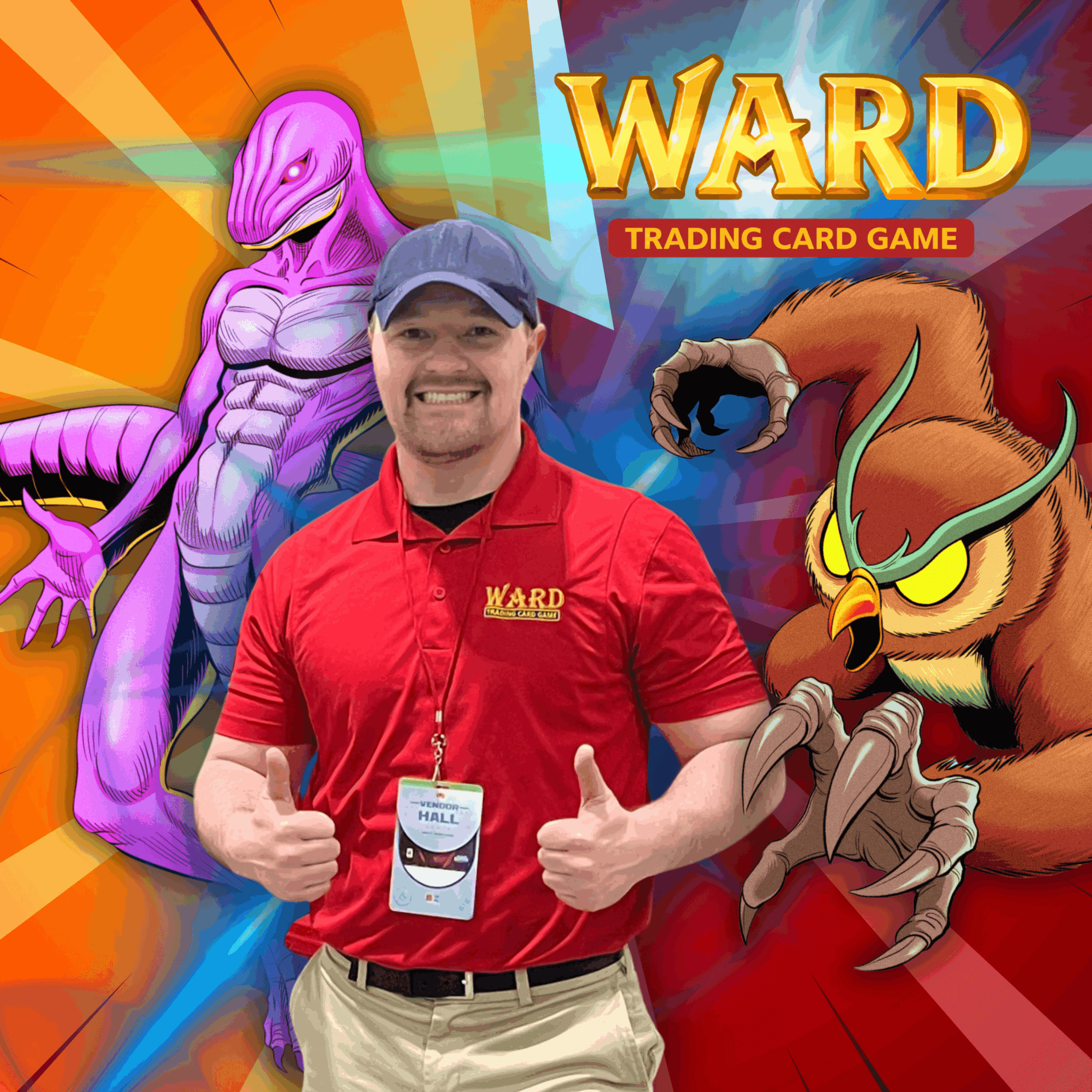

Alright – so today we’ve got the honor of introducing you to Joe Casey. We think you’ll enjoy our conversation, we’ve shared it below.
Alright, Joe thanks for taking the time to share your stories and insights with us today. What’s the backstory behind how you came up with the idea for your business?
The story of how Ward was created is very different from most games in this industry. Most trading card games are developed by teams that are tasked with building a product, following trends and trying to fit into an existing market. It’s a very corporate process. Ward started the opposite way. I created it purely for fun.
The earliest version was thrown together in Microsoft Paint 3D using generic art. I wanted to build something that felt more like Dungeons & Dragons, where creatures actually battle using dice, but simplified so anyone could play. That’s why everything was built around standard six-sided dice, something everyone already has. From the beginning, the goal was to make it very easy to learn, but with enough depth that players could keep discovering new strategies and combinations over time.
To test it, I printed out the first 100 cards at home, glued them onto Walmart cardstock, and ran them through a laminator. It was extremely scrappy, and at that point the game didn’t even have a name. I brought it with me to our family cabin in northern Minnesota, where every winter a group of friends and family gets together for what we call “Nerd Weekend.” There’s no internet, no distractions, just a small cabin in the middle of nowhere, usually in -30 degree weather, where we play board games, card games, and anything we can get our hands on all weekend.
That year, I brought Ward, expecting it to just be one of many games we played. Instead, it completely took over the weekend. We kept coming back to it, tweaking things, playing again, and pushing it further. It stopped feeling like a throwaway idea and started feeling like something real.
After that weekend, my brother Tom pushed us to take it further. His thinking was simple, if we enjoyed it this much, there was a good chance other people would too. So we decided to test it properly. We found an artist, had a small batch professionally printed, and hosted a local tournament at a game shop in Virginia, Minnesota called Runes and Relics. About 20 people showed up. We went into it with a very simple mindset, if people we didn’t know enjoyed it, we might have something. If they didn’t, we were only out a few thousand dollars.
By the end of the event, it was obvious. People didn’t just like it, they were hooked. Some were even talking about stepping away from games like Pokémon and Magic: The Gathering because Ward felt faster, more accessible, and just more fun. That first small run sold through, and from there we started scaling.
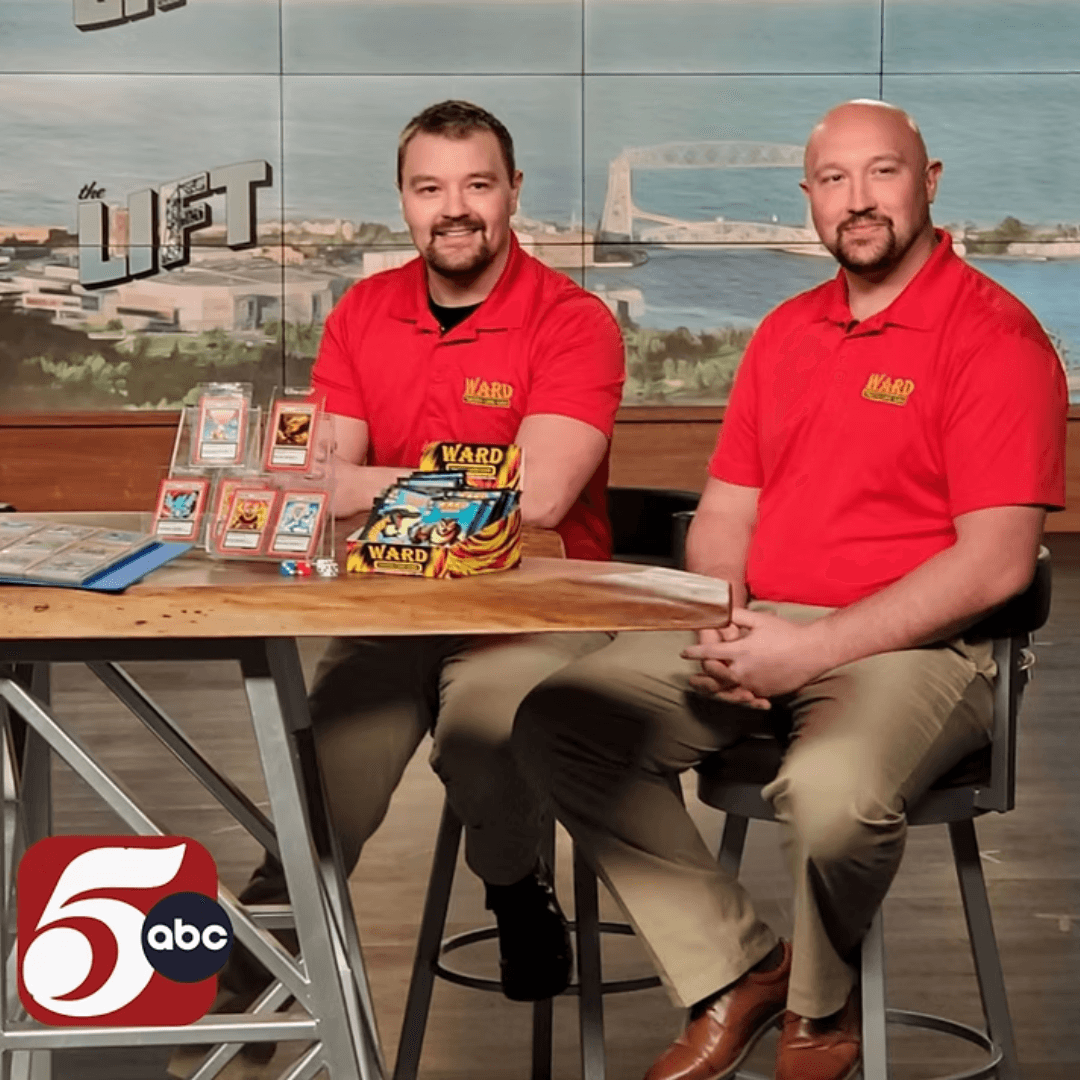
We began printing larger quantities, attending conventions, and building a community around the game. Along the way, Ward has been featured on ABC, NBC, and PBS, which helped bring even more attention to what we were building. Today, Ward is distributed across the United States through multiple major distribution partners and is carried in hundreds of stores. We are now working with Asmodee (Owners of Catan) to expand even further, including into Canada.
What started as a homemade game built for fun and tested during a freezing weekend in a cabin has grown into something much bigger. The most rewarding part has been hearing from players, especially families, who tell us Ward has become their favorite game because it’s easy to learn and something they can enjoy together. That was always the goal, and it’s still what drives everything we do.
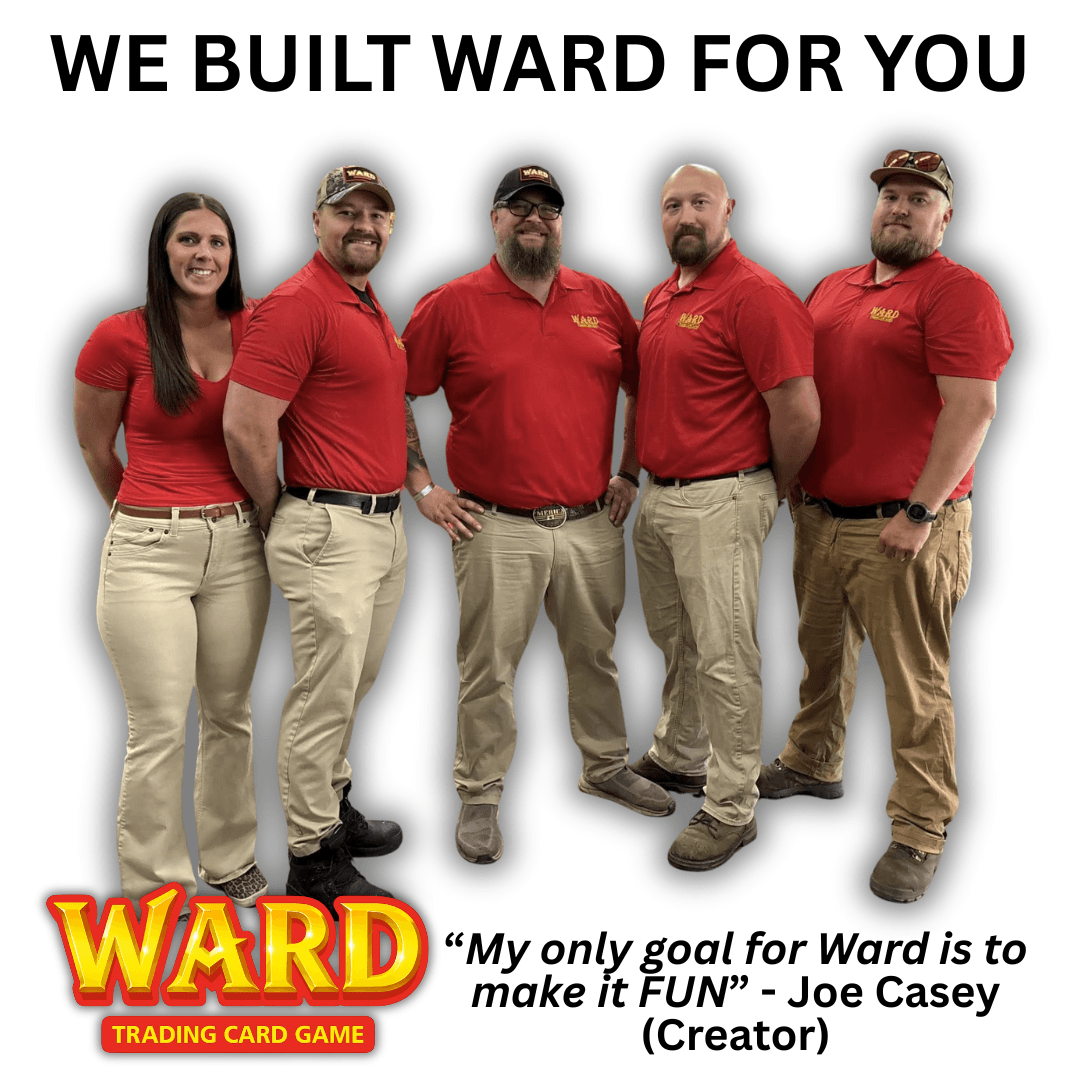
Joe, before we move on to more of these sorts of questions, can you take some time to bring our readers up to speed on you and what you do?
I grew up in Shakopee, Minnesota in the early 90s, and from a young age I was always into things most people considered “nerdy”, video games, board games, miniatures, and card games. Back then, it wasn’t exactly something you talked about openly. As I got older, that side of me faded into the background as I became heavily involved in sports. Football, wrestling, and baseball were my life, and I was very much seen as a “jock.” But in reality, that never fully replaced who I was. I would still sneak away to play Final Fantasy late into the night or pull out my comic books and read. At that time, especially in the late 90s and early 2000s, those worlds didn’t really mix.
Every summer was spent at our family cabin in northern Minnesota. That place is still what I consider our true home. We hunted, fished, swam, water skied, and spent nights playing split-screen Halo for hours, along with a lot of cribbage. Cribbage was actually my first real introduction to card-based gameplay. It’s not a trading card game, but playing hundreds of games over the years helped shape how I think about pacing, scoring, and flow. That influence still exists in Ward today, even if most people wouldn’t recognize it at first glance.
After high school, I moved to St. Cloud and attended St. Cloud State, where I was recruited to wrestle at the NCAA level. It was during college that I started reconnecting with that inner “nerd” side of myself again. By then, the lines between jock and geek weren’t as rigid, and I found myself getting back into games like Yu-Gi-Oh and spending a lot of time playing Dungeons & Dragons. It felt natural, like returning to something I had never really left behind.
After college, I became a full-time police officer. It’s a career that demands more from you than most people can understand. The level of stress, the situations you’re exposed to, it changes you. I won’t go into detail, but there’s a reason that profession requires strong mental resilience. It gave me a completely different perspective on life.
It was toward the later part of my law enforcement career that I created Ward. For a period of time, I was living two completely different lives. During the day, I was working on Ward, calling stores, talking to manufacturers, working with artists, trying to build something from nothing. At night, I was putting on the uniform and going out on patrol. I did that for years.
I spent over a decade as a police officer, and I’m proud of the work I did and the impact I tried to make in my community. But there came a point where running a business and working full-time in law enforcement, along with overtime, became unsustainable. I had to make a choice. I decided to step away from law enforcement and commit fully to Ward.
Wrestling taught me the meaning of hard work and discipline. I wasn’t the most naturally gifted athlete, but I worked relentlessly to become one of the best in the state and compete at the collegiate level. That mindset carried directly into how I approach business. I don’t quit. If something doesn’t work, I adjust, learn from it, and come back stronger.
Law enforcement taught me how to operate under extreme pressure, to stay focused and make decisions when the stakes are high. When you combine that with the work ethic I developed through wrestling, it creates a mindset that doesn’t break easily.
Because of that, I truly believe there is nothing that will stop Ward from becoming a household name, not just as a trading card game, but as a full franchise.
We’d love to hear a story of resilience from your journey.
Our initial launch of Ward featured a card design that leaned heavily into an old-school look, something inspired by how classic trading card games used to feel. The goal was to tap into that nostalgia. While it resonated with some players, we also heard consistent feedback that the design didn’t feel like its own identity. At the time, we largely ignored that criticism because, financially, things were working. The product was selling, and we were growing.
That changed when we had a meeting with MJ Holding, the distribution company that supplies products to Walmart. They loved everything about Ward, the gameplay, the concept, the energy behind it, but the moment they saw the cards, the conversation shifted. The design was a dealbreaker, and we lost the opportunity to get into one of the largest retailers in the country.
That was a turning point for us.
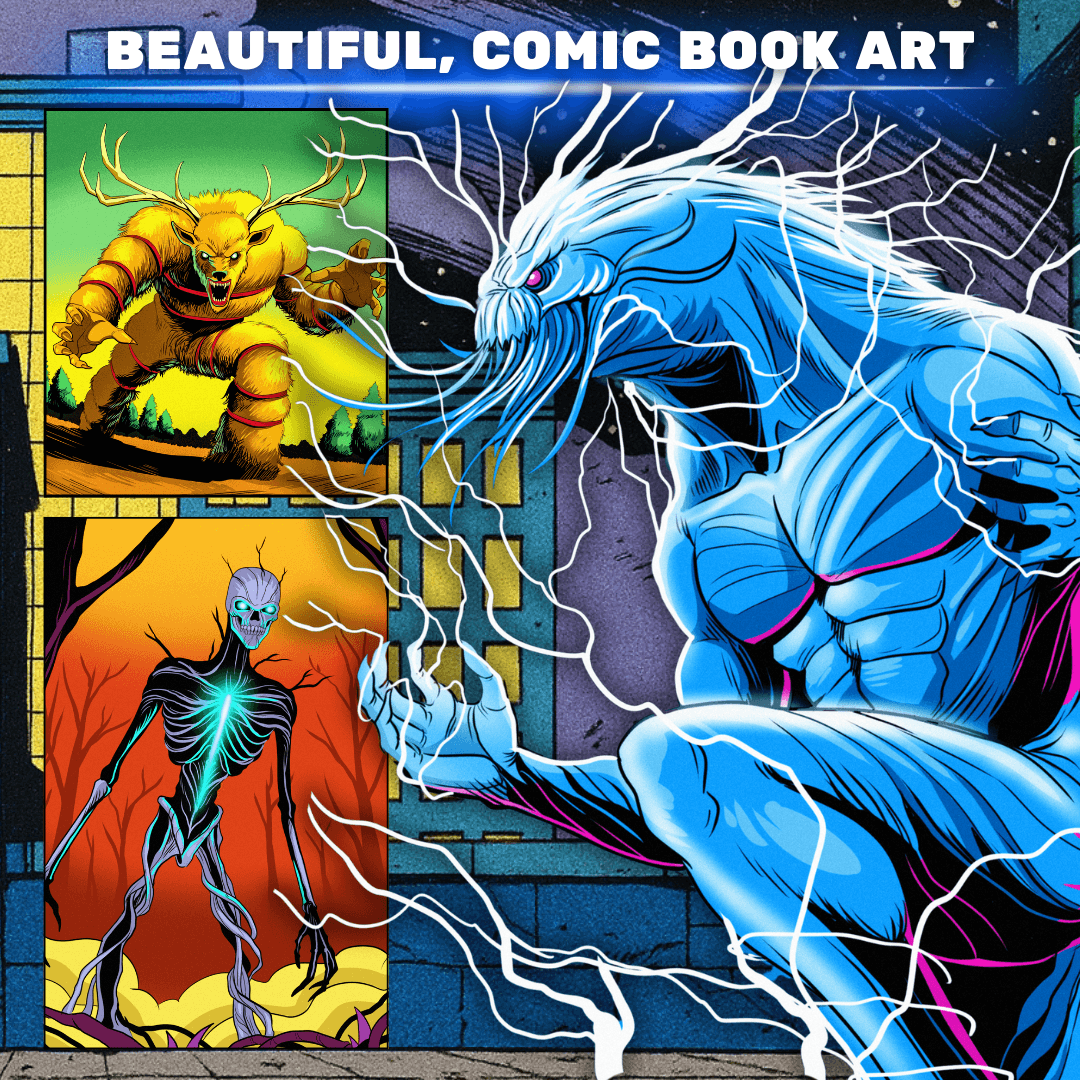
Up until then, we had been comfortable. But that experience forced us to take a hard look at what we were building. We made the decision to completely rework the visual identity of Ward and move away from anything that felt like a callback to something else. We wanted it to stand on its own.
Since making that change, Ward has grown far beyond what we originally expected. In hindsight, it was something we should have done much earlier, we just needed the push to make it happen.
That moment reinforced a mindset I’ve carried my whole life, especially from wrestling. When you lose, you don’t blame the referee. That’s the easy way out. You go back, figure out exactly what went wrong, make the adjustments, and come back better. That’s exactly what we did with Ward.
Can you talk to us about how you funded your business?
This is an interesting part of our story. A lot of trading card games, board games, and similar projects rely on Kickstarter to get started. Kickstarter can be a powerful tool, but we had also seen many projects raise a lot of money, gain momentum quickly, and then fall apart just as fast. In most cases, it wasn’t because the idea was bad, it was because the creators weren’t prepared for what comes after funding. Taxes, logistics, manufacturing, distribution, hiring, those are the real challenges, and they begin after the money comes in, not before.
My brother Tom and I made the decision early on to fund Ward ourselves. We started small, around $10,000, maybe even a bit less. I picked up extra overtime working as a police officer to make it happen. At the time, my wife thought I was a bit crazy, but she still supported me.
Our strategy was simple. We would print what we could afford, sell through it, and then use that revenue to fund the next print run. Each cycle, we reinvested and scaled up. No shortcuts, no big gamble, just steady growth.
That approach ended up being one of the best decisions we made. It allowed us to get Ward into the market while learning the business side in real time. We made mistakes, adjusted, and improved with each step. We never assumed we had it all figured out, and that mindset helped us adapt as we grew.
What started as a small run of 100 to 200 packs has now grown into print runs in the range of 100,000 to 200,000 packs, and the next one will be even larger.
We’ve always treated this as a marathon, not a sprint, and that mindset is what continues to drive the growth of Ward today.
Contact Info:
- Website: https://ward-cardgame.com/
- Instagram: @wardcardgame
- Facebook: Ward The Card Game
- Youtube: https://www.youtube.com/@Wardtradingcardgame
- Other: Discord Link Invite: https://discord.com/invite/8CJ2B8NBW8
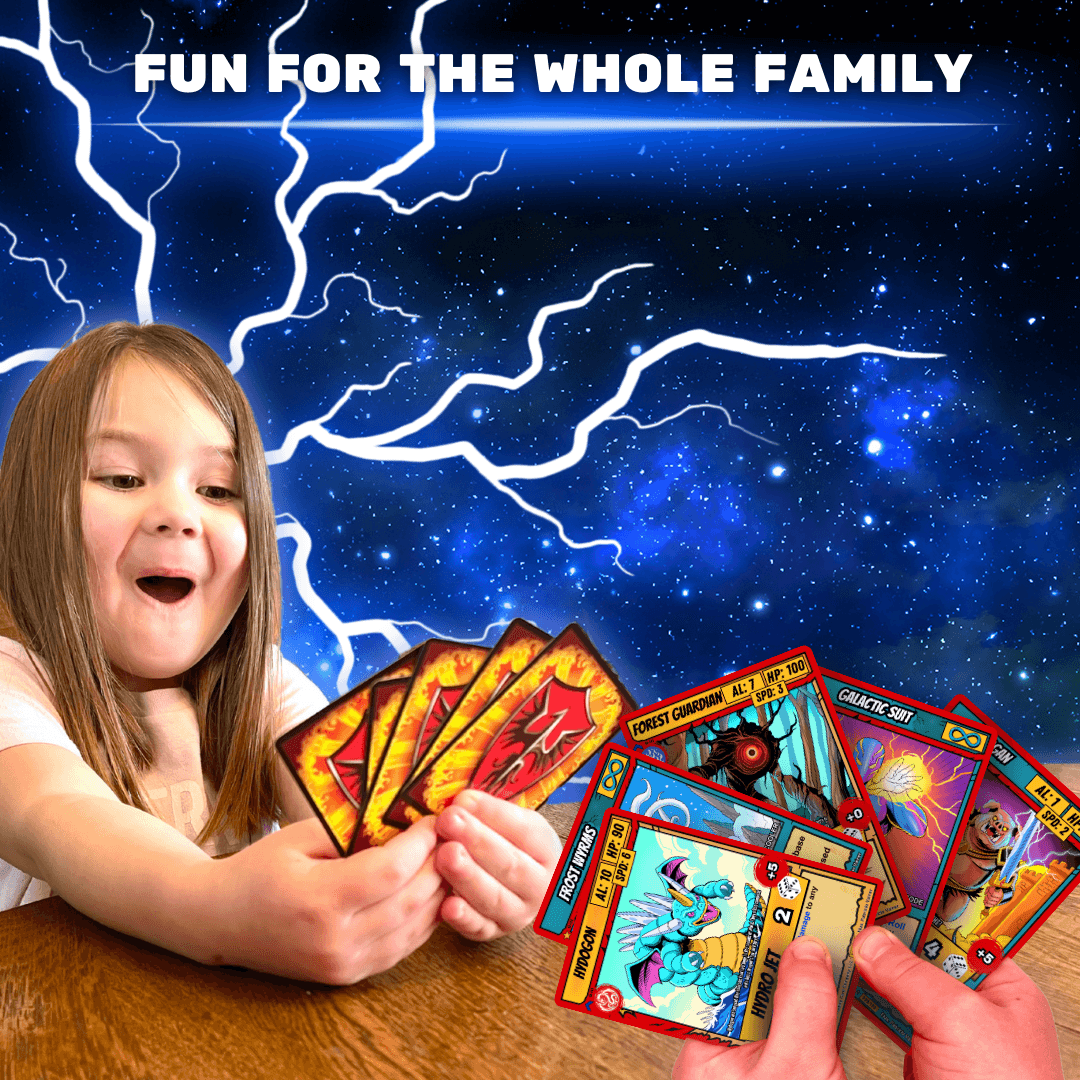
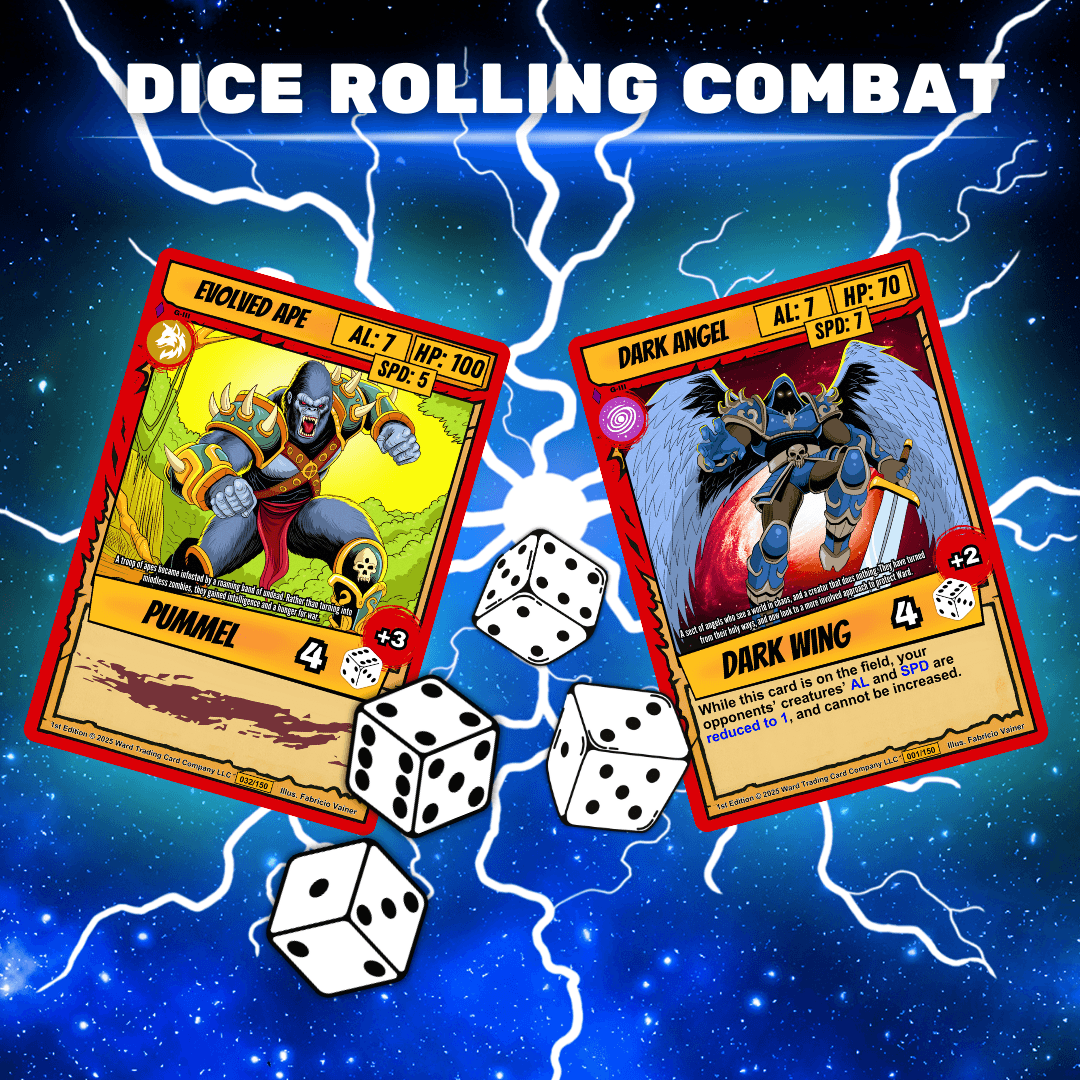
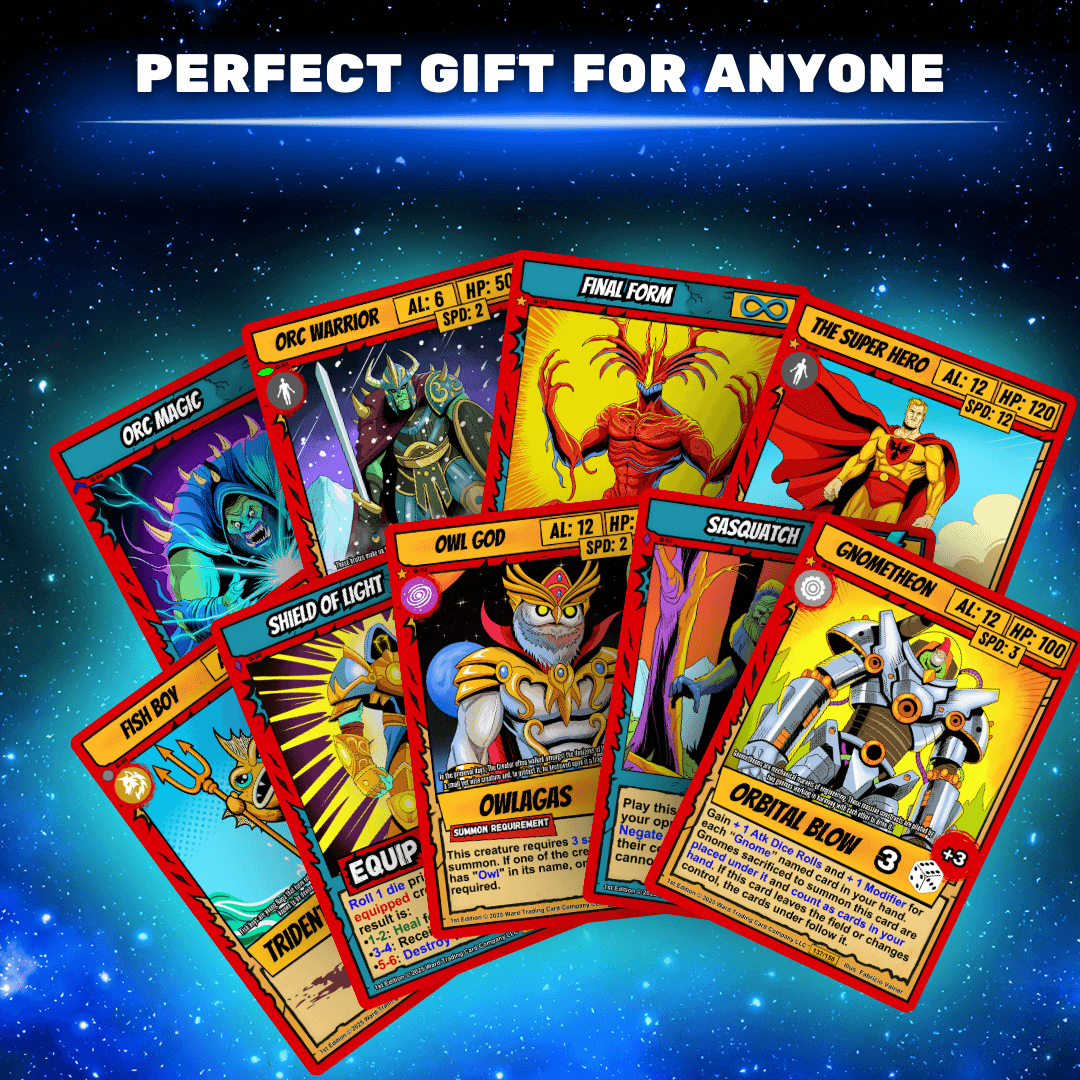
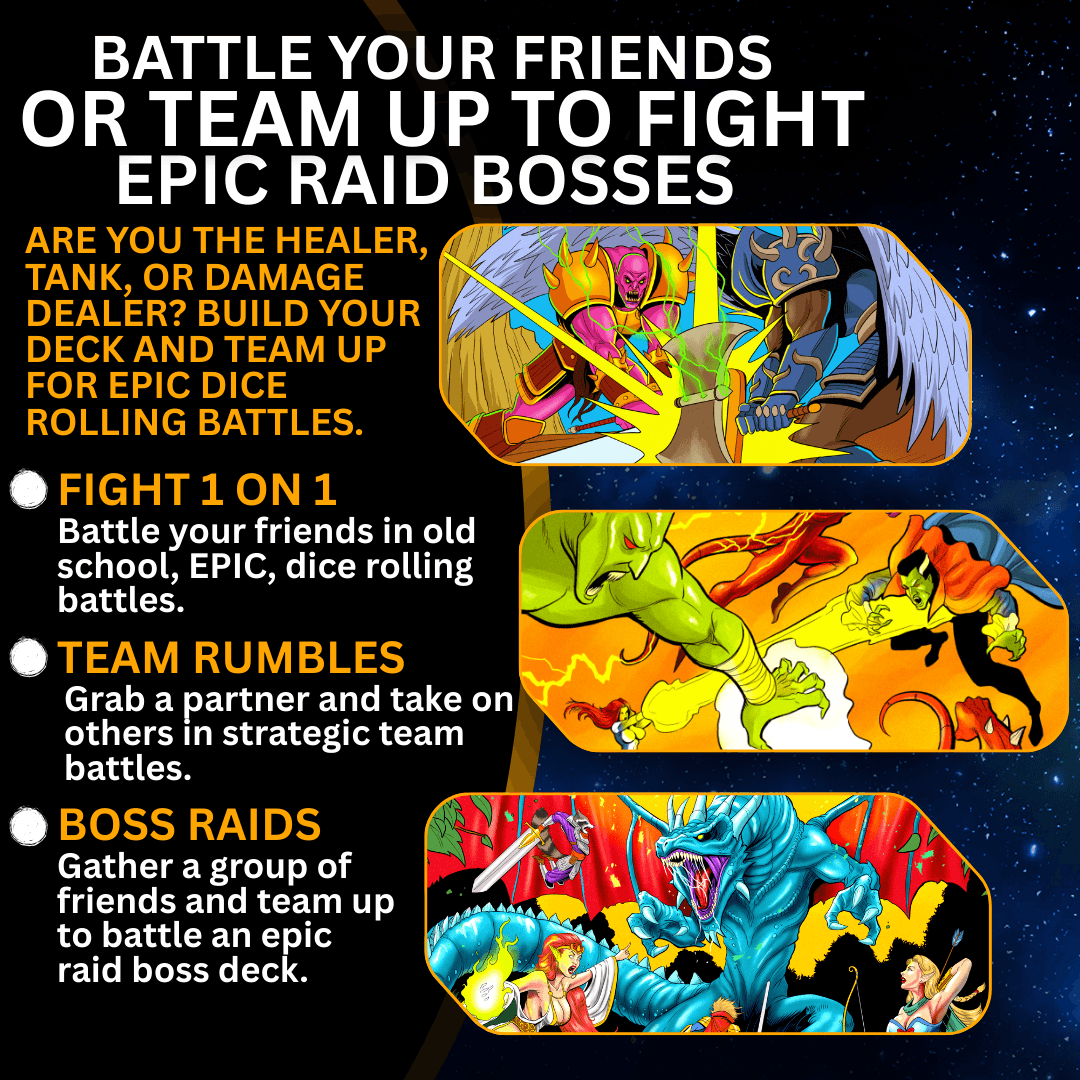
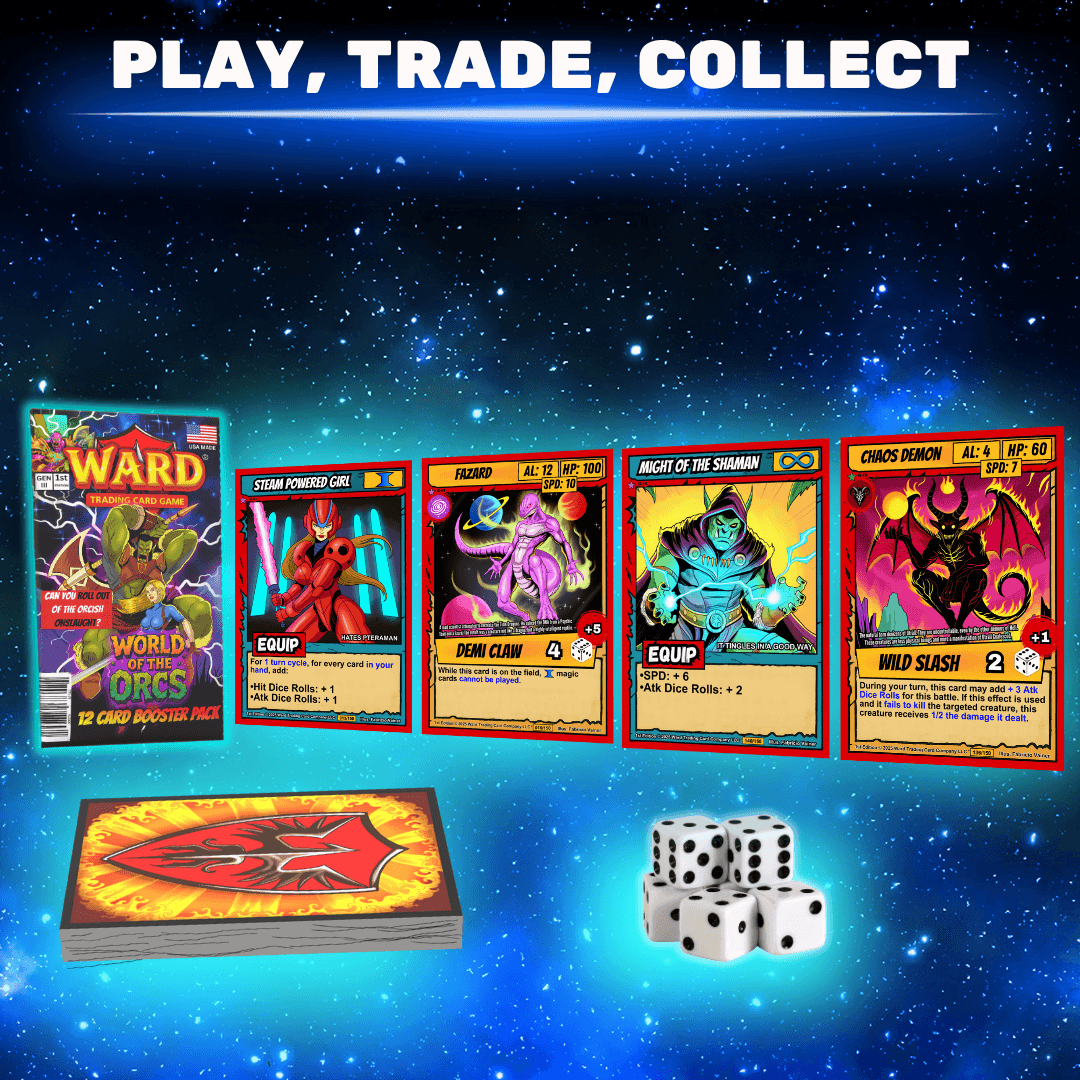
Image Credits
All artwork and images © Ward Trading Card Company LLC. All rights reserved.