

We recently connected with Jessica Glynn and have shared our conversation below.
Jessica, thanks for taking the time to share your stories with us today Do you wish you had started you own firm sooner?
If I’m being honest, there are moments when I think, “I wish I had started sooner.” I always knew I wanted to be a therapist. That calling was there early. The drive, the curiosity about people, the desire to sit with someone in their pain and help them find their way through it- that was always part of me.
But life unfolded differently.
When I would have “started sooner,” I was home raising my children. I chose family first. I chose to be present in those early years. And that season shaped me in ways no graduate program ever could. It grounded me, softened me, and deepened my understanding of relationships, partnership, stress, identity shifts, and sacrifice. For that, I am incredibly grateful- and I wouldn’t change it.
There was also a defining moment that changed the trajectory of who I am as a therapist: losing my brother to suicide.
That loss broke something open in me. It gave me an intimacy with grief, with unanswered questions, with the weight families carry after tragedy. It expanded my empathy beyond theory. It forced me to sit with pain I couldn’t fix- only feel. And I truly believe that experience reshaped me into a different kind of clinician.
So yes, I sometimes wonder what it would have been like to start earlier. Would I have built the business faster? Would I have reached this level of growth sooner?
Maybe.
But would I be the same therapist I am today?
No.
I don’t think I would carry the same depth. The same patience. The same understanding of complex grief, trauma, and the quiet resilience people don’t always see in themselves.
When I officially started my practice, I was in a very different life season. My children were a little older. I had lived more. I had loved more. I had lost more. I wasn’t just bringing education and training into my work — I was bringing experience.
Starting later meant I built my practice with clarity and intention. I knew who I was. I knew what I valued. I knew the kind of impact I wanted to make. I wasn’t just chasing success — I was building something meaningful.
Looking back, would I change the timing?
I don’t think so.
Of course, part of me wishes I could have both — the time and the experience. But I truly believe the success and depth of my work today is directly tied to the path I walked first.
Sometimes starting “later” is actually starting exactly when you’re ready to do it with your whole self.
And I wouldn’t trade that.

Awesome – so before we get into the rest of our questions, can you briefly introduce yourself to our readers.
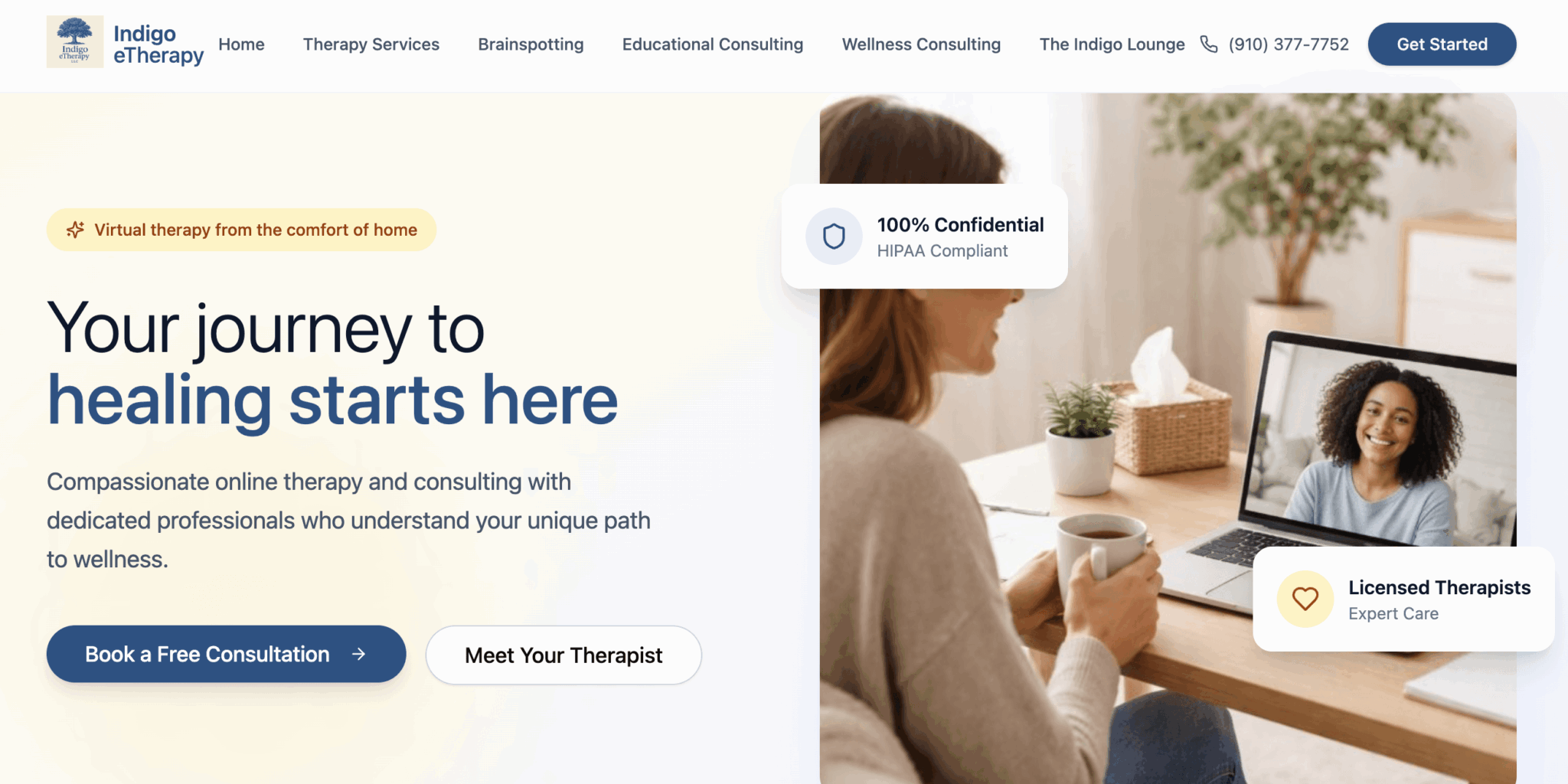
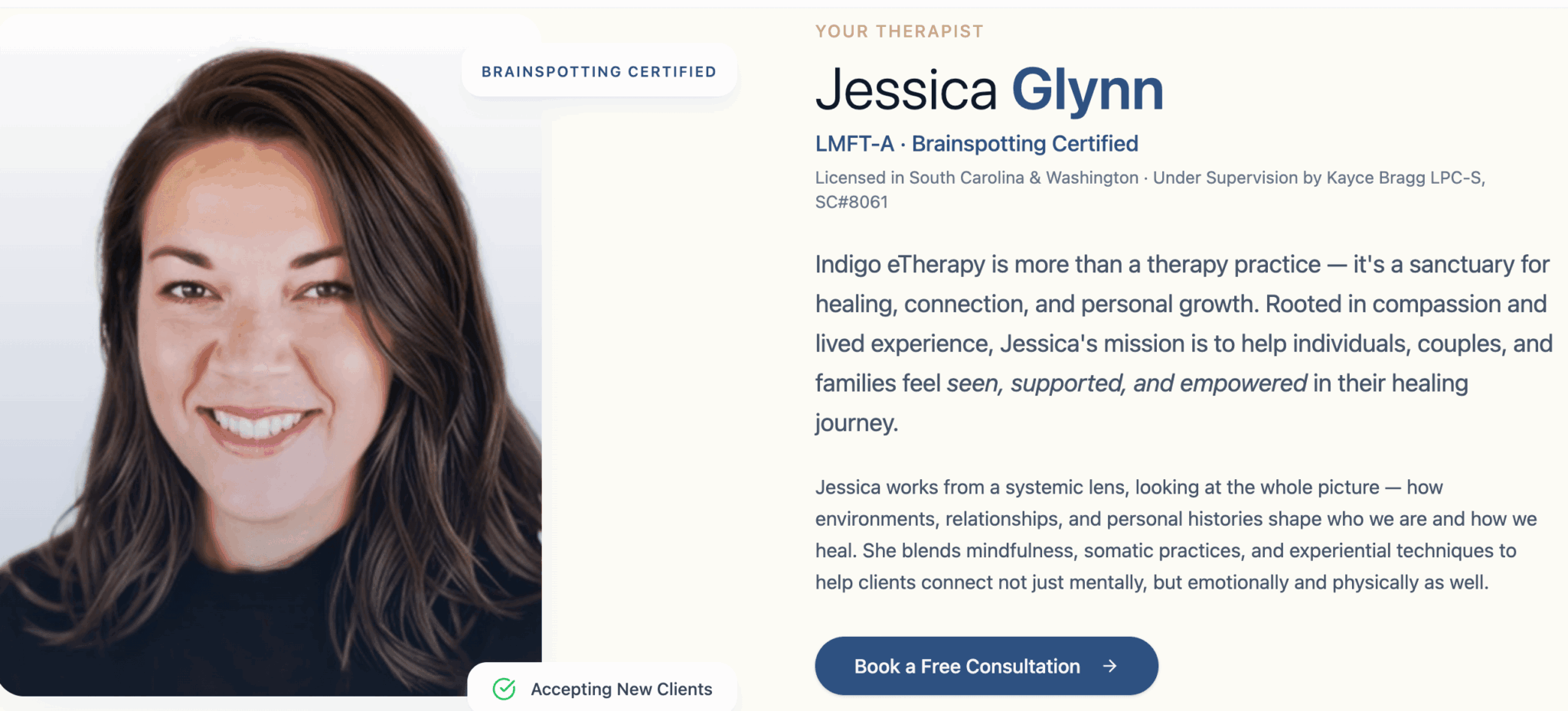
For those who may not know me yet, I’m Jessica Glynn — a Licensed Marriage and Family Therapist, Brainspotting practitioner, and founder of Indigo eTherapy LLC, and Indigo Consulting & Meditation.
At my core, I help people move through the emotional blocks that keep them stuck; whether that’s in their relationships, their performance, their identity, or their healing.
But this work didn’t start as a business plan.
It started as a calling.
I always knew I wanted to work in the mental health field. I’ve always been deeply curious about human behavior; about why we love the way we love, why we react the way we react, and how trauma shapes the stories we tell ourselves. But my path wasn’t linear. I chose to spend years home raising my children before stepping fully into graduate school and building my practice. That season shaped me more than I could have known at the time. It gave me lived insight into partnership, identity shifts, stress, and resilience.
Then I lost my brother to suicide.
That loss changed me.
Today, through Indigo eTherapy LLC, I provide therapy, Brainspotting, trauma-informed coaching, and mental performance work. I work with individuals, couples, high achievers, athletes, and performers who feel stuck- emotionally, relationally, or professionally.
In therapy, I specialize in relationships, trauma recovery, communication dynamics, and emotional regulation. I’m particularly passionate about helping couples learn how to “fight well”- how to communicate without destroying connection.
Through Brainspotting, I help clients access and process deeper emotional material that talk therapy alone sometimes can’t reach. Brainspotting is incredibly powerful for trauma, performance blocks, anxiety, and nervous system regulation. It allows healing to happen at the level where the body stores experience- not just the mind.
Through coaching, I work with clients nationwide and internationally to build emotional resilience, confidence, and mental strength; especially for high performers and athletes who want to overcome internal barriers limiting their potential.
What sets me apart is the blend.
I don’t approach healing from only one angle. I integrate relational theory, trauma work, nervous system science, mindfulness, and performance psychology. I’m both deeply compassionate and direct. I will sit in your pain with you, but I will also help you move forward.
I believe healing isn’t about becoming someone new.
It’s about removing the blocks that prevent you from being fully yourself.
The problem I solve for clients is this:
They often feel stuck- repeating patterns in relationships, stuck in anxiety cycles, blocked in performance, carrying unresolved trauma, or feeling disconnected from themselves.
I help them untangle that.
I help them understand what’s happening in their nervous system.
I help them learn to communicate clearly.
I help them release stored trauma.
I help them build emotional resilience.
I help them reconnect to their own power.
What I’m most proud of isn’t a number or milestone.
It’s the depth of transformation I witness.
When a couple learns how to argue without tearing each other apart.
When a client finally stops blaming themselves for trauma they didn’t cause.
When an athlete clears a mental block that’s held them back for years.
When someone says, “I feel like myself again.”
I’m also proud of building this business intentionally; after years of education, training, lived experience, and personal growth. I didn’t rush it. I built it from a place of clarity and purpose.
The main thing I want potential clients and followers to know about me and my brand is this:
I don’t do surface-level work.
I’m here for real healing. Real conversations. Real growth.
I believe in emotional strength.
I believe in resilience.
I believe in accountability.
And I believe in compassion.
You can be both strong and soft.
Driven and healing.
Successful and still working through pain.
Indigo was built on that belief.
And if you’re here, chances are you’re ready to move through something- not just talk about it.
That’s the work we do.
What’s a lesson you had to unlearn and what’s the backstory?
One of the biggest lessons I’ve had to unlearn is the belief that my emotions were “too much.”
Growing up, I internalized the idea that being sensitive, expressive, or deeply feeling meant I was overreacting. That the way I experienced things was excessive. Over time, that messaging becomes quiet but powerful. It doesn’t just stay in childhood; it leaks into adulthood. It shapes how you show up in relationships. It influences whether you speak up. It determines whether you trust your own internal compass.
For a long time, I questioned my reactions. I minimized my feelings. I tried to regulate myself into being more palatable, more contained, less “intense.”
And what I had to unlearn -slowly- was that my emotions weren’t the problem.
They were information.
They were depth.
They were empathy.
They were part of what makes me effective at the work I do today.
Graduate school was a turning point. Not just academically, but personally. Sitting in rooms where vulnerability was normalized. Learning about attachment, trauma, and nervous systems, and quietly recognizing parts of myself in the theories. Then stepping into internship and working with clients who were brave enough to let me witness their pain.
That’s when something shifted.
I realized the very thing I had once tried to shrink in myself was the thing that allowed people to feel safe with me. My emotional awareness wasn’t a liability, it was an asset. My sensitivity wasn’t weakness, it was attunement.
And I had to do my own healing work around self-belief and self-love. Around trusting that I am allowed to take up space exactly as I am. Around understanding that being human -still learning, still growing, still healing- doesn’t disqualify me. It connects me.
Today, I’m someone who deeply believes that you are exactly where you’re meant to be as a person. Not because everything is perfect, but because every experience shapes you into something meaningful. Every person is unique for a reason. The way you think, feel, process, and show up, it matters. It contributes to your relationships, your family, your community, and the world in ways no one else can replicate.
Unlearning the idea that I was “too much” allowed me to become someone who helps others realize they are not too much either.
They are human.
And that’s enough.
Can you tell us about what’s worked well for you in terms of growing your clientele?
The most effective strategy for growing my clientele hasn’t been a single marketing tactic, it’s been clarity and authenticity.
When I first started, I thought growth would come from doing more, more posting, more networking, more visibility. And while those things matter, what truly made a difference was getting very clear about who I am as a clinician and who I’m meant to serve. I felt learned in graduate school to be almost robotic, but thats just not me. I am a human, who cares deeply. So I show that authenticity to my clients. It hasn’t failed me yet!
Once I leaned fully into my niche- relationships, trauma, emotional regulation, Brainspotting, anxiety, and grief/loss- everything shifted. Instead of trying to be a therapist for everyone, I became very intentional about speaking directly to the people who resonate with the depth of work I offer.
Another major factor has been relationship-building. Referrals have been one of the strongest sources of growth, from other professionals, from past clients, from community connections. I prioritize collaboration over competition. I build genuine relationships with other clinicians, physicians, coaches, and educators. When people trust you and understand your specialty, they refer confidently.
Consistency has also mattered. Showing up regularly, whether through social media, podcasting, workshops, or community involvement; builds familiarity. And familiarity builds trust. I don’t focus on going viral. I focus on being steady and credible.
And honestly, the quality of the work itself has been one of the most powerful growth strategies. When clients experience meaningful change, they talk about it. When people feel deeply seen and supported, they remember it. I was told by one of my mentors, Dr. Lisa Lovelace, to pay attention to what your clients say about you. So I did. The most common response was always that I was “so easy to talk to”. I always cherish and hold onto those words, as a reminder of staying true to who I am as a therapist.
I also believe my lived experience and authenticity play a role. I don’t present as someone who has everything figured out. I’m transparent about growth, about healing, about being human. That creates connection. And connection is what ultimately drives sustainable growth in a service-based field like this.
If I had to summarize it, I’d say this:
Clarity of niche.
Consistency in presence.
Collaboration with others.
And depth of care in the room.
That combination has been far more effective than any quick marketing hack.
Contact Info:
- Website: https://indigo-etherapy.com
- Instagram: https://www.instagram.com/jess.indigo_etherapy/
- Facebook: https://www.facebook.com/profile.php?id=61586009728973
- Linkedin: https://www.linkedin.com/in/jessica-glynn-924a8b252
- Youtube: https://www.youtube.com/@TheIndigoPerspective
- Other: https://open.spotify.com/show/0f3XguMJROCnqWITdHMMEB?si=pgO-DEQORCWXnJXftAc8ow