

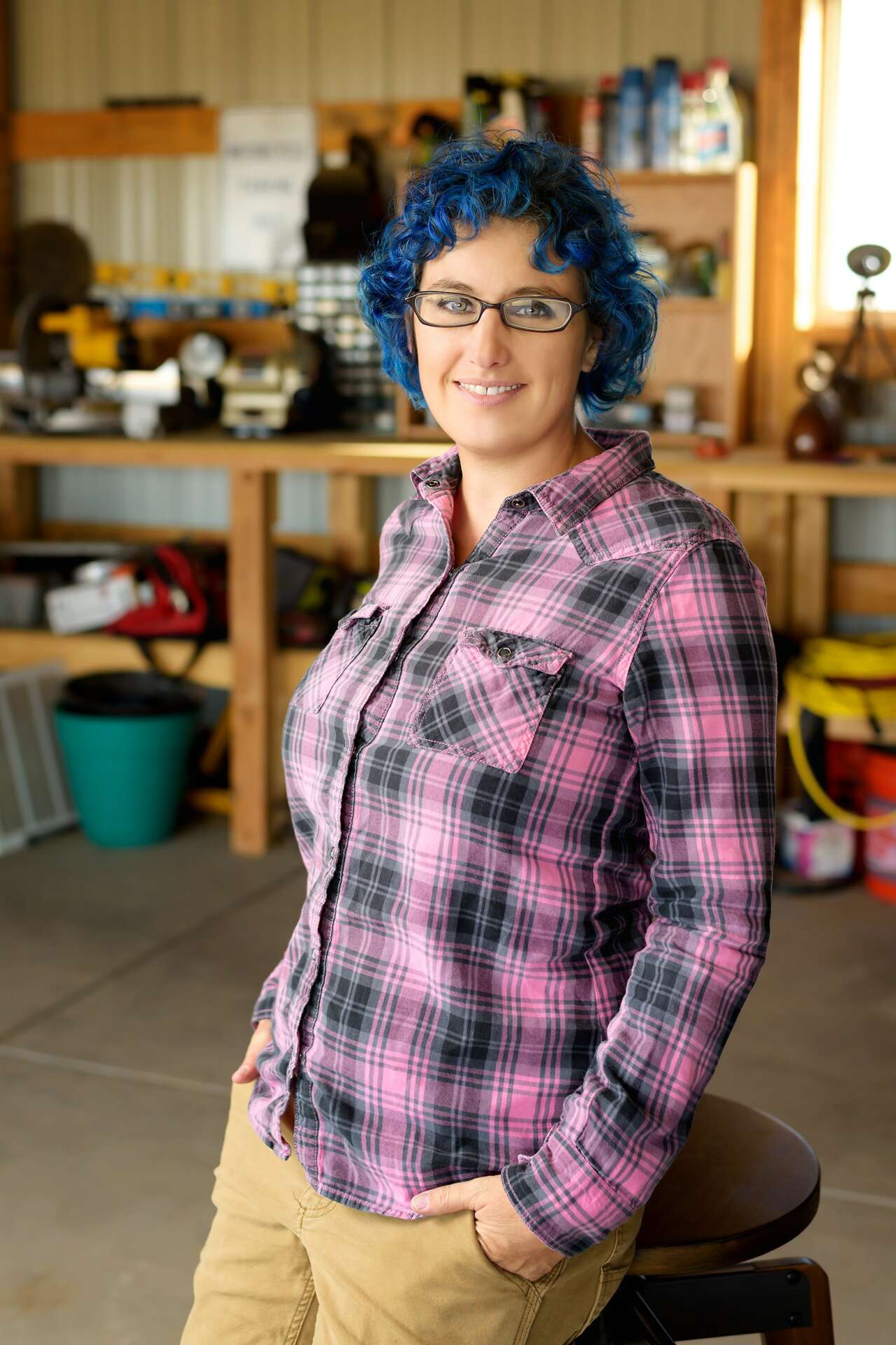

We caught up with the brilliant and insightful Jessi Burg a few weeks ago and have shared our conversation below.
Jessi, thanks for taking the time to share your stories with us today Do you take vacations? How do you keep things going – any advice for entrepreneurs who feel like they can’t step away from their business for a short vacation?
I am a firm believer that everyone in a company should be able to take a vacation, including the owner. Honestly, most importantly the owner! It’s vital for business owners to take time off to be able to think about things other than what they need to get done in their business. This leaves room for the ability to solve harder problems in the future. As for whether or not I personally take vacations, yes, but I wouldn’t call them “vacations” per-say. My last traditional vacation was November of 2021, my husband and I went to Mexico and neither one of us worked for a whole week! Now, that’s a vacation – but we also learned that I need lots of activities to keep me occupied even at the beach.
My more frequent version of a vacation is traveling while working part time and taking the time to explore the area. Since my husband and I work remote, we have the time to adventure to new places while also running a business. The last few years, we’ve lived in a different place for a month at a time over the winter months. I also take time off around holidays and when family comes to visit, and I’m religious about taking my weekends off to recharge. Long story short, it’s important to have designated regular set times where you don’t have to think about your business so you can come back refreshed and ready to tackle new problems.


Jessi, before we move on to more of these sorts of questions, can you take some time to bring our readers up to speed on you and what you do?
I started my journey as an entrepreneur after years of toxic work environments. I kept changing jobs, working within education, summer camps, seasonal trades, non-profits etc, and nothing ever stuck. Either I liked the job, but wasn’t paid enough to live, or the work environment was awful, or both the pay and the work were awful. I knew there had to be a way to stay passionate about my career, while valuing employees and paying a livable wage.
The answer ended up being to be my own boss and start my own company. I discovered that being a business owner amplified my voice, and gave me a platform to advocate for the lack of business development in the trades and service industry. Upon starting my landscape business, I found that there were many resources to help me start up and almost nothing to help me grow. I wasn’t shy about airing my grievances about this, and it eventually led me to create Outgrow Your Garage, a business learning community focused on trades and home services. With this I could help other small business owners by providing the tools and resources I wish I had when starting out, plus everything I’ve learned along the way. The idea for this business started during the pandemic when my spouse and I decided we wanted to leave Denver and head for the western slope of Colorado. I was interested in a career that allowed me to travel and set my own hours.
It was around this time that people were coming to me for advice on how to grow their trades/service businesses. Not thinking anything of it, I started coaching on the side while still running the landscaping business. Eureka! This was the dream job I had been longing for. After much thought, I sold the landscaping company and went full time with Outgrow Your Garage. I needed to create something that meets the needs of tiny business owners who spend almost their entire work day driving around town from job site to job site. Through our on-the-go course work, we provide guidance and problem solving for operations such as hiring your first employee, automating client communication, setting pricing in a service based business, managing a schedule when you have more locations than staff, and more. Each course is tailored to different learning styles, and ensures that we help you understand how to apply the course content to your business while setting realistic goals for the future.
Any advice for managing a team?
Unpopular opinion: work ethic and morale is inextricably linked to our life outside of our job. When people talk about managing a team, we tend to focus on leadership and getting everyone organized and working in the same direction towards the same goals. In my opinion, our culture fails at balancing how much energy your employees have to commit to work and recognizing that they have a life outside of your business. Your staff is not just a team – they are individual humans with their own lives, communities, families, and friends. None of these things have anything to do with you. The more we recognize this, the easier it becomes to manage and instill high morale, because the expectation is set that everyone is responsible for managing themselves and what they can personally contribute on a given day. It’s easier when we have this solid foundation, even if it takes some training in the beginning to make sure staff can say to their boss “I can’t put that on my plate”.
Something Outgrow Your Garage adopted early on is project based management. This is where we decide as a group what our collective and individual goals are for any given week, and the hours worked are less important than completing their own task list. They can make their schedule work around their lives as long as the work is getting done by the deadlines we set as a team.
Since we are an online company, it’s far easier for us to work on an asynchronous schedule, but what if you are managing something where employees have to be present for their shift? You could potentially achieve similar goals by having shift sign ups – by stating the amount of people you need on a given shift and have your team sign up for their own work hours instead of assigning people their shifts. This allows everyone to work around their lives and can fluctuate as needed. This definitely wouldn’t work in all industries (for example, anyone who relies on tips is going to fight for the busiest shifts.) Every workplace is different – it’s about finding the right balance for your staff. Chances are, if you ask them, they’ll have some ideas.

We often hear about learning lessons – but just as important is unlearning lessons. Have you ever had to unlearn a lesson?
When I first started my landscaping business back in 2017, I had absolutely no idea how to network or market myself. There was no inkling of how to generate connections within the business world on what to do, what to say, or how to act at networking events or lead groups. When we think about networking, we usually picture someone who is charismatic, outgoing, and is able to strike up a conversation with anybody in any situation. What if that’s the complete opposite of who you are and how you operate? I had to unlearn all of these cultural ideas of how to be “good” at networking and marketing yourself. What I found was I could essentially cultivate these spaces little by little where I felt comfortable. I started going to all women’s groups and found that they actually listened and engaged. There was also more structure, so I wasn’t just showing up and needing to start conversations with strangers. A lot of times networking events end up being where everyone wants to talk about themselves, and no one wants to listen.
I wanted to cultivate groups where the focus was on making legitimate connections and not just sales pitching your business at each other. I would go to events and talk to the person standing alone in the corner who also had no idea what they were doing or how to navigate this place. Being comfortable with fumbling through those events and through that growth process was a huge eye opener that I don’t have to be “good” at networking. I just needed to be prepared with a couple questions to ask about someone else’s business, and find that piece that links us in a way where we could either collaborate or share contacts that may help each other.
The most crucial part to networking is the follow up. After the event, reach out via email, phone, LinkedIn, etc. and let them know you had a nice time chatting, and recall points of the conversation that stood out to you. This is a nice segue into building that connection and how you two can benefit each other. A tip I used to use when I went to big networking events was to write down what we talked about on the back of their business card. After the event, I would go through all the business cards I gathered and know exactly what to follow up with!
Contact Info:
- Website: https://outgrowyourgarage.com/
- Facebook: https://www.facebook.com/outgrowyourgarage
- Linkedin: https://www.linkedin.com/in/jessi-burg-8b252335/
- Other: Coworking Sessions in Eventbrite: https://www.eventbrite.com/o/outgrow-your-garage-32670198679
Image Credits
You’re Golden