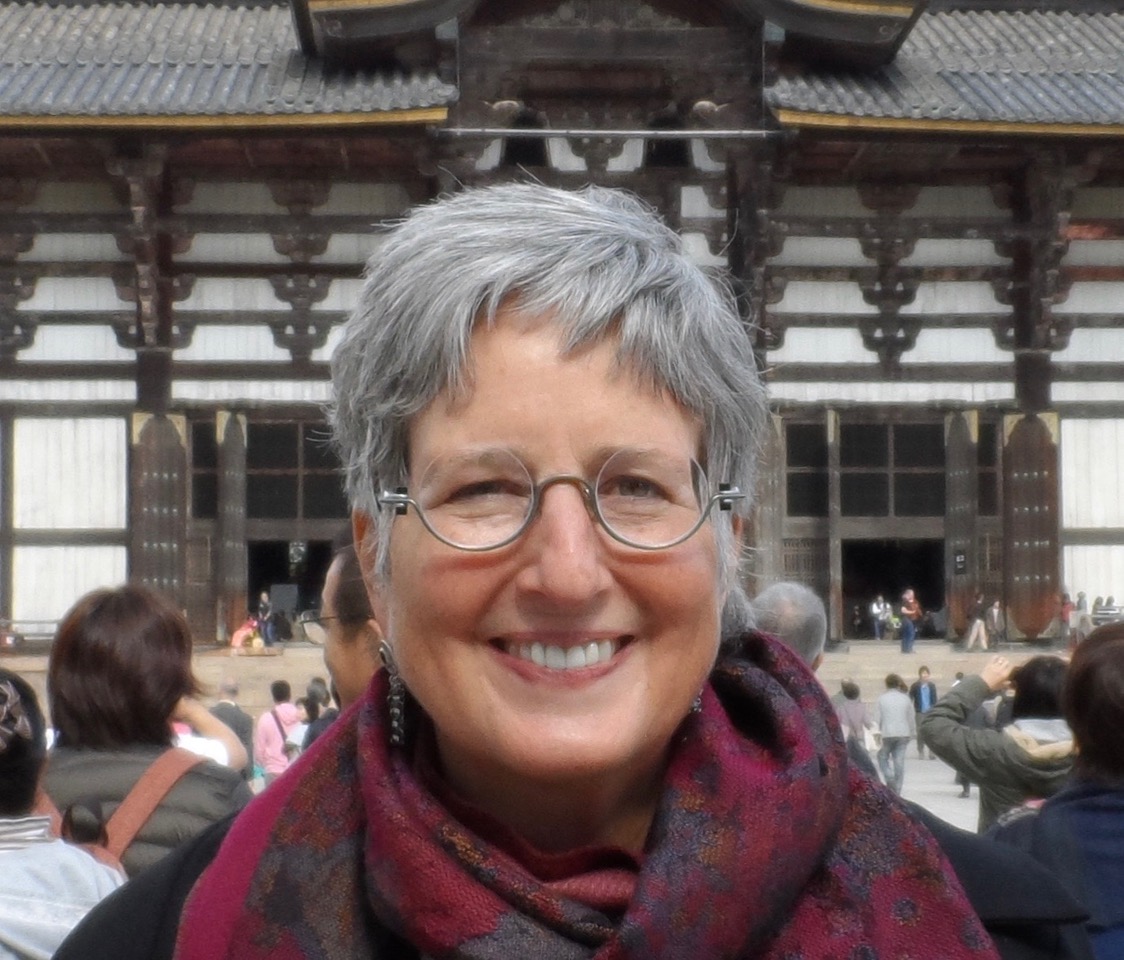

We recently connected with Jennifer Crocker and have shared our conversation below.
Alright, Jennifer thanks for taking the time to share your stories and insights with us today. Have you signed with an agent or manager? Why or why not?
I almost had an agent.
For about 20 years, I’ve played with the idea of writing a book about my research that would be accessible to a broader audience than the scientists who read my journal articles. Somehow, the way I thought about a book project and how I connected it to my self-esteem made it too scary to try. Let me explain.
On the few occasions when I’ve written for or spoken to broader audiences, people seem interested and some even find my work helpful.
But other than occasional conversations with editors or agents, the book idea never got very far. I have “good” reasons for writing such a book—to make my work more accessible, to help people who suffer from issues with self-esteem—but something always gets in the way.
One reason not to write a book is that psychology is an “article field,” not a “book field.” Hiring, promotion, and honors are all based on publishing highly cited articles in high-impact scientific journals. Writing a book would take a lot of time, and hinder, rather than advance, my career. At least, that’s what I told myself.
To be honest, another reason is that I wasn’t sure I could write a book that anyone other than scientists would find readable or interesting. Scientists can read my journal articles about the same work, so what’s the point?
This doubt in my ability to write for a general audience—real people, not just scientists—has haunted me for a long time. When I got my first academic job at Northwestern University and published my first sole-authored article in a top journal, I was quite pleased with myself. And because I was always trying to make my mother proud, I sent her a copy.
The next time I visited her, I asked her what she thought.
“I could have said it more simply,” was her only comment.
Because I cared so much about getting my mother’s approval and acknowledgement—it has been the driving motivation for much of my life—her words hurt.
No doubt she was right. She taught middle school English, and she knew how to diagram a sentence. I was a new assistant professor and wanted to write in a way that sounded serious and scientific, which I thought meant that I had to use jargon and lots of prepositional phrases. When I go back to some of my early articles, I wish I could clean up the prose and get rid of excess words.
Every time I thought about writing a book, mom’s comment came back to me. I just didn’t think I could do it, or if I did, it would be unreadable, a failure.
Which brings me to what I suspect is the real reason I never dared to write a book. I had a fantasy that my book would bring me fame and fortune. In my daydreams, I would have a book agent who shopped my book to lots of big-time publishers and earned me a big advance—an up-front payment against the royalties the book was expected to earn. The book would then sell lots and lots of copies, I would go on a book tour, and I would be invited to talk about it on morning TV shows. My fantasy prompted thoughts about what clothes I would need to buy for the book tour, far in the future.
But every time I started writing a book proposal, this fantasy bumped up against my fear that I couldn’t write interesting, engaging prose. Not only would I not get rich and famous, publishing a book would embarrass me when people wrote nasty reviews about how poorly written it was. Instead of a break-out best seller, I was afraid I would write a dud.
I never finished a book proposal, much less a book.
****
Imagine my surprise when a couple of years ago, a literary agent reached out to me about writing a book about self-esteem.
“Dear Dr. Jennifer Crocker,” she wrote. “It’s an honor to meet you, and a gift to have stumbled across your legendary work.”
The flattery continued:
“I recently discovered – and then devoured (!!) – your research on egosystem and ecosystem and the counterintuitive and destructive results of intentionally demonstrating self-esteem. There seems to be so much about self-worth that has gone unexamined in popular book publishing and I believe you and your work might have some fascinating new insights that could bridge academic disciplines and answer the huge (and hugely interesting!) question of why and how to be responsible to the self without undermining, compromising, belittling, and devaluing it at the same time. Would you be open to a brief meeting with me, Dr. Crocker, to discuss your work?”
Although I had long since given up on the idea of writing a book, the email reawakened my fantasy. I got excited about the possibility of finally writing a book that would encapsulate everything I had learned in more than 40 years of doing research. It would be deep, engaging, thought-provoking, maybe even profound. I drafted an outline of the chapters I would include.
A few days later, I had a phone conversation with the agent, and my enthusiasm grew. Maybe this time, now that I was retired from teaching and doing research, I could find the time to make a book project happen. The agent ended our call with a disclaimer: “Of course, I have bosses. I’ll run this idea past them for their approval.”
By this point, my fantasy was fully awake and consumed me. I was ready! I could overcome the decades-old block I’d had about writing a book and get it done! I chatted with a few other psychologists who were thinking about writing a book or had recently written one. Some psychologists—people in my orbit—had very successful popular books. Steven Pinker and Daniel Kahneman were almost household names. I heard rumors that a social psychologist—a friend and former colleague—got a book advance of a million dollars. His book made the New York Times nonfiction best-seller list. If he could do it, so could I. Rich and famous, here I come!
A week later, I received a follow-up email. “While I have a real personal passion for this subject matter, after thinking on the topic over the weekend and discussing with my team here, a big commercial book idea on self-esteem just hasn’t quite crystallized. We’re going to put this idea aside for now.”
I was crushed. My mother was right, I thought. I couldn’t write in a way that people found interesting.
Once again, I gave up on the idea of writing a book.
****
I’ve discovered that the biggest obstacle to writing a book—or taking on any daunting challenge—is my ego. When my fantasy encounters my deepest fear—that I have nothing to offer, and therefore I’m worthless–I’m paralyzed. Forward motion grinds to a halt.
These highs and lows of self-esteem occur when I get some sort of feedback in an area where I’ve staked my self-esteem. Can I somehow break through this obstacle that I’ve created?
Today I am writing. My writing is aimed at real people, not just scientists. I’m not writing to get rich and I’m not writing to get famous.
About a year ago I was diagnosed with metastatic breast cancer. I’m sharing what I write in case my discoveries could help other people. I don’t know how much time I have left, so I’m stumbling forward, and doing it with joy.
Awesome – so before we get into the rest of our questions, can you briefly introduce yourself to our readers.
I spent more than 40 years as an academic, teaching and doing research on self-esteem, and working on my own ego. When I retired, I was happy to put all that behind me. When I learned a couple of years later that the breast cancer I had seven years ago had returned and spread, I was devastated. A dear friend from Learning as Leadership encouraged me to start writing about what I had learned and share it with a wider audience. I think she believed that writing would give me a sense of purpose and help me reconnect with the value of the work I did over my lifetime.
I started writing a Substack called The Ego Equation. It provides a unique perspective on self-esteem and how, when people (including me!) are driven by their egos, they become their own worst enemies. My writing is informed by years of scientific research and working on my own ego. I don’t want to write as an expert who tells other people how to live. Rather, I use my personal experience to bring to life what I’ve learned. My examples come from my own struggles with issues of self-worth, needing to prove that I’m smart and competent, and the erroneous idea that those things will bring me safety and love. I think these themes are universal. My hope is that by sharing what I’ve learned through research and life experience, I can help others.
We’d love to hear a story of resilience from your journey.
Sometimes hidden blessings come in very unwanted packages. And sometimes blessings come with hidden costs.
There’s an old Chinese story about a farmer who wakes one morning to find that his only horse has run away.
The neighbors come to offer sympathy. What terrible luck, they tell him.
The farmer shrugs. Maybe. Maybe not.
A week later, the horse returns, bringing with it a small band of wild horses. Now the neighbors are back to congratulate him. What wonderful luck!
The farmer shrugs again. Maybe. Maybe not.
The farmer’s son, eager to tame one of the new horses, climbs on its back. The horse bucks, the boy falls, and his leg snaps. The neighbors gather once more, shaking their heads. Such terrible luck.
The farmer: Maybe. Maybe not.
Months pass, and the war that had been rumored finally arrives. Soldiers move through the village, conscripting every able-bodied young man they can find. Many of the boys will not come home. The farmer’s son is spared, his leg still mending. The neighbors, relieved, whisper that the farmer has been blessed after all.
The farmer repeats himself. Maybe. Maybe not.
****
I think about this story when I remember what my friend Marc-Andre told me at a Learning as Leadership workshop, just days after I learned the breast cancer I thought was cured was now in my colon and a lymph node in my neck. I’ve known Marc-Andre since my first LaL seminar 25 years ago. I’ve stayed at his home, I’m friends with his wife, know his daughter, played with his dogs. We’ve written things together. In all that time, I have sensed his unwavering intention to support me, to not hold back out of fear of how his support would land.
Now, he stood close, looking directly into my eyes. I could feel he was about to say something important. “For all you know,” he said, “your life with cancer could be better than the life you would have had without cancer.”
Marc-Andre had credibility on this point. He suffered a major stroke while at home on a zoom call, coming to in the hospital hours later. Despite lasting damage to his vision and other lingering issues, he discovered ways the stroke had made his life better. It forced him to live in the present moment, as if each day could be his last. Although coming from another person his comment could have seemed harsh, I knew he was sharing his hard-earned wisdom.
Could this diagnosis hold hidden blessings in an unwanted package?
****
A diagnosis of metastatic cancer sure seems like terrible luck.
When I was diagnosed with breast cancer in 2017, my oncologist told me there was a 12% chance that the cancer would return, probably between 5 and 10 years down the road. She said it like it was good news—the odds favored my continued health. I wasn’t so sure. 12% is a lot higher than 0%.
Eight years later the same cancer was discovered during a routine colonoscopy. It had migrated to a spot far from the original site. Bad luck!
Of course, luck is just a word we use when we don’t understand the causes of an event. Setting that problem aside for now,
was it terrible luck? Maybe, maybe not.
It’s clearly not good luck that my cancer has metastasized. I wouldn’t wish metastatic cancer on anyone.
At the same time, I’m not sure it’s terrible luck.
Of course, I’m lucky that I was born in a prosperous country at a prosperous time, and I’m white and educated and have many privileges as a result.
Beyond that, I’m lucky to have cancer now, rather than in times past when breast cancer was stigmatized, with few treatment options, and the diagnosis was kept secret from the patient.
I’m lucky that the metastasis was caught early in a routine colonoscopy, before it spread to my bones, liver, lungs, or brain.
I’m particularly lucky that when the metastasis was discovered, a drug specifically designed to treat the type of cancer I have (lobular, estrogen positive breast cancer) had been developed, tested, approved by the FDA, and was covered by my insurance, albeit with a co-pay of $3300 a month. The drug was only approved by the FDA in 2017, the same year I was initially diagnosed. People who got this diagnosis before effective treatments were available had terrible luck.
In another stroke of good luck, during Biden’s presidency, a new Medicare rule changed the out-of-pocket maximum for prescriptions. The first two months I was on the drug, I paid the full co-pay. But on January 1, 2025, the new rule set the maximum prescription out-of-pocket cost at $2,000. That’s $2,000 a year, not a month. And all prescription co-pays count toward the $2000 maximum. This has saved me thousands of dollars in one year. How lucky am I that this new out-of-pocket maximum went into effect just a few months after my diagnosis? Very lucky!
For the past 18 months, the drug has done a great job suppressing my cancer. It turns out that I’m an excellent responder. PET scans that initially showed cancer in several places in my body no longer show any cancer at all. My oncologist said if she didn’t know I had metastatic cancer, looking at the PET scan results, she would have concluded that I was cancer-free. Blood tests show that the level of cancer tumor DNA molecules circulating in my body has declined from 1.49 molecules per milliliter of blood to .26 molecules. Not zero, but much, much lower. How lucky am I that I happen to be one of the people who respond well to the drug?
And much like the farmer who lost his horse, I’ve discovered some unexpected benefits of a cancer diagnosis. It’s not that the farmer wanted to lose his horse, and I certainly didn’t want my cancer to come back. But the consequences have not all been bad. In fact, so far, I have experienced very few side effects of treatment, no pain, and some real benefits.
First, people who know about my diagnosis have been overwhelmingly supportive. I’ve been reminded that many people in my life care about me and wish me well. That’s a gift.
Second, the diagnosis prompted me to take a good look at my life and think about how I wanted to live for the rest of it. I realized that since my retirement I had taken on roles and activities because I had the time. Most of these activities are worthwhile—they make a contribution to others—but did not give me a strong sense of purpose or spark joy. After my diagnosis, I stopped doing many of them. I felt the weight of obligations lift off my shoulders.
At the same time, I started doing things that feel meaningful and good for my well-being. I started traveling more, not to cross locations off a bucket list, but to spend meaningful time with family and friends I don’t see often. After learning more about the connection between stress and cancer, I decided I wanted to let go of lingering resentments. Because anger is toxic to my body as well as my mind and my relationships, and research shows that personal, reflective writing has remarkable health benefits, I started writing to process painful events in my past. That has felt emotionally healing.
I also decided to share some of what I learned through my research and my LaL work with others, which led to writing for this Substack. It gives me a sense of purpose to share what has helped me create the life I want and I hope it helps others do the same.
Unexpectedly, the diagnosis allowed me to let go of anxiety about running out of money in retirement. I grew up in a family that didn’t have much, with parents whose financial attitudes were shaped by the great depression. When I made the leap from earning money to spending it at retirement, I found it hard to trust that we had enough to last our lifetimes.
With this diagnosis, it’s unlikely I’ll live to my mid-90’s, as my mother and both grandmothers did. The hidden blessing is that
I don’t need to worry about running out of money if I live to be 95 or 100.
Much like the farmer who lost his horse, I find that these hidden blessings could have a hidden cost–they could make me reluctant to get better. Do I need to have cancer before I can say no to activities that don’t give me a sense of purpose and yes to those that do? Do I need to have cancer to justify traveling to see friends and family? To share what I’ve learned? To feel a sense of abundance of friends, support, and even money? That’s a very dangerous way to think about cancer, because it creates reasons NOT to get well.
Can I hold onto these blessings even if treatment holds my cancer in abeyance for many years?
Yes, I can. Unlike the first time I was diagnosed, when I hoped I was cured, I now know that I will not be cured. This knowledge has changed me. I am more aware of the fragility and unpredictability of life. I cannot forget that the time I have—however long or short—is precious. I’m clearer about what is important to me, and what is not. I feel more appreciation for the people I love. I have a sense of purpose. I don’t need to have cancer to remember these things.
I now realize that what matters is not how long I live, but how well I live. Don’t get me wrong–I’m grateful to be alive. Life is the ultimate blessing, and it’s full of mystery. I plan to savor every moment, however many–or few–moments I have.
Is being diagnosed with metastatic breast cancer terrible luck? Maybe, maybe not.
What do you think is the goal or mission that drives your creative journey?
Two missions drive my creative work.
Over the past 45 years I’ve studied self-esteem and how the ego gets in the way of creating what people really want. I’ve spent many years examining how that works in my own life. I’ve learned a lot.
When I wrote about this work, it was for an audience of scientists. I published my work in academic journals behind paywalls. The research was described in technical ways, with details about research methodology and data analysis. It was not accessible to nonscientists.
When I learned that my breast cancer had metastasized, I decided to start writing for nonacademic audiences. I wanted to share my work more broadly, because I believe that what I’ve learned could be helpful to other people who struggle with similar issues. I wanted to make a difference for others.
I also write to heal myself. I carry anger, shame, and guilt about past events in my life. I want to let go of these negative emotions, because I don’t think they are healthy. Research shows that stress enables cancer cells to develop and grow by impairing the immune system—the body’s natural defense against disease. Negative emotions are linked to the stress response, and therefore get in the way of my body’s ability to heal. By getting my story onto paper (or hard drive) and sharing it with others, I gain perspective and get these unhealthy feelings out of my body.
Contact Info:
- Linkedin: https://www.linkedin.com/in/jennifer-crocker-19b9794/
- Other: Substack:
https://theegoequation.substack.com/p/the-ego-equation?r=6q881y