



Alright – so today we’ve got the honor of introducing you to Jenni Hardnett. We think you’ll enjoy our conversation, we’ve shared it below.
Hi Jenni, thanks for joining us today. What were some of the most unexpected problems you’ve faced in your career and how did you resolve those issues?
One of the most unexpected challenges I’ve faced in my career didn’t come from a lack of opportunity, it came at the exact moment everything was working.
I was part of a business partnership that had grown rapidly. What started as something modest turned into real traction, real revenue, and real visibility in a short period of time. On paper, it looked like success. Behind the scenes, it was something else entirely.
What I didn’t expect was that the biggest disruption wouldn’t come from the outside, it would come from within.
The breakdown of that partnership was rooted in something deeper than business disagreements. It exposed issues of colorism and internal community conflict that I had never imagined. I would have to navigate in a space built on shared identity and assumed alignment. I had built from a place of trust, believing we were operating with the same values and vision. Realizing we were not was one of the most difficult professional awakenings I’ve experienced.
At the same time, I was dealing with domestic violence in my personal life. So while things were unraveling in business, I was also trying to navigate safety, stability, and motherhood behind closed doors.
And then everything collapsed at once.
I lost my business partnership and my marriage in the same season. My life didn’t gradually shift. It reset. I went from operating at a high level of stability to having to rebuild every part of my life while raising four children who were also processing trauma.
There’s no real way to prepare for that kind of convergence.
What I had to confront was not just loss, but identity. Who are you when everything you built, believed in, and trusted falls apart at the same time?
The solution wasn’t immediate, and it wasn’t simple. It was a series of decisions rooted in discipline, clarity, and truth.
I had to rebuild differently.
Not just rebuilding income or structure, but rebuilding how I see people, how I define alignment, and how I lead. That experience forced me to:
-Build from a place of discernment instead of assumption
-Understand that shared identity does not always mean shared values
-Prioritize structure, accountability, and clarity over speed and growth
What I learned is that success without alignment is unstable. And growth without foundation will eventually expose everything underneath it.
Today, that experience is directly reflected in the work I do.
Through Lionjevity, I don’t just help organizations grow; I help them build systems that can sustain pressure, conflict, and real-life challenges. Because I’ve lived what happens when those systems aren’t in place.
I don’t lead from theory. I lead from experience.
And if there’s one thing I carry with me now, it’s this:
Not everything that grows is meant to last, and not everyone who starts with you is meant to finish with you.
That lesson didn’t break me. It refined how I build, with whom I build, and why I build at all.
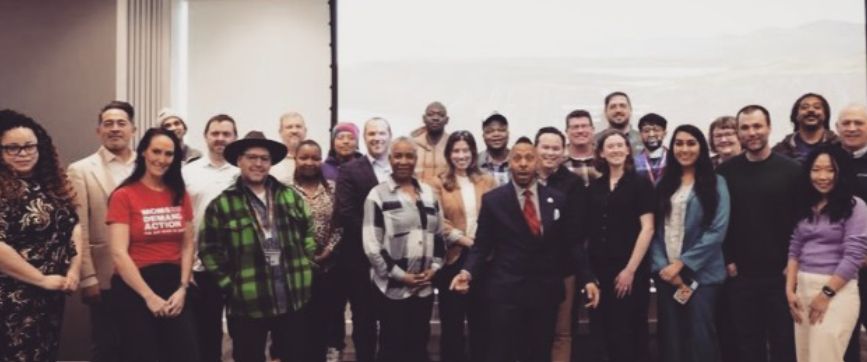
Jenni, love having you share your insights with us. Before we ask you more questions, maybe you can take a moment to introduce yourself to our readers who might have missed our earlier conversations?
I’ve built my career on one core truth: most programs don’t fail because of lack of funding, they fail because they were never designed to work in real life.
I’m Jennifer Hardnett, a Business Manager, Program Planner, and the Founder of Lionjevity. My work sits at the intersection of strategy, community impact, and execution. I didn’t enter this field through theory. I came into it through lived experience, systems navigation, and a deep understanding of what it takes to build something that actually works beyond a proposal or a plan.
Over the years, I’ve had the opportunity to support more than 50 organizations across nonprofit, government, and community-based sectors. I’ve also led and contributed to funding strategies and proposals that have brought in major investments to support housing, outreach, workforce development, and public safety initiatives. At the same time, through our Digital Navigator work, we’ve helped over 60 businesses grow, many of them doubling their revenue, by combining technical support with real-world business development strategy.
What makes Lionjevity different is that we don’t just design programs, we build systems that can be implemented, measured, and sustained.
A lot of organizations have great ideas but struggle with execution, compliance, or long-term sustainability. Others receive funding but don’t have the infrastructure to deliver outcomes at the level required. That’s where we come in. We specialize in program design and implementation, workforce and youth development, and business development strategies that are rooted in data, cultural responsiveness, and real accountability.
We’ve worked across high-impact areas like outreach to unsheltered populations, housing stabilization, violence prevention, and economic development, often serving communities that are overlooked but deeply in need of effective, well-structured solutions. Our approach combines strategy, reporting, and hands-on implementation so that programs don’t just start strong, they continue to perform.
What also sets us apart is perspective. I’ve seen systems from multiple sides, government, nonprofit, corporate, and community, and I understand where breakdowns happen. I also understand the human side of this work. That balance allows us to build programs that are both compliant and compassionate, structured and adaptable.
What I’m most proud of is not just the scale of work we’ve done, but the impact behind it. Helping organizations become more sustainable, helping businesses grow, and helping communities access resources in ways that actually create change.
At the core, Lionjevity is about building with intention.
We are here for organizations, agencies, and partners who are serious about doing the work, not just launching programs, but building something that can last, perform, and make a measurable difference.
Because growth is important, but sustainable impact matters most.
Can you open up about a time when you had a really close call with the business?
One of the closest moments I’ve faced in business came during the same period where everything else in my life was unraveling.
At the time, I had a team of 11 staff members who were depending on the company, not just for income, but for stability. These weren’t entry-level roles, they were well-compensated positions, and I carried the weight of knowing that people’s livelihoods were directly tied to decisions I was making in real time.
When the business partnership broke down, it didn’t just impact leadership, it disrupted the entire financial structure of the company. Revenue streams were affected, operations slowed, and suddenly I was in a position where meeting payroll became uncertain.
As the visionary, strategist, and public-facing leader of the company, the responsibility didn’t feel shared, it felt concentrated. My team looked to me for answers, for reassurance, and ultimately for solutions that I was still trying to figure out myself.
There were moments where I had to make incredibly difficult decisions while still showing up with composure. At one point, I was navigating internal breakdowns, external pressures, and even legal challenges, all while trying to hold the business together.
Not everyone stayed. Some people couldn’t, and I understood that.
But what stood out to me was who did stay.
Three team members chose to remain through that uncertainty. They came from very different backgrounds, but what they shared was trust, patience, and a willingness to move forward without guarantees. That experience shifted my perspective on loyalty and alignment in a way I will never forget.
Although there were gaps and delays during that time, I made a commitment to make things right.
About a year later, after rebuilding, I was able to repay what had been missed and create new opportunities for those same individuals who stayed. That wasn’t just a financial decision, it was a leadership decision rooted in accountability and integrity.
That experience taught me that payroll is not just about numbers, it’s about trust.
And in moments where a business feels like it’s at risk, what matters most is how you lead when there is uncertainty, not just when things are stable.
Any advice for managing a team?
One of the biggest lessons I’ve learned about managing a team is that morale is not built through motivation alone, it’s built through clarity, consistency, and trust.
When everything is going well, morale is easy. The real test of leadership comes when things are uncertain.
During one of the most challenging periods of my career, I had to lead a team while navigating business instability, personal hardship, and major structural changes. I didn’t have the luxury of pretending everything was fine, but I also understood that how I showed up would directly impact how my team responded.
What I learned is that people don’t expect perfection, they expect honesty and direction.
Maintaining morale required me to:
Be transparent without creating panic
Set realistic expectations instead of overpromising
Stay consistent in communication, even when there were no immediate solutions
Lead with accountability, not avoidance
I also learned that not everyone is meant to stay through difficult seasons, and that’s okay.
The people who remain during uncertainty are often the ones who are aligned beyond just a paycheck. Those are the individuals you build with long-term.
Morale is not about keeping everyone comfortable, it’s about creating an environment where people understand the mission, trust the leadership, and feel respected even in hard moments.
Today, I approach team building very differently.
I focus less on speed and more on alignment. I prioritize structure, communication, and shared expectations from the beginning. And most importantly, I build teams that understand that challenges are part of the process, not a sign of failure.
Because strong teams are not defined by how they perform when everything is easy, they are defined by how they move when things get difficult.
Contact Info:
- Website: https://lionjevity.com/
- Instagram: https://www.instagram.com/lionjevity/?hl=en
Image Credits
Moms Demand Action, KGW, KOIN, KATU, OPB, WB, KPTV, and Oregonian.