

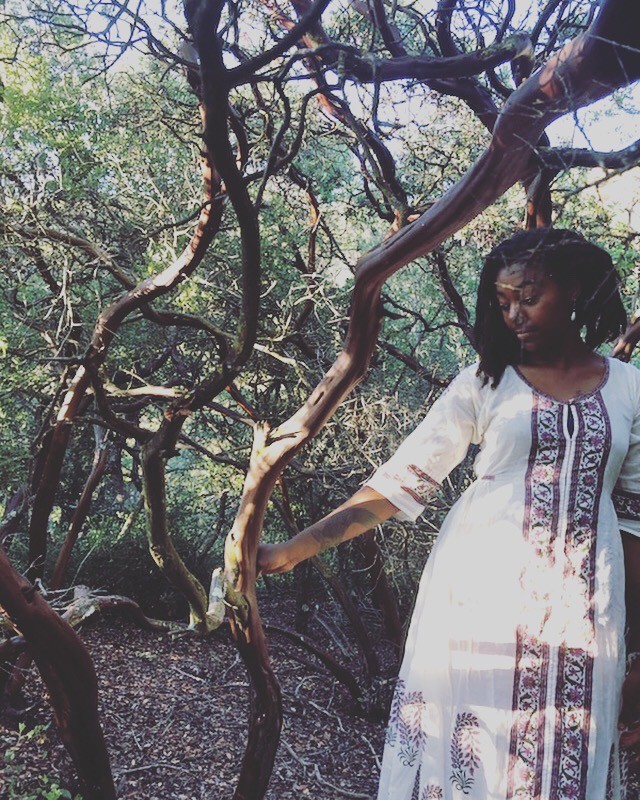

We were lucky to catch up with Jenelyse Woolery recently and have shared our conversation below.
Alright, Jenelyse thanks for taking the time to share your stories and insights with us today. Do you think your parents have had a meaningful impact on you and your journey?
There are many things my parents did very wrong. Being young parents and living in a modern world striving for conveniences certainly created a tinge of false ego around material possessions. However, they both come from very simple upbringings. I learned my father spent much of his childhood on his family farm in Missouri. They had to use an outhouse there, so naturally as he progressed in his career with modernization at the forefront he never went back to the land nor took us to these magical familial places. My mother grew up with 9 other siblings and both of her parents in a one story three bedroom and one bath house on about a quarter of an acre in Illinois. They experienced the last of their family’s connection to homesteading through gardening, jarring, canning, and all such. My great grandparents were coal miners and some of them farmed animals and lived close to the land, while my great great grandparents were mostly all farmers. We were hog farmers and most of my ancestors did not own their land, they rented. Meaning generational wealth has not been passed on in my lineage due to slavery. This connection to land though slowly disappearing within our lineage was revived within me. Luckily, this distant connection to purpose on land wasn’t entirely lost with my parents generation. My father kept a pretty thriving garden in my early developmental stages and during elementary school I was a girl scout. Whenever I could, I was outside so thankfully I still grew up in the generation that valued time outdoors over on the screen. The computers were still bulky with bulging screens when I first began to type out stories in elementary school. They put me in montessori school at a fundamental stage which I am sure inspired my creative energy. I also biked to my elementary school which was a few neighborhoods away. I spent a lot of time observing the grass, the bugs in the grass and even wrote a full fledged story about a lady bugs saga during the second grade that deeply impressed my teacher and parents. My mother took us caving, to gem shows, and allowed us to be as free flowing, playful, and creative as possible. Play was probably more important than anything else in my household. I still view the world as this beautiful oasis to find innocent child like joy in. I remember the caves distinctively just as much as I remember stepping on a coiled up rattle snake when I was seven. Swimming in lakes, riding horses, going to fairs, and being outdoors on our play sets and our local pool are deeply fond memories of mine. We were sent to my grandparents during the summer months and they still lived in that three bedroom one bath house. We fed ducks with out grandparents, played outside, went to parks, and pretty much experienced humble living.


Awesome – so before we get into the rest of our questions, can you briefly introduce yourself to our readers.
I am an initiated Olokun priestess in the Yoruba West African tradition. My lineage is mostly West African through way of Cameroon, Sierra Leone, and Nigerian having been stolen from these lands and human trafficked to Turtle Island. My ancestors were human trafficked and forced to work on plantations growing rice, cotton, indigo, and other cash crops. I recently located the Mckay family plantation owned by a European man named James. He lived in South Carolina and enslaved hundreds to a thousand of African peoples, my ancestors were among those numbers. My people have gone through hell and now we are finally tasting the sweetness of freedom through my own personal choices. I have made the choice not to work for corporations who rape and pillage the earth, I emancipated my mind. I have chosen to eat locally, organically, and to wear slow fashion. I support producers of goods directly and strive to consume less and less by the day. My fairly recent ancestors having been flung from slavery into the industrial era had little to no choice but to work gruesome and difficult jobs in mines and on farms. While my grandfather was a pastor and the other a carpenter, both served their communities and lived very humbly. Let us just say living and stewarding the land is truly in my blood, and so much so that my ancestors were hard working people who never took more than they could give. My lineage is also made up of a young Italian woman who died giving birth to my great grandfather, Scottish folks on my dads mother’s side who owned farm land in Missouri, and Native First Nations aboriginal peoples of the Congaree tribe in South Carolina. My lineage encompasses many various and beautiful traditions. This inspires my work, these people, these stories, these truths, and the blood that flows through my veins. I have always been drawn to group therapy, talking through our issues, and following up with natural remedies. My mother first inspired me following was my own interests in yoga and intentional rituals. I learned about sitting with cannabis in a sacred way, I learned about meditation, balancing my internal energy portals. I learned that even music had an impact on our soul consciousness and the clothes we wear and food we eat. I learned that what I put into my hair had an effect on my soul and physical connection to the earth. I stopped using chemicals in my teens and took on a fully vegetarian life in my early twenties. I began studying yoga with a Vedic monk, studying about Rastafari from Jamaican elders, learning more about my African roots from mentors, and eventually took an herbal training program from a Polish woman. Following, I received my bachelors of science in alternative medicine and obtained certifications in farming and women’s health. After working and living on farms, compiling all of my life experience, and weaving in traditional elders I found that I could create a platform that guided other BBIPOC folks into their true reclamation of health, wellness, and ancestral rites. I live and work on organic farms and have for about a decade, having also managed farms my goal is to continue to grow within the sustainable agriculture and environmental movement. By trade I am a community health educator, inspiring folks to get on to the land, to farm, garden, and produce medicine as well as food from their harvest. I promote sincere ethicality and sustainability. My medicine box offerings are made up of hand harvested herbs while my phytotherapy sessions involve deep talks and personalized herbal remedies.
Can you share a story from your journey that illustrates your resilience?
I was sick often as a child and I think that in my late teens early twenties choosing to address my health from a holistic perspective encapsulates my resilience. Many of my peers chose terrible fast food, they didn’t have the education. I prepared my own meals my senior year of school which was usually steamed salmon, a salad, smoothie, or protein shake. I wouldn’t eat how I ate then even but it was a world healthier than those in my circle. I chose a healthier lifestyle despite having many illnesses as a child, from asthma, terrible allergies, troubled skin, difficult menstruation, and life threatening flus. I could have chosen to live a conventional life, as I grew up in a food desert. Working and living on farms in all the various elements, rain, shine, wind, snow has also proven to be one of the biggest challenges. Being committed to a sustainable off grid life means harvesting your own water, making fires, enduring the elements, showering with cold water, and numerous other annoyances. Of course, it is worth living this way to be sustainable, ethical, and in solidarity with Indigenous nations. However, growing up with a well to do family living in medium to large homes in Illinois, to Texas, then Virginia, and New York to living in the bush of California comes with its heroic heroine challenges. I choose to live in the bush, though I wouldn’t have it any other way so now at this point knowing what I know about our government, this society, our world even I do not feel like I have a choice when I am standing in solidarity with Indigenous peoples. This is a dual perspective that I live within, feeling that I do not have a choice and yet I choose every day to continue living close to the earths biorhythms as a land steward. I am resilient in the fact that I have survived through fires, bathed in ice cold springs during winter time, grown and harvested my own produce and I continue to run an online herbal academy as the lead educator. I continue to write and work on my book. I continue to live and breathe this work even when I may not have had any self care.


Are there any books, videos, essays or other resources that have significantly impacted your management and entrepreneurial thinking and philosophy?
Queen Afuas books, Dr. Laila Afrikas books, Patrice Malidoma Some’s books, Marcus Garveys books, all publications written by Indigenous peoples regarding the land, herbs, and tradition. My favorite Native author is Paula Gunn Allen as each and every one of her books has impacted my life for the better. Leah Penniman’s farming book for black folks is like my bible these days, while Dr. Vasant Lad’s ayurvedic publications have truly impacted my practice for the better. Each and every documentary on netflix pertaining to the land is spot on, like the Kiss the Ground documentary.
Contact Info:
- Website: indigigoldenherbalacademy.org
- Instagram: indigigoldenherbalsmedicine
Image Credits
Thandiwe Seba El is the photographer of two of three of these images, the rest I have taken.