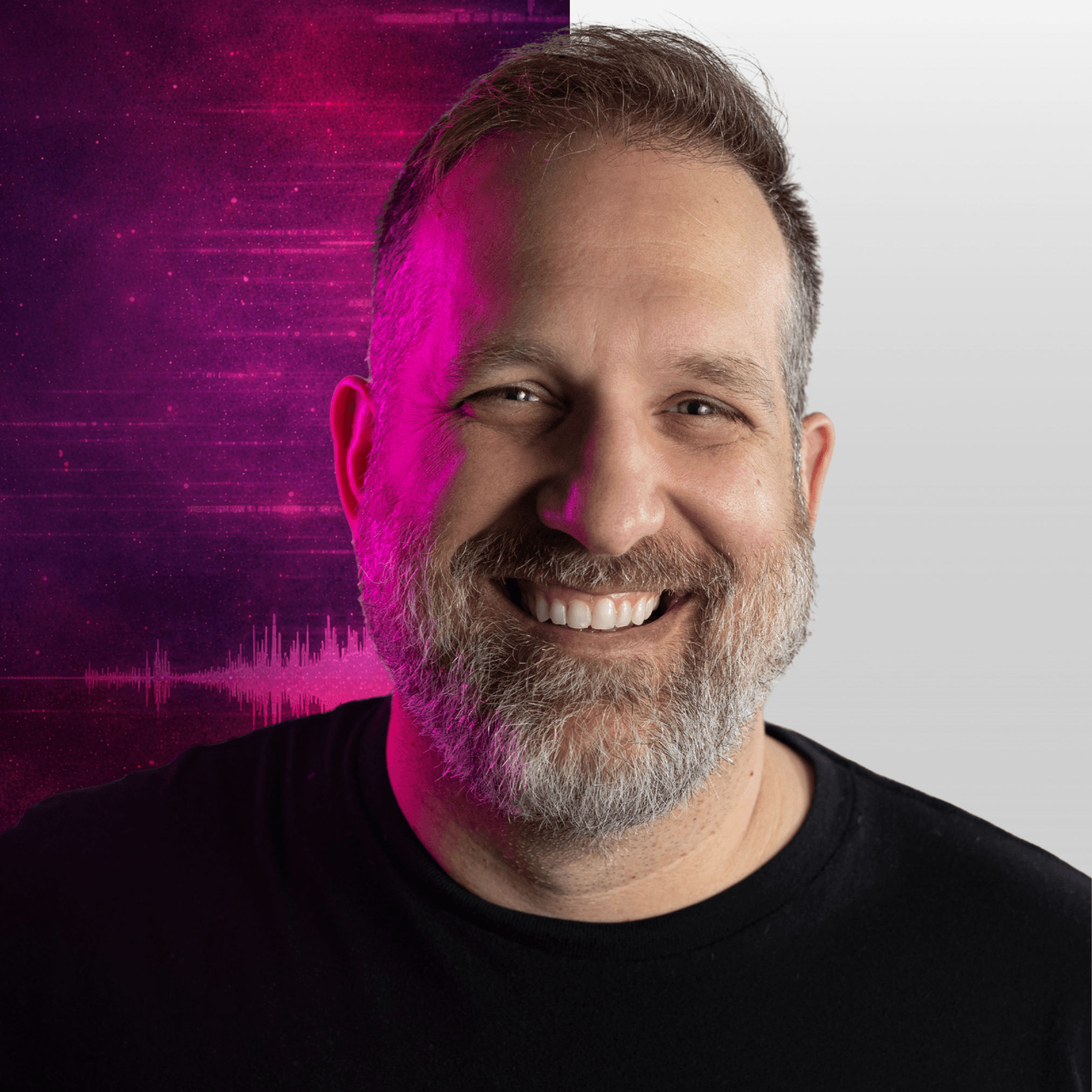

Alright – so today we’ve got the honor of introducing you to Jeff Rimmer. We think you’ll enjoy our conversation, we’ve shared it below.
Jeff , thanks for taking the time to share your stories with us today Risk taking is something we’re really interested in and we’d love to hear the story of a risk you’ve taken.
I don’t think of risk as a single moment. For me, it’s a pattern. It’s how I move.
Most people think of risk as jumping off a cliff. One big decision, one big leap. Mine has always looked different. It’s been a series of smaller, constant decisions to choose uncertainty over comfort, over and over again.
I’ve taken risks leaving stability to build something from nothing. Starting a creative agency without a guaranteed pipeline. Building a music platform in an industry that doesn’t exactly welcome new models. Investing time, energy, and money into ideas that, on paper, don’t make sense yet.
There’s never a clean moment where everything lines up and says “now is the right time.” If you wait for that, you don’t move. Most of my risks came from feeling like staying still was actually the bigger danger.
What’s interesting is that risk stops feeling like risk when you do it enough. It starts to feel like alignment. You get more comfortable being uncomfortable. You start trusting your ability to figure things out instead of needing certainty upfront.
Not everything works. Some ideas stall. Some take longer than expected. Some evolve into something completely different than what you planned. But every risk compounds. You learn faster. You see patterns earlier. You build confidence that isn’t based on outcomes, but on your ability to adapt.
If I had to point to one “result,” it’s this: I’ve built a career that doesn’t feel like I’m fitting into something that already existed. I’m building something that reflects how I think and how I create.
So the real risk wasn’t starting something. It was deciding not to play it safe as a long-term strategy.
And that’s a decision I keep making.
Jeff , before we move on to more of these sorts of questions, can you take some time to bring our readers up to speed on you and what you do?
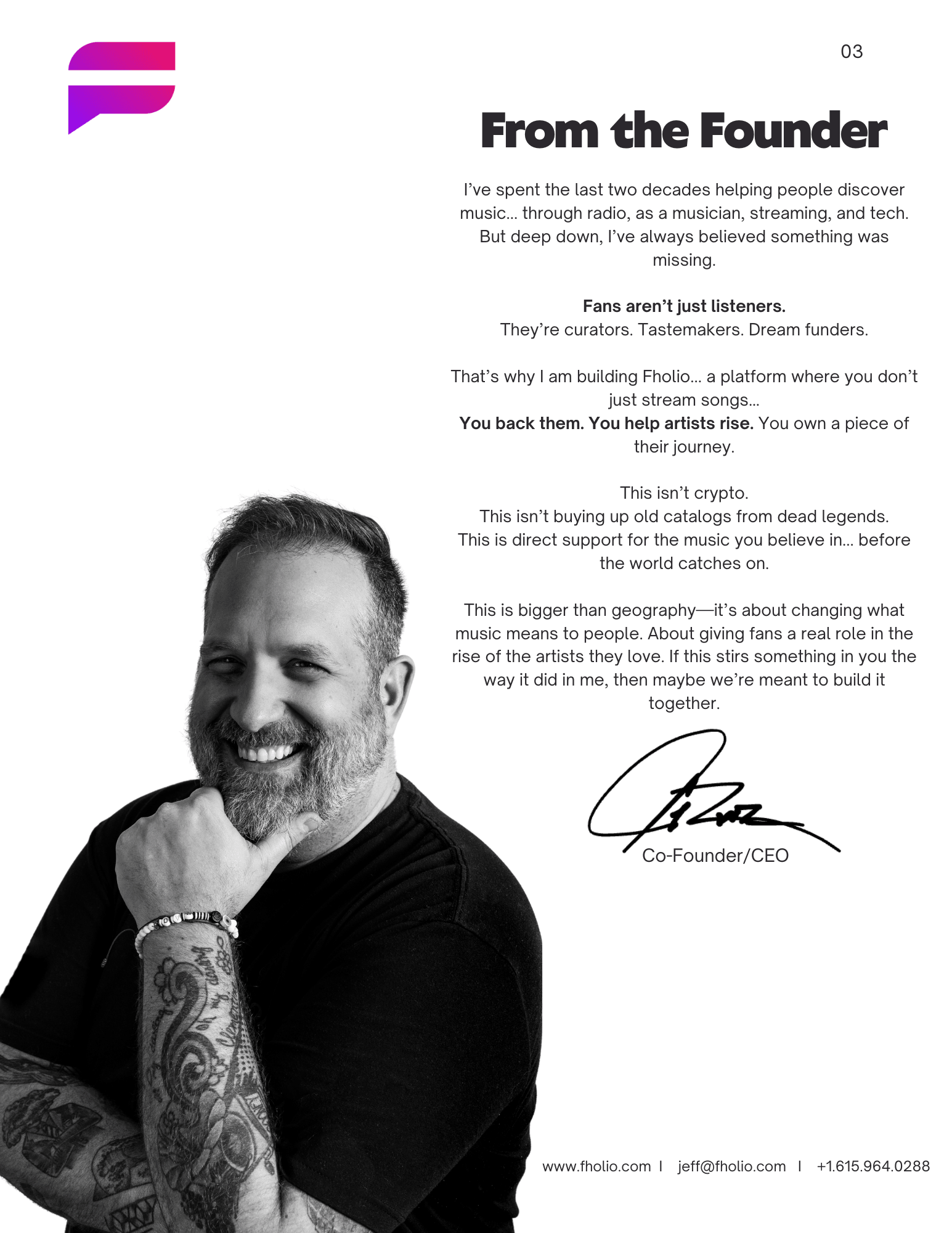
I’m a founder and creative strategist focused on building brands, ideas, and platforms that people actually connect with.
I didn’t take a traditional path into this. I’ve always been pulled toward the space between creativity and business, where ideas aren’t just made, they’re shaped into something that can live in the real world. Over time, that turned into building my own ventures instead of fitting into someone else’s.
Today, I run a creative agency called Extra Medium. The name came from this idea that most brands sit at one of two extremes. They’re either safe and forgettable, or overly loud without substance. “Extra Medium” is that balance in the middle. Work that stands out, but still makes sense. Creative that grabs attention, but also drives real results. We help brands grow through a mix of strategy, storytelling, and performance, making sure what they put out into the world actually connects and converts.
Alongside that, I’m building Fholio, a music platform centered around a simple but powerful idea: fans should be able to back the artists they believe in. It’s about creating a new model where discovery, support, and growth aren’t controlled by a few gatekeepers, but driven by real people who care about the music.
What sets me apart is how I approach both sides of the equation. I care deeply about the creative, how something feels, how it resonates, how it sticks. But I’m just as focused on outcomes. Growth, revenue, traction. The work has to do both.
I’m most proud of building a career that isn’t confined to one lane. I’ve been able to move between industries, build multiple things at once, and stay curious enough to keep evolving.
If there’s one thing I’d want people to know, it’s that I’m not interested in creating noise. I want to build things that people remember, that people choose, and that actually move something forward.
How do you keep your team’s morale high?
I don’t think you manage morale. I think you build an environment where it either grows or dies.
Most teams don’t struggle because people aren’t talented. They struggle because things feel unclear, disconnected, or controlled. People want to feel like what they’re doing matters and that they have ownership in it.
For me, it starts with clarity. Everyone should know what we’re building, why it matters, and how their role contributes to it. When that’s missing, morale drops fast.
The next piece is empowerment. I don’t believe in over-managing. I want people to take ownership, bring ideas, and feel like they can shape the outcome. When people feel empowered, they show up differently. They care more. They push more. When they don’t, they disengage.
And then there’s energy. Teams reflect the energy of the person leading them. I’m not someone who operates in a rigid, controlled way. I bring ideas, momentum, and direction, and I want the team to build with me, not just execute for me. That creates a different kind of environment, one where people feel like they’re part of something, not just working on something.
I also think it’s important to be real. Not every day is exciting. Not every project hits right away. But if people feel trusted, empowered, and connected to something meaningful, they’ll push through the hard parts.
At the end of the day, morale isn’t about perks or forced motivation. It’s about creating a space where people feel ownership, energy, and purpose in what they’re building.
We’d love to hear a story of resilience from your journey.
I don’t think resilience shows up in one big moment. It shows up in the stretch where nothing is working yet, and you keep going anyway.
There have been multiple points in my career where I was building something without clear validation. No guarantees, no real proof it would work, just a belief that it could.
That space is uncomfortable. You question yourself. You wonder if you’re early or just wrong. You watch other people take safer paths and get more immediate results.
I’ve had ideas stall. I’ve had things take longer than expected. I’ve had to pivot, rebuild, and rethink more times than I can count. And every time, the easiest option would have been to step back into something more predictable.
But I didn’t.
What I’ve learned is that resilience isn’t about forcing something to work exactly as you first imagined it. It’s about holding onto the reason you started, while allowing the project itself to change form. The vision stays, but the path adapts. You reshape it, rebuild it, and let it become what it needs to be without letting go of why it matters to you.
Over time, that compounds. You get faster at recognizing what works. You build confidence in your ability to figure things out. And you stop needing immediate validation to keep moving.
If I had to define resilience in one sentence, it’s this: continuing to build when there’s no clear signal yet, and trusting that the signal will come if you stay in it long enough.
Contact Info:
- Website: https://www.xmedium.co
- Instagram: @brojaysimpson
- Linkedin: https://www.linkedin.com/in/jeffrimmer/
- Other: https://www.fholio.com