

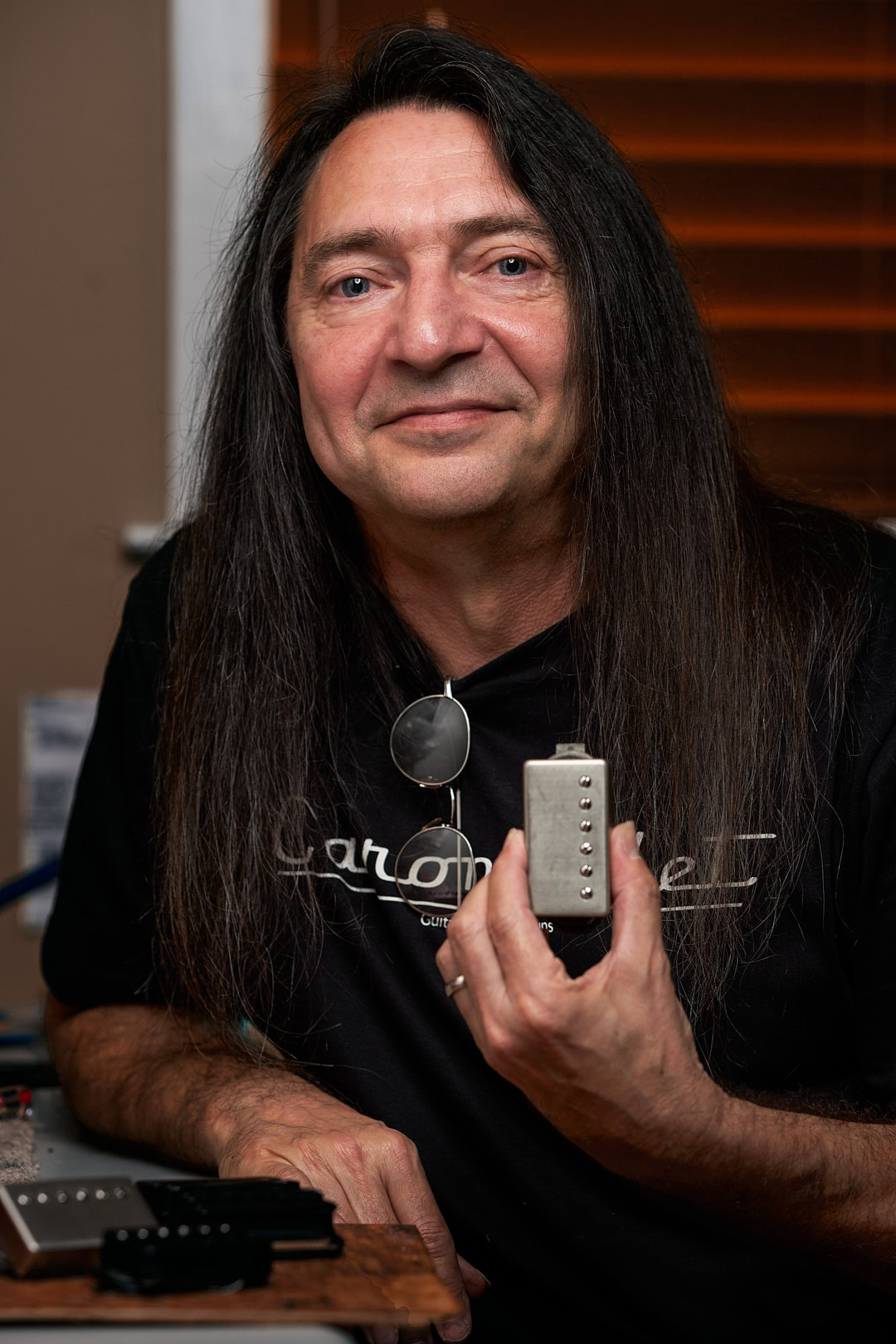

Alright – so today we’ve got the honor of introducing you to Jeff Richard. We think you’ll enjoy our conversation, we’ve shared it below.
Jeff, looking forward to hearing all of your stories today. We’d love to go back in time and hear the story of how you came up with the name of your brand?
Carondelet (pronounced “kuh-RON-duh-let”) originates from Baron Francisco Luis Hector de Carondelet, a Spanish noble who governed New Orleans during its Spanish colonial period from 1791 to 1797. Our company is actually based an hour northwest in Baton Rouge, but New Orleans is our nearby globally renowned music epicenter … it is the birthplace of jazz and a key player in the origin and evolution of American blues and rock and roll.
From a marketing perspective, “Carondelet” sounds upper tier, classy and high end, which I’d like to think is where our products sit in the marketplace. And our logo intentionally utilizes a font and feel that is distinctly 1950s. That’s the decade in which electric guitars and their electromagnetic transducers, the “pickups” that we make, transformed from being somewhat of a fad into the industry standard.
And those industry standards are firm … the most popular electric guitars and basses in the 1950s, the Gibson Les Paul series, the Fender Stratocaster and Telecaster, are still in production and virtually unchanged 75 years later. As are their pickups. My job is to recreate that vintage vibe generations later. Or to take the sounds and feel in a fresh, modern direction while keeping the original blueprint intact. Or as intact as possible. I definitely lean towards the latter … I draw inspiration from the past, but every pickup I make either bends or breaks an old skool rule or two. I’d have it no other way.
Jeff, before we move on to more of these sorts of questions, can you take some time to bring our readers up to speed on you and what you do?
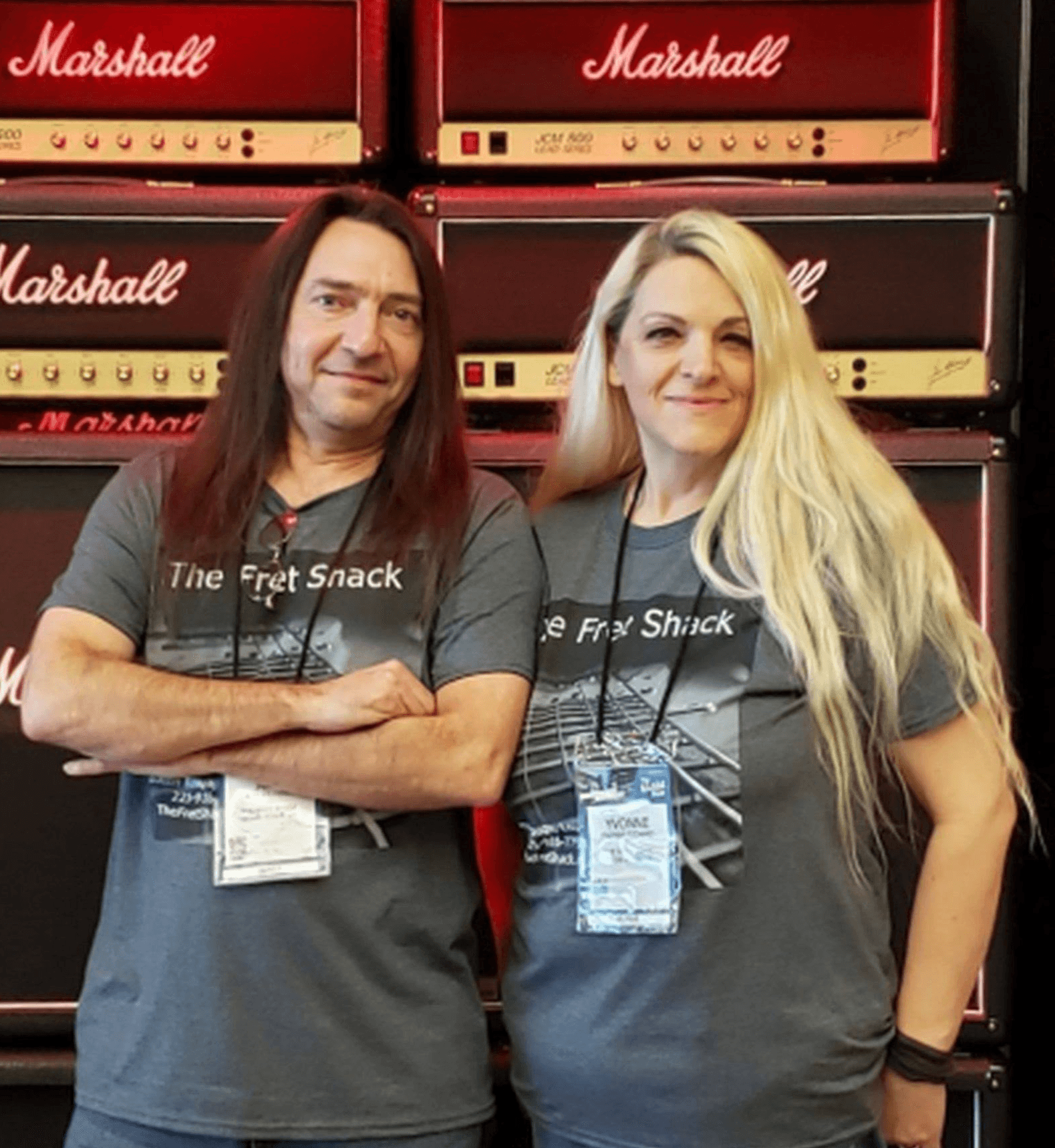
I’m 57 and a lifelong Louisiana resident. I’m married to wife Vonnie and our children are all adults. We’re not quite empty nesters, thanks to our chihuahuas Felix and Pierre, and our pet flying squirrel, Delta. We rescued her when she left orphaned as a baby on our doorstep by a hurricane that hit Baton Rouge in 2020. The hurricane was named Delta, as is a major airline, so it was the perfect name for our little flyer.
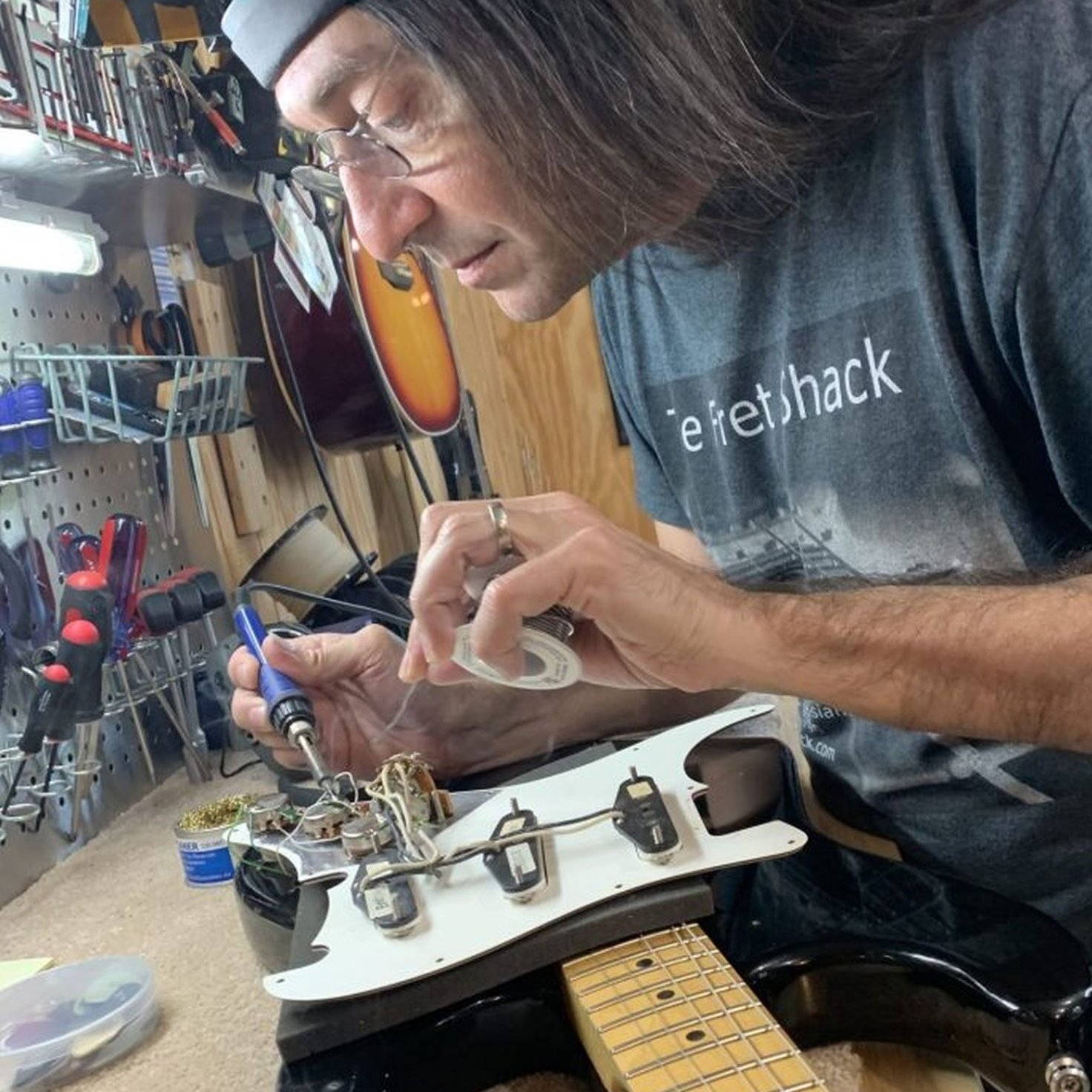
I’ve been playing guitar since I was a teen, so over 40 years now. And I’ve been working on guitars basically just as long. I was a tinkerer from day one, disassembling and reassembling my own guitars, modifying and upgrading parts, trying to find ways to make my guitars play better or sound better or look better. My guitar heroes hot-rodded their guitars, I figured I should too. I destroyed a few of mine on my way to getting good at it, and at that point I started working on friends’ guitars.
Professionally, I had a 20-plus year career in journalism and then in PR/marketing dating back to the early 1990s. In 2015, I opened The Fret Shack, a guitar and fretted instrument repair and upgrade workshop. It was meant to be a passion-driven sanity check and side hustle, something productive to do with my nights and weekends. I learned very fast just how much of a demand there was for what I do. Barely a year after we opened, I quit my day job to focus solely on Fret Shack.
Today Fret Shack services about a thousand guitars, basses and fretted instruments annually from our market and abroad. We are Louisiana’s authorized service and warranty center for several notable guitar brands. We’ve taken in work from most US states, and earlier this year we set a high water mark for the furthest a guitar traveled to us for service. It came from Greenland.
Which leads us to Carondelet. Fret Shack is a service-based repair and upgrade workshop. We decided around 2019, however, to also offer a made-in-house product as well. I chose guitar pickups because oddly enough, I didn’t really know much about them. I knew how different pickups sounded and how to replace and install them in instruments. But I knew very little about how or why they worked, and I found them subsequently intimidating. Learning to make them not only would give us that distinctly-ours product, it would curb my fear and intimidation and give me a new learning and creativity endeavor to boot.
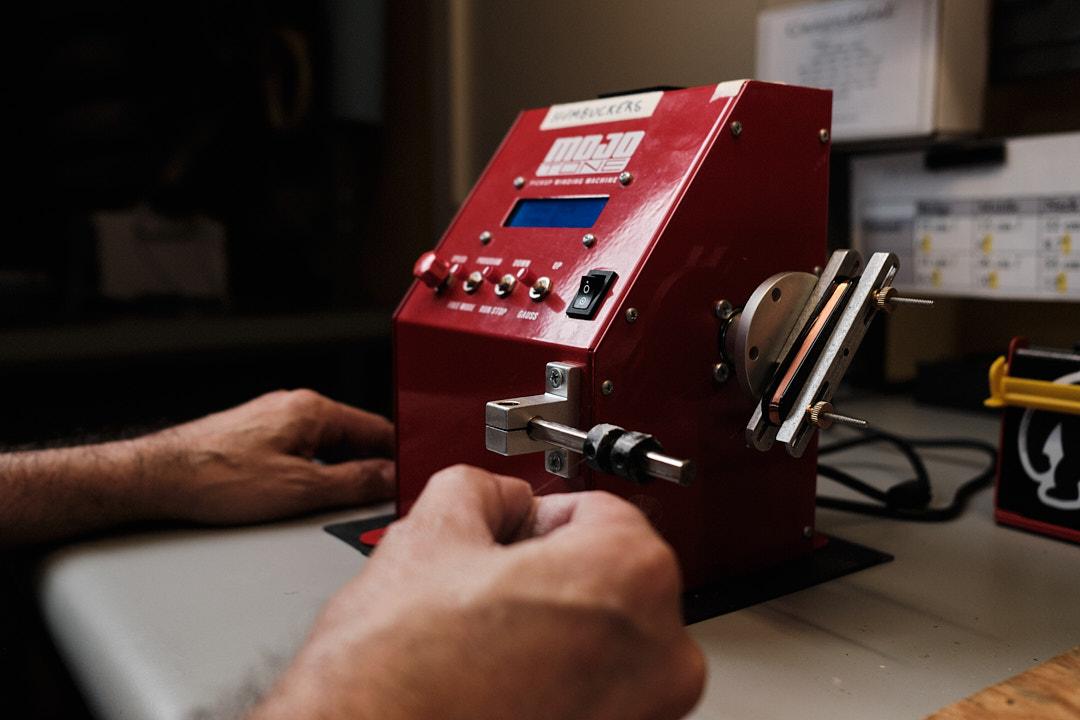
Guitar pickups are electromagnetic transducers, they are to a guitar what a microphone is to a vocalist. Pickups are mounted under the strings and are made of magnetic material and one or more finger-sized bobbins. Each bobbin is wrapped several thousand times with copper coil wire that is smaller in diameter than human hair. I hand-feed that coil wire onto the bobbins using a device akin to a repurposed sewing machine motor, spinning the bobbin at about 1200rpm. My hand controls the feeding pattern of the wire onto the spinning bobbin, and the tension of the wire as it’s fed. Those factors along with the number of coil turns, the thickness of the wire, the type of magnets, etc., dictate what the pickup sounds like, i.e., warm and clean for jazz, phat and gritty for blues and classic rock, twangy for country, pummeling and authoritative for rock and metal.
I tell people I’m not an engineer or a scientist as it pertains to guitar pickup design, I’m just a lifelong guitarist who knows what sounds and feels good and what doesn’t. I wind pickups most every day, I learn something new every time I wind, and my hand, eyes and brain get better with each repetition. I keep detailed notes so I can consistently recreate recipes that work and not repeat the ones that failed. On that note, I’m admittedly my own biggest critic – if I have any doubts about a pickup’s performance, sound, feel, build quality, or even demand or relevance in the marketplace, I won’t release it.
We opened Carondelet Pickups in 2020 and it’s been incredibly successful. I don’t know the exact number but it’s safe to say we have several hundred clients using our pickups, with the use list growing daily. And we’ve been fortunate to have connected friends in the industry who shared our name, product and philosophy with some really big names. Some of our more notable artists, users and fans include members of Aerosmith, Acid Bath, Candlebox, Cheap Trick, Kiss, Lynyrd Skynyrd and ZZ Top. Also the backing bands for Cody Jinks, Maddie and Tae, Scotty McCreery, Frankie Valli, Alanis Morrissette, among others.
The Fret Shack and Carondelet operations have grown enough that my daughter and former workshop apprentice Caitlin and her significant other Patrick, are actually moving from Arizona to Louisiana later this year to oversee Fret Shack’s daily repair/upgrade activities, so I can focus more on Carondelet. Caitlin and Patrick are both graduates of the Roberto-Venn School of Luthiery in Phoenix, the most prestigious guitar repair and building school in America. To have such capable talent at the helm, that double as the next generation taking the reins of the family business, what incredibly good fortune for the family and our clients alike.
How’d you meet your business partner?
My co-founder and business partner is also my partner in life, my wife Vonnie. She’s Fret Shack and Carondelet’s accounting whiz, the ledger keeper, the numbers cruncher, the vendors and accounts oversight, the taxes and insurance expert … all those brainy CFO things for which I don’t have the time, interest nor the skill set. She can even wind a set of Telecaster pickups if we are in a deadline pinch.
If you have multiple revenue streams in your business, would you mind opening up about what those streams are and how they fit together?
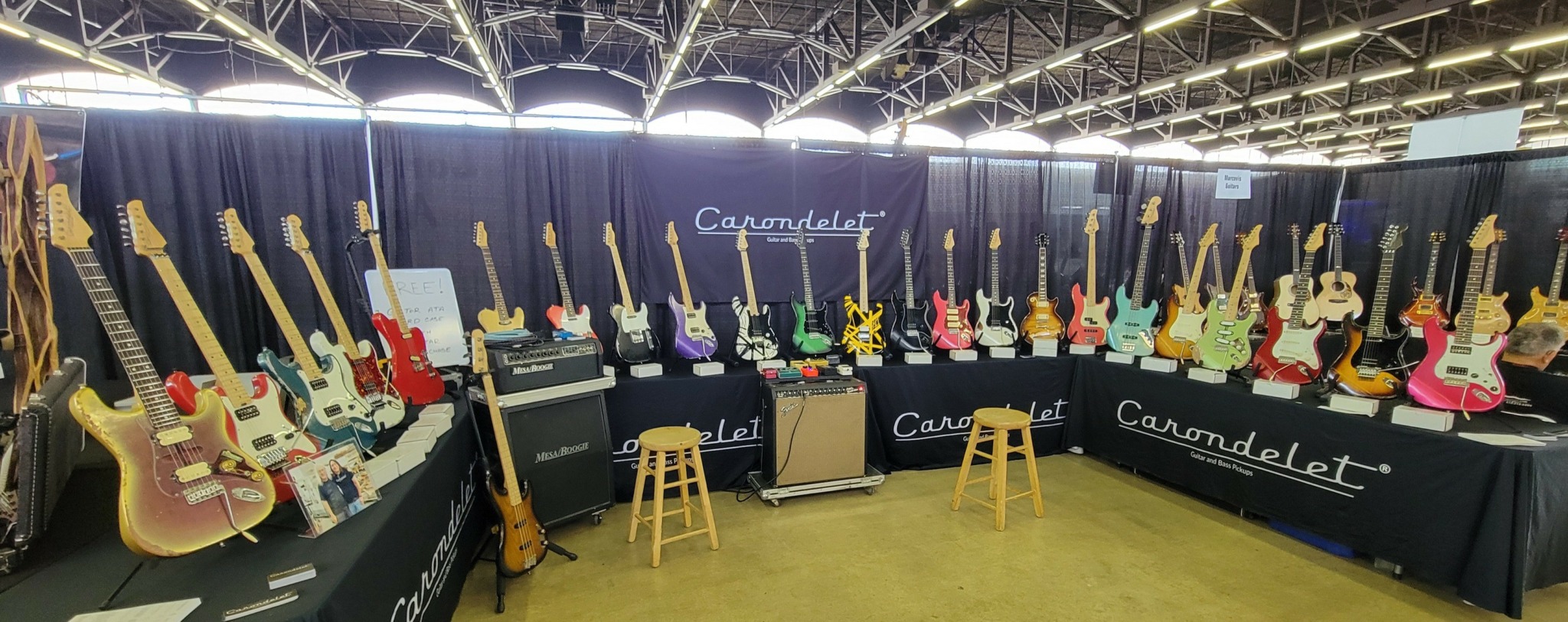
Carondelet’s secondary product and supplementary revenue stream is custom Carondelet electric guitars and basses. Early in the hand-wound pickup game, I started fabricating pickup demo instruments. The idea was instead of me using colorful adjectives to describe our pickups in the workshop or at guitar trade and consumer shows, I could just hand a client a guitar with our pickups so they could hear and feel them with their own ears, their hands, their ribcage.
Since I’m not tooled to make guitars from scratch, I have some of world’s best individual guitar components makers on board as contributors and sub-contractors. One of our vendors for guitar necks, for example, is Grover Jackson of Jackson Guitars fame. He’s made guitars for some of the biggest names in the guitar world, players like Edward Van Halen, Randy Rhoads, Steve Vai, Jeff Beck, David Gilmour. Similar acclaim is found among our guitar body makers, our hardware fabricators, our painters, even our guitar case supplier. My contribution to the guitars is only what I do best – pickups and electronics, fretwork, final assembly and final setup.
Client feedback very often goes like, “I love the pickups but I also love this guitar, will you sell me the entire package?” Absolutely, I’ll just build a new demo guitar to replace it. Then that replacement demo sells, so a new demo replaces it, and the pattern continues. Or people might play a Carondelet demo and want one just like it but in a different color or electronics package. So I make that happen. To date, we’ve sold between 70 and 80 Carondelet guitars and basses. They tag out anywhere between $2K and $3K depending on specs, features and options.
Contact Info:
- Website: https://www.carondeletpickups.com/
- Instagram: https://www.instagram.com/carondeletpickups/
- Facebook: https://www.facebook.com/CarondeletPickups
- Youtube: https://www.youtube.com/@CarondeletPickups
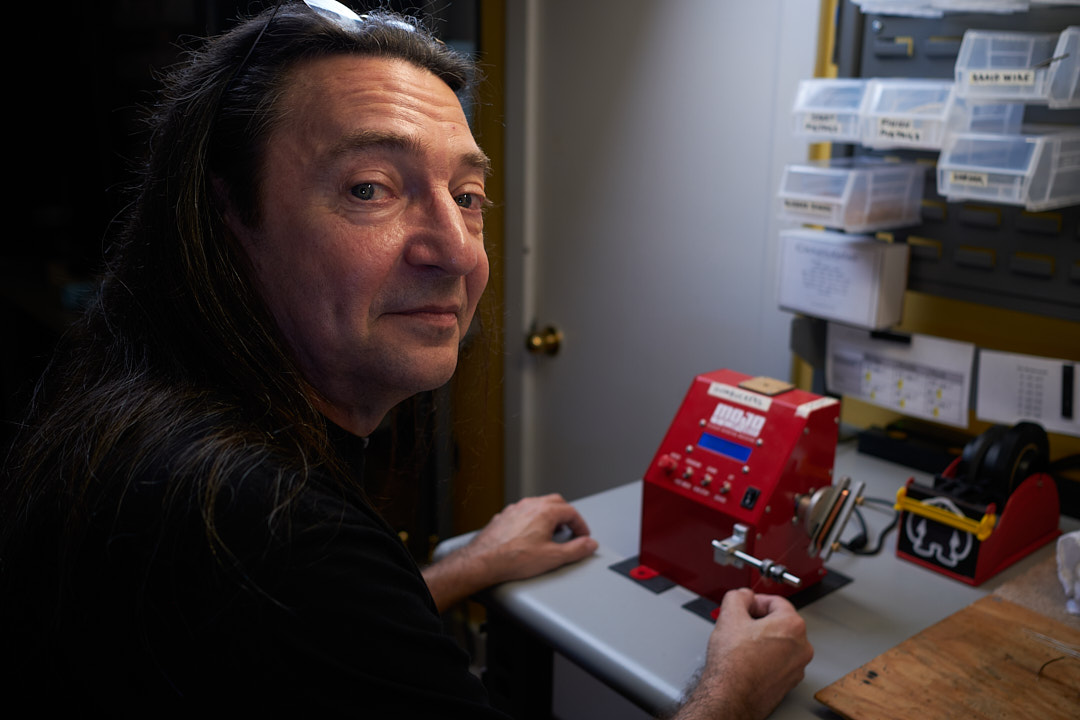
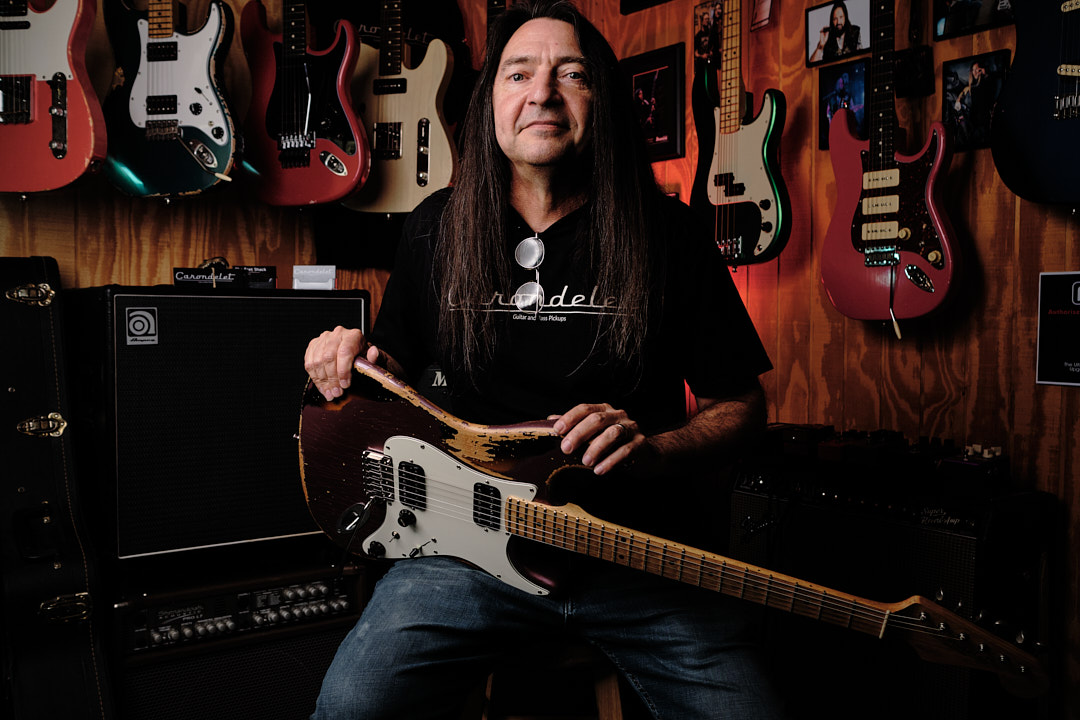
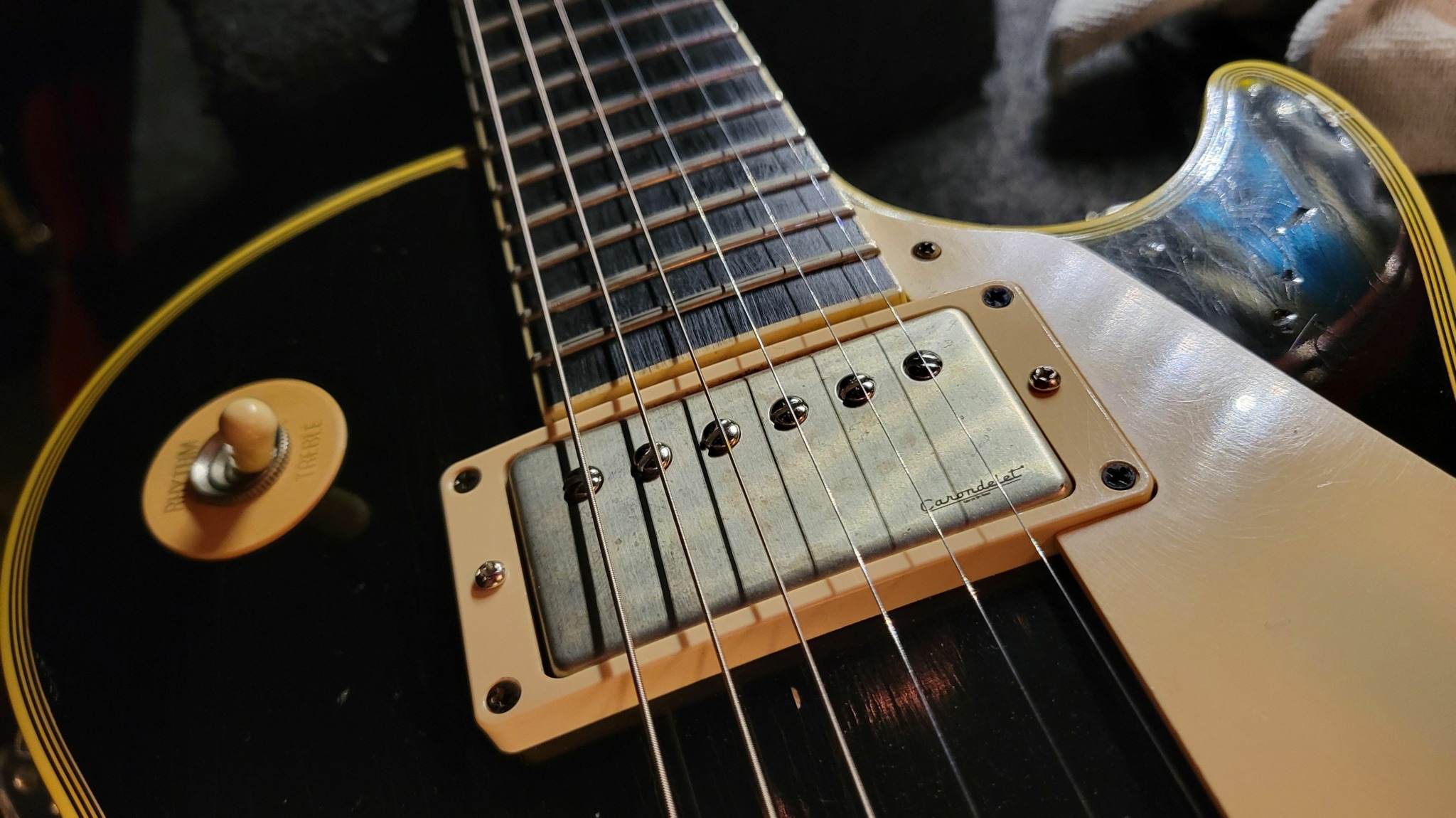
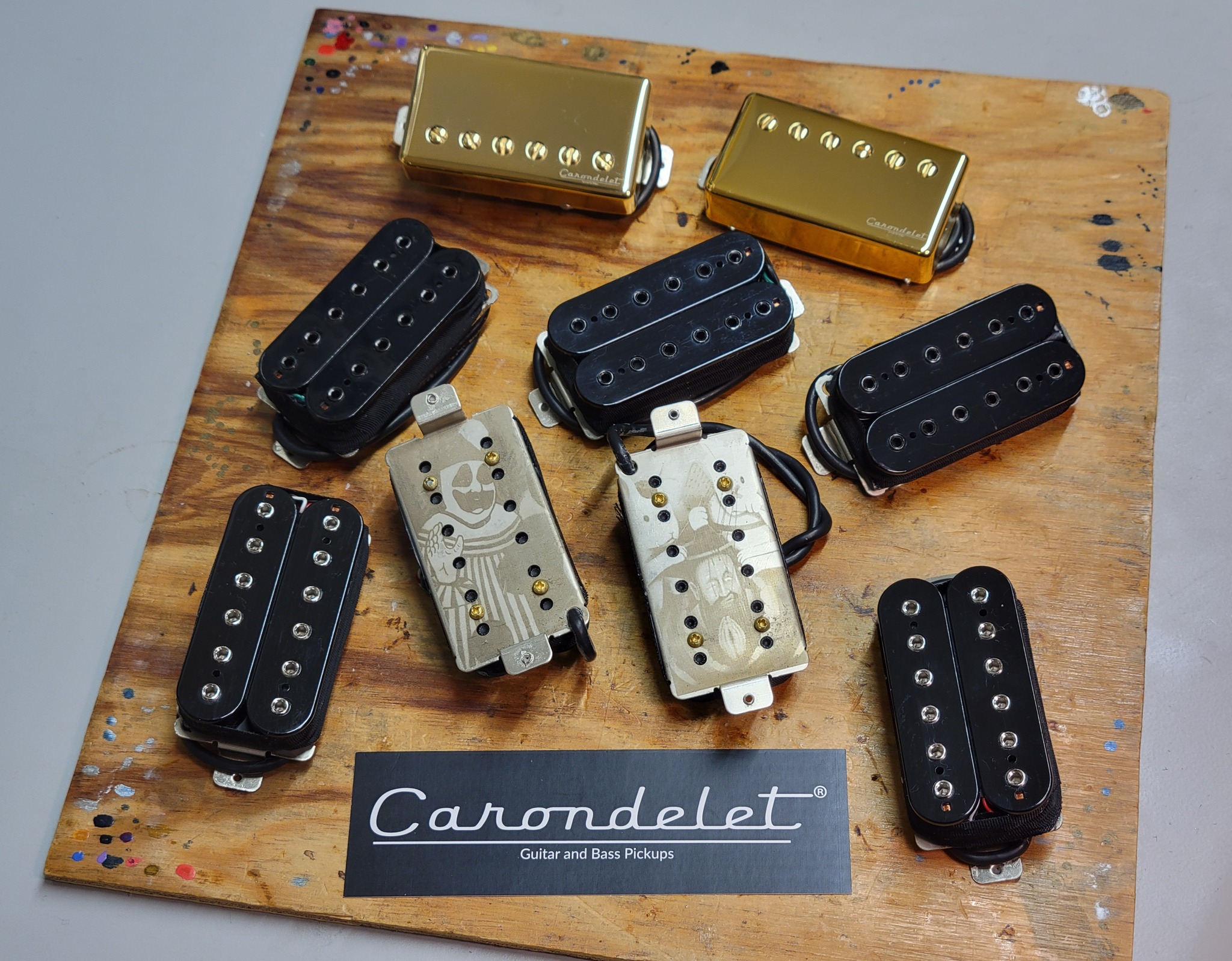
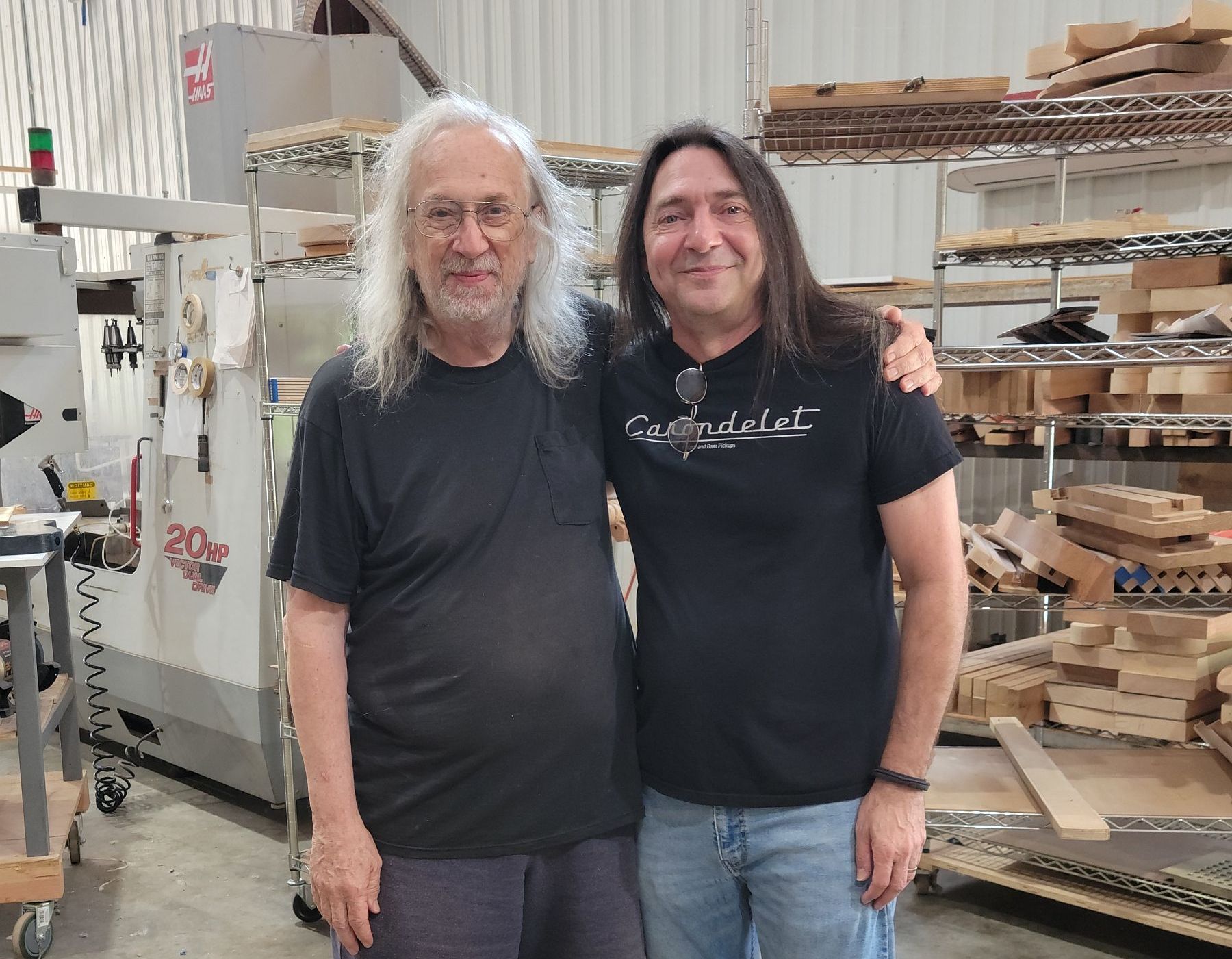
Image Credits
Carondelet Pickups