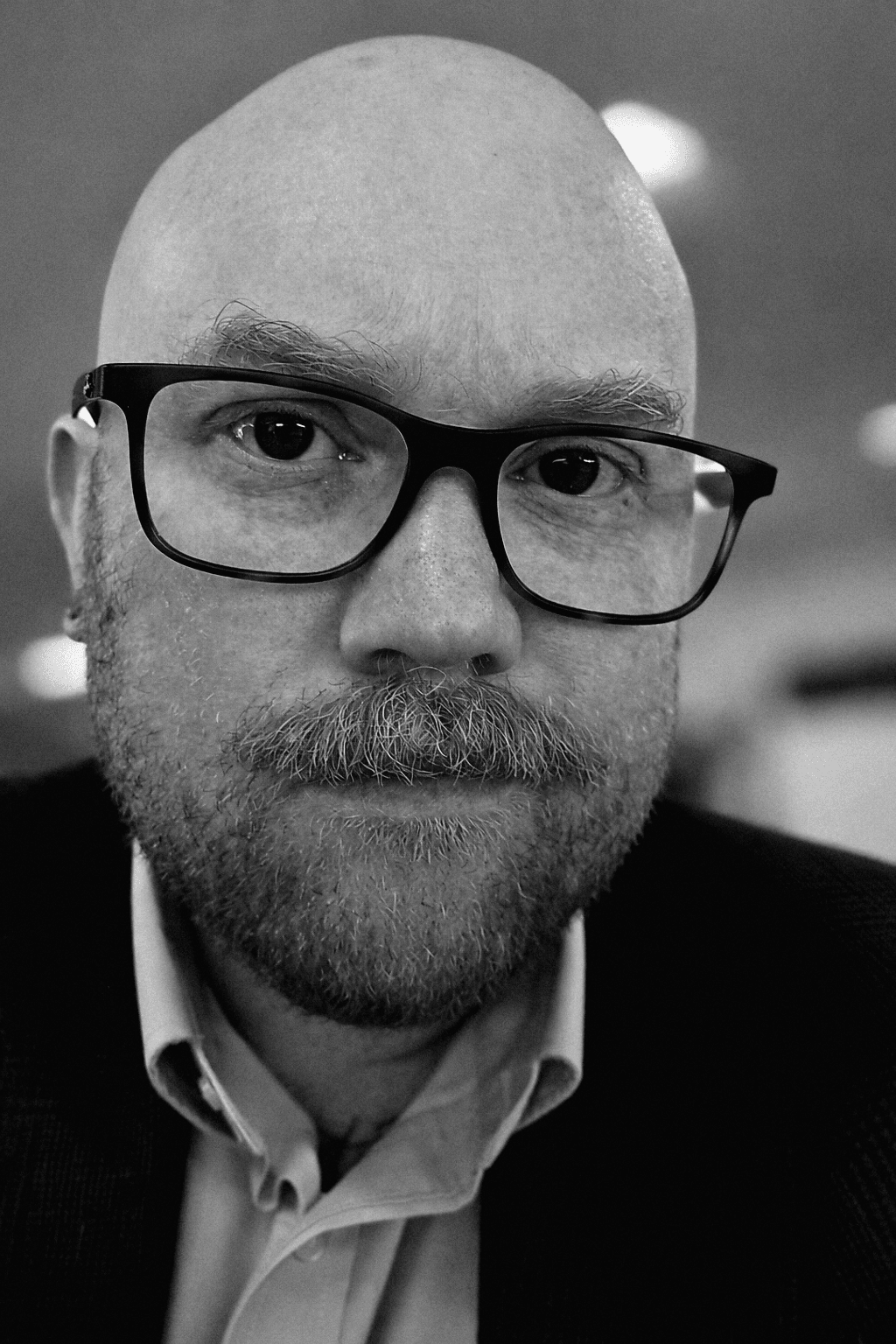

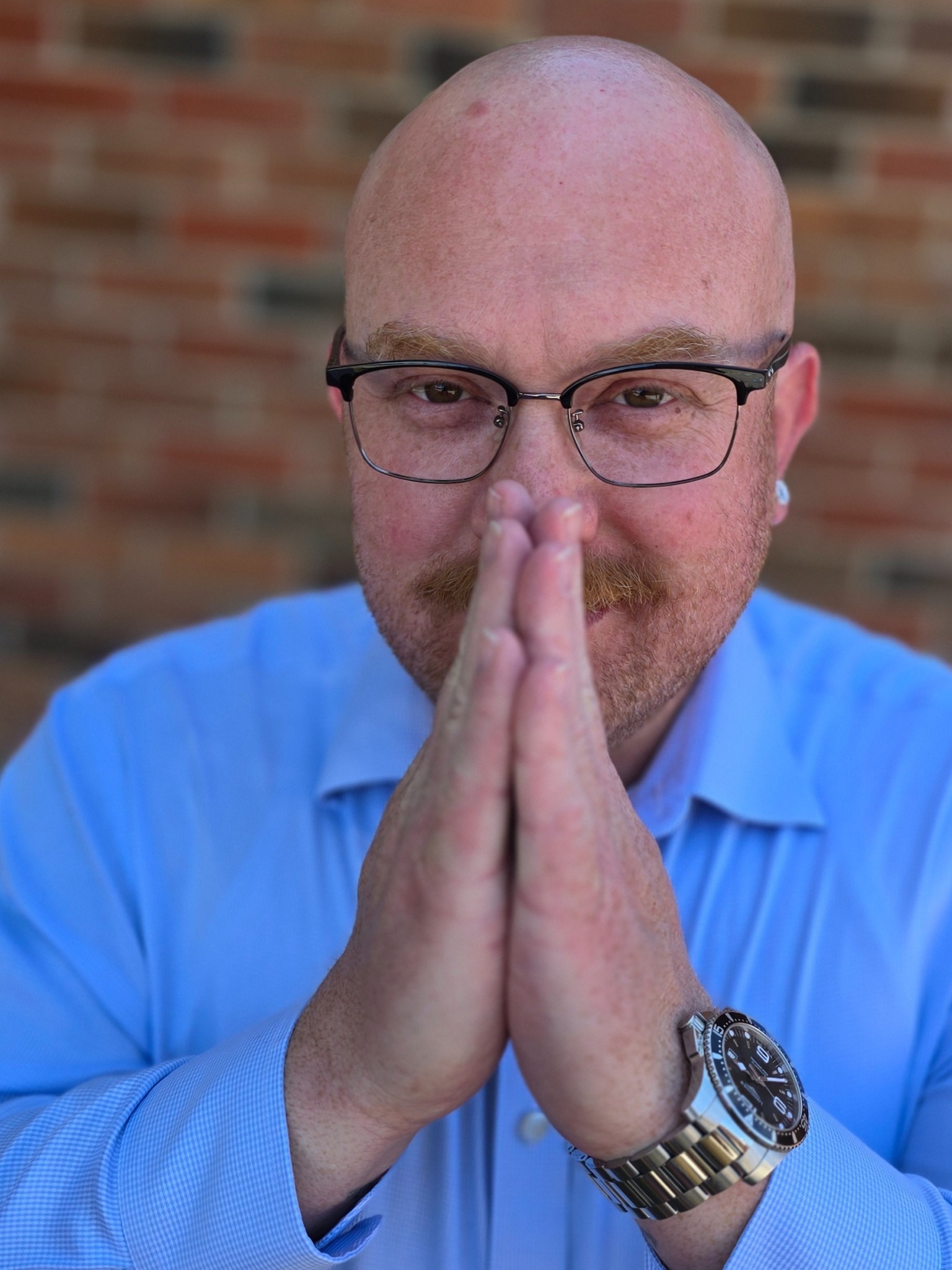
We caught up with the brilliant and insightful Jason Phillip Scott Stalder a few weeks ago and have shared our conversation below.
Jason Phillip Scott, thanks for joining us, excited to have you contributing your stories and insights. Almost all entrepreneurs have had to decide whether to start now or later? There are always pros and cons for waiting and so we’d love to hear what you think about your decision in retrospect. If you could go back in time, would you have started your business sooner, later or at the exact time you started?
I was about twenty-two years old, working the graveyard shift in a transitional facility filled with teens that caught multiple sustained felony charges. In the early hours of my shift, we might be involved in some action: runners, fights, riots, medical emergencies – whatever. But around eleven, things settled down and got really quiet. I’d wondered since college if I had it in me to write a novel; I started my first on the graveyard shift, knocking together words between 11pm and 5am.
The story was told in the first-person, with the main character being a telephone psychic who fell in love with a phone sex operator. He ends up catching a murder charge for killing her abusive boyfriend in self-defense. While he isn’t convicted, he ends up homeless, living on the street, where he becomes something of a street prophet before he takes to traveling the country in train boxcars, searching for the girl he lost.
Mind you, this is the most you will ever hear of this story. After three rejection letters from publishers, I filed it away, believing maybe I wasn’t cut out to write novels.
Writing court documents with the Probation Department eventually turned into professional opportunities writing and administering grant programs with the State and then later consulting as a grant writer. I made a pretty solid living slinging words for other people – telling compelling stories and making meaningful arguments so they could get paid. I was successful at it, tracking winning proposals at 92% of submissions in a field where most grant writers had success rates in the teens. It’s a specific skilled type of writing, which great – but it was never my voice or ideas.
Of course, the irony is that my writing (and stubborn determination) was the key to my professional success all along. I spent more than a decade selling my words to others, writing passionately to pay the bills instead of paying the bills with writing I was passionate about. Do I wish I had started sooner? No, I started soon enough, and the journey taught me a lot about writing, government systems, and life. But I gave up on the dream aspect too early.
It took the death of my father for my paradigm to shift; there is only so much time for any of us. My novels may not be as financially profitable as consulting and grant proposal development; I’m still an unknown voice in a sea of people screaming for attention. But there is something priceless that comes from never giving up on a dream, despite failure, loss, frustration, and the grind of learning.
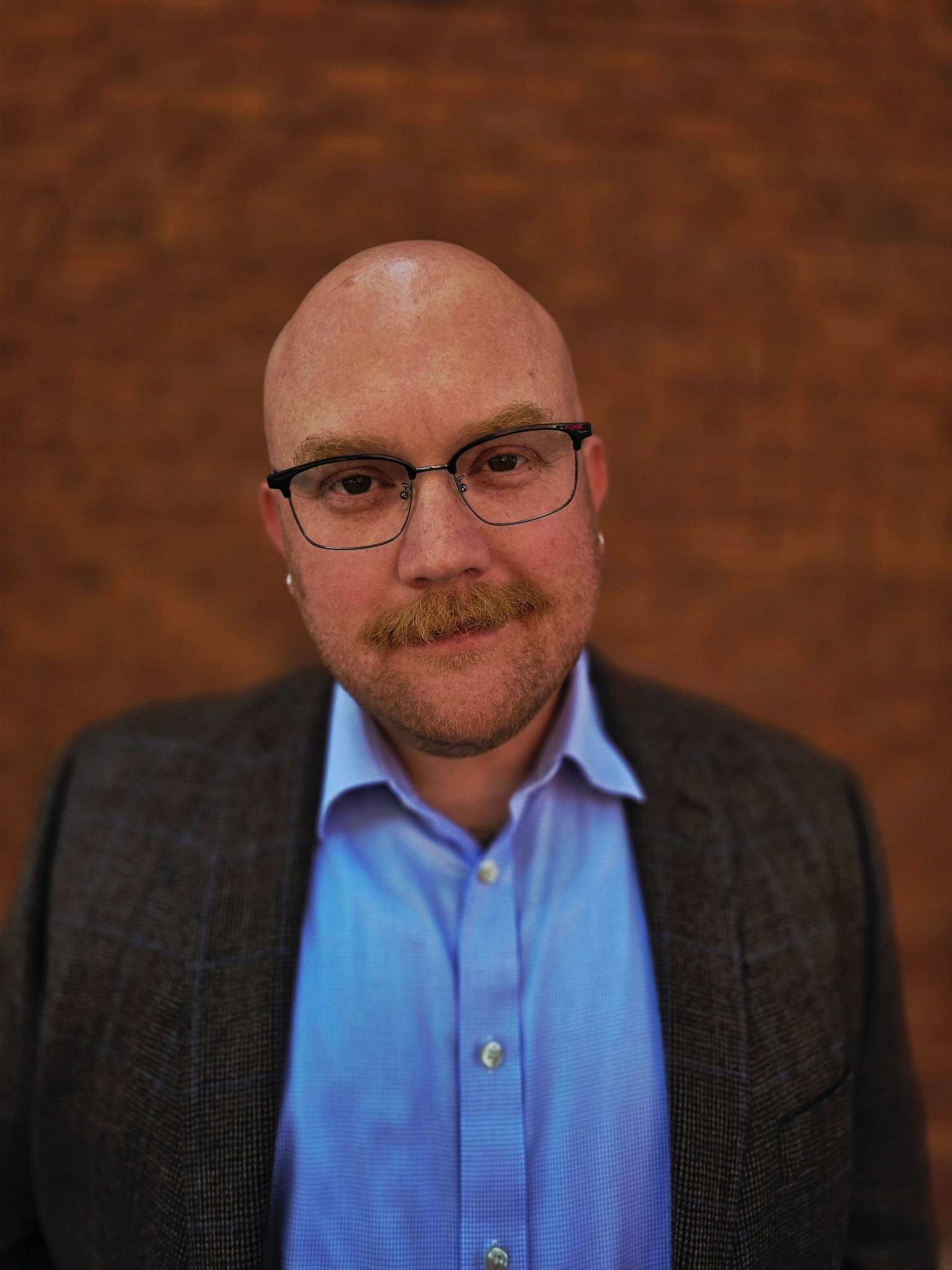
Jason Phillip Scott, before we move on to more of these sorts of questions, can you take some time to bring our readers up to speed on you and what you do?
My name is Jason Phillip Scott Stalder, and I am a writer, word-slinger, father, life-long learner, willful rebel, and an intentionally deep thinker. My books are published under J.P.S. Stalder, because my full name is too long to fit easily on a 6×9 book cover. I write compulsively, almost involuntarily; it’s like breathing or sleeping for me. I wake up at 3am sometimes and jot down notes on a notepad; I scribble words and ideas on napkins that will be revisited sometimes years later. I’ve baked words into the cake of my life. When the cake comes out looking funny, and I start again. And then again and again until that word cake tastes delcious.
I write speculative fiction, which is just a large umbrella term for near-future settings with dystopian, technological, and sci-fi themes. To me, categorizing it like that makes it sound sort of cheap – like putting my heart and soul into some marketing category. If we were to meet face to face, I would talk to you about trying to tell intimate, deeply human stories that exist at the intersection of power dynamics, technology, psychology, and philosophy. I want to go on adventures with words. I try to tell stories that don’t give simple answers; I don’t have simple answers. Writing outside the box like this can be challenging in the current climate of 15-second attention spans, but like a plague doctor examining a patient, I want to encourage deep thought and conversation. That’s my prescription for what is killing us.
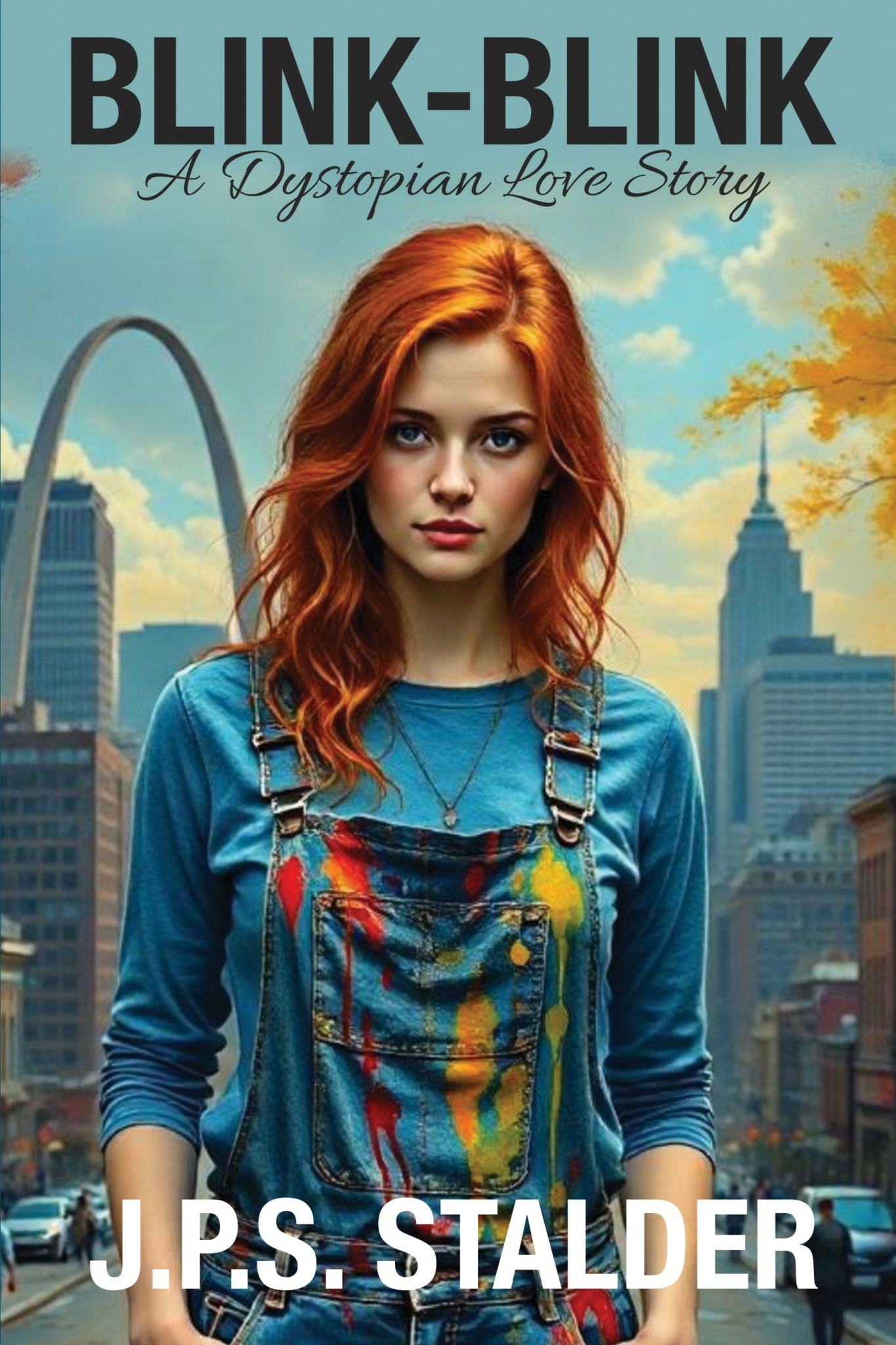
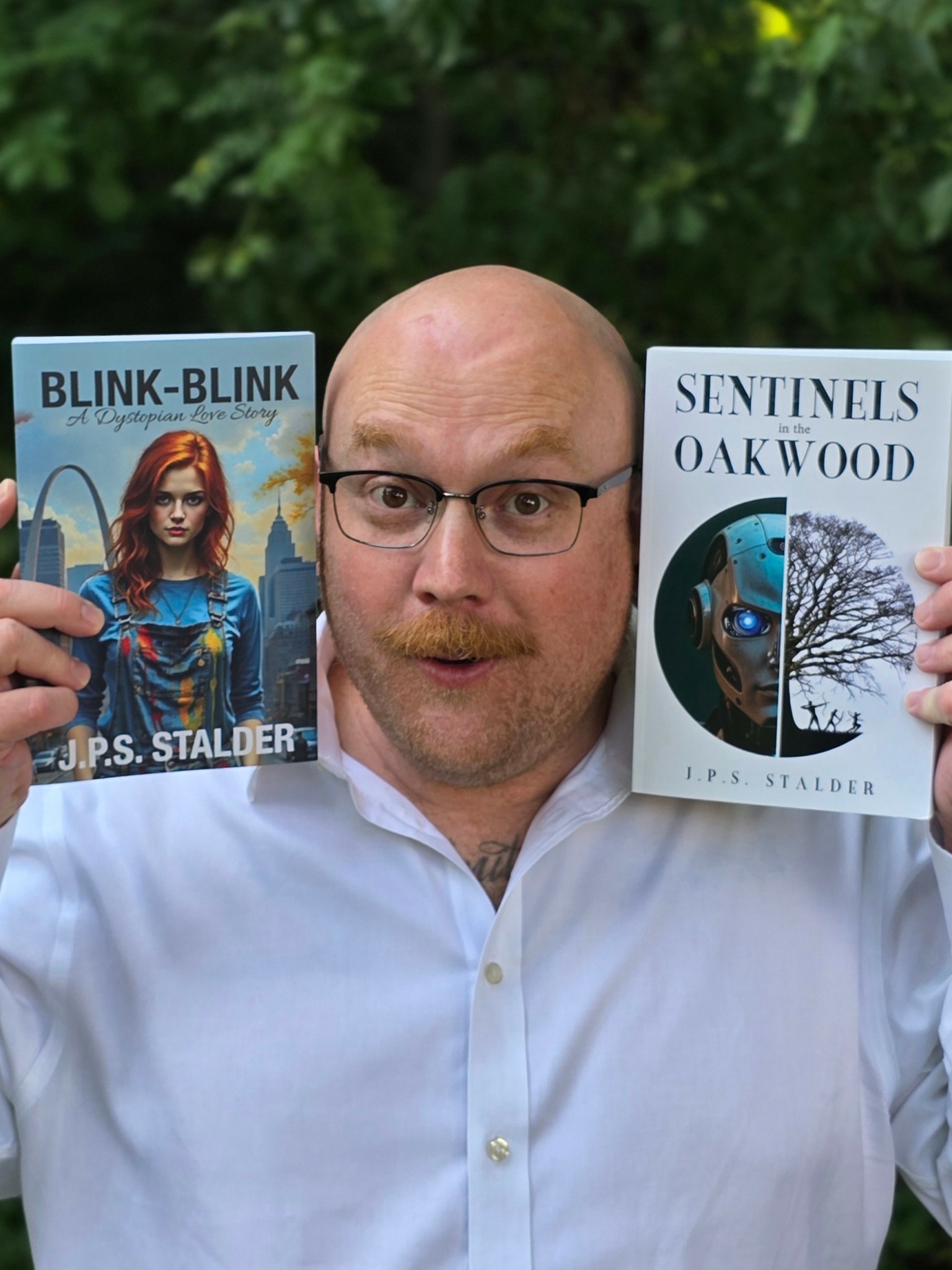
Of my two novels that have been released, “BLINK-BLINK: a dystopian love story” has proven the most successful; it’s only been out for less than a year. Critics have called it a post-gothic Americana, pointing to it being “Bold, lyrical, and unsettlingly timely…” Cool – that sounds nice, I guess. But those critics aren’t you; I don’t know anyone that decided to spend 10 hours reading because some critic said something was poignant and relevant. Critics didn’t just spill coffee on the front of that shirt they spent ten minutes ironing while their kid was screaming about being out of cereal. Why should you care what a critic says?
I just pulled up a recent review that was left by a random reader, and this is what “Darci P” has to say, “Blink-Blink is a whispered challenge—a dystopian love story that dares to ask what resistance looks like when it’s rooted in art, emotion, and hope.” That I dig. It tells me that Darci felt something, enough so that she wanted to speak out about it to tell others.
What I’m proud of in my work is that my stories rely on an earnestness rather than tropes. The words are rooted and evoke authentic challenges, whispering truths we’ve long let drown out with the noise. I don’t use flashy gimmicks or shock-factor to hold a reader’s attention; I’d rather have a conversation with that soft muscle in their chest.
For you, what’s the most rewarding aspect of being a creative?
One anonymous voice bobbing in a sea of six million other voices has a challenge. You can write the most beautiful prose ever written, and you’ll still be just a clanging buoy, tossed about by the waves. But occasionally, something I wrote connects with someone in a real and meaningful way, and they reach out and say something – that last part is the key. Calling it “validation” doesn’t feel genuine in the era of social media likes and hashtags. The term falls flat when ninety percent of content is rehashed and repackaged dribble you’ve seen before.
When I get a call, a text, an email or an anonymous review from someone my work connected with, it doesn’t feel like validation. It is more like an ethereal hand on my chest and the voice of a stranger saying, “I see it like that too, and I felt it.” That sounds like resonance and smells more like a connection between humans than it does a thumbs up to my effort. I could make zero dollars from my writing and still chase the dream for that connection alone. Meaningful contributions to someone’s mind and heart are difficult to put a price tag on.
Let’s talk about resilience next – do you have a story you can share with us?
So, my dad passes, and I take a year to think. Literally. Then, I start writing “Sentinels in the Oakwood” the first book I’ve attempted in 17 years. I finished it, and the story is good. But I know I need help, and I know nothing about the publishing industry. I reached out to only a few publishers, picking only hybrid/partnership publishers over concerns I would sell the rights to my book baby. I was one hundred percent convinced I needed editorial help, marketing help, everything – I signed the contract that promised it would do those things.
When “Sentinels in the Oakwood” was released, it looked as if the publisher had uploaded an unedited version (or really early version) of the manuscript. The first books that went out were full of errors and corrections we’d already resolved during the publishing process. I was mortified. Now, my name is attached to a book that I have under contract and outside of my control, and it is far less than I wanted it to be. The story is still good; it’s just lacking polish.
With keen awareness of the danger in trusting “professionals” to be professional, I independently published BLINK-BLINK. I did everything in my power to polish it as finely as I could, but I’m sure there are still some errors. That said, I’ve read some NYT bestsellers and found errors; it happens. I’m immensely proud of BLINK even if it’s not perfect, but I wonder how much more success it could have had if it were supported by a proficient publisher, a marketing team that knew what they were doing, and real help. It takes resilience, tenacity, and stupid levels of stubbornness to shake off failure and strive to make something beautiful. That’s normal for anyone trying to build a business, but it’s even more amplified when you write something that is intimate and personal that will be judged by the world. All I know how to do is hoist the black flag and refuse to surrender.
That said, I completed “Artificial Messiah: legacy of a fallen prophet” sometime around New Year’s Eve, 2025. It is deeply personal, spiritually vulnerable, culturally critical, and psychologically thrilling. If haters had a problem with some themes in BLINK, buckle up; I’ve more coming for you. But this time, I’m only pursuing traditional publishing. And if I can’t find a traditional publisher, maybe it never gets released. I had to get to the point where I could value the chance of success for my work more than I valued my ownership of it. I’ve heard other writers talk about knowing a book is finished when you feel disconnected from it – it feels like an orange that you can hold in your hand, not something you made. It lives on its own. I’ve felt that with all of my books. The question becomes, what do you do with an orange? Give it to some cagey character who will step on it? Juice it, eat it, or consume it? Or do you take its seeds and plant an orchard?
Contact Info:
- Website: https://www.jpsstalder.com/
- Instagram: j.p.s.stalder
- Facebook: JPS Stalder
- Youtube: https://youtu.be/fOctm–H8QQ?si=TvV8N5PGd_fvxZrV