

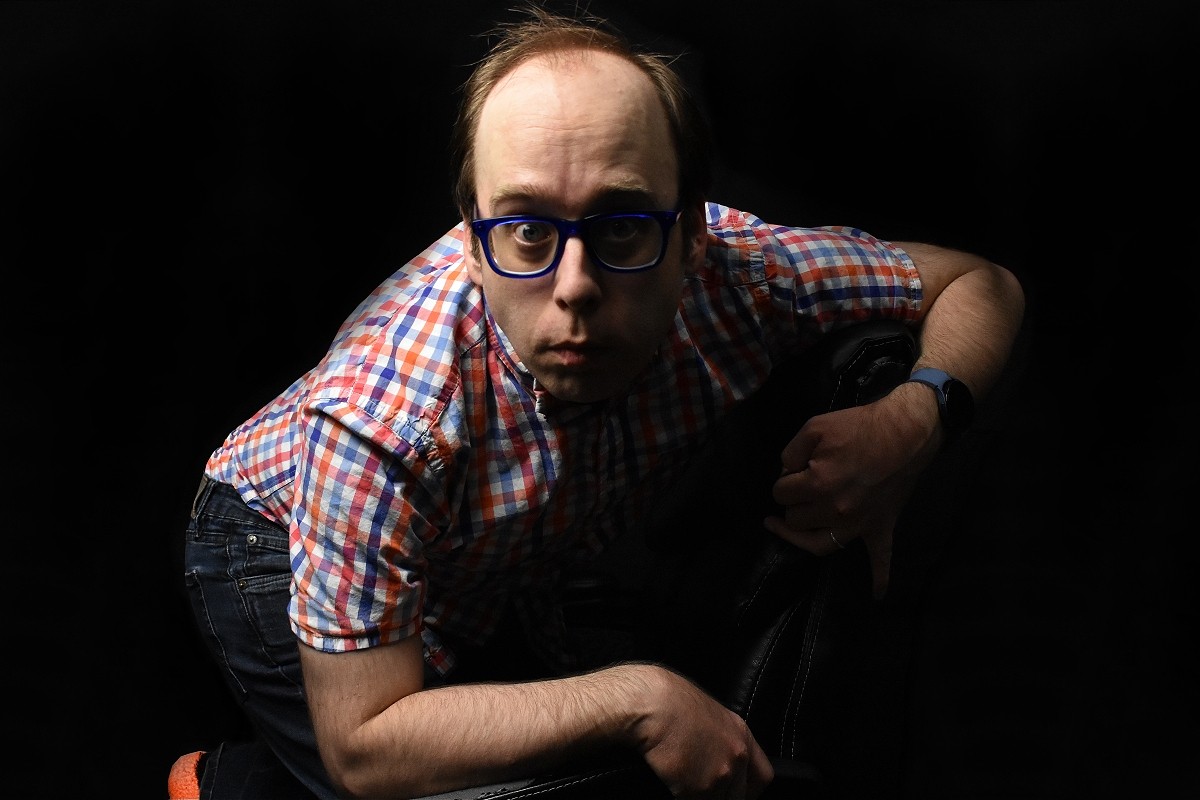

We recently connected with Jason Klamm and have shared our conversation below.
Jason, thanks for joining us, excited to have you contributing your stories and insights. We’d love to hear about a project that you’ve worked on that’s meant a lot to you.
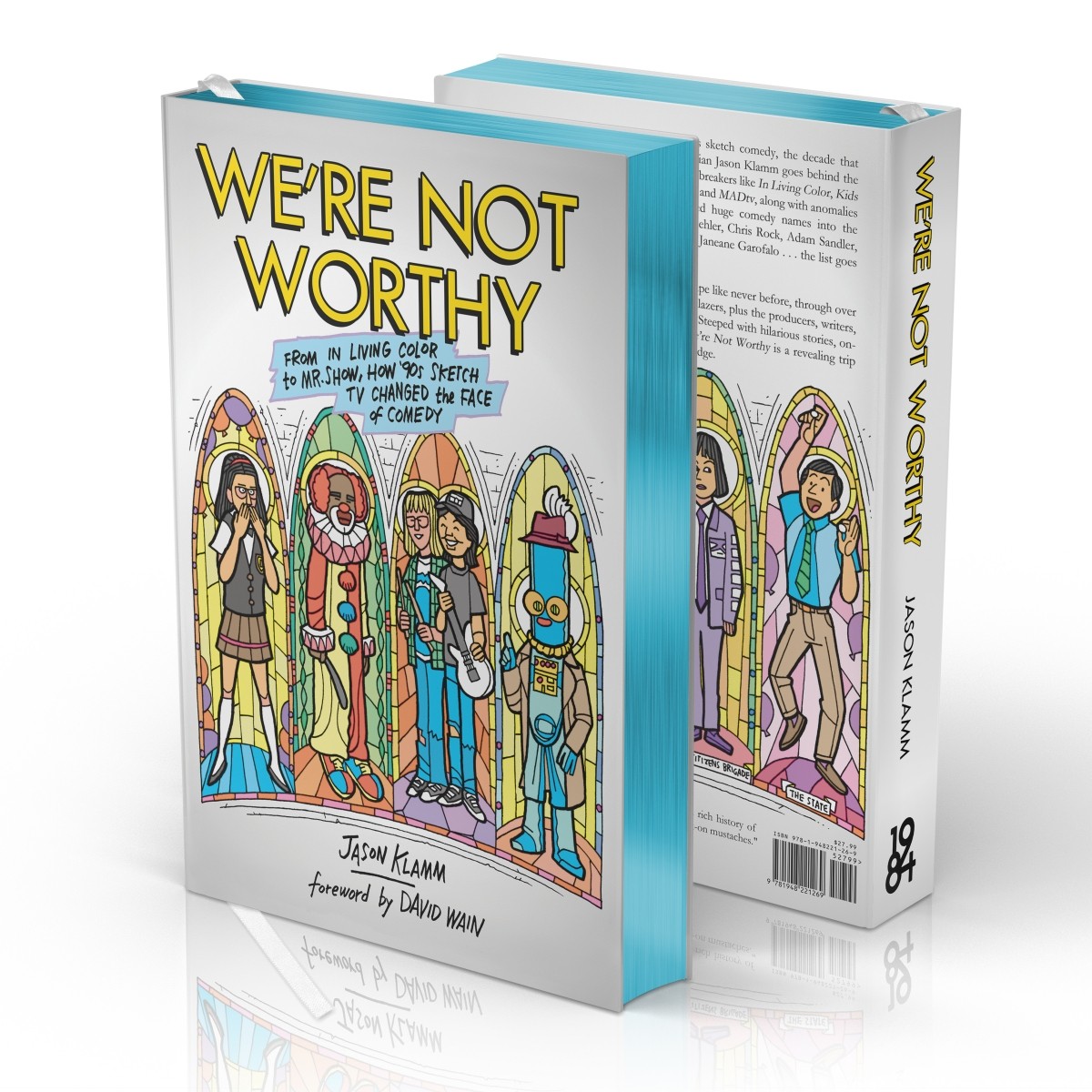
The most meaningful project I’ve worked on in my career is my latest book, “We’re Not Worthy.” It’s the history of 1990s TV sketch comedy, which I wrote for a number of reasons. First, I’ve been performing sketch and improv now for thirty years (I started when I was 13) and have been watching and listening to sketch since the early ’90s. Fortunately for me, the ’90s was also the most prolific decade in the history of sketch comedy, and it created so many TV and movie stars that it seemed inevitable that someone should write this history. As a lover of comedy and specifically sketch, I felt like I was the right person to do this.
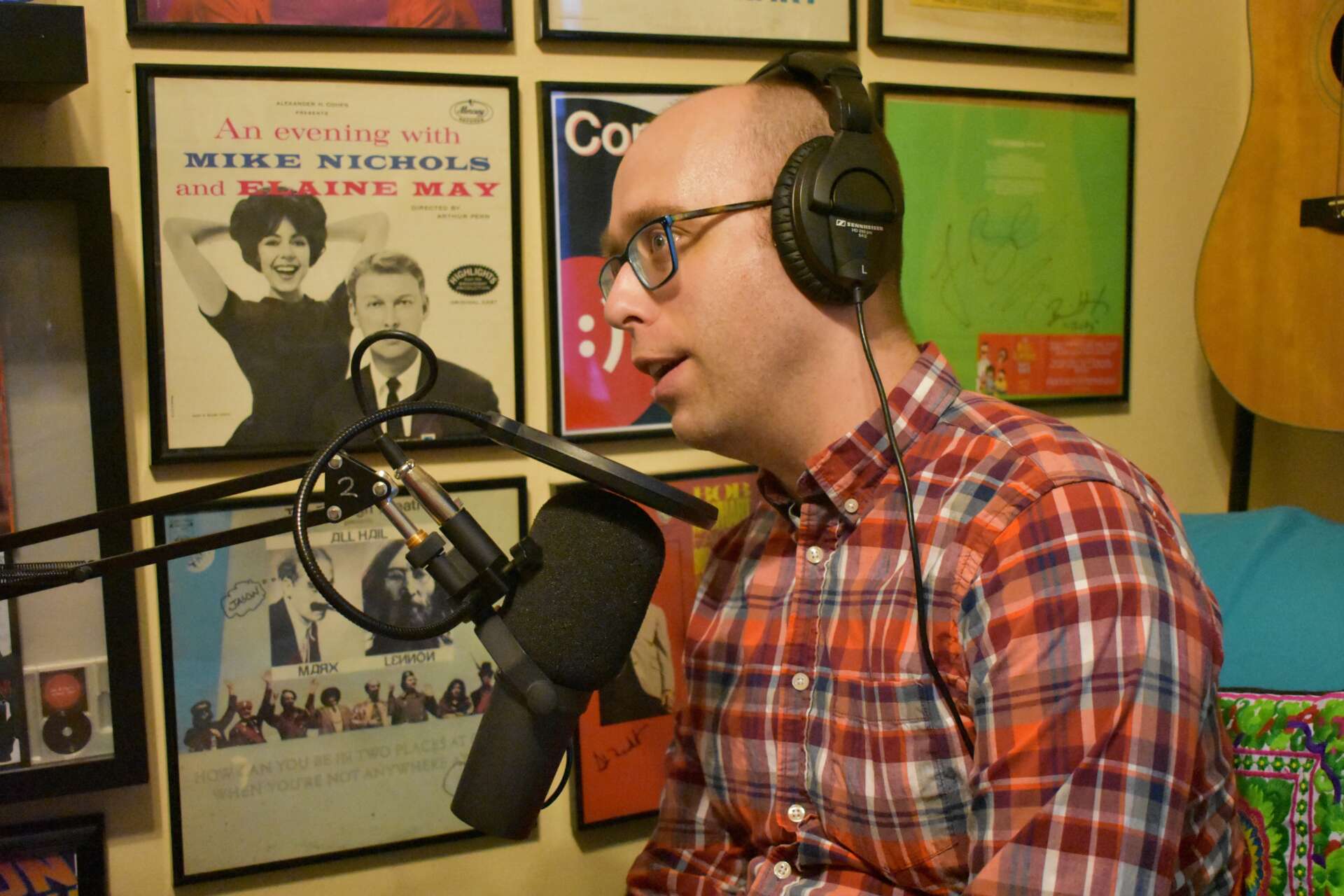
I made my best friend over comedy, and I made the comedy I enjoy the most with my friends growing up, so the book is also a love letter to that era of my life and those friendships. As a result of over a decade of interviewing comedy names on the “Comedy on Vinyl” podcast I was able to get some fantastic new interviews with people I already knew, as well as many more – including the likes of Carol Burnett and Bob Odenkirk – who I’d never had the chance to speak with before. In total, I interviewed 150 people for the book, including actors, writers, producers – everyone in front of and behind the camera on these ’90s shows, as well as some shows throughout the history of TV sketch, going all the way back to the 1940s, to the first mainstream TV sketch show, “Your Show of Shows.”
Not only have I spent my career making comedy, but I’ve also used that time to learn how to archive my comedy, and those of others, so this book is the paper version of the sketch comedy museum I would create if I had the ability to do so. Exploring the human side of making comedy – including shows you’ve never heard of, or which were never given a chance – is a love of mine. I believe firmly that unknown isn’t the same thing as inconsequential.
As always, we appreciate you sharing your insights and we’ve got a few more questions for you, but before we get to all of that can you take a minute to introduce yourself and give our readers some of your back background and context?
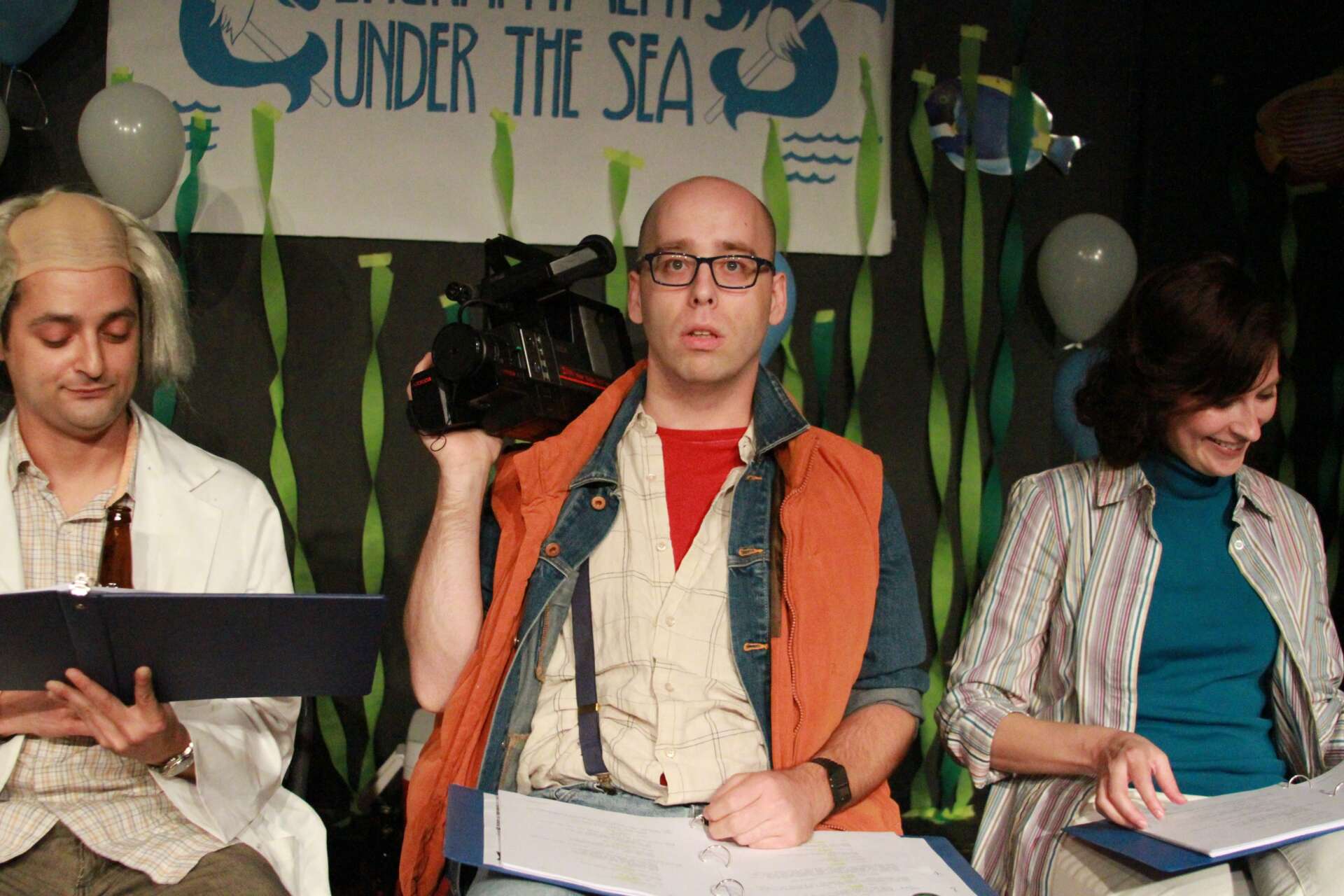
After years of creating sketches with my group, Dan and Jay’s Comedy Hour, in 2001 I directed one of the world’s first viral videos, “Tunak Tunak Tun,” which is a lip dub/parody of an existing viral video of the same name, by a Bhangra Pop Star named Daler Mehndi. After graduating from Columbia College Chicago, I moved to LA, and shortly after had another hit on one of the world’s first video sharing websites, KnowItAllVideo.com, with my video “Dinosaurs: They Certainly Were Big,” which won a short film contest, played on Frontier Airlines, got me plaudits from the science community, and got me my first interview with the New York Times.
I spent the next few years as an early adopter of many different online media, trying to find one that stuck. Eventually, I independently produced three feature films, including the documentary “Lords of Soaptown.” I then turned my production company, StolenDress Entertainment (stolendress.com) into a podcast network and audiobook production house. We still produce short films, like my recent documentary about the sketch group The Firesign Theatre and their archivist, but our primary concentration is on audio production. I’ve personally produced over 1,200 podcast episodes and have read and produced numerous audiobooks.
What do you find most rewarding about being a creative?
Being an artist is a necessity for me, as its the purest way I know how to express myself. Like a lot of artist, that calls for a lot of therapy, as the art should be the supplemental expression, not the other way around. It does, however, allow me to bring out certain parts of me that don’t make sense to express elsewhere. As an actor onstage, I get to use my voice and body to express my own joy through the emotions of whatever character I’m lucky enough to embody. Even when I’m doing a stage show where I’m mostly doing impressions, or aping someone else’s film performance (like in the show “A Drinking Game,” which is stage readings of famous films) I’m expressing my love for the performance, or my desire to add something to it when it comes to a bit part.
The immediate reward of art is the expense of energy, and the long-term one, if you’re lucky enough to find it, is getting a positive response from your audience. Whether it’s a positive book review, a few nice words about a podcast, or someone telling you you sounded “just like that guy from the movie,” that is hard to beat. The other, often less-tangible one – because we often aren’t looking for it – is when you realize you might have inspired someone else to do the same thing, or to follow your lead in terms of your method. You probably inspire people more than you realize.
Is there a particular goal or mission driving your creative journey?
My goal as a kid was just to make comedy, until I saw the film “Blazing Saddles.” That was when I realized what comedy was about, and what it had the potential to be. Comedy has always been about poking holes in authority and power, no matter what people will tell you. The reason “punching up” has been the method of the greatest comics is because they realize that absolute power corrupts absolutely, but that the most powerful people are also usually the most fragile. No one is saying that comedy has the power to change the world on it’s own, but it can inspire change and change one’s perspective.
Comedy’s potential, then, is to be an agent of that perspective change. To so powerfully make you laugh that you realize there’s something more to the story. Blazing Saddles is very specifically geared toward poking holes in ignorance, bigotry and racism. I was raised by staunchly anti-racist parents, so when I saw that I didn’t just have to be angry or sad about bigots, I could laugh at them, I immediately saw my calling. If I was going to write a joke or a script it was going to – somewhere – be about smashing ignorance, one way or another. Comedy with an agenda is okay, as long as it remains comedy. If it punches up, it’s probably going to still be a comedy.
Contact Info:
- Website: https://jasonklamm.com
- Instagram: https://instagram.com/jasonklamm
- Facebook: https://facebook.com/itsjasonklamm
- Twitter: https://twitter.com/jklamm
- Youtube: https://youtube.com/jklamm
- Other: https://sketchcomedybook.com
Image Credits
Photos by Jen Smith