



Alright – so today we’ve got the honor of introducing you to Jane Korneyko. We think you’ll enjoy our conversation, we’ve shared it below.
Jane, thanks for joining us, excited to have you contributing your stories and insights. How did you come up with the idea for your business?
I spent over a decade as a transformation consultant across healthcare, law, and professional services in Australia. Mergers, quality frameworks, digital transformation, operational redesign. My job was to walk into organisations where the structure had outgrown the strategy, and rebuild what wasn’t working.
The problems were almost never unique. Processes layered on top of processes. Workarounds that became permanent. Systems that should talk to each other but never do. More people, more approvals, more meetings about meetings, more time spent navigating the machine instead of doing the actual work. And no matter how good the fix, I was always arriving after the complexity had already calcified into something that cost millions to undo.
So I started asking a different question. What if these problems never existed in the first place? The answer: startups. Get to founders before the bad habits, the broken processes, the unempowered teams. Before any of it calcifies. Stop fixing from the top down. Start empowering from the ground up.
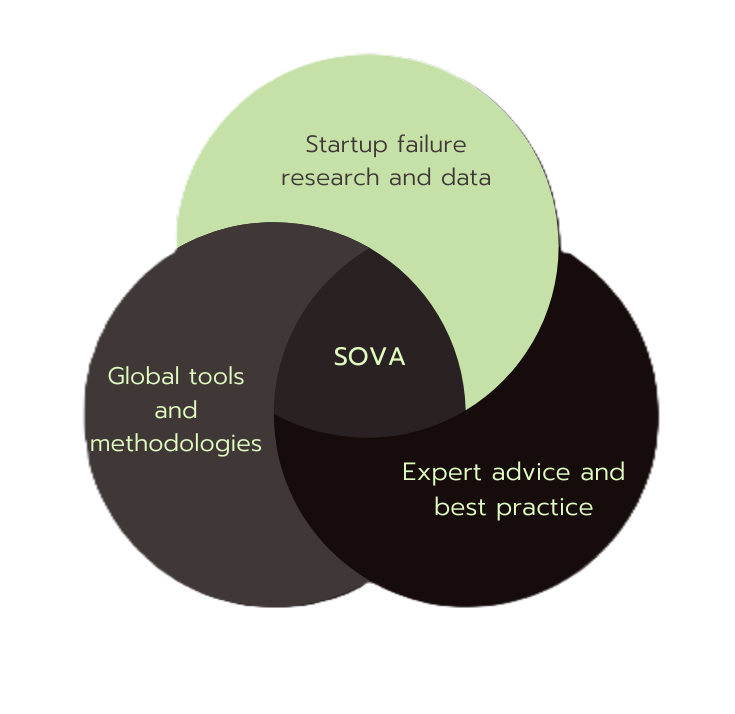
I started researching why startups fail. Not the surface reasons investors talk about, like running out of cash or bad product-market fit. Those are symptoms, not root causes. The structural ones are all underneath. The patterns that repeat across industries, stages, and founders. What I found was significant; the help startups so desperately needed was either too generic to be useful, too expensive to be accessible, or too fragmented to act on. Plenty of advice existed but nobody was showing founders how the parts of their business connected, how a gap in one area quietly creates problems in three others, and how the priorities shift as you grow.
I synthesised more than 350 research findings from the most reputable sources and mapped the structural patterns underneath startup failure. What emerged were 9 interconnected business elements: governance, purpose, strategy, performance, finance, marketing, people, process, and technology. Not a checklist. A system, where each element influences the others. Layered across 4 growth stages that change which elements matter most and what good looks like at each point. A governance structure that works at Discovery will strangle you at Scale. A lack of strategy means no ability to measure performance. Technology that’s not integrated, means manual processing.
That became Sova. A diagnostic that shows founders exactly where their business is exposed, what to build, in what order, and why it matters. Matched with the tools and frameworks used across the business world by consultants, advisors, and accelerators, but made accessible to the people who need them most, who can least afford them, or who don’t have the luxury of quitting their jobs or leave their kids for a six-week accelerator program.
If I can help founders build properly from day one, I don’t just impact one business. I prevent the failure that takes jobs, morale, brilliant ideas, world savers and game changers, their investment, and years of work down with it. That is what Sova is. A belief that better businesses build a better world, and that every founder deserves the chance to build one.

Awesome – so before we get into the rest of our questions, can you briefly introduce yourself to our readers.
My name is Jane Korneyko. I’m the founder of Sova, a diagnostic tool for Australian startups and scaleups. I built Sova to solve a problem I kept seeing from both sides: founders making avoidable structural mistakes, and the support ecosystem being too expensive, too generic, or too inaccessible to help them in time.
Sova works like this. Founders complete a self-assessment across 9 business elements: governance, purpose, strategy, performance, finance, marketing, people, process, and technology. The tool maps where their business is strong, where it’s exposed, and critically, how gaps in one area are creating problems in others. It then generates a personalised action plan with prioritised recommendations, evidence-based tools, and frameworks matched to their specific growth stage and business type. There’s also an AI coaching layer that lets founders ask questions and get advice grounded in the same research base, tailored to their actual assessment results.
The problem I solve is that most startup guidance treats a business like a collection of independent functions. Get your finances sorted. Build a team. Find product-market fit. As if these things exist in isolation. They don’t. A weak governance structure doesn’t just create compliance risk, it causes strategic drift, which leads to misallocated resources, which burns runway. Sova shows those connections. It also adapts to where you actually are.
What sets Sova apart is the depth of the research underneath it. This isn’t a survey someone put together over a weekend. It’s built on more than 350 findings from over 80 published sources, synthesised into a framework that maps how business elements interact across growth stages. It’s the kind of structural analysis that usually lives inside consulting firms charging six figures. Sova makes it accessible to a sole founder working from their kitchen table.
What I’m most proud of is building this as a solo founder. I researched the framework, designed the product, built the platform, and launched it. Every part of it reflects what I spent a decade learning about how organisations actually work and fail. It’s not built on theory. It’s built on pattern recognition.
What I want founders to know is that Sova isn’t a score or a badge. It’s a working tool. You use it, you see where you’re exposed, you get a clear plan for what to do about it, and you are matched with the right experts if you still need help. The assessment adapts as you grow. And if you’ve ever felt like you’re supposed to just know how to build a business because you had a good idea, you’re not alone, and you don’t have to figure it out by trial and error.
Any advice for managing a team?
Most advice on team management focuses on the people element in isolation. Better hiring, engagement surveys, team-building activities, recognition programs. Those things matter, but they’re surface-level if the structural foundations underneath aren’t right. Morale isn’t a people problem. It’s a systems problem.
They haven’t been told or involved in the strategy, so they can’t see how their work connects to where the business is going. They’re buried in manual processes because nobody invested in the right technology or streamlined the workflows. They’ve never been asked for input on how things should work, so they’ve stopped caring about outcomes they had no hand in shaping. The problem isn’t morale. The problem is that six other business elements are failing them.
Here’s what I’d actually tell a founder or a small business leader. Start with purpose. Not a mission statement on the wall. A genuine, clearly articulated reason for the work that your team helped shape. If they co-designed it, they’ll own it. Then connect it to strategy. Every person on your team should be able to explain how their work moves the business forward. If they can’t, that’s not a training gap. That’s a leadership gap.
Then look at the systems around them. Are your processes reducing their admin burden or adding to it? Is your technology making their work easier or creating workarounds they have to navigate every day? Are you measuring their performance in ways that actually reflect what matters, or are you tracking metrics that have nothing to do with the outcomes you need?
And then the part most leaders skip: ask them. Constantly. Not an annual survey. Regular, genuine conversations about what’s working, what’s not, and what they’d change. The best ideas for improving how your business operates almost always come from the people doing the work. If you’re not asking, you’re leaving insight and innovation on the table, and you’re telling your team, whether you mean to or not, that their perspective doesn’t matter.
High morale isn’t something you create with perks or policies. It’s what happens when people understand the purpose, can see themselves in the strategy, have systems that support them instead of frustrating them, and feel genuinely empowered to shape how things work. Get those foundations right and the morale follows. Get them wrong and no amount of pizza Fridays will fix it.
Have any books or other resources had a big impact on you?
If I had to point to one body of work that has shaped how I think about business, problem-solving, and honestly, life in general, it would be Lean methodology. Not a single book, but the entire philosophy that started in manufacturing and has since been applied to healthcare, software, government, education, professional services, startups, and just about every industry you can name. I’ve used it across all of them.
Lean, at its core, is about one thing: eliminating waste so that value can flow. That sounds simple, but the implications are enormous. It forces you to ask, for every process, every meeting, every approval, every report: does this create value for the person we’re serving, or does it exist because we’ve always done it this way? Most of what bogs organisations down, and most of what burns founders out, is the second category.
What I love about Lean is that it’s not theoretical. It’s practical and it’s universal. The same thinking that Toyota used to revolutionise manufacturing is what hospitals use to reduce patient wait times, what software teams use to ship faster, and what Eric Ries adapted into the Lean Startup methodology that changed how an entire generation of founders think about building products. Build, measure, learn. Don’t spend two years perfecting something nobody wants. Test your assumptions early, learn fast, and iterate. That principle is baked into Sova’s design. The assessment isn’t something you do once. You come back as your business evolves, reassess, and see what’s changed.
Lean is also where I first understood that problems are almost never where they appear to be. A slow turnaround time isn’t a speed problem. It’s usually a process problem, or an information problem, or a decision-making problem three steps upstream. That way of thinking, tracing the symptom back to the structural root cause, is embedded in everything Sova does. When the tool shows a founder that their marketing isn’t working because their strategy is unclear, or that their team is underperforming because their processes are creating friction, that’s Lean thinking applied to the startup context.
The other Lean principle that has stayed with me is respect for people. Not in a soft, motivational sense. In the operational sense that the people doing the work are the experts in that work, and any system that doesn’t actively seek their input is leaving its best thinking on the table. That principle shows up in how I advise founders to build their teams, and it shows up in how Sova is designed. The founder is the expert in their business. Sova doesn’t tell them what to do. It shows them where to look and gives them the tools to decide.
If you want a starting point, “The Toyota Way” by Jeffrey Liker is the most comprehensive introduction, and “The Lean Startup” by Eric Ries is essential reading for any founder. But honestly, the best way to understand Lean is to apply it. Pick one process in your business, sit down with your team, map every step, and watch all the waste emerge. You’ll be surprised!
Contact Info:
- Website: www.getsova.com.au
- Instagram: https://www.instagram.com/get.sova
- Linkedin: https://www.linkedin.com/company/get-sova
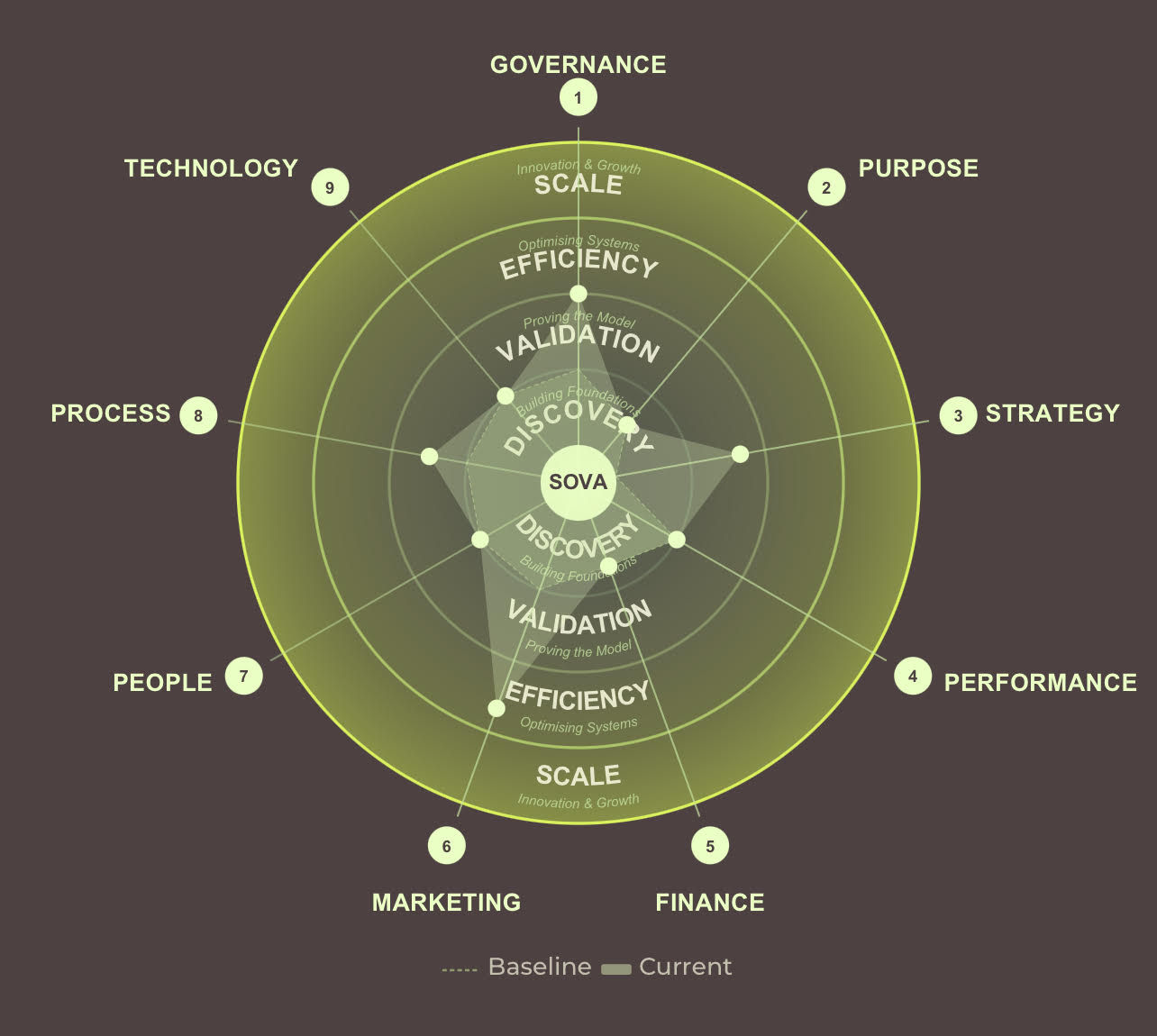

Image Credits
Jane Korneyko