

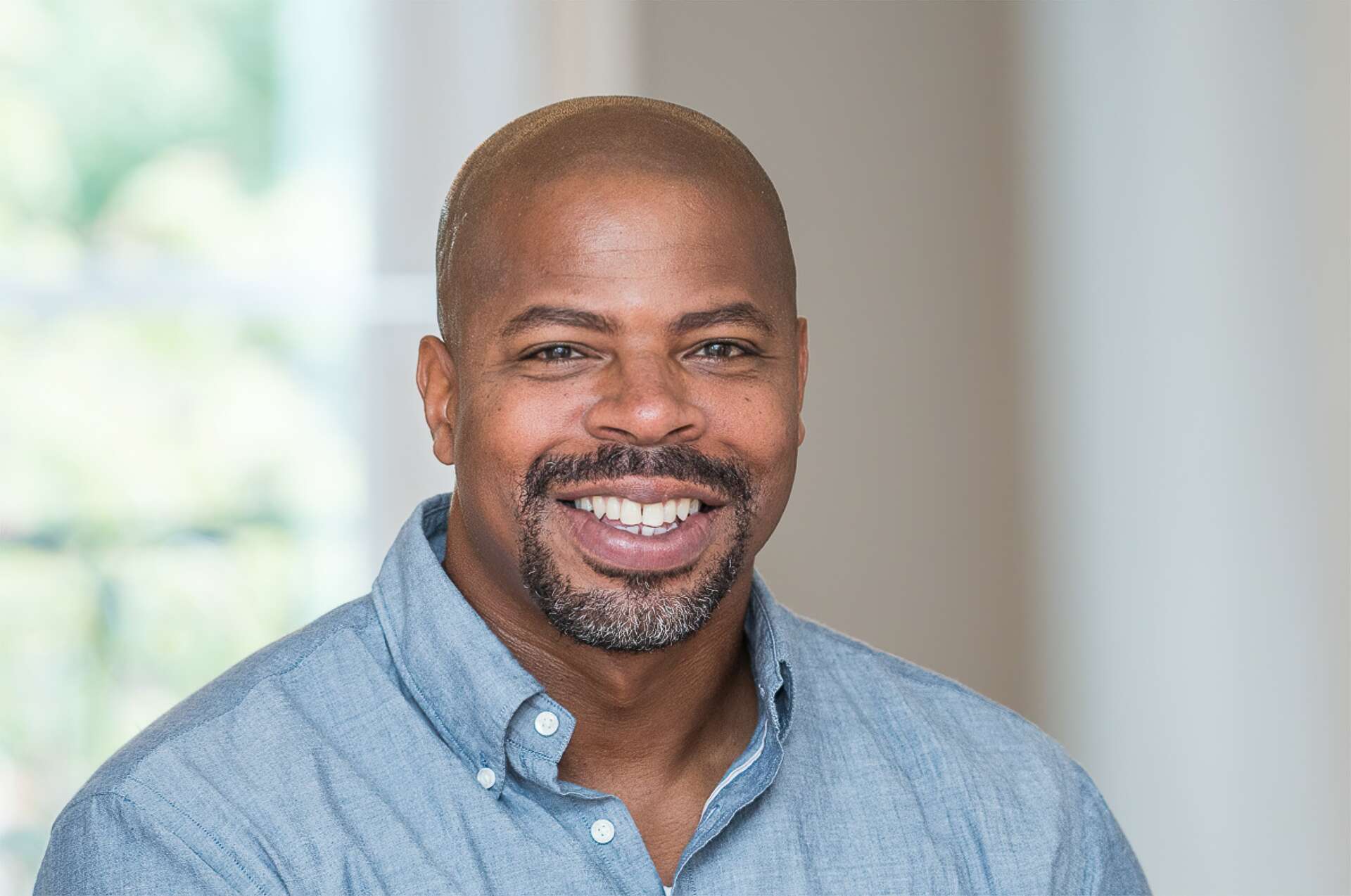

We were lucky to catch up with James Evans recently and have shared our conversation below.
Hi James, thanks for joining us today. How did you come up with the idea for your business?
*** Tell us the story of how you came up with the idea for your business? Paint the picture for us so we really understand the context, circumstances, the emotions etc. *****
I’ve always been fascinated and kept at peace by animals, companion animals, and wild animals. I grew up in Baltimore, Maryland, when German Shepherds were popular. There were many living in my under-served Park Heights neighborhood. Whenever I found a lost dog in need, I took the dog home, and at one point, I had as many as five large dogs living in our kitchen pantry. When my mother discovered this, she made me put signs up and return the pets to their homes, which ultimately taught me valuable lessons. I got my wildlife tug from watching Mutual of Omaha’s Wild Kingdom, the only television program that explored the world of Natural History at the time. To this day, I still love that show!
I went to high school and college for art and design, and after that, I worked for several national and internationally renowned design and architecture firms. I loved the work, but the design field tends to be sexist and not inclusive. During my 20-plus years of working for several elite firms, I never worked with any colleagues of color. Many of my coworkers then needed cultural competency, particularly my direct reports.
In 1999, I started my firm. Like any upstart, the first three years were a rollercoaster ride, but in our fourth year, we began to level out, won some significant design awards, and garnered several major clients. One of them was the Human Society of the United States (HSUS). My firm did outstanding work for them, including helping to create one of animal welfare’s first diverse programs called Pets for Life. This program focused on supporting Black Indigenous and People of Color (BIPOC) communities and their pets.
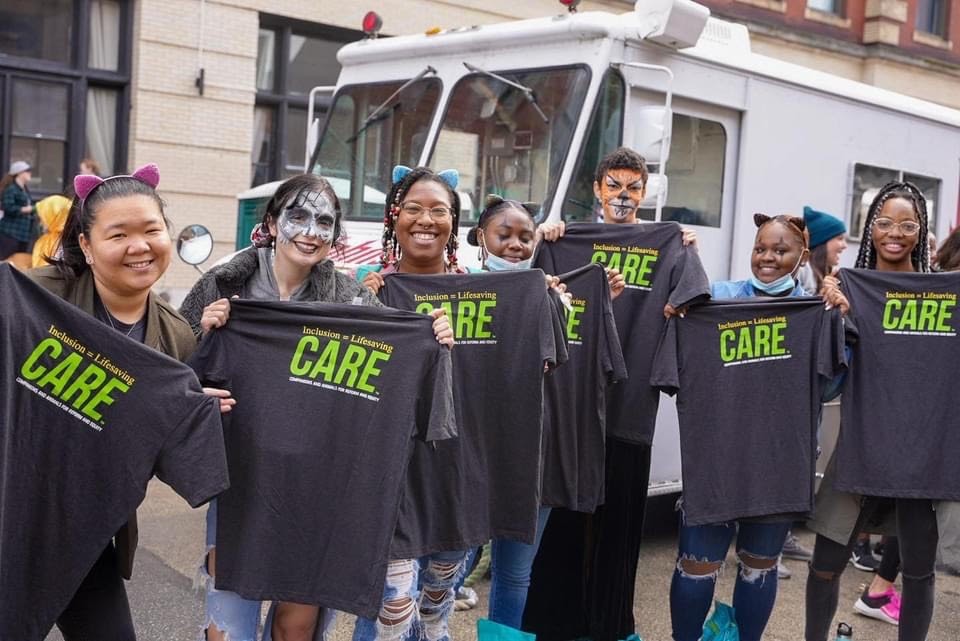
In 2019, a few months before the COVID outbreak and George Floyd’s murder, a significant animal welfare grant maker, Spring Point’s Life of Riley, contacted me and asked if I would be interested in creating a nonprofit organization that focused on bringing more equity and inclusion into the animal welfare field. I said yes, and I’m now the nation’s first CEO of a national BIPOC-led pet advocacy organization called Companions and Animals for Reform and Equity or CARE, notable given Animal Welfare’s originals date back to the early 1600s.
###
All people who look like me are the victims of a sadistic story that presents us as the most likely to steal, the least likely to work hard, the most likely to be violent, and the lowest capacity to love.
People of Color in the U.S. are not regarded or treated as if their humanity is on par with their White Counterparts. The narratives underpinning the inequities we face are so powerful they influence our quality of life, life expectancy, and, for some, the manner of our deaths.
I’m passionate about my work because it allows me to play an active role in my survival and those within my community who live oppressed by an untruth. Dismantling bias anywhere provides more opportunity for People of Color everywhere.
I’m passionate about this project because the only way for people of color to be seen in a better light is by telling our story. And people and pets are central to my story, as it is for many others.
##
**** – talk to us about the logic of why you felt this would work? Were you solving a problem that no one else was solving? Were you offering a unique approach or what about this idea got you most excited?****
ANIMAL WELFARE
The Animal Welfare field is homogenous, composed primarily of White women, 85%. Aside from the industry not being diverse, it holds a strong bias toward Black, Indigenous, and People of Color [BIPOC] and those who are not financially stable. See the study here [https://careawo.org/rd/#harvard].
Animal Welfare is not without good intentions and successes, but no system is without its flaws. One of Animal Welfare’s most significant shortcomings is its myopic pets-only focus vs. being inclusive of all people and their pets. The best civic-centered solutions partner with diverse communities and place value on community wisdom and involvement.
Building grassroots partnerships designed to collaborate with Animal Welfare and Sheltering allows communities to have agency in their relationship with Animal Welfare and Animal Protection. Typically, Animal Welfare organizations initiate one-sided “partnership” programming. In this case, one side means that the animal welfare organizations ultimately derive, design, and control the program or offer.
Nearly all Animal Welfare programs, even programs designed to support people, are owned by Animal Welfare organizations. Organizations can wax and wane programming at will or end programming at any time, often resulting in a lost opportunity for trust-building, partnership, and systemic change.
Unconscious bias influences Animal Welfare policy-making, Animal Control Laws, Pet Adoptions, and where, how, and if resources are distributed to pet owners in need. And the lack of diversity within the field prevents community-wide participation in knowledge production and sharing.
Challenges:
ANIMAL CONTROL
The large majority of people love their pets, and this includes those pet parents living in challenging situations. We recognize the value of animal protection and the need to prosecute those who intentionally hurt animals. However, from our perspective, Animal Control organizations too often police Poverty in the same manner the field punishes deliberately harmful behavior.
SHELTERING
We recognize the benefits to shelters but believe more can be done to make adoption broadly accessible and reimagine
fostering to be more attractive to those capable of TLC, but living on the margins nonetheless. After all, there
are approximately 166 Million homes in the U.S. without companions and pets, yet shelters and rescues struggle to
form partnerships with diverse communities.
ACCESS TO CARE
We also acknowledge and commend efforts to close the Access to Care gap. Still, that gap is most often
represented as solely an affordability gap. However, the much more significant and urgent gap in Access to Care is represented by the lack of veterinarians, which is even more pronounced in underserved BIPOC communities.
While Access to Care is a twofold problem, more must be done to address the scarcity of veterinarians. The lack of
veterinarians keeps demand for their services high, well out of reach for those who need them most. More than 135 Million Dogs and Cats live with people throughout the U.S. Still, less than 60 Thousand small animal veterinarians exist, equaling 1 veterinarians per every 2,200 pets. That equation does not account for pet birds, reptiles, or companion pets. Even in the best scenario where veterinary care was more affordable, pets would continue to suffer, particularly those living within marginalized BIPOC communities, due to veterinarian shortages.
Our unique approach:
PREVENTION & EQUITY FOCUSED
After studying the inequities plaguing underserved communities and partnering with communities to remove barriers – we acknowledge there is more work to be done despite the many emerging successes throughout CARE’s programs.
We have realized that a thorough safety net must be built to support people and pets in marginalized communities. Sustainable, generational change is only possible with a comprehensive plan that repeals the historic harms inherent to animal welfare’s engagement of BIPOC communities. Acknowledging the damage caused is not enough; we must reimagine and construct an inclusive system built upon Human and Animal Well-Being [HAW].
CARE has created a new structure for and by community members. Spearheaded by the community wisdom found
within CARE Center Proximate leaders and supported by Community Animal Care. Sustaining Human and Animal Well-Being depends partly on communities trusting in Animal Welfare and Shelters as valued partners. However, that trust will not be established if traditional Animal Welfare continues to define the human and animal bond for culturally diverse communities.
Programs:
CARE’s Circle of Learning and Leadership will be a unique BIPOC-led educational experience with an ecosystem centered on Deep Listening, Racial Equity, Community Wisdom, and Access to Preventive Care. We aim to bridge the information gap between traditional Animal Welfare and marginalized communities.
Community Animal CARE [CAC] is an innovative Public Health-centered program designed to prevent and solve
persistent challenges to Human and Animal Well-Being. CAC will deliver critical resources to community members led by Proximate Leaders. In particular, Access to Care and Prevention, Pet Behavioral Training, Pet Resources,
Compliance Awareness, Lost and Found Pets, and Involuntary Surrender Prevention.
The CARE CENTER program is an organized system designed to provide community advocates with the tools and access they need to continue lifting their communities and pets in the face of systematic challenges.
Proximate Leaders are subject matter experts on the challenges facing their communities. Their solutions are
often structured around insights only found through lived experiences. When allowed to lead, Proximate Leaders are
far more capable of finding sustainable solutions for their community of friends, loved ones, and neighbors than
outside organizations seeking to implement “charitable” solutions.
The CARE Center Partner Program provides capacity-building and technical assistance for BIPOC proximate
leaders and nonprofit organizations to help people of color and companion pets through the Human-Animal Well-
Being (HAW) framework. The program provides support by leveraging community wisdom within underserved
communities. Our CARE Center model recognizes community genius and supports proximate leaders.
CARE Center Partners are located throughout the United States. Potential partners can be found in every underserved
BIPOC community.
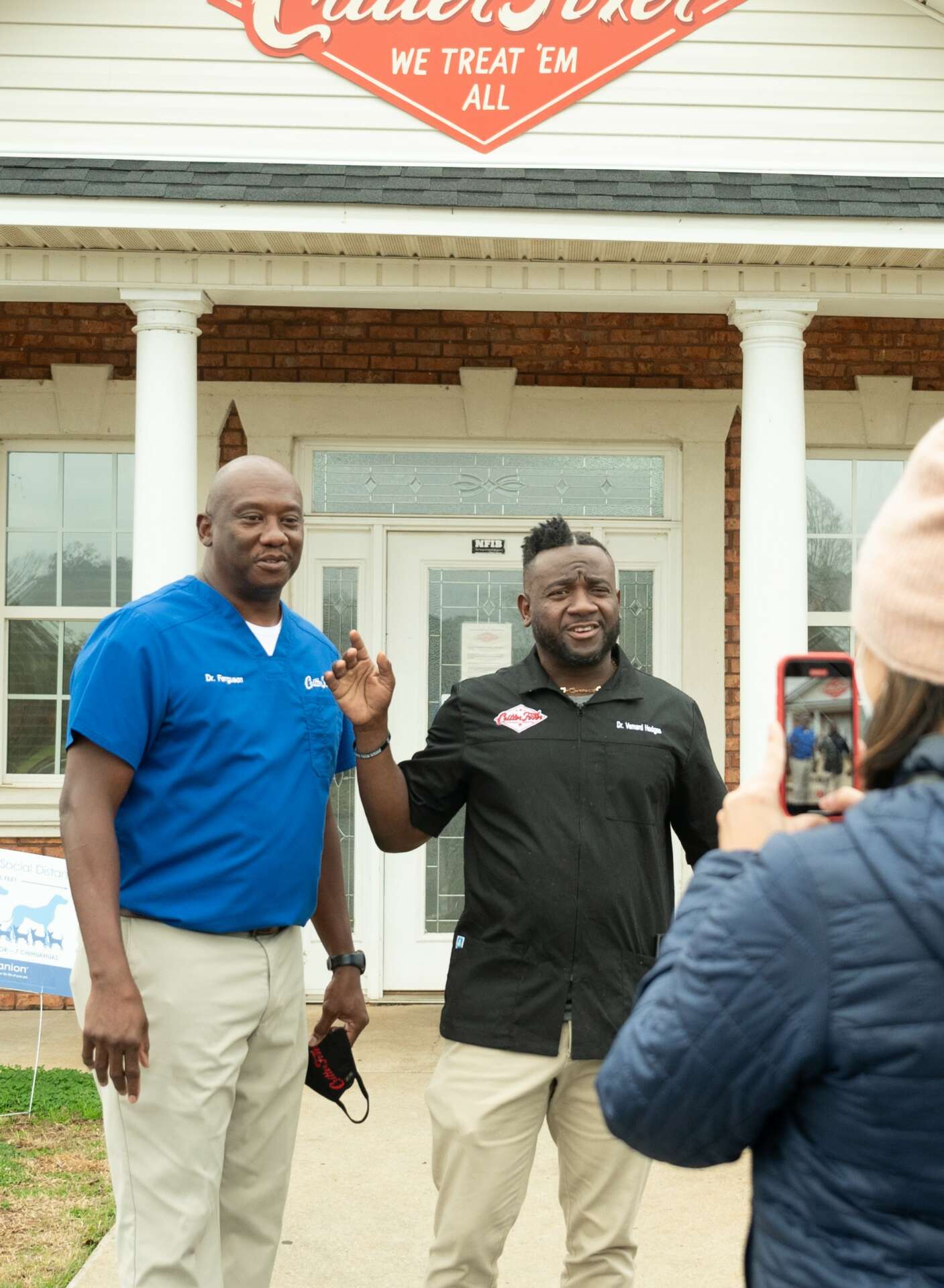
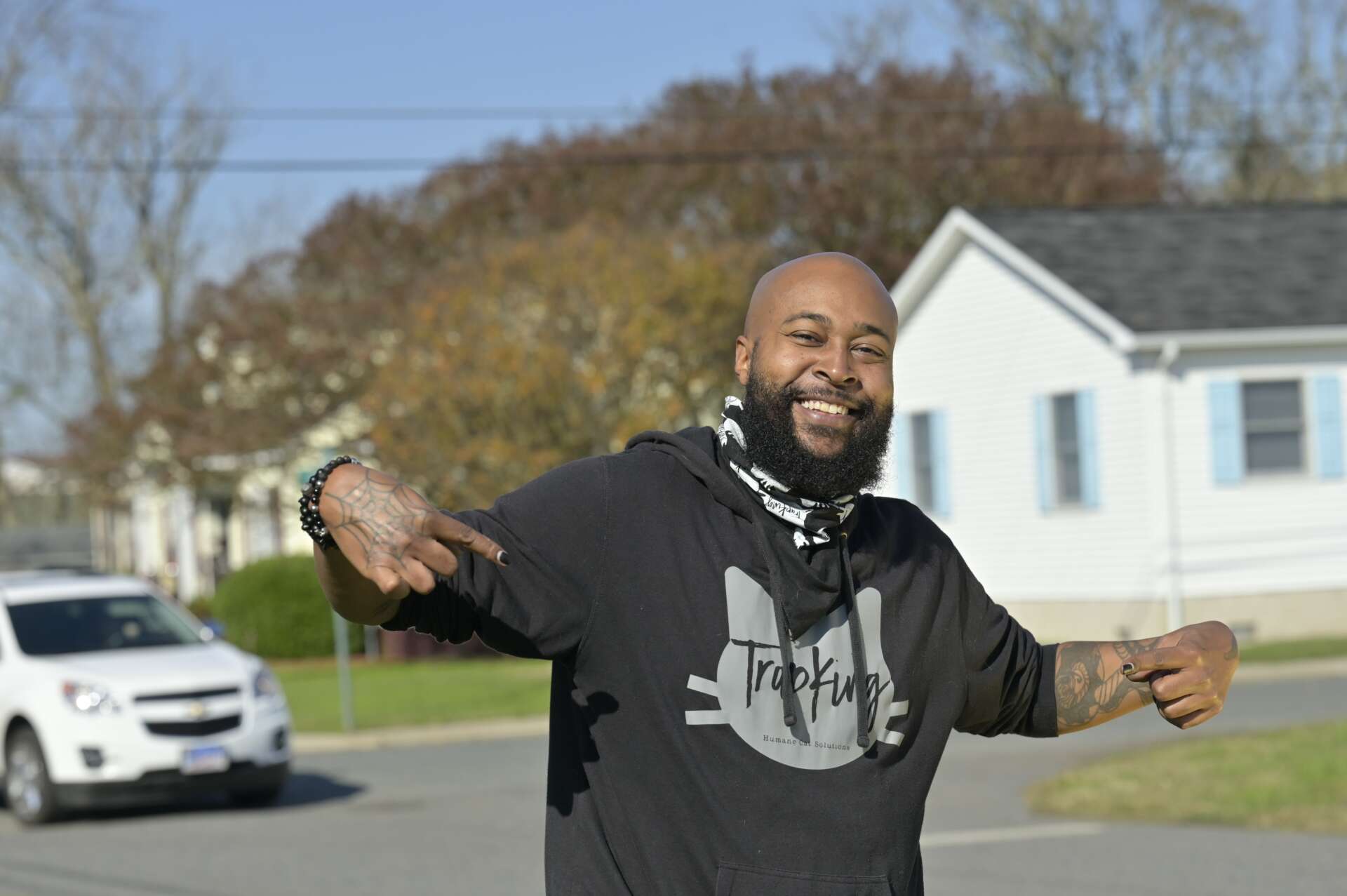
In many instances, we know community members and their Proximate Leaders already care for pets and people around them with few resources. CARE Center’s mission is to support and amplify community leaders working to keep pets and people together. The CARE Center model is not prescriptive; CARE Center Partners range from traditional rescues to experts in dog behavioral training. We’re here to support our partners.’ passions and visions.
Our CARE Center partners are on the frontlines of social and racial disparities – inequities that are often concentrated
within marginalized communities. Unfortunately, the Proximate Leaders we stand with suffer the same community ills, they seek to prevent and cure for others. Thanks to CARE’s technical support and financial support of our donor partners, we see the beginning stages of progress toward Human and Animal Well-Being within CARE Center partnerships.
Since the launch of the CARE Center Program in late 2021, CARE has helped to initiate more than ten BIPOC-owned
501c3s. These organizations represent a generational first, and their communities are grateful. Aside from helping
to start new organizations, CARE has provided invaluable technical and financial support to pre-existing organizations.
Aside from inspiring and overseeing thousands of pounds of food and life-saving veterinary resources, our CARE Center
Partners have also taken the opportunity to speak nationally on behalf of their communities. As a result, for the first
time in U.S. history, BIPOC communities have received Human and Animal Well-Being support led by local BIPOC
Proximate Leaders, undergirded by a national BIPOCLed nonprofit. Having had the opportunity to own their
narratives have transformed our Proximate Leaders and is likely to create opportunities for BIPOC leaders in the future.
Long-forsaken communities and pets are now being transformed, and CARE seeks to continue planting
transformational seeds and CARE-giving to the community leaders who seek our technical assistance and support
Human and Animal Well-Being is a culturally situated framework that reimagines animal welfare through an intentional social justice lens and focuses on the comprehensive well-being of humans and animals to achieve positive household outcomes that strengthen family and community while cultivating the human-animal bond.
Great, appreciate you sharing that with us. Before we ask you to share more of your insights, can you take a moment to introduce yourself and how you got to where you are today to our readers.
I’ve always been fascinated and kept at peace by animals, companion animals, and wild animals. I grew up in Baltimore, Maryland, when German Shepherds were popular. There were many living in my under-served Park Heights neighborhood. Whenever I found a lost dog in need, I took the dog home, and at one point, I had as many as five large dogs living in our kitchen pantry. When my mother discovered this, she made me put signs up and return the pets to their homes, which ultimately taught me valuable lessons. I got my wildlife tug from watching Mutual of Omaha’s Wild Kingdom, the only television program that explored the world of Natural History at the time. To this day, I still love that show!
I went to high school and college for art and design, and after that, I worked for several national and internationally renowned design and architecture firms. I loved the work, but the design field tends to be sexist and not inclusive. During my 20-plus years of working for several elite firms, I never worked with any colleagues of color. Many of my coworkers then needed cultural competency, particularly my direct reports.
In 1999, I started my firm. Like any upstart, the first three years were a rollercoaster ride, but in our fourth year, we began to level out, won some significant design awards, and garnered several major clients. One of them was the Human Society of the United States (HSUS). My firm did outstanding work for them, including helping to create one of animal welfare’s first diverse programs called Pets for Life. This program focused on supporting Black Indigenous and People of Color (BIPOC) communities and their pets.
In 2019, a few months before the COVID outbreak and George Floyd’s murder, a significant animal welfare grant maker, Spring Point’s Life of Riley, contacted me and asked if I would be interested in creating a nonprofit organization that focused on bringing more equity and inclusion into the animal welfare field. I said yes, and I’m now the nation’s first CEO of a national BIPOC-led pet advocacy organization called Companions and Animals for Reform and Equity or CARE, notable given Animal Welfare’s originals date back to the early 1600s.
##
ANIMAL WELFARE
The Animal Welfare field is homogenous, composed primarily of White women, 85%. Aside from the industry not being diverse, it holds a strong bias toward Black, Indigenous, and People of Color [BIPOC] and those who are not financially stable. See the study here [https://careawo.org/rd/#harvard].
Animal Welfare is not without good intentions and successes, but no system is without its flaws. One of Animal Welfare’s most significant shortcomings is its myopic pets-only focus vs. being inclusive of all people and their pets. The best civic-centered solutions partner with diverse communities and place value on community wisdom and involvement.
Building grassroots partnerships designed to collaborate with Animal Welfare and Sheltering allows communities to have agency in their relationship with Animal Welfare and Animal Protection. Typically, Animal Welfare organizations initiate one-sided “partnership” programming. In this case, one side means that the animal welfare organizations ultimately derive, design, and control the program or offer.
Nearly all Animal Welfare programs, even programs designed to support people, are owned by Animal Welfare organizations. Organizations can wax and wane programming at will or end programming at any time, often resulting in a lost opportunity for trust-building, partnership, and systemic change.
Unconscious bias influences Animal Welfare policy-making, Animal Control Laws, Pet Adoptions, and where, how, and if resources are distributed to pet owners in need. And the lack of diversity within the field prevents community-wide participation in knowledge production and sharing.
Challenges:
ANIMAL CONTROL
The large majority of people love their pets, and this includes those pet parents living in challenging situations. We recognize the value of animal protection and the need to prosecute those who intentionally hurt animals. However, from our perspective, Animal Control organizations too often police Poverty in the same manner the field punishes deliberately harmful behavior.
SHELTERING
We recognize the benefits to shelters but believe more can be done to make adoption broadly accessible and reimagine
fostering to be more attractive to those capable of TLC, but living on the margins nonetheless. After all, there
are approximately 166 Million homes in the U.S. without companions and pets, yet shelters and rescues struggle to
form partnerships with diverse communities.
ACCESS TO CARE
We also acknowledge and commend efforts to close the Access to Care gap. Still, that gap is most often
represented as solely an affordability gap. However, the much more significant and urgent gap in Access to Care is represented by the lack of veterinarians, which is even more pronounced in underserved BIPOC communities.
While Access to Care is a twofold problem, more must be done to address the scarcity of veterinarians. The lack of
veterinarians keeps demand for their services high, well out of reach for those who need them most. More than 135 Million Dogs and Cats live with people throughout the U.S. Still, less than 60 Thousand small animal veterinarians exist, equaling 1 veterinarians per every 2,200 pets. That equation does not account for pet birds, reptiles, or companion pets. Even in the best scenario where veterinary care was more affordable, pets would continue to suffer, particularly those living within marginalized BIPOC communities, due to veterinarian shortages.
Our unique approach:
PREVENTION & EQUITY FOCUSED
After studying the inequities plaguing underserved communities and partnering with communities to remove barriers – we acknowledge there is more work to be done despite the many emerging successes throughout CARE’s programs.
We have realized that a thorough safety net must be built to support people and pets in marginalized communities. Sustainable, generational change is only possible with a comprehensive plan that repeals the historic harms inherent to animal welfare’s engagement of BIPOC communities. Acknowledging the damage caused is not enough; we must reimagine and construct an inclusive system built upon Human and Animal Well-Being [HAW].
CARE has created a new structure for and by community members. Spearheaded by the community wisdom found
within CARE Center Proximate leaders and supported by Community Animal Care. Sustaining Human and Animal Well-Being depends partly on communities trusting in Animal Welfare and Shelters as valued partners. However, that trust will not be established if traditional Animal Welfare continues to define the human and animal bond for culturally diverse communities.
Programs:
CARE’s Circle of Learning and Leadership will be a unique BIPOC-led educational experience with an ecosystem centered on Deep Listening, Racial Equity, Community Wisdom, and Access to Preventive Care. We aim to bridge the information gap between traditional Animal Welfare and marginalized communities.
Community Animal CARE [CAC] is an innovative Public Health-centered program designed to prevent and solve
persistent challenges to Human and Animal Well-Being. CAC will deliver critical resources to community members led by Proximate Leaders. In particular, Access to Care and Prevention, Pet Behavioral Training, Pet Resources,
Compliance Awareness, Lost and Found Pets, and Involuntary Surrender Prevention.
The CARE CENTER program is an organized system designed to provide community advocates with the tools and access they need to continue lifting their communities and pets in the face of systematic challenges.
Proximate Leaders are subject matter experts on the challenges facing their communities. Their solutions are
often structured around insights only found through lived experiences. When allowed to lead, Proximate Leaders are
far more capable of finding sustainable solutions for their community of friends, loved ones, and neighbors than
outside organizations seeking to implement “charitable” solutions.
The CARE Center Partner Program provides capacity-building and technical assistance for BIPOC proximate
leaders and nonprofit organizations to help people of color and companion pets through the Human-Animal Well-
Being (HAW) framework. The program provides support by leveraging community wisdom within underserved
communities. Our CARE Center model recognizes community genius and supports proximate leaders.
CARE Center Partners are located throughout the United States. Potential partners can be found in every underserved
BIPOC community.
In many instances, we know community members and their Proximate Leaders already care for pets and people around them with few resources. CARE Center’s mission is to support and amplify community leaders working to keep pets and people together. The CARE Center model is not prescriptive; CARE Center Partners range from traditional rescues to experts in dog behavioral training. We’re here to support our partners.’ passions and visions.
Our CARE Center partners are on the frontlines of social and racial disparities – inequities that are often concentrated
within marginalized communities. Unfortunately, the Proximate Leaders we stand with suffer the same community ills, they seek to prevent and cure for others. Thanks to CARE’s technical support and financial support of our donor partners, we see the beginning stages of progress toward Human and Animal Well-Being within CARE Center partnerships.
Since the launch of the CARE Center Program in late 2021, CARE has helped to initiate more than ten BIPOC-owned
501c3s. These organizations represent a generational first, and their communities are grateful. Aside from helping
to start new organizations, CARE has provided invaluable technical and financial support to pre-existing organizations.
Aside from inspiring and overseeing thousands of pounds of food and life-saving veterinary resources, our CARE Center
Partners have also taken the opportunity to speak nationally on behalf of their communities. As a result, for the first
time in U.S. history, BIPOC communities have received Human and Animal Well-Being support led by local BIPOC
Proximate Leaders, undergirded by a national BIPOCLed nonprofit. Having had the opportunity to own their
narratives have transformed our Proximate Leaders and is likely to create opportunities for BIPOC leaders in the future.
Long-forsaken communities and pets are now being transformed, and CARE seeks to continue planting
transformational seeds and CARE-giving to the community leaders who seek our technical assistance and support
Human and Animal Well-Being is a culturally situated framework that reimagines animal welfare through an intentional social justice lens and focuses on the comprehensive well-being of humans and animals to achieve positive household outcomes that strengthen family and community while cultivating the human-animal bond.
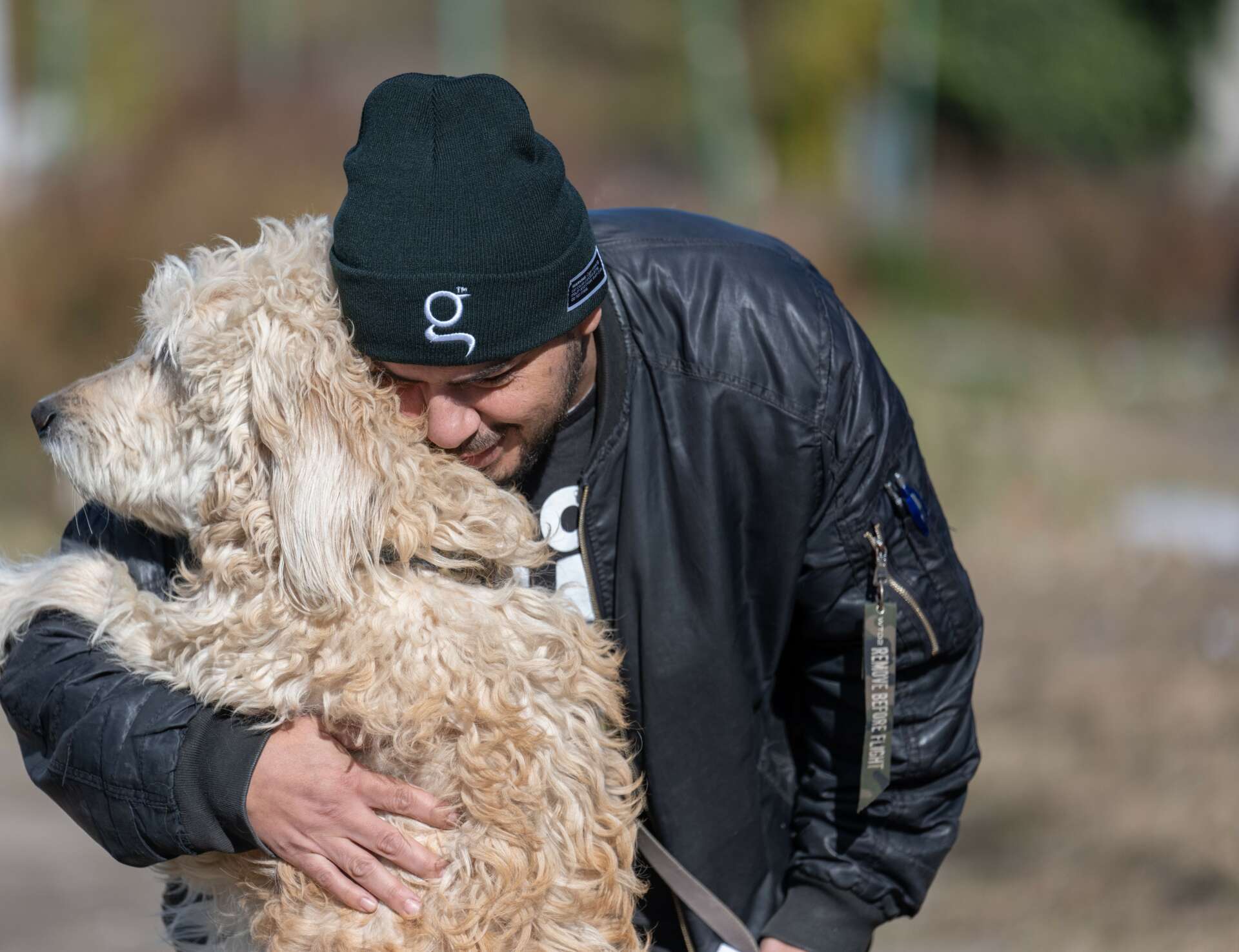
How’d you meet your business partner?
Years ago I was need of a talented and determined Art Director. Someone that could take a creative vision from concept to finish with confidence, attention to detail, and compassion for my current employee.
A photographer friend of min introduce me to an Art Director he thought would would for my firm, and he was right!
From the first project to the national organization we run together today, we’ve been been great partners. So much so, we got married four years ago.
People often ask me what it’s like working with my wife, and the truth is, working with her make me fall in love with her daily. Our relationship started with respect for each others talent and work ethnics and I can’t think of a better grounding for a marriage.

Have you ever had to pivot?
I’m not sure how funny this will be, all of my mistakes have been expensive ☺
When I first started out as an environmental graphic designer, my principal role was to add meaningful and visually appealing designs to architectural spaces. For example, themed floor title designs, sconces, informational blade signs (wayfinding), and in the case of this story, a rod-iron gate design to prevent people from stepping into an interior water fountain. Keep in mind, I was working for an elite design firm at the time, and every element of what we produced was themed and customized for each client. That said, the rod-iron gate design needed to be beautiful and in theme with the architecture it lived within.
The project location was Durban, South Africa. So, when I started my design “research” I started looking through a book in the studio called African Patterns or some title like that. I found lots of inspiration throughout the book, all of which I incorporated into the gate design. My colleagues and my direct reports loved the work so much that the designs were incorporated into the overall interior motif.
Then came the moment of truth. The clients we’re flown in from South Africa to review our progress. These meetings are designed to showcase forty or more large prints of design concepts that are hung from the wall. Once the clients walk in, there is no way to hide from your work.
Within minutes of the meeting starting, the client expressed a strong objection to our designs. They were deeply frustrated because the design elements I used were symbols, some of them sacred. Not only had I used several symbols inappropriately, but many of the symbols were not from where the project was located.
What I learned: People matter. Conversations matter. Studying something is an important first step, but mastering a design, any design, whether a seat belt, glove, or congressional bill, should always include a conversation with the entity the design is being made for.
Contact Info:
- Website: careawo.org
- Instagram: careforequity
- Facebook: https://www.facebook.com/careforequity/
- Linkedin: https://www.linkedin.com/company/careforequity
- Youtube: @humanandanimalwell-being
Image Credits
Credit: Companions and Animals for Reform and Equity or C.A.R.E.