

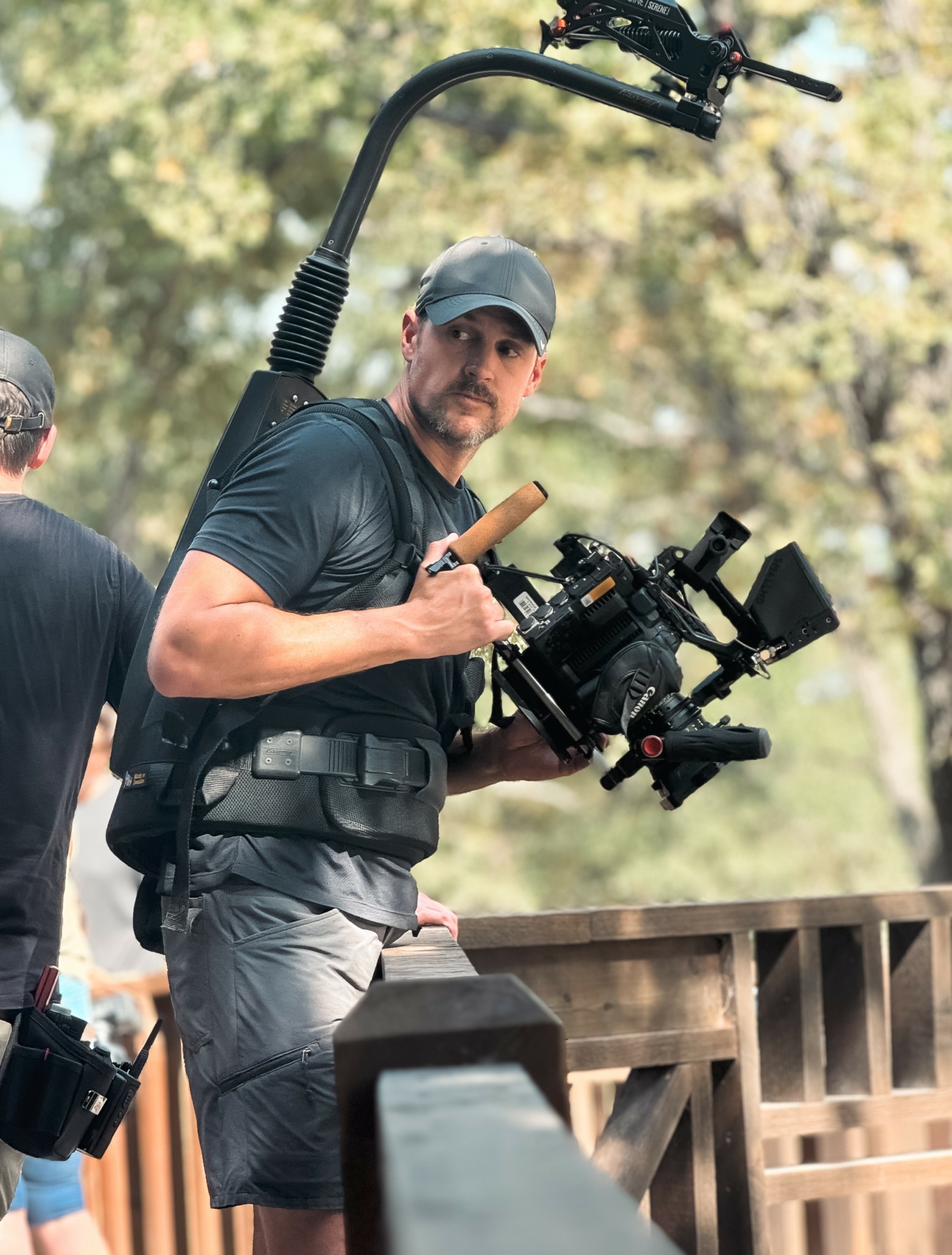

Alright – so today we’ve got the honor of introducing you to James Bobo. We think you’ll enjoy our conversation, we’ve shared it below.
Alright, James thanks for taking the time to share your stories and insights with us today. Can you talk to us about how you’ve thought about whether to sign with an agent or manager?
I do! I have a commercial agent and a manager.
When I first started auditioning two years ago with no reps, I did an awful self tape for a tv movie movie, somehow booked the job. A week later, I was on set in Atlanta. That movie was directed by a great guy named Danny J. Boyle—not to be confused with Academy Award winner Danny Boyle. Even Danny jokes, “I didn’t direct Trainspotting.”
With that fresh credit in hand, I started looking for representation. I cold-emailed a few agents… crickets. Then I used the “Talent Link” feature on Actors Access to get on someone’s radar. I got one response. We set up a call, and the agent started walking through my (very short) resume. When he got to the new movie, he said, “That’s quite the director!” I kept my mouth shut. He signed me that day.

Great, appreciate you sharing that with us. Before we ask you to share more of your insights, can you take a moment to introduce yourself and how you got to where you are today to our readers.
I’m a commercial director and actor based in Los Angeles. I started out in post production, moved into directing about ten years ago, and more recently made the leap into acting. I guess I have a hard time saying “no”.
I grew up in a conservative Christian household in the South. We watched plenty of movies at home, but going to the theater was rare—so when we did go, it felt like a big deal. That kind of limited exposure made the experience feel elevated, almost sacred in a way, and I think that early sense of wonder stuck with me.
After failing out of computer and business classes in university, I pivoted to film. I barely scraped by in school. Honestly, I think they let me graduate just so they wouldn’t have to put me on academic probation again. My sister mentioned someone she knew at a local production company, so I dropped in—no idea what they even did. Turned out they made commercials. They brought me on as an intern, and I ended up working there unpaid for eight months before being hired as an editor.
Editing became my first real storytelling education. I learned how to shape a scene, where to cut, and how timing can change an emotion. It gave me a huge advantage when I started directing—I still think like an editor when I’m on set.
I read a quote that said, “If you want to be a good director, learn how to act.” It stuck with me. I’d been working with great actors, but didn’t understand the process from their side. I didn’t know how to give them what they needed, and I couldn’t speak the same language.
It was my girlfriend who gave me the push to start acting two years ago. I took my own headshot (which she immediately trashed) and she booked me for a real one. She helped me start auditioning, and before I knew it, I was taping constantly. I’d heard acting was a numbers game, so I committed to the reps. The more I did it, the more I learned. Self-tapes are a great teacher. Watching yourself back is humbling—you see every weird habit and every missed moment. You learn fast.
Since then, I’ve been lucky to act in films, TV shows, commercials, and even a music video. My past experience on set helps a ton—being in front of the camera feels like home to me. And I’m just relentless.
Have any books or other resources had a big impact on you?
Oh god, yes. Here are a few that I revisit often.
The War of Art by Steven Pressfield changed my life as an artist, like it has for so many others. I definitely used to fall into the habit of waiting to create until I felt “inspired.” That book taught me to treat my work like a job—to show up whether I feel like it or not. That shift in mindset is what separates the artists who make it from the ones who stay stuck. My career really hit the gas once I fully embraced that.
In the same spirit, I was really inspired by Daily Rituals by Mason Currey. It’s a simple but powerful book that outlines the daily habits of creatives throughout history—Picasso, Warhol, Ben Franklin. It helped me stop making excuses. They had the same 24 hours. If they could make it work, why can’t I?
And special shoutout to On Directing Film by David Mamet. I always keep it close by. It may have been published in 1991, and the industry has changed a lot since then, but the principles of storytelling remain the same. If you’re reading this, David—we need an updated edition!

Any resources you can share with us that might be helpful to other creatives?
That’s an easy one—other creatives.
I started my career in Arkansas, where I grew up. I was lucky to be working in production and surrounded by some really talented people. But outside of work, I didn’t really know any other creatives. Everyone in my social circles—my neighbors, old classmates—were in banking, medicine, things like that. I think a lot of LA transplants can probably relate.
When I moved to LA, everything changed. I was suddenly surrounded by artists. The friends I made were all on their own creative paths. My neighbors are Oscar-nominated producers, Criterion directors, SNL alumni. The creative energy here is everywhere—it’s contagious. It reignited a spark in me.
There’s that Warren Buffett quote: “Surround yourself with people who are better than you.” I can’t think of a better place to do that as a filmmaker than Los Angeles.
That’s not to say everyone should pack up and move here. But I do think it’s important to find your people—creatives who can inspire you, challenge you, and collaborate with you. That’s the resource I wish I had earlier: a creative community.
Contact Info:
- Website: https://www.jamesbobo.com/
- Instagram: @jamesbobo
