

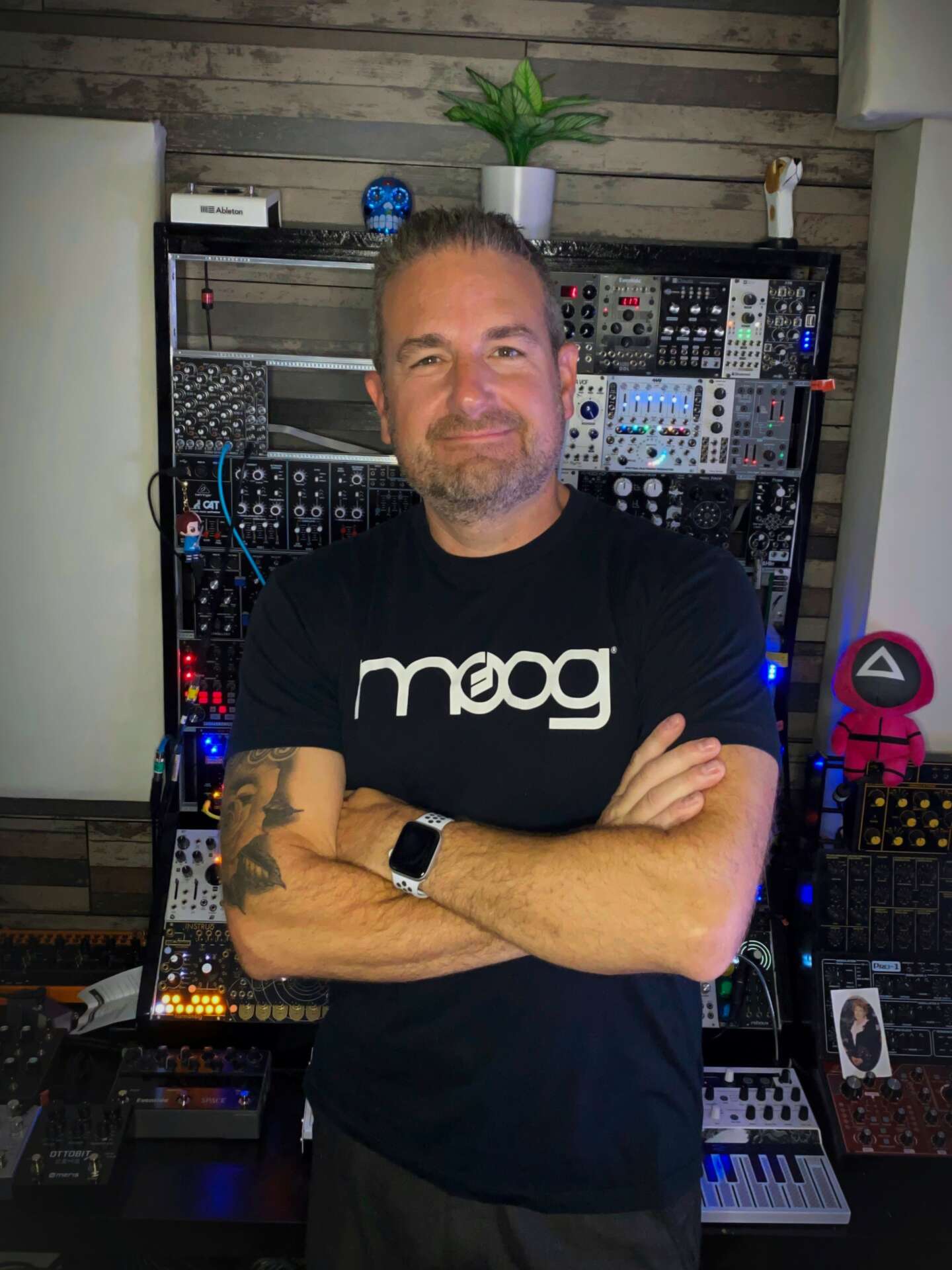

We recently connected with Jack D. Elliot and have shared our conversation below.
Alright, Jack D. thanks for taking the time to share your stories and insights with us today. When did you first know you wanted to pursue a creative/artistic path professionally?
When I was 13, I knew I wanted to pursue music as a career. I had a book report for school, and my teacher allowed me to do an audio presentation instead of a written paper. At that time, I owned my first synthesizer. I used a double cassette player to compose music and record my voice, going back and forth between the two cassettes. My version of multitracking. I was so passionate about completing the project and felt incredibly inspired. I had this magical feeling inside me, and it was at that moment I realized that music was my destiny.


Jack D. , love having you share your insights with us. Before we ask you more questions, maybe you can take a moment to introduce yourself to our readers who might have missed our earlier conversations?
I came from a musical family that goes back generations. My grandfather was a highly successful trombone player, and my dad followed in his footsteps by playing trombone on Broadway. I was taught how to play the piano by my uncle, Edward Edson, who was a concert pianist, and from age three I was playing piano and trombone. When I was 13, I had a revelation that music was going to be my path in life and my eventual career. After spending my summers growing up attending the famous Interlochen Arts Camp, I got my first break when I was discovered by a DJ who worked with Mark Kamins (the producer who brought Madonna to Sire Records and produced her single Everybody). I recorded my first records at his Prime Cut Studios, after which I got lucky, and my first record was signed to Strictly Rhythm Records.
I was then asked to play keyboards and DJ at the exclusive New York City nightclub, The Limelight. I also was invited to become a member of a funk metal band called White Trash, but I decided instead to finish my degree at SUNY Purchase college in New York. After graduation, I pounded the pavement like everyone else. I started working for a small record label called Northcott Productions in the early ‘90s, and convinced the owner to start a label with me called Progressive High records. We put out over 40 releases in the Progressive House/Techno vibe, which led to me meeting more music executives to build a reputation in the industry.
My big break came when I met Steve Lunt from Jive Records in 1998 he gave me a shot at remixing Britney Spears on spec and told me if she came out Jive would pay me! As everyone now knows, Britney became the biggest act in the pop business and my mix name Boy Wunder at the time was included on single. That opened the doors to remix more for Britney, and also Backstreet Boys, NSYNC, Dolly Parton and many more legendary artists. I got my first No.1 remix on the Billboard chart with Nick Lachey for What’s Left of Me.
I loved doing remixes but my manager at the time said that I should start songwriting and composing for Artists & TV shows. I went on to write and produce songs that placed No. 1 and No. 2 on the Billboard Dance Charts, including If I Close My Eyes for Reina (co-written with dance legend Janice Robinson). Then I wrote/produced No. 1 Billboard smash I’ll Be Your Light for world-renowned diva Kristine W, which was co-written with John DeNicola (of Dirty Dancing fame) and Patty Maloney. My next lucky break was when my manager introduced me to James Foster, who is legendary producer David Foster’s sister. David asked me to write a theme song for the TV hit Who Wants to be a Millionaire, that I co-wrote with my ex-wife, Jemma Elliot, who also sang on the track. After we sent it over, David called me from his vacation in Hawaii and said he thought it was a hit and liked the vibe we had together, and he even wanted me to rap on it. He signed us to his record label, 143 Records — I was on Cloud 9! — the subsequent song was called I Want to be a Millionaire, by Jack and Jemma.
I felt so lucky and blessed in life for my success … then the September 11th terror attacks happened. At the time, I lived in Battery Park City across the street from the World Trade Center. When the first plane hit the towers, I woke up confused about what had happened. I looked out my window and saw the debris and fire. I told my ex-wife that we should leave just in case parts of the tower hit our apartment building. I was not yet aware that it was a terrorist attack, and in my usual business-focused mindset, I brought with me a reel of my new songs to play at Jive Records that afternoon not realizing that the world was going to shut down.
When the second plane hit, my whole building shook. When I got in the elevator to leave, someone said the planes hit the towers on purpose and I started to have a panic attack. When I got outside, people were running everywhere … leaping over fences in the courtyard, and collapsing on the ground crying. I saw people jumping from the towers to their deaths in front of me — it was pure chaos. I was able to make it far enough away and reach safety before the first tower collapsed. The FBI shut my apartment building down after searching for evidence and only allowed us to re-enter the building two weeks later for 10 minutes to grab the most important stuff we would need with one suitcase. I had to walk up 28 flights in the pitch black and the building smelled so bad from rotting food. I could not work for three months because my studio was in the evacuation area so I had to go live with my parents back in Long Island. The whole experience gave me PTSD and I suffered from serious depression for a couple of years afterwards. Needing a break from New York City and 9/11-related trauma, I moved to Orlando, Florida, which recharged me personally and professionally in order to get my career back on track.
I started writing again. It was slow for a while but then an A&R for Warner Bros. named Tommy Page hired me and introduced me to songwriter Diane Warren (who has been nominated for 13 Academy Awards and given an honorary Oscar this year). I produced one of Diane’s demos for her, she liked it a lot and told me If I lived in Los Angeles then she would hire me all the time. So in one second I sold my house and moved to L.A. and became one of her in-house producers for eight years. Diane remains one of the coolest people I have ever worked with and is still a close colleague. My journey in L.A. continued by being introduced to Reality TV mega composer David Vanacore, who asked me to take the electronica vibe from my remixes and mix it with dramedy tracks. The results was I made hip-hop dramedy tracks that were placed in countless shows such as the Real Housewives series, America’s Next Top Model, Hell’s Kitchen, Jersey Shore and tons more. From there, I ended up scoring shows for Bravo and Lifetime and I composed custom cues for Abby Sciuto’s character on NAVY NCIS. Next, I wrote and produced the No. 1 single in Hungary for superstar Gigi Radics, titled Over You.
In 2015 year, I joined The SCL (The Society of Composers and Lyricists), and started writing a review column on music software and equipment in the guild’s Score Magazine. I ended up throwing my name into the ring to be on the board for the SCL and I was voted on four years ago. As a board member, I am the seminar chair and host educational seminars in Los Angeles covering a range of subjects relevant to media composers. I am so happy to be part of the SCL team. Everyone is wonderful and looks out for composers in our community to help teach and protect them from the ins and outs of the music business. Ashley Irwin, our president, tirelessly fights to protect the composer community and stand up for our rights. It is such an amazing experience to be part of the SCL and I am always learning new skills while working with them.
I now have music in over 26,000 episodes of television shows around the world including NAVY NCIS, Impractical Jokers, American Idol, America’s Next Top Model, Real Housewives of Orange County, Access Hollywood, E! News Live and Good Morning America. I have worked with advertisers such as Progressive Insurance, V8, and Dr. Pepper, and written video Game soundtracks for Insomniac Games like Feral Rites. I recently wrote the theme song Everybody Get Gronk’ed (Shirts Off to That!) for three-time Super Bowl champion Rob Gronkowski. I was nominated for an OMA Award for Producer of the Year, and also just finished a feature film score and scored two short films this year.


What do you think is the goal or mission that drives your creative journey?
One of my main motivations is witnessing how my music affects people, whether they’re going through tough times or in a positive state of mind. It’s incredibly exciting to receive emails from fans or messages on Facebook, telling me how much a song I wrote brought them happiness during a dark period or brightened their day. There is no better feeling in the world than knowing that my music has had such a positive impact on strangers I’ve never met. I live and breathe music, so the more I work, the happier I am.
Can you tell us about a time you’ve had to pivot?
When I lived in NYC, I survived the September 11th terrorist attack because I lived across the street in Battery Park City. This was one of the most significant life-changing events for me, as it was for people worldwide. I managed to escape the collapsing buildings and witnessed many horrifying events not shown on TV. When the towers fell, they damaged a substantial portion of my apartment complex. My studio was in my apartment where I created all my music. It took some time before I could access my apartment, and I couldn’t move to a new space until November. I suffered from severe depression and PTSD, which prevented me from working for several months. When I finally reentered the music business, I was surprised by how I was treated. I had achieved significant success before September 11th, working with artists like Britney Spears, Backstreet Boys, and David Foster. However, record labels seemed to focus solely on what I had achieved on the Billboard charts in the past six months, as mentioned earlier in this article. My manager encouraged me to explore new directions and expand my skill set. I had to find alternative ways to make a living since remixes were no longer paying the high fees they once did.
I began writing songs more and composing for TV, which allowed me to earn royalties and backend income in addition to upfront fees. It took some time to get my career back on track, but the changes I made along the way ultimately paid off significantly.
Contact Info:
- Website: www.jdemusic-official.com
- Instagram: https://www.instagram.com/jackdelliot/
- Facebook: https://www.facebook.com/jackdelliot
- Youtube: https://www.youtube.com/channel/UCZby3u2Xt10wEuftfEYHquQ