

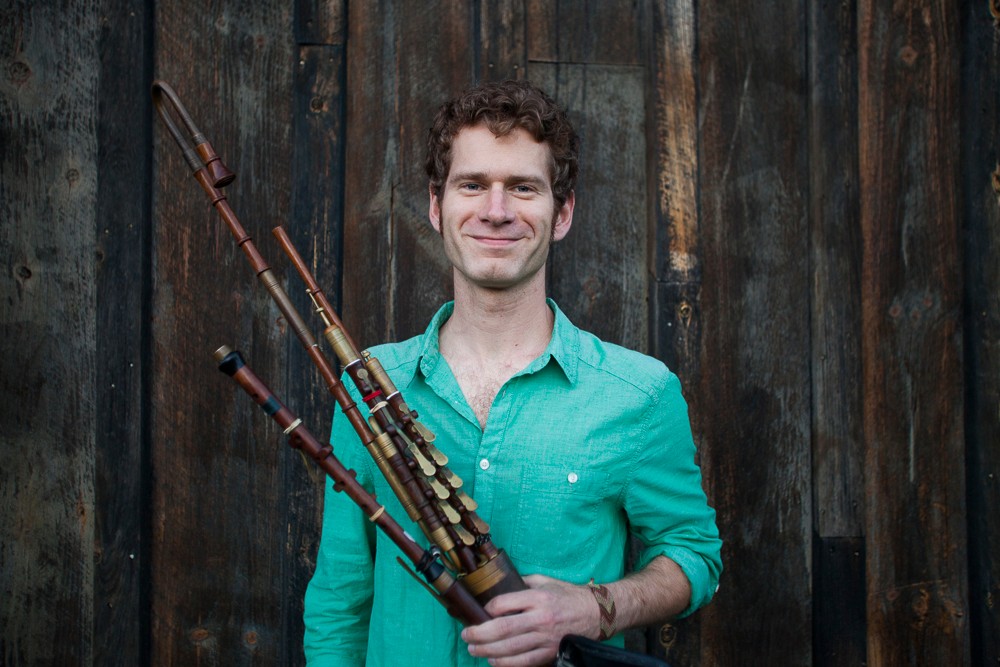

Alright – so today we’ve got the honor of introducing you to Isaac Alderson. We think you’ll enjoy our conversation, we’ve shared it below.
Isaac, appreciate you joining us today. Can you talk to us about a project that’s meant a lot to you?
As a working musician, I’ve been lucky enough to tour and perform as a part of several large, well-recognized, and well-paying productions, but the projects that have meant the most to me have been the informal gigs and the low-budget recordings I’ve done with friends of mine. In particular, an album I helped make in the summer of 2012 with The Yanks sticks out in my mind. We were a four-piece band of young American musicians playing traditional Irish instrumental music, and at the time we had been hired to teach and perform at an annual festival called Catskills Irish Arts Week, in East Durham, NY. During that week, we made arrangements with recording engineer John Walsh to bring some equipment and work with us during breaks in our schedule. We set up a fairly bare-bones temporary recording studio in a literal shack behind one of the bars in town, which didn’t even have four complete walls and certainly didn’t have any air conditioning, making for a sweaty few days’ work in the sweltering July heat. We would desperately switch on a large fan in between takes in order to cool off a bit before hitting the record button again, and we were constantly grappling with tuning issues because our instruments were not designed to be played in such intense heat. Our great friend and sometimes auxiliary bandmate Josh Dukes would cheer us on and shove bottles of water at us to keep us going. We hadn’t done a great deal of planning or arranging the pieces we recorded, so there was a lot of figuring things out and making decisions on the spot. Luckily, the four of us were all fairly accomplished players even at that time and so what came through in the recordings was a very raw energy from four young and enthusiastic individuals who were willing to subject themselves to a fairly torturous environment just to make a bit of nice music!
When we released the album the following year, we were completely bowled over by the positive response we received from the Irish music community around the world. We were even the top-selling album on Bandcamp for about a solid hour that day, temporarily beating out Ghostface Killah who had just released a new album as well. While we never imagined ourselves competing for a #1 download spot with a hip-hop icon, it certainly gave us a bit of a chuckle. The album was being played consistently on traditional music radio stations in Ireland, and we received all kinds of messages of appreciation from older musicians to whom we’d been looking up since childhood. Even today, ten years later, we are frequently told by fellow musicians in our genre that that album remains a part of their regular listening libraries, and some of the great younger players coming into their own in the U.S., Ireland, and elsewhere cite it as a major influence on their playing.
In retrospect, what made the album ‘successful’ and meaningful was that it was honest. The four of us went into that blazing hot little shack in the Catskills with no intention other than to play the music we loved and capture it. We had very little money to spend on it – I believe the total amount we spent on recording, editing, mixing and mastering was around $6,000 – and no expectation that it would make the kind of waves it did, but as I mentioned above, the purity of intention and raw enthusiastic energy we brought to the recording was evident to anyone who listened.

Awesome – so before we get into the rest of our questions, can you briefly introduce yourself to our readers.
I am a musician specializing in Irish instrumental dance music on traditional wind instruments such as the uilleann pipes, Irish flute, and tin whistle. My introduction to Irish music was a bit unorthodox, as I do not come from an Irish or Irish-American family – I was first exposed to it through the soundtracks of several popular big-budget films in the 90’s – but as a child growing up in Chicago and then as a young man in New York, I had access to a fairly vibrant community of people playing that kind of music locally, which was a huge help once I decided I wanted to learn how to play. While my first intention wasn’t necessarily to go into music as a way to make a living, I found myself getting invited to perform and eventually be paid for it, which as a young person was certainly gratifying. I knew it would not likely be a career path that led to great fortune and fame, but I loved the music tremendously as well as the community of people involved with it, and continued to pursue it throughout my time in college and beyond. As I developed musically and personally, I learned how to be flexible and adapt to the needs of whatever gig I might be thrown into. Over the years that has meant a huge variety of different types of engagements: playing highly traditional Irish music in pleasant concert settings, lending an Irish flare to screaming rock bands in dingy bars, touring with a major Broadway musical production, playing music for weddings and other social events, recording on other musicians’ albums as well as for television and other electronic media, and most things in between. I believe that flexibility, humility, and friendliness have gone a long way in making people want to work with me, as well as a dedication to executing my craft as well and as genuinely as I can.

Is there mission driving your creative journey?
The funny thing is that there really is no concrete goal or mission for me, other than to do what I do, and hopefully do it well. While there are things that I could imagine being milestones that I’d perhaps like to tick off my career bucket list, I think the ultimate goal is really just to be able to look back on my life as an older person and feel as if I contributed to my field in some kind of meaningful way. I hope to inspire others to play the kind of music that I do, in the same way that the musicians I idolized as a young man inspired me. I hope to make recordings that I can listen back to multiple decades from now and feel that they live up to my own standards and withstood the test of time. I hope to feel that I brought emotion and meaning into peoples’ lives through music. None of these wishes are attached to any amount of money, so I’m not sure how much they can be regarded as ‘professional goals’, but they are certainly life goals!

How can we best help foster a strong, supportive environment for artists and creatives?
I can really only speak to the music industry here, but it often feels these days as if the ground is shifting underneath us. In the age of smartphones and social media, there is so much competing for people’s attention that it can be very difficult to cut through the noise, and with the ready availability of endless content on streaming services, independent musicians are seeing less and less money coming their way. So, please, support live music by going to performances, purchasing tickets, and tipping musicians, and please buy recordings instead of just streaming them online. There is nothing like real, live music being made by real, live people, and without it our lives would be significantly less bright and cheery, so please do what you can to support musicians!

Contact Info:
- Website: http://isaacalderson.com
- Instagram: @isaacalderson
Image Credits
Photos by Anna Colliton, Jimmy O’Kelly, Jason Samples