

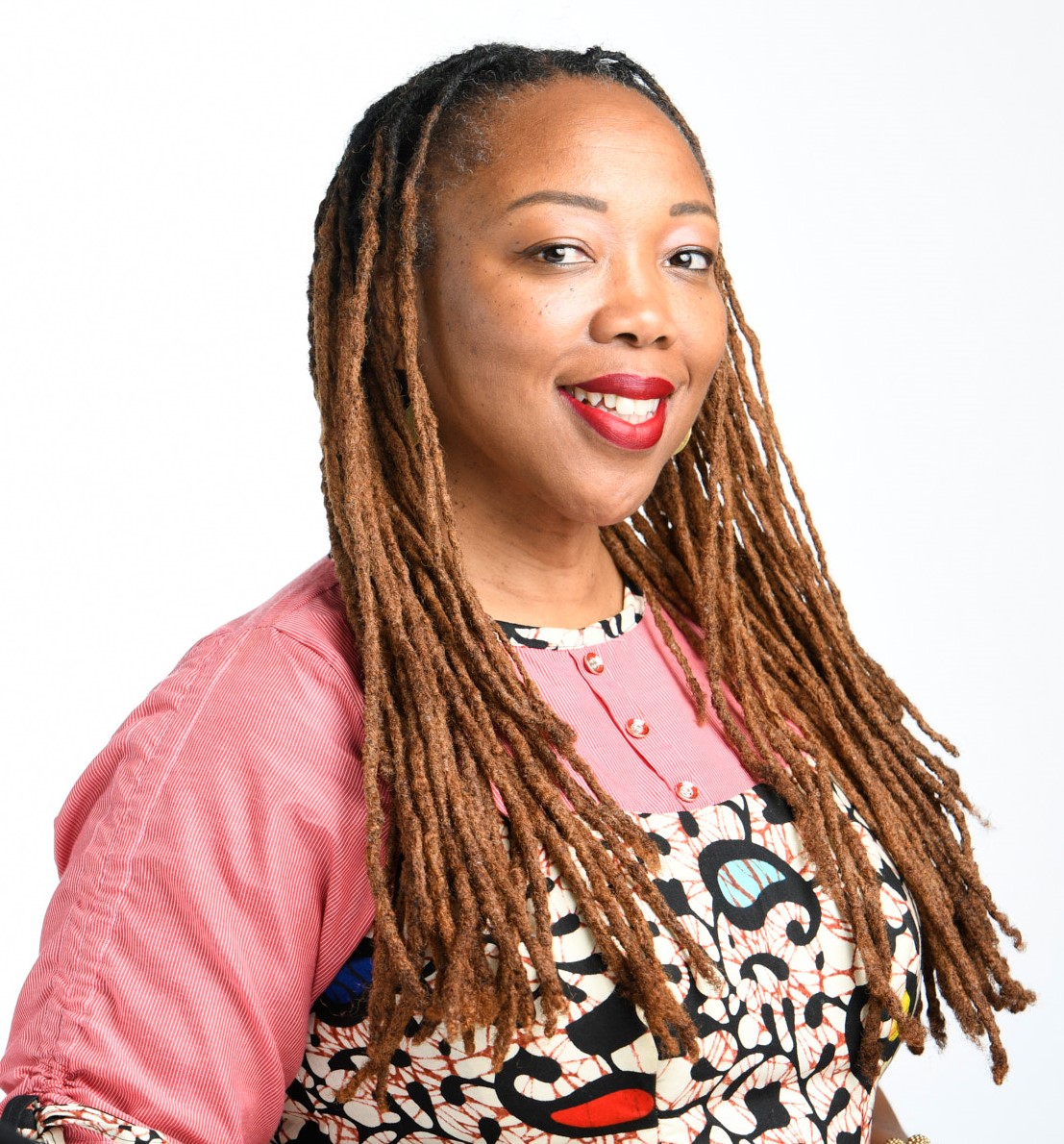

We recently connected with Ifeoma Ebo and have shared our conversation below.
Ifeoma, looking forward to hearing all of your stories today. What did your parents do right and how has that impacted you in your life and career?
My mother is the blueprint for everything I am. She left her village in Anambra State, Nigeria, crossed an ocean, and built a life in America through sheer will, faith, and an Igbo stubbornness that I now recognize as my greatest inheritance.
She raised me as a single mother while working two jobs — as a registered nurse and manager at a home-based care agency. I watched her leave before dawn and return after dark, yet she never let exhaustion become an excuse to lower her standards for me. She taught me that hard work is not a burden — it is a form of devotion.
Her Christian faith was not performative; it was structural. Prayer was how we started mornings, how we navigated crises, how we gave thanks when there was barely enough. And woven through that faith were Igbo values that shaped my character just as deeply: *igba mbo* — the relentless pursuit of excellence; communal responsibility — the understanding that your gifts are not yours alone; and resilience — the belief that you adapt, you endure, you build.
These values are the foundation of my practice today. When I design with communities in Weeksville or Bed-Stuy, when I center cultural preservation and collective voice, I am doing what my mother modeled: showing up fully, serving others, and insisting that where you come from is not something to escape but something to honor. She didn’t just raise me. She gave me a design philosophy.
Great, appreciate you sharing that with us. Before we ask you to share more of your insights, can you take a moment to introduce yourself and how you got to where you are today to our readers.
I’m Ifeoma Ebo, a transdisciplinary designer, Distinguished Lecturer at the Spitzer School of Architecture at City College of New York (CUNY), and founder of Creative Urban Alchemy — a studio working at the intersection of art, architecture, urban design, and planning.
My path into this work was not linear. I came to design through a deep love of culture, place, and storytelling — shaped by my Igbo heritage and my upbringing in Brooklyn. I studied architecture, but I quickly realized that the most urgent design problems couldn’t be solved within the walls of a single building. They required working across scales — from public installations and community pavilions to master plans and policy — and centering the people most often excluded from those conversations.
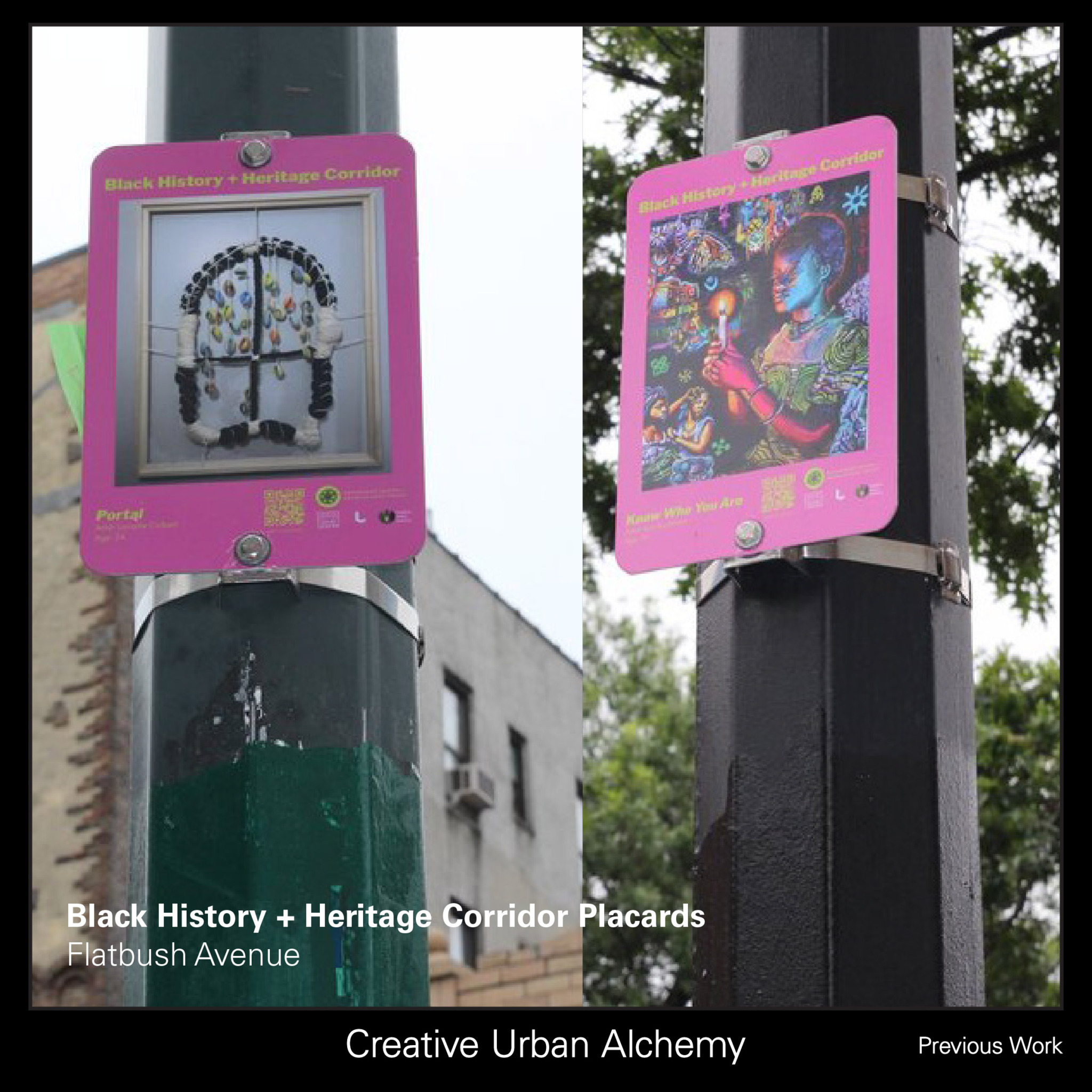
Creative Urban Alchemy is built on a philosophy I call *cultural urbanism*: the belief that space, place, people, and culture are inseparable. My work spans design-build projects like the Weeksville Heritage Center Community Pavilion, public history initiatives like the Black History and Heritage Corridors in Brooklyn, reparative design installations, culturally grounded master plans, and Hip Hop Architecture workshops that invite young people into design thinking on their own terms. I use visual storytelling, collage, participatory design, and emerging tools including AI to make these processes accessible and alive.
What sets my work apart is that I don’t treat community engagement as a checkbox — it *is* the design methodology. I solve for erasure. I design against displacement. Every project asks the same question: how do we honor what was here, empower who is here, and protect what should remain?
What I’m most proud of is the trust communities place in me to hold their stories with care — and to translate those stories into space, form, and policy that endures.
Any advice for growing your clientele? What’s been most effective for you?
The most effective strategy for growing my practice has never been marketing — it’s been relationships built on trust, shared values, and a track record of showing up.
The foundation is my work with community-based organizations. I don’t approach communities as a consultant parachuting in with solutions. I build long-term relationships — with heritage organizations, housing residents, youth programs, cultural institutions — and those relationships become the soil from which projects grow organically. When a community trusts you, they bring you back. They refer you. They advocate for you in rooms you’re not in. That kind of credibility can’t be manufactured.
My nearly a decade of experience working in city government was equally formative. That time gave me an intimate understanding of how public projects move — the bureaucracy, the funding streams, the political dynamics — and it allowed me to build lasting connections with agency leaders, elected officials, and policy makers. Those relationships endure well beyond any single administration. When public sector partners need someone who understands both community and process, my name comes up because I’ve been on their side of the table.
Finally, my reputation as a thought leader in cultural urbanism, design justice, and reparative design opens doors to collaboration with practitioners at larger firms. When established offices need expertise in community-centered design, cultural preservation, or equitable public space, they seek me out — not as a subcontractor, but as a partner whose perspective elevates the work.
Growth, for me, has always been relational. I invest in people and places, and the work follows.
Are there any books, videos or other content that you feel have meaningfully impacted your thinking?
Mindy Thompson Fullilove’s *Urban Alchemy: Restoring Joy in America’s Sorted-Out Cities* has been foundational to my thinking. The name of my studio — Creative Urban Alchemy — is a direct nod to her work. Fullilove approaches fractured cities not as a planner but as a social psychiatrist, examining how spatial segregation harms collective well-being and offering tools for reconnection. That lens — treating urban space as a public health issue — deeply mirrors how I approach design: as an act of healing.
Bryan Stevenson’s *Just Mercy* reinforced my belief that proximity to communities is not optional — it is the work. His principle that you cannot change systems you refuse to get close to has shaped how I engage every neighborhood I serve.
I return often to bell hooks’ writings, particularly *Belonging: A Culture of Place*, which explores the intersection of place, identity, and homecoming — especially for Black communities navigating displacement. It validates the emotional and cultural dimensions of design that technical training often ignores.
Jane Jacobs’ *The Death and Life of Great American Cities* remains essential. Her insistence on observing how people actually use space — rather than imposing theory from above — is a discipline I practice in every community engagement session.
And Lesley Lokko’s curatorial and editorial work, particularly around the 2023 Venice Architecture Biennale, has been a powerful reference point for imagining what a decolonized architecture practice can look like — one that centers African and diasporic knowledge systems as rigorous, contemporary, and generative.
These works collectively affirm that design is not neutral. It is either repairing harm or perpetuating it.
Contact Info:
- Website: https://www.cuadesign.com
- Instagram: @cua_design / @Ifeoma_Ebo
- Linkedin: https://www.linkedin.com/in/ifeomaebo/
- Soundcloud: https://soundcloud.com/ifeoma-ebo
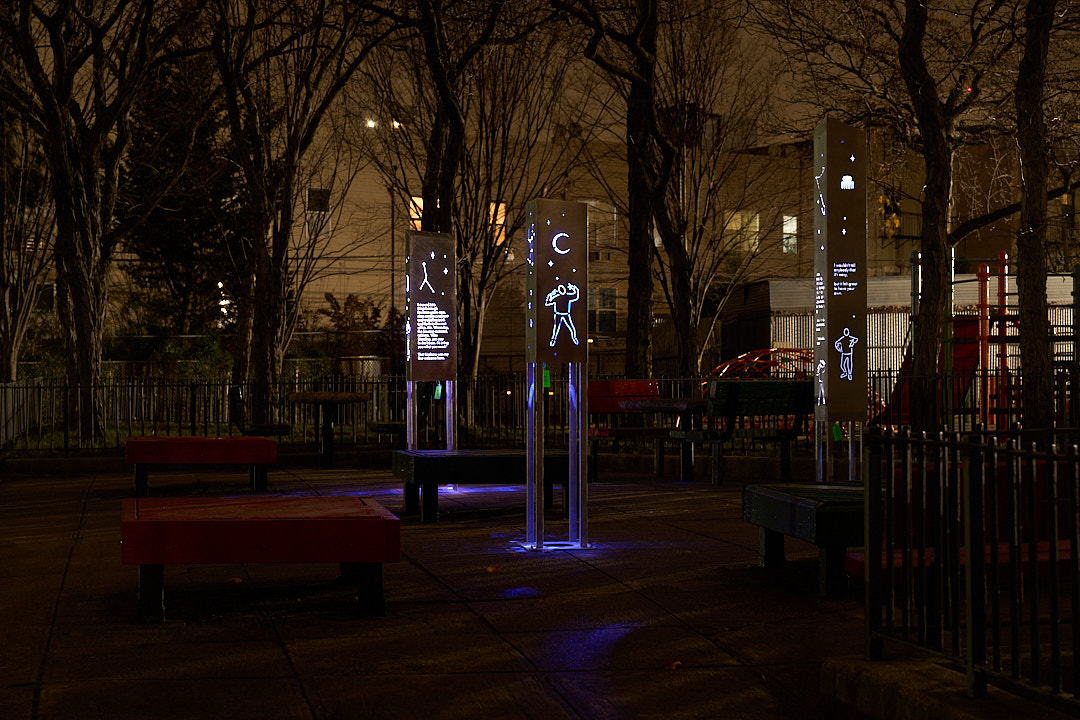
Image Credits
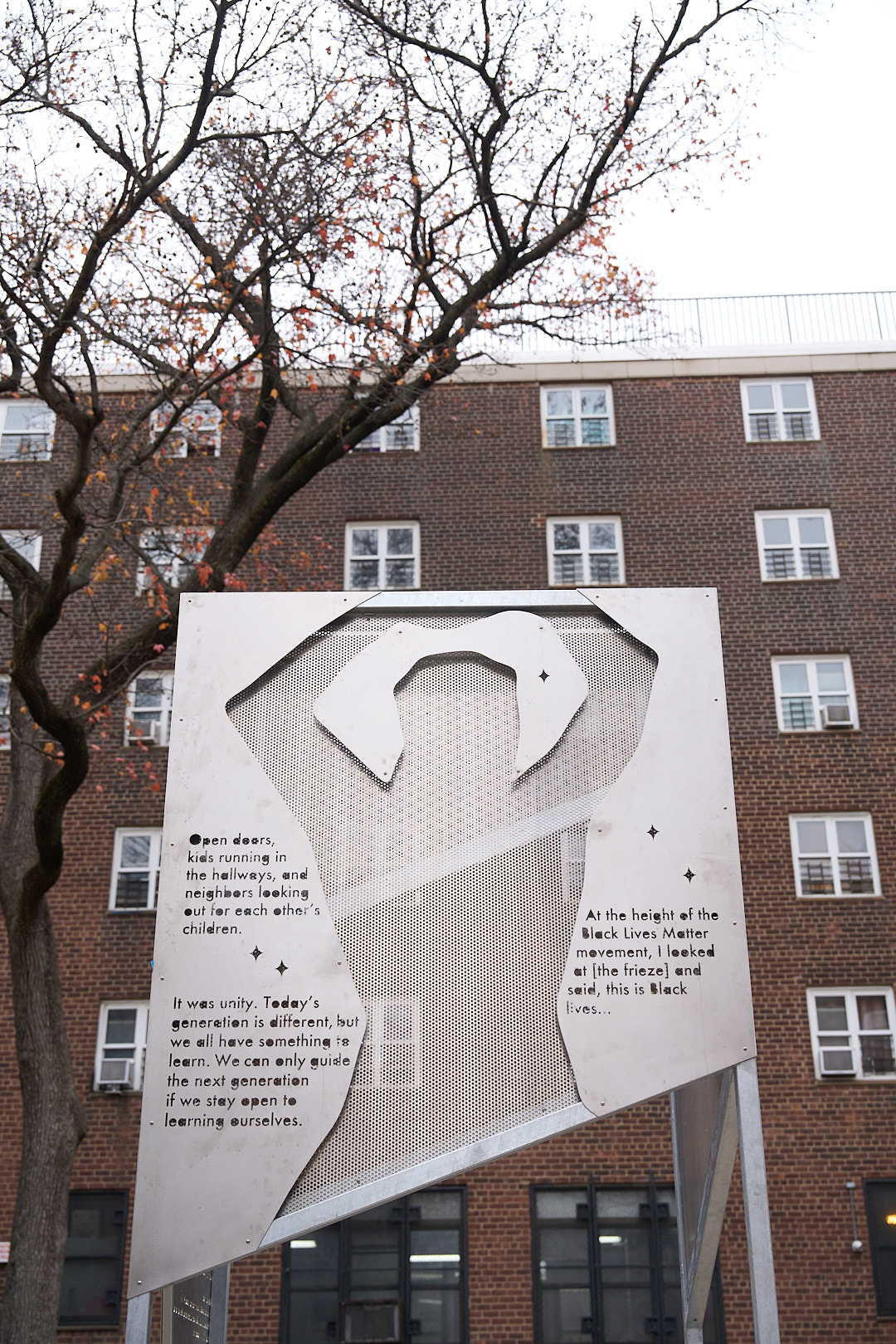
Anna Dave for the steel sculptures
Ifeoma Ebo for the Placards