

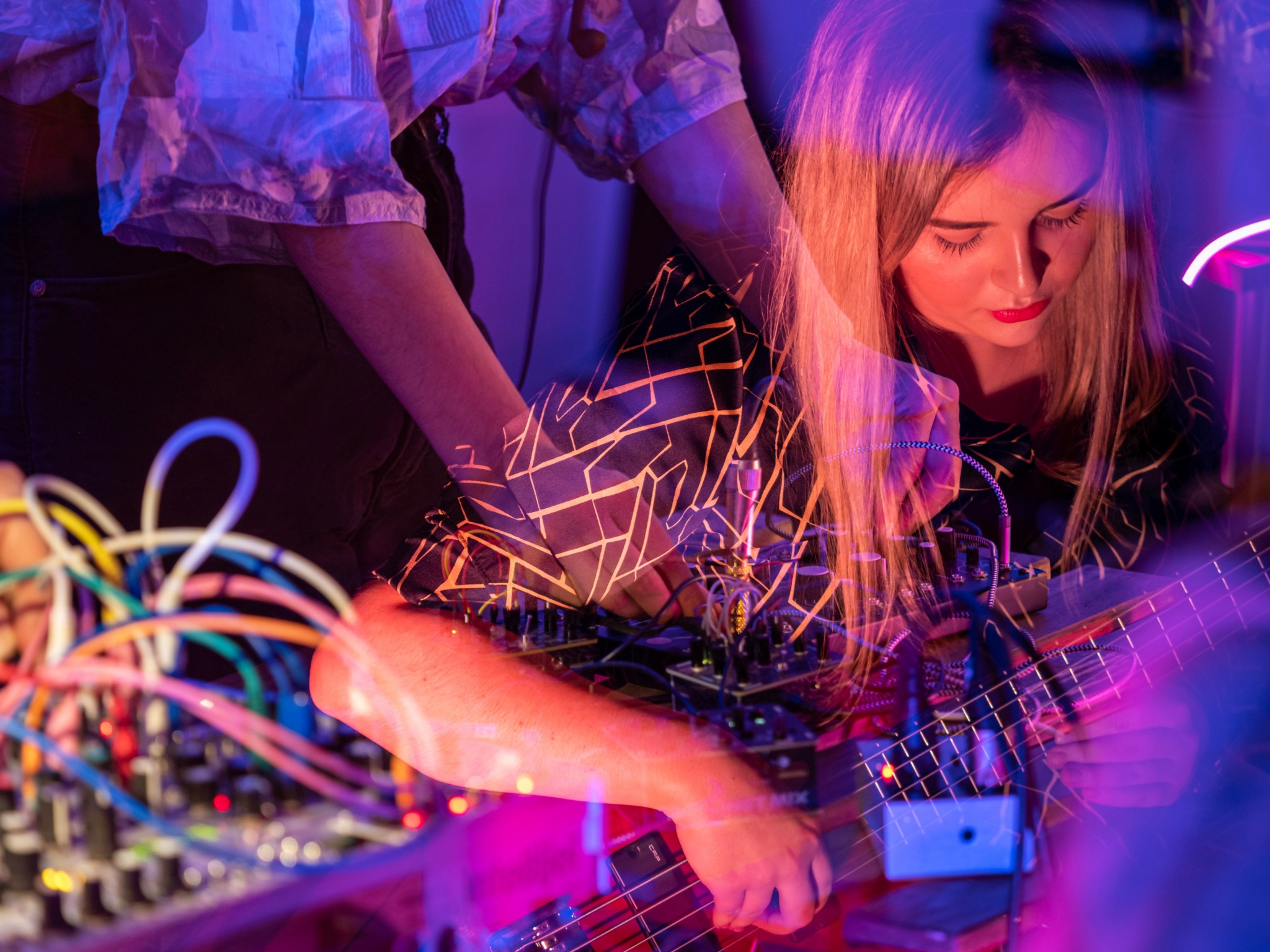

We caught up with the brilliant and insightful Holly Gowland a few weeks ago and have shared our conversation below.
Alright, Holly thanks for taking the time to share your stories and insights with us today. Can you tell us about a time that your work has been misunderstood? Why do you think it happened and did any interesting insights emerge from the experience?
As someone who is situated between the classical and electronic music realms, I often feel like I do not fit into either community, as I am too classical for the electronic world but too electronic for the classical world. Besides this having consequences with funding possibilities, when we do perform to the two different audiences, I find that the focus of each specialist group varies vastly. My piece, Skew for viola and motion sensor, which is being performed with PRX.LIVE in February, has had performances both with classically trained audiences and electronically advanced listeners, and the feedback highlighted vast differences in focus points within both the sonic material and the presence of the performer within the sonic space. For example, when this piece first premiered at Denis Arnold Hall (University of Oxford), compared to when this piece was performed at Sound/Image Festival 2024 at University of Greenwich, the focus on the actionable quality of the performer shifted. The audience more closely aligned with a classical practice pivoted towards analysing the composer’s intention, analysing the body of the performer through the notes prescribed to the notation score, with the performer’s movement becoming secondary to sonic intention, promoting the composer. Whereas, the technologically advanced audience focused on the movement of the performer and its intention to which it belongs within the sonic space, becoming the mediator between a detached sonic reality existing behind the speakers and the presence of the body and its surrounding architecture. The electronically advanced audience promoted the presence of the performer so much that certain listeners discarded the idea of the composer and thought that my violist (Ynyr Pritchard) had written the piece they performed. This highlighted a few key differences between the two creative areas I sway between:
– the presence of a performer within the classical world becomes second nature, often not questioning the visibility of the physical sound generators (person and instrument). The electronic world, with sound usually existing as a detachment from its physical origin (for example Schaeffer’s train sounds existing behind the speaker without the physical train being on a stage), begins to question the reasoning for the presence of a physical body, as it is not required for sound to “exist” (I have put this word in quotation marks as sound is really conjured or retranslated from its original physical activation, therefore it can never exist without physicality).
– the composer within the classical world is implied within any piece of music, often existing as an external body. This is usually because the skill of the composer does not usually relate to being proficient at playing an instrument (usually they are proficient in at least one instrument, but it is impossible to be proficient in every instrument that exists and a high performance level is required for the sound to be correct). The composer within electronic music is often tied in with the performer – even fixed acousmatic pieces can have a diffusion performer dispersing the sound around the room. The electronic composer also “performs” by collecting sound from certain spaces, with the performance becoming part of the compositional process that comes afterwards. The performance, in this case, becomes intrinsically linked to the composition. In addition, the performance (collecting sound, sound dispersion, movement cues) becomes reliant on technological knowledge which is integrated within the compositional process too.
This has therefore led be to consider what the meaning of the physical body within the sound space is – does it need to be seen to be interpreted? Is movement implied through sound, and therefore the body does not need to be present? How can we use the body as a tool to become a service within the acoustic, essentially pushing electronic sound into a hyperreal experience? I have therefore written a series of pieces that use movement as a tool to warp the electronic sound, so that the connection between the concrete and the virtual is realised through the analysis of the performer’s movement.
Great, appreciate you sharing that with us. Before we ask you to share more of your insights, can you take a moment to introduce yourself and how you got to where you are today to our readers.
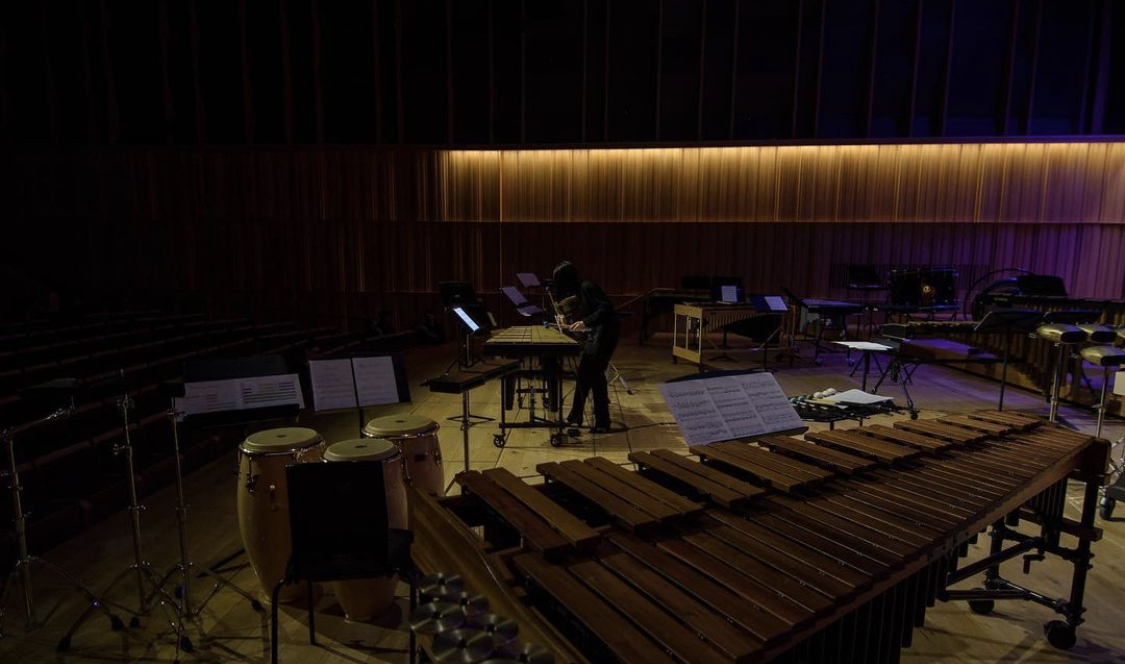
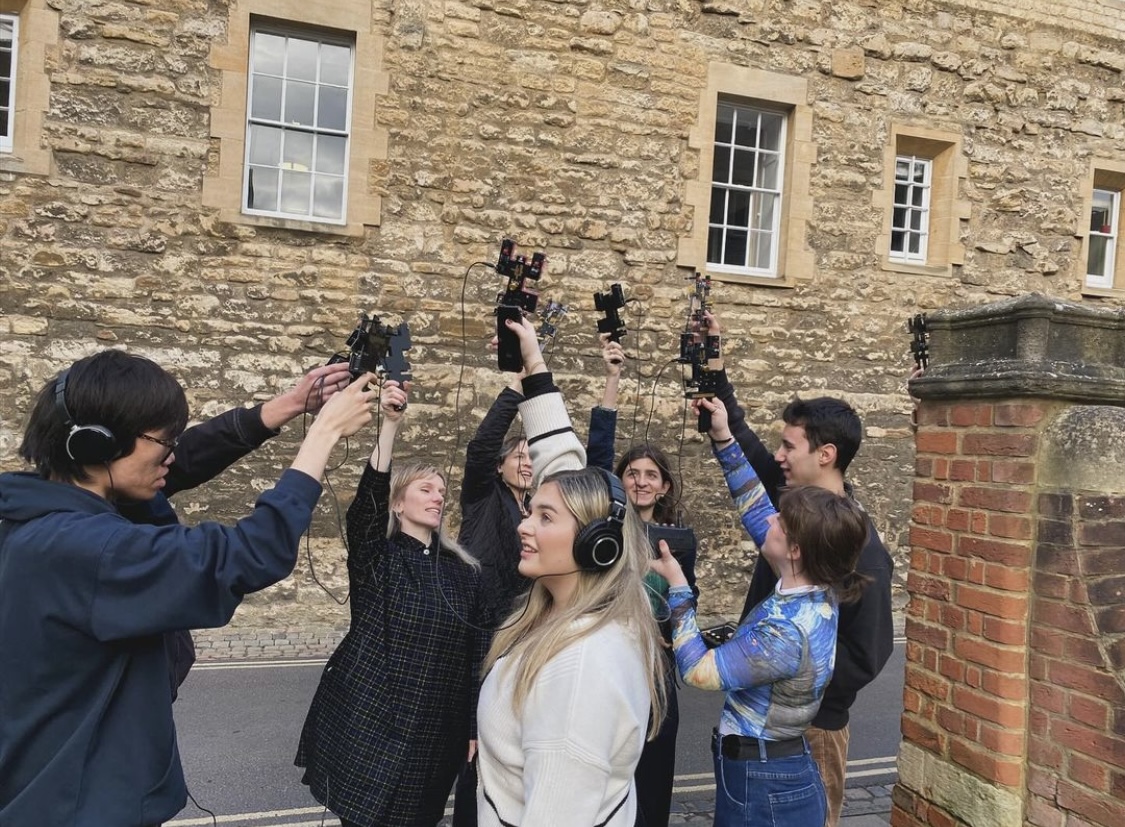
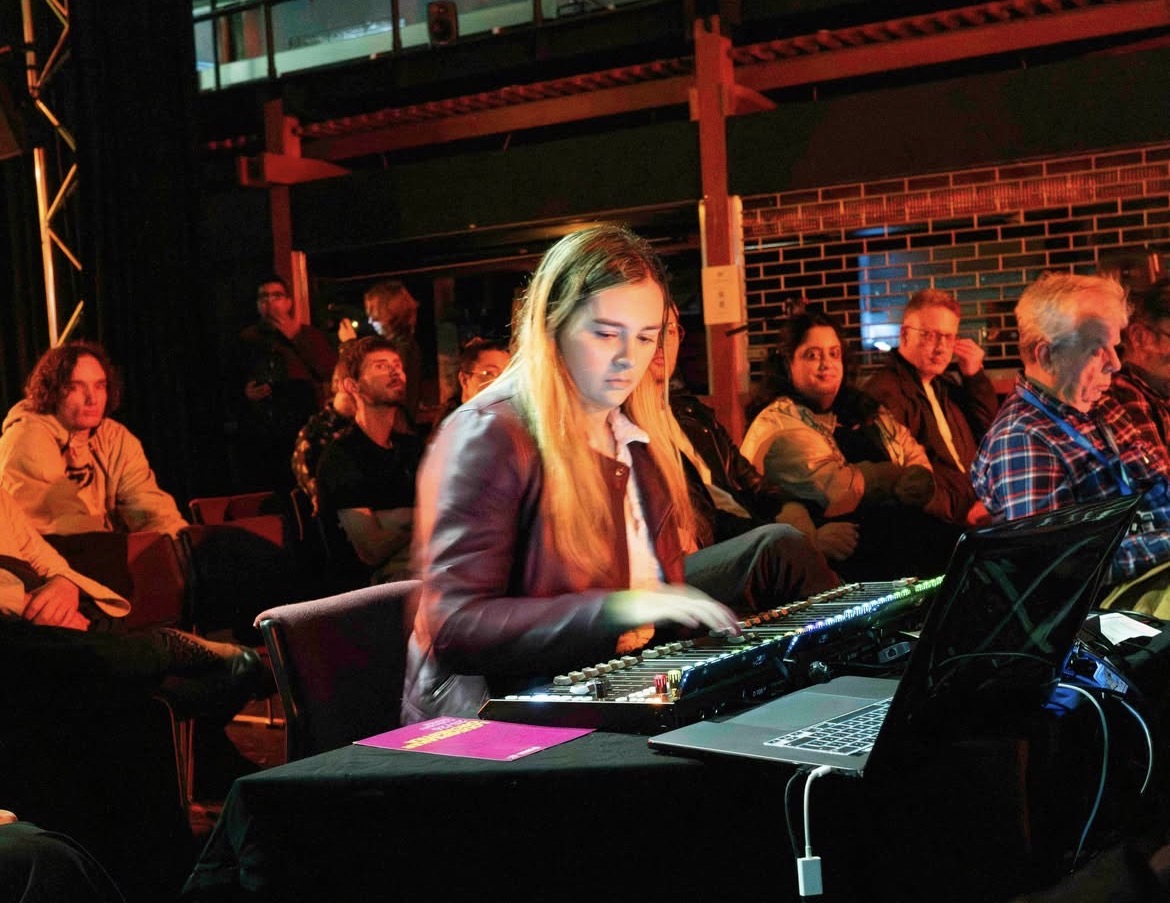
I am a composer from Manchester, UK, who is currently living in Birmingham, UK. I mainly write mixed composition (combining electronic and acoustic elements), but I have also written many fixed acousmatic pieces and purely acoustic works. My practice focuses on new ways of combining real and virtual elements; I often build new technologies to facilitate harmonic blending. My work usually consists of field recordings and draws special attention to spatial aspects. Adapting the acoustic and altering the material within the work are two ways in which I blend acoustic instruments with the electronic. Some of my recent work has used gesture to promote the activation of action plans by providing visual signals. These aid the perception of musical structure and therefore gesture and facial expressions are integral to shape the way music is perceived, understood, and experienced. Therefore, I mainly consider space in relation to sound, its creation, and its existence.
I first started composing when I obtained my first piano around 7 years old. I started learning to play piano around the age of 12 and, as I would often get bored of my graded pieces, I used to analyse the pieces I played and Eric Satie’s works and use these processes to write my own piece on piano. I began to attend the Junior Royal Northern College of Music around 15 or 16 years old, where I initially studied double bass and piano. Around a year into attending JRNCM, composition became my primary study, studying with Dr Joshua Brown. Josh introduced me to Xenakis, which shifted my attention from music in its harmonic and melodic forms to composition which is sound-based, focused on energy. I then studied BMus (Hons) Composition at Royal Birmingham Conservatoire supervised by Andrew Hamilton, Emma Margetson, Howard Skempton, Seán Clancy and Joe Wright. I then went to study MSt Music (Composition) at University of Oxford with Jennifer Walshe and Martyn Harry. I have won the Peter Redfearn Prize for Composition in 2019 and was commissioned by NMC (New Music Cassette) in 2022. I have also received the Royal Birmingham Conservatoire Composition Prize, John Mayer Prize, Musicians’ Union Bill Warman Award for the most promising music creator, McQueen bursary, Carole Emery Scholarship, Ida Carroll Scholarship, the 7th Annual Henfrey Prize for Composition, AHRC Midlands4Cities Doctoral Training Partnership (2024-8), the University of Birmingham Research Festival People’s Choice Award, and the Mendelssohn Scholarship (Special Award) (2025). My pieces have been played internationally at the 2023 International Electroacoustic Music Exhibition at Anthropological Museum of Contemporary Art, Ecuador; Colaboradio in Berlin, Germany; and Artspring Festival in Berlin, Germany. I am currently working on pieces for harpsichord (Gośka Ipsahording) and electronics for Crosscurrents Festival (Birmingham, UK) and for string quartet for Bled New Music Week (Slovenia). My pieces have also been performed at Retune Festival, Oxford; Museum of Modern Art, Oxford; Centrala, Birmingham; BEaSTFEaST 2025; Sound/Image Festival 2024 and 2025; Hippodrome Theatre, Birmingham; Jacqueline du Pré Building, St Hilda’s College Oxford; and Bradshaw Hall, Royal Birmingham Conservatoire. Next year, one of my pieces will be performed at MUSLAB International Electroacoustic Music Exhibition at Centro de Cultura Digital, Mexico City.
On the side of composing, I am a classically trained double bassist who has performed with orchestras and experimental groups at venues such as Centrala, Hippodrome Birmingham, Liverpool Philharmonic Hall, and Symphony Hall Birmingham.
Are there any resources you wish you knew about earlier in your creative journey?
I wish two main areas were integrated into music education and composition training: searching for opportunities and technical training.
Searching for opportunities allows you to get your music out to wider audiences and also permits networking with like-minded people. This is crucial for paid opportunities (work and commissions) beyond these opportunities, therefore, arguably, is more important than the composition itself. Tools, such as PRXLUDES, Ulysees, and Sound and Music, mean that you can browse opportunities without having to go onto independent websites. Bobbie Jane Gardner has also previously taught me how to save hashtags on certain platforms such as Twitter and Instagram to be able to see other opportunities as they pop up on social media platforms. Writing the application for these opportunities also has a knack to it, which is never really taught. Befriend a person who writes funding applications – they will be your best friend. Every application needs to be direct whilst also maintaining an air of authenticity, highlighting why you are unique among the pool of applications. Also, never take a rejection as an insult – sometimes, your type of work just is not what they’re looking for at the time; they may not have the rehearsal time for the level of intricacy you have shown in your piece; and they have very limited spaces.
Technical training is crucial for a composer in this current climate. As the composer is quickly becoming their own manager, producer, sound engineer, and video artist, technology runs throughout the promotion of the creative output and the documentation of it too. I became very close friends with a music technologist, Jess Delacy, in the first year of my degree who helped me become proficient in DAW software, but I believe this should happen much earlier on in composition training and music education in general. Often, schools do not teach students the software for a variety of reasons (economic, knowledge, equipment, exclusion by the syllabus) but this can cut down costs significantly if you are able to fill the boots of technical freelancers. It also means you are able to work in other technical roles whilst progressing creatively.
Is there mission driving your creative journey?
My creative journey is driven by a desire to listen carefully to the world and then re-present it in ways that subtly rewire how we notice space, time, and each other. I am drawn to thresholds. The point where music blurs into geography, where technology brushes against memory, where everyday sound reveals an unexpected architecture. Sound, for me, is not decoration but a way of knowing. A form of evidence, an archive of movement, power, absence, and care.
This interest becomes especially charged when working with space and with the meeting of electronics and acoustic instruments, because they arrive through fundamentally different modes of listening. Acoustic sound often invites empathetic listening. We hear effort, breath, friction, touch. The body is present, negotiating material in real time, and the listener responds almost instinctively, recognising vulnerability and labour. Electronics, by contrast, often lean towards abstractionist listening. Sound becomes system, behaviour, process. The listener is asked to observe, to trace structures and activations, to think spatially and conceptually rather than corporeally.
What compels me is not resolving this difference but composing within it. Space becomes the mediator that allows these listening modes to slide, fracture, and reconfigure. An acoustic sound, dispersed or spatialised, can lose its singular body and become architectural. An electronic sound, tied to gesture, proximity, or breath, can suddenly feel intimate and fragile. The room itself choreographs attention, inviting listeners to shift between empathy and abstraction, sometimes within a single moment.
At the heart of the work is an ethical pull towards resisting flattening. I want to give room to marginal textures, overlooked rhythms, and sounds that do not arrive neatly framed. By composing space alongside sound, and by allowing different ways of listening to coexist in friction rather than harmony, I aim to create sonic environments that encourage attention, curiosity, and gentler ways of inhabiting the world. The work lives not in answers, but in the act of listening differently.
Contact Info:
- Website: https://www.hollygowland.com
- Instagram: @_vitamusic
- Facebook: https://www.facebook.com/hollycomposer
- Linkedin: https://www.linkedin.com/in/holly-g-86567a129
- Other: Bandcamp – https://hollygowland.bandcamp.comMy website is currently being rebuilt, but my old site can be accessed through: https://hollvita.wixsite.com/website-1
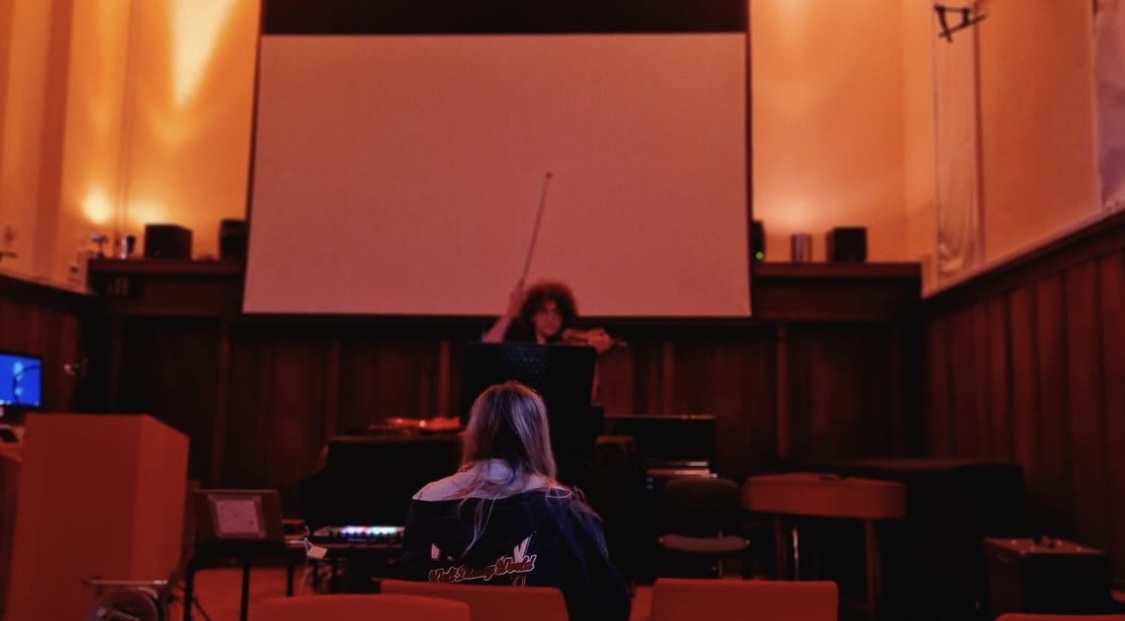
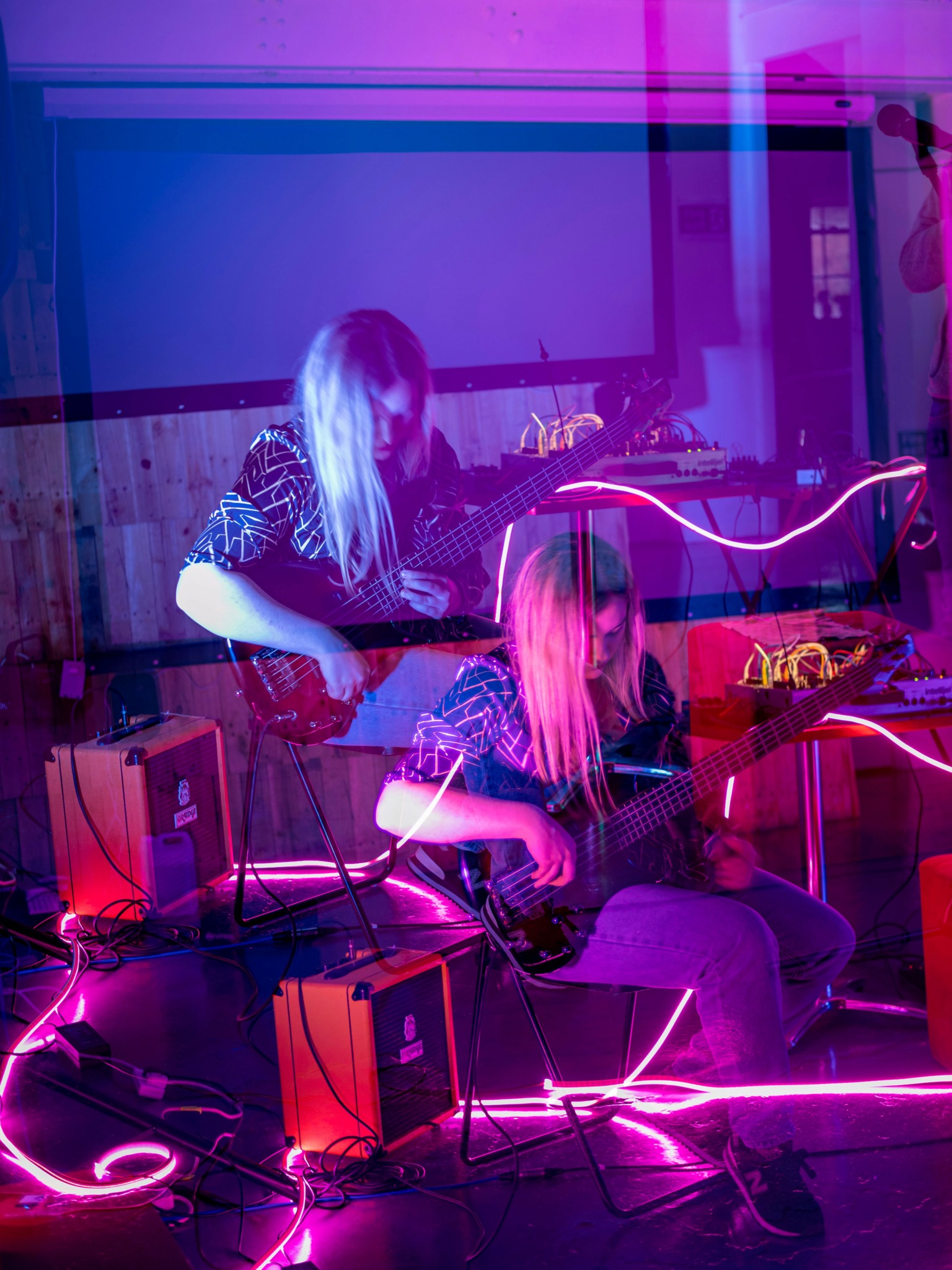
Image Credits
John Convery
Alex Henshaw
Jonathan Crabb
Zack Di Lello