

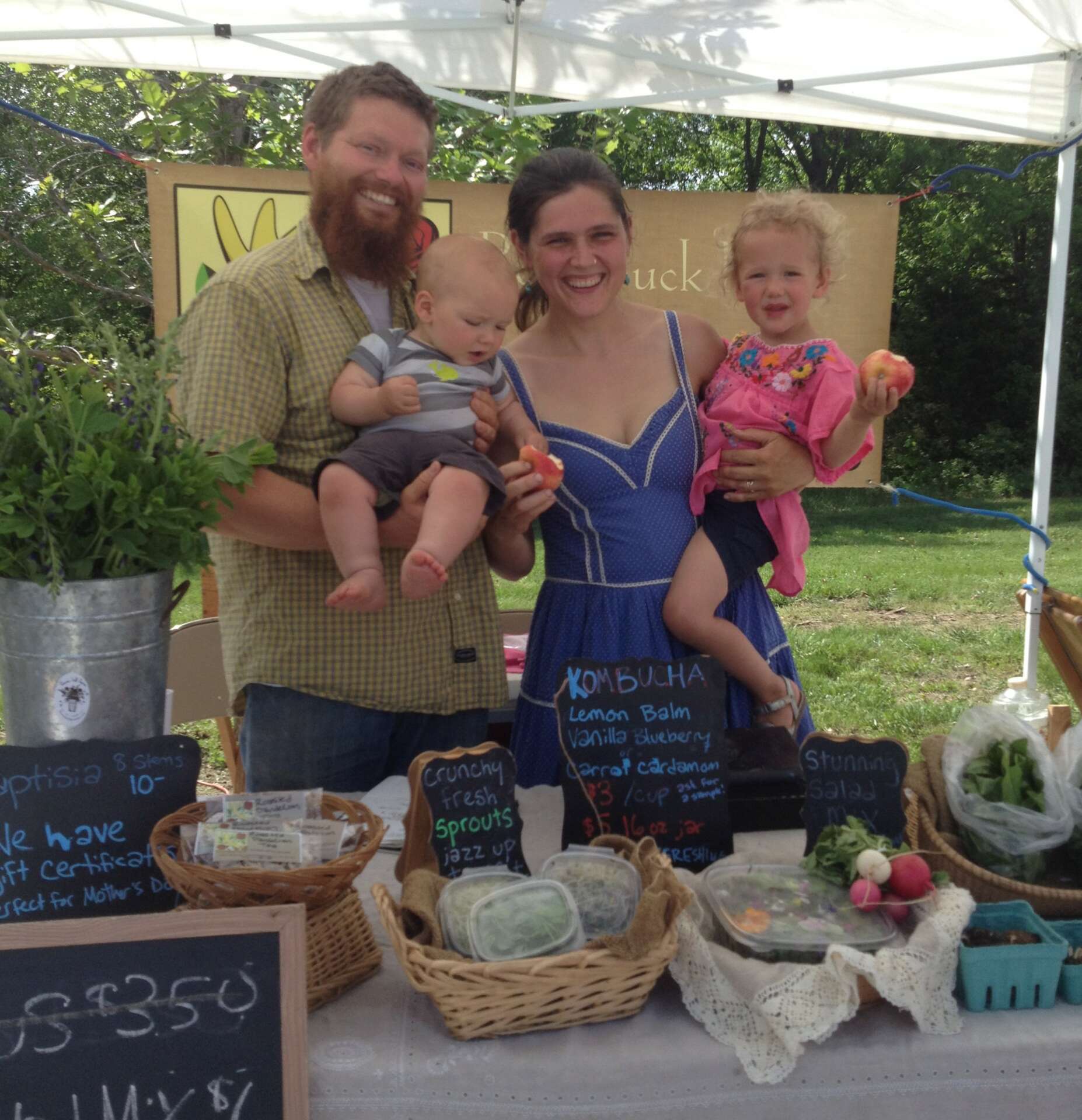

We’re excited to introduce you to the always interesting and insightful Holly Evans and Randy Buck. We hope you’ll enjoy our conversation with Holly Evans and Randy Buck below.
Holly Evans and Randy Buck, appreciate you joining us today. What was it like going from idea to execution? Can you share some of the backstory and some of the major steps or milestones?
My husband and I met in 2009 when we were both on our first farm internship on Orcas Island, off the coast of Washington. As that season ran its course and our relationship grew, we realized that we both saw a farm in our future and that we had a lot to learn. After a couple years of finishing school and saving money, we hit the road in our tiny Volkswagen, traveling around the country volunteering on a wide variety of small scale farming enterprises through the WWOOFing program. We focused on farms that focused on some skill or production that might be useful on our future dream farm. Eleven months and seventeen farms later, we’d tried our hands at beekeeping, pasture-raised livestock, vegetable farming, herbal medicine, community farms, fruit and nut orchards, draft horses, butchering animals, churning butter, selling at farmers markets, and more. We’’d seen the joy of unexpected bumper crops and the sadness of a newborn animal not surviving the night despite your best efforts. We saw all kinds of farmers making it work in all kinds of ways and at the end of that trip we knew that we wanted to be counted among them. The following year one of the farms asked us to return as farm managers, and this was the perfect next step: a season-long, in-depth stay at one farm, after the flurry of farms the previous year. The farm we stayed at had livestock and vegetables, a CSA and sold to restaurants and at the farmers markets, and was Certified Naturally Grown. It embraced many we we wanted our future farm to have and we loved getting into the daily and seasonal rhythm of one piece of land.
The next year we did a bit of international traveling, also working on farms, and got to inoculate sheep in New Zealand, forage stinging nettles in France, and process tropical fruit in Bali. After three years of learning the ropes, we were itching to finally get our hands dirty on our own endeavors. We reached out to family and friends and found someone with an unused hayfield where we could start our first season. We hand dug our first six plots of raised beds and began trying out all the ideas we had gathered and generated during our travels, like our system of improving soil health by utilizing no-till garden plots composed of multiple concentric circles.
After our first modest but successful year, we returned to Missouri, where we were planning on settling down, and again had to find a place to grow. We found an older couple with a flower farm looking for help, and they let us live and grow on their land in exchange for farm management. Randy again hand-dug our circle plots, this time about 12. We gradually moved toward more unusual, niche produce like radish pods, ground cherries, and wild foraged items. After living and growing on that land for four years, we were ready to buy land of our own. We found a perfect 16-acre parcel with a house, a spring, a workshop, and a pear tree, we were in love! Moving our farm was a bit of an ordeal, taking a few months and more than a few late nights and full pickup trucks before we were finally settled in the new place. Randy again, for hopefully the last time, hand-dug our circle plots, this time 18. Every year we have a CSA and sell at area farmers markets, and love getting to know and educate our customers about unusual produce.


Holly Evans and Randy Buck, before we move on to more of these sorts of questions, can you take some time to bring our readers up to speed on you and what you do?
My husband and I love flavorful, responsibly-raised food, and we enjoy raising it ourselves. We also love the independence of farming and working for ourselves, and the ability to be together and with our 4 kids all day, every day. We are no-till, focused on building up the health of the soil, believing that healthy soil leads to healthy crops. We are also fossil-fuel-free on the farm (no tractors, tillers, or other machinery), doing everything with elbow grease and hand tools. We enjoy growing unique produce like purple green beans, pink potatoes, radish pods, ground cherries, and autumnberries. A large part of our work is educating our customers on these delicious and unusual items, and about our sustainable growing practices.


Can you talk to us about how your funded your business?
We had been farming on others’ land for four years before we started pursuing funding for our own land. We knew we could farm, we had saved enough for a down payment, and we knew we would be able to pay back a mortgage, now we had to convince others of that! We tried to go to the Farm Credit Services, but they were not used to our kind of farming. They normally deal with commodity farmers, who grow hundreds of acres of corn and soybeans. They couldn’t fathom getting $20,000 off of one acre, and their algorithms had no place for heirloom, organically grown garlic that would fetch twenty times the commodity price of garlic. They were confused by us and did not think we could possibly have a valid farm business on just a handful of acres, so no chance of a loan from them. We did not have much credit or collateral, or anyone who would co-sign for us, so a regular bank loan or mortgage was out. There are some farm loans out there for small-scale sustainable farmers, but they are either too small to be helpful for land, or they are expressly for development of land but not purchase of land. We were running out of options, and talking to everyone we knew. While visiting farmer friends in Massachusetts they surprised us by offering to loan us abut half of what we would need to buy land, and we were blown away! We still needed to find another funding source, and a friend of my grandfather’s met with us and agreed to loan us the remainder of what we needed. The generosity of our family and friends helped us over the biggest hurdle for many first time/small scale farmers.


Any stories or insights that might help us understand how you’ve built such a strong reputation?
We have all direct-to-consumer sales since we sell at farmer’s markets. Customers have come to know us as having unusual produce, and will stop by to see what we have that week. We supplement our farming with wild-foraged items like mushrooms, autumnberries, and persimmons, so what we have changes week to week, but there’s always something unique. We also seek out unusual varieties of produce to grow (like purple green beans, lemon basil, or mini bok choi) so we always have something new to introduce our customers to. We send out emails and do a lot of chatting with customers about our growing practices, recipes, and seasonal trends, so they gradually know what to expect from us.
Contact Info:
- Website: www.rosybuckfarm.com
- Instagram: @rosybuckfarm
- Facebook: facebook.com/rosybuckfarm